iPhone Charger Guide 2026: From 5W Adapter to GaN, PD and AVS Fast Charging Technology
For many years, choosing an iPhone charger was simple. Most users only needed to know one thing: does this charger fit my iPhone?
However, the charging world has changed dramatically.
From the early 5W Apple adapter to today's USB-C PD fast chargers, GaN chargers, and high-efficiency charging technologies, iPhone charging has evolved from basic power delivery into an intelligent charging ecosystem.
Today, users are asking more advanced questions:
• What charger does iPhone use?
• What is the best charger for iPhone 17 Pro Max?
• Can a 65W GaN charger damage an iPhone battery?
• Why does my iPhone get hot while charging?
• Will the upcoming iPhone 18 charger require new technology?
For charger brands, retailers, and OEM buyers, these changes represent a major market opportunity. The demand is shifting from simple phone chargers toward compact, efficient, and intelligent charging solutions such as GaN chargers, PD chargers, PPS chargers, and future AVS chargers.
This guide explains the complete evolution of Apple iPhone chargers, charging wattage trends, compatibility, fast charging technology, and what the future of iPhone charging may look like.
1. The Evolution of Apple iPhone Chargers: From 5W Adapter to GaN Fast Charging
When Apple launched the first iPhone in 2007, charging technology was relatively simple. The original iPhone used a traditional 5W power adapter, which was enough for the small battery capacity and basic smartphone functions at that time.
Over the following years, Apple gradually increased charging performance while improving power management, battery protection, and charging efficiency.
The biggest turning points were:
• The introduction of USB Power Delivery (USB PD) fast charging
• The transition from Lightning to USB-C
• The rise of GaN charger technology
• The development of higher efficiency charging protocols
Today, an iPhone charger is no longer just a power adapter. It is a smart power management device that communicates with the phone to deliver the appropriate voltage and current.
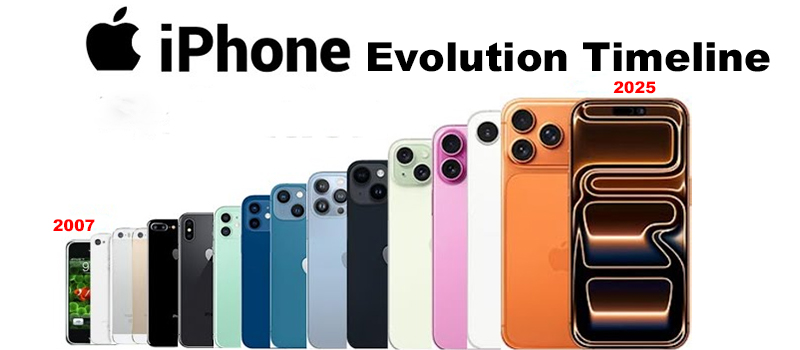
iPhone Charger Evolution Timeline (2007–2026)
| iPhone Series | Release Year | Charging Port | Typical Charger Power | Charging Technology Development |
| iPhone (1st Generation) | 2007 | 30-pin | 5W | Traditional USB charging |
| iPhone 3G / 3GS9 | 2008–2009 | 30-pin | 5W | Standard charging era |
| iPhone 4 / 4S | 2010–2011 | 30-pin | 5W | Improved power management |
| iPhone 5 / 5S / 6 Series | 2012–2015 | Lightning | 5W | Lightning ecosystem introduced |
| iPhone 7 Series | 2016 | Lightning | 5W | Larger battery demand increased |
| iPhone 8 / X Series | 2017 | Lightning | 5W / 18W PD | Fast charging introduced |
| iPhone XS / XR / 11 Series | 2018–2019 | Lightning | 18W PD | USB-C PD charging became popular |
| iPhone 12 Series | 2020 | Lightning | 20W PD | MagSafe charging introduced |
| iPhone 13 Series | 2021 | Lightning | 20W+ | Faster charging optimization |
| iPhone 14 Series | 2022 | Lightning | 20W+ | Improved thermal management |
| iPhone 15 Series | 2023 | USB-C | 20W–30W | USB-C charging ecosystem |
| iPhone 16 Series | 2024 | USB-C | 27W–39W | Better power management |
| iPhone 17 Series | 2025 | USB-C | 35W–40W | Advanced charging control |
| iPhone 18 Series (Expected) | - | - | - | - |
Why Did Apple Move from 5W Chargers to Fast Charging?
The answer is simple: modern smartphones consume much more power.
Early iPhones mainly handled:
• Phone calls, Messages, Basic internet browsing
Modern iPhones support:
• High-performance processors
• Professional cameras
• 5G connectivity
• AI processing
• High-refresh-rate displays
• Gaming workloads
These features require larger batteries and faster charging solutions.
A 5W charger that was acceptable for early iPhones can no longer meet the expectations of today's users.
This is why modern consumers increasingly search for:
• iphone fast charger
• iphone USB-C charger
• best charger for iPhone
• iPhone PD charger
• iPhone GaN charger
2. What Charger Does iPhone Use? Understanding iPhone Charger Types
One of the most common Google searches is:
"What charger does iPhone use?"
The answer depends on the iPhone generation.
Currently, iPhone charging can be divided into two major categories:
Lightning Charger (iPhone 14 and Earlier Models)
Before the iPhone 15 series, Apple mainly used the Lightning connector.
Compatible models include:
• iPhone 14, 14 pro and 14 pro max Series, iPhone 13, 13 pro and 13 pro max Series, iPhone 12, 12 pro and 12 pro max Series, iPhone 11, 11 pro and 11 pro max Series
• Earlier iPhone models
However, the charging adapter itself has changed.
Older 5W USB-A chargers can charge these devices, but they are much slower compared with modern USB-C PD chargers.
For example:
A traditional 5W charger:
• Lower charging speed
• Longer charging time
• Less suitable for modern usage
A USB-C PD charger:
• Higher efficiency
• Faster charging
• Better compatibility with new devices
USB-C Charger (iPhone 15 Series and Later)
The iPhone 15 lineup introduced USB-C charging, creating a major change in Apple's charging ecosystem.
USB-C allows iPhone users to share chargers with:
• MacBook, iPad Pro, iPad Air, USB-C laptops, Gaming devices, Power banks
This also increased demand for:
• USB-C charger adapter
• USB-C fast charger
• PD charger
• GaN USB-C charger
Important: USB-C Does Not Automatically Mean Fast Charging
Many users misunderstand USB-C.
USB-C is only the connector type.
Charging speed depends on:
• Charger power output
• Charging protocol
• Cable capability
• iPhone power management system
For example:
A USB-C charger without PD support may not provide optimal fast charging.
A USB-C PD charger can intelligently communicate with iPhone and provide the correct charging power.
3. iPhone 13 / 14 / 15 / 16 / 17 Charger Compatibility Guide
Choosing the correct charger does not mean buying the highest wattage charger.
The best charger depends on:
• Your iPhone model
• Your charging habits
• Whether you charge other devices
• Whether you need travel or desktop charging
Recommended Chargers for Different iPhone Models
| iPhone Model | Recommended Charger Type | Recommended Power |
| iPhone 13 | USB-C PD Charger | 20W–30W |
| iPhone 14 | USB-C PD Charger | 20W–30W |
| iPhone 15 | USB-C PD Charger | 20W–30W |
| iPhone 15 Pro | USB-C PD Charger | 30W recommended |
| iPhone 15 Pro Max | PD / PPS Charger | 30W+ |
| iPhone 16 | USB-C PD Charger | 30W recommended |
| iPhone 16 Pro Max | PD / PPS / GaN Charger | 30W–45W |
| iPhone 17 Series | PD / GaN Charger | 30W–45W |
| iPhone 17 Pro Max | High-efficiency GaN Charger | 35W-45W recommended |
| iPhone 18 Series (Expected) | Advanced USB-C Charger | 45W+ potential |
iPhone 15 Pro Max Charging Wattage: What Users Should Know
The iPhone 15 Pro Max charging wattage is one of the most searched topics among Apple users.
Many users assume:
"Using a higher watt charger means my iPhone charges much faster."
However, this is not always true.
The iPhone controls how much power it receives.
A 65W GaN charger does not force 65W into the phone.
Instead:
• Charger provides available power
• iPhone negotiates required power
• Battery management system controls charging speed
This is why a:
• 30W charger
• 45W charger
• 65W GaN charger
can all safely charge an iPhone.
The difference is mainly:
• charging flexibility
• multi-device capability
• future compatibility
Why More Users Choose GaN Chargers for iPhone
Traditional chargers use silicon-based components.
GaN (Gallium Nitride) technology allows chargers to achieve:
• Higher power density
• Smaller size
• Better efficiency
• Lower heat generation
For example:
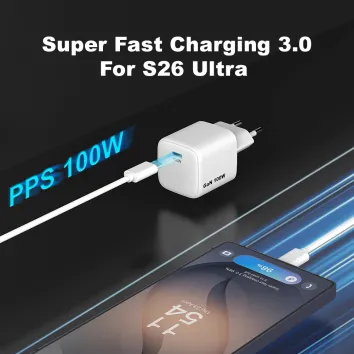
A 65W GaN charger can charge:
• Apple iPhone, Apple iPad, Apple MacBook Air, Wireless earbuds
with a much smaller design compared with traditional chargers.
This makes GaN charger technology increasingly popular among:
• travelers
• business users
• Apple ecosystem users
• charger brands and retailers
Leggi di più
4. Can a 65W or 100W GaN Charger Damage an iPhone?
One of the most common questions from iPhone users is:
“Can I use a 65W charger or 100W GaN charger to charge my iPhone?”
Many people still believe that:
A higher wattage charger will push too much power into the phone and damage the battery.
This is one of the biggest misunderstandings about modern charging technology.
The reality is different.
A charger does not continuously force its maximum output into a device. Modern smartphones, including iPhones, use intelligent power management systems to communicate with the charger and request the power they actually need.
In other words:
A 100W USB-C charger does not automatically charge an iPhone at 100W.
The iPhone controls the charging process.
How iPhone Charging Power Negotiation Works
Modern iPhones use charging controllers and battery management systems (BMS) to regulate:
• Input voltage
• Charging current
• Battery temperature
• Charging speed
• Battery protection
When you connect an iPhone to a USB-C PD charger:
• The charger identifies the connected device.
• The iPhone communicates its required charging profile.
• The charger delivers the negotiated power level.
• The iPhone adjusts charging speed based on battery condition.
This technology is called power negotiation.
It is the reason why a:
• 30W iPhone charger, 45W GaN charger, 65W USB-C charger, 100W PD charger
can all safely charge an iPhone.
Are Higher Wattage Chargers Better for iPhone?
The answer depends on how you use your charger.
For users who only charge an iPhone:
A 20W–30W PD charger is usually enough.
For users who own multiple devices:
A higher-power GaN charger provides more flexibility.
For example:
A 65W GaN charger can charge:
• iPhone 17, iPhone 17 Pro, iPhone 17 Pro Max, iPad Pro, MacBook Air, AirPods, Power bank
with one compact charger.
This is why 65W GaN chargers have become popular among Apple ecosystem users.
Recommended iPhone Charger Power Guide
The iPhone 15 Pro Max charging wattage is one of the most searched topics among Apple users.
Many users assume:
"Using a higher watt charger means my iPhone charges much faster."
However, this is not always true.
The iPhone controls how much power it receives.
A 65W GaN charger does not force 65W into the phone.
Instead:
• Charger provides available power
• iPhone negotiates required power
• Battery management system controls charging speed
This is why a:
• 30W charger
• 45W charger
• 65W GaN charger
can all safely charge an iPhone.
The difference is mainly:
• charging flexibility
• multi-device capability
• future compatibility
Why More Users Choose GaN Chargers for iPhone
Traditional chargers use silicon-based components.
GaN (Gallium Nitride) technology allows chargers to achieve:
• Higher power density
• Smaller size
• Better efficiency
• Lower heat generation
For example:
A 65W GaN charger can charge:
• Apple iPhone, Apple iPad, Apple MacBook Air, Wireless earbuds
with a much smaller design compared with traditional chargers.
This makes GaN charger technology increasingly popular among:
• travelers
• business users
• Apple ecosystem users
• charger brands and retailers
Leggi di più
4. Can a 65W or 100W GaN Charger Damage an iPhone?
One of the most common questions from iPhone users is:
“Can I use a 65W charger or 100W GaN charger to charge my iPhone?”
Many people still believe that:
A higher wattage charger will push too much power into the phone and damage the battery.
This is one of the biggest misunderstandings about modern charging technology.
The reality is different.
A charger does not continuously force its maximum output into a device. Modern smartphones, including iPhones, use intelligent power management systems to communicate with the charger and request the power they actually need.
In other words:
A 100W USB-C charger does not automatically charge an iPhone at 100W.
The iPhone controls the charging process.
How iPhone Charging Power Negotiation Works
Modern iPhones use charging controllers and battery management systems (BMS) to regulate:
• Input voltage
• Charging current
• Battery temperature
• Charging speed
• Battery protection
When you connect an iPhone to a USB-C PD charger:
• The charger identifies the connected device.
• The iPhone communicates its required charging profile.
• The charger delivers the negotiated power level.
• The iPhone adjusts charging speed based on battery condition.
This technology is called power negotiation.
It is the reason why a:
• 30W iPhone charger, 45W GaN charger, 65W USB-C charger, 100W PD charger
can all safely charge an iPhone.
Are Higher Wattage Chargers Better for iPhone?
The answer depends on how you use your charger.
For users who only charge an iPhone:
A 20W–30W PD charger is usually enough.
For users who own multiple devices:
A higher-power GaN charger provides more flexibility.
For example:
A 65W GaN charger can charge:
• iPhone 17, iPhone 17 Pro, iPhone 17 Pro Max, iPad Pro, MacBook Air, AirPods, Power bank
with one compact charger.
This is why 65W GaN chargers have become popular among Apple ecosystem users.
Recommended iPhone Charger Power Guide
| User Scenario | Recommended Charger |
| Basic iPhone charging | 20W USB-C PD charger |
| Faster daily charging | 30W PD charger |
| iPhone + iPad users | 45W GaN charger |
| iPhone + laptop users | 65W GaN charger |
| Multiple devices / travel | 100W+ multi-port GaN charger |
Leggi di più
5. Why Does My iPhone Get Hot While Charging?
Another highly searched question is:
“Why is my iPhone getting hot while charging?”
Search trends show increasing interest in:
• iPhone 15 heat while charging
• iPhone 16 heat while charging
• iPhone 17 heat while charging
Heat during charging is not automatically a sign of a bad charger.
Some heat is normal because charging is an energy conversion process.
However, excessive heat should be investigated.
Common Reasons Why iPhone Gets Hot While Charging
1. Fast Charging Generates More Heat
Fast charging transfers more energy in a shorter period.
During high-speed charging:
• More electrical energy flows through components
• Battery chemical reactions increase
• Power conversion creates heat
This is normal behavior. A good charger manages this heat through:
• Efficient power conversion
• Thermal protection
• Intelligent power adjustment
2. Using the Phone While Charging
Heavy activities increase heat generation.
Examples:
• Playing high-performance games
• Recording 4K video
• Using navigation apps
• Video calling
When the phone is already producing heat internally, charging adds additional thermal load.
3. Poor Quality Chargers or Cables
Not all chargers are designed equally.
Low-quality chargers may have problems with:
• Voltage stability
• Heat management
• Component reliability
• Safety protection
A reliable USB-C PD charger should include:
Over-temperature protection
Over-voltage protection
Over-current protection
Short-circuit protection
4. High Environmental Temperature
Charging performance is affected by surroundings.
For example:
Charging an iPhone:
• inside a hot car
• under a pillow
• near direct sunlight
can increase temperature significantly.
How to Reduce iPhone Charging Heat
For better charging experience:
Use a quality charger
Choose chargers with:
• PD certification, GaN technology, Safety certifications
Use the correct cable
A poor-quality USB-C cable may:
1. reduce charging speed
2. create extra resistance
3. increase heat
Keep ventilation, Avoid:
• covering the phone while charging
• charging on soft surfaces
• placing it under blankets
Another highly searched question is:
“Why is my iPhone getting hot while charging?”
Search trends show increasing interest in:
• iPhone 15 heat while charging
• iPhone 16 heat while charging
• iPhone 17 heat while charging
Heat during charging is not automatically a sign of a bad charger.
Some heat is normal because charging is an energy conversion process.
However, excessive heat should be investigated.
Common Reasons Why iPhone Gets Hot While Charging
1. Fast Charging Generates More Heat
Fast charging transfers more energy in a shorter period.
During high-speed charging:
• More electrical energy flows through components
• Battery chemical reactions increase
• Power conversion creates heat
This is normal behavior. A good charger manages this heat through:
• Efficient power conversion
• Thermal protection
• Intelligent power adjustment
2. Using the Phone While Charging
Heavy activities increase heat generation.
Examples:
• Playing high-performance games
• Recording 4K video
• Using navigation apps
• Video calling
When the phone is already producing heat internally, charging adds additional thermal load.
3. Poor Quality Chargers or Cables
Not all chargers are designed equally.
Low-quality chargers may have problems with:
• Voltage stability
• Heat management
• Component reliability
• Safety protection
A reliable USB-C PD charger should include:
Over-temperature protection
Over-voltage protection
Over-current protection
Short-circuit protection
4. High Environmental Temperature
Charging performance is affected by surroundings.
For example:
Charging an iPhone:
• inside a hot car
• under a pillow
• near direct sunlight
can increase temperature significantly.
How to Reduce iPhone Charging Heat
For better charging experience:
Use a quality charger
Choose chargers with:
• PD certification, GaN technology, Safety certifications
Use the correct cable
A poor-quality USB-C cable may:
1. reduce charging speed
2. create extra resistance
3. increase heat
Keep ventilation, Avoid:
• covering the phone while charging
• charging on soft surfaces
• placing it under blankets
> Read: iPhone Charger Guide 2026: From 5W Adapter to GaN, PD and AVS Fast Charging Technology (Part 2)
Frequently Asked Questions About iPhone Chargers
Q1: What type of charger does iPhone use?
Modern iPhone models use USB-C chargers.
iPhone 15 series and newer models use USB-C ports, while earlier models mainly use Lightning connectors.
For fast charging, users should choose a USB-C PD charger with appropriate power output.
Q2: What is the best charger for iPhone 17 Pro Max?
A 30W–45W USB-C PD or GaN charger is recommended for iPhone 17 Pro Max.
A higher-power 65W GaN charger is also safe and useful if you need to charge multiple devices.
Q3: Can I use a 65W GaN charger for iPhone?
Yes. A 65W GaN charger will not force 65W into the iPhone.
The iPhone controls how much power it receives through its charging management system.
Q4: Can a 100W charger damage an iPhone battery?
No, assuming the charger is a quality certified product.
Higher wattage only means the charger has more available power.
The phone decides how much power to draw.
Q5: Why is my iPhone 15 getting hot while charging?
Some heat during charging is normal.
Common causes include:
1. Fast charging
2. Using the phone while charging
3. High room temperature
4. Poor-quality cables or chargers
Q6: What charger should I use for iPhone 15 Pro Max?
A USB-C PD charger rated around 30W or higher is recommended.
A GaN charger can provide better efficiency and portability.
Q7: Do I need Apple's original charger for my iPhone?
No. Certified third-party chargers can safely charge iPhones.
Important factors include:
1. Safety certification
2. PD compatibility
3. Reliable manufacturer quality
Q8: Is a GaN charger better for iPhone?
GaN chargers offer several advantages:
1. Smaller size
2. Higher efficiency
3. Better power density
4. Lower heat generation
They are especially useful for users with multiple devices.
Q9: What is the difference between PD and PPS chargers?
USB PD is a universal USB-C charging standard.
PPS is a more flexible charging technology that allows dynamic voltage adjustment.
Many modern fast chargers support both PD and PPS.
Q10: What is an AVS charger?
AVS (Adjustable Voltage Supply) is an advanced charging technology designed for more precise voltage control.
It is important for future high-power USB-C charging solutions.
Q11: Will iPhone 18 require a new charger?
Most existing USB-C chargers are expected to remain compatible.
However, future iPhone models may benefit from newer chargers with improved efficiency and higher charging performance.
Recommended for Zonsan Website
• What Is a GaN Charger? ↗
• GaN Charger vs PD Charger ↗
• 65W GaN Charger Guide ↗
• PD 3.1 240W Charging Technology Explained ↗
• How to Choose a Fast Charger ↗