正在等待翻译……
Walk into any office, home, or airport lounge, and you'll find chargers of every age.
Some are nearly a decade old and still working reliably every day.
Others stop functioning after only a few months.
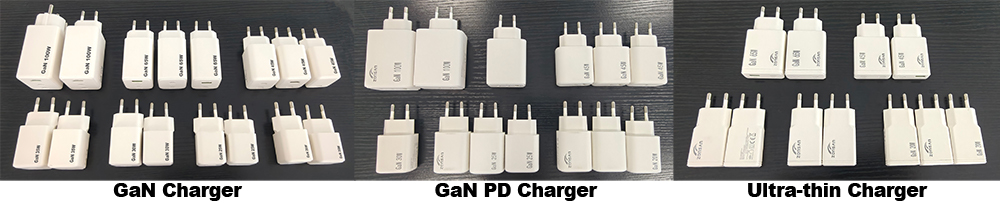
At first glance, they may look almost identical.
Both may be labeled:
• 20W USB-C Charger
• 45W Fast Charger
• 65W GaN Charger
• 100W PD Charger
Both may even claim the same certifications.
Yet their actual lifespan can be dramatically different.
So what determines how long a charger lasts?
Is it luck?
Brand name?
Price?
Or something deeper inside the product?
The truth is that charger lifespan is largely determined by engineering decisions made long before the product reaches a customer.
In this article, we'll explore the real reasons why some chargers continue working for years while others fail much sooner.
The Lifespan of a Charger Starts at the Design Stage
Many people assume charger reliability depends mainly on manufacturing quality.
Manufacturing is important.
However, long-term reliability actually begins much earlier.
It starts during product development.
When engineers design a charger, they must balance:
• Size
• Cost
• Efficiency
• Heat generation
• Component lifespan
• Safety margins
Poor decisions made during the design stage often create problems that appear months later.
For example:
A charger may pass all basic tests while new.
But if internal temperatures remain consistently high, components can age much faster over time.
This is why experienced charger manufacturers place significant emphasis on reliability engineering during product development.
Heat Is the Biggest Enemy of Charger Lifespan
If there is one factor that shortens charger life more than anything else, it is heat.
Electronic components naturally degrade over time.
High temperatures accelerate that process.
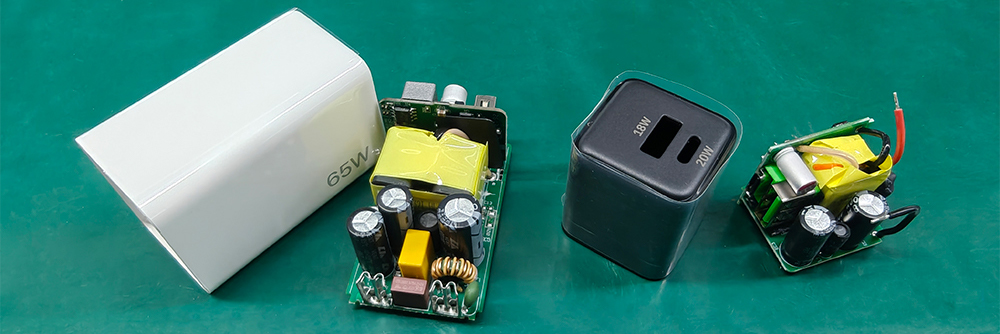
Inside a modern fast charger, heat is generated by:
• Power ICs
• GaN transistors
• Transformers
• Rectifiers
• USB-C PD controllers
When temperatures remain high for long periods, components experience continuous stress.
The effects may include:
• Reduced efficiency
• Capacitor aging
• Solder fatigue
• Material degradation
• Increased failure risk
This is why thermal engineering has become one of the most important areas in charger design.
A cooler charger is usually a longer-lasting charger.
Capacitors Often Determine How Long a Charger Survives
Ask experienced power electronics engineers what component most commonly limits charger lifespan, and many will immediately answer: Capacitors.
Capacitors operate continuously whenever a charger is plugged in.
Over time, heat gradually dries out the electrolyte inside certain capacitor types.
As capacitor performance decreases, the charger may begin showing symptoms such as:
• Charging instability
• Increased ripple voltage
• Random shutdowns
• Failure to start
Professional charger factories therefore pay close attention to:
• Capacitor quality
• Temperature rating
• Expected operating life
• Supplier consistency
Higher-grade capacitors typically cost more but often contribute significantly to long-term reliability.
Build Quality Matters More Than Most Buyers Realize
Two chargers can share the same specifications while being manufactured very differently.
Differences in production quality may include:
• Solder consistency
• Component placement accuracy
• PCB cleanliness
• Connector durability
• Insulation quality
Poor assembly quality may not cause immediate failure.
Instead, small defects gradually worsen during daily use.
This is one reason professional charger factories invest heavily in:
• Automated SMT production
• AOI inspection
• Process monitoring
• Reliability verification
Good manufacturing quality reduces hidden defects before products leave the factory.

Why Cheap Chargers Often Fail Earlier
Low-cost chargers can appear attractive because of their price.
However, lower production costs often come from compromises such as:
• Lower-grade components
• Reduced thermal materials
• Less testing
• Simplified protection circuits
• Shorter aging procedures
These compromises may not be obvious externally.
The charger may work normally when first purchased.
But over time, reliability problems become more likely.
This doesn't mean every inexpensive charger is poor quality.
However, extremely aggressive cost reduction often increases long-term failure risks.
Modern GaN Chargers Can Last Longer—If Designed Properly
A common misconception is that GaN chargers wear out faster because they are smaller.
In reality, GaN technology itself is not the problem.
Well-designed GaN chargers often provide:
• Higher efficiency
• Lower energy loss
• Better thermal performance
• Reduced operating temperatures
The key factor is not whether the charger uses GaN.
The key factor is whether the engineering team successfully manages heat, power density, and component reliability.
A properly designed 65W GaN charger may easily outlast an older silicon charger.
Reliability Testing Extends Product Lifespan
Professional charger manufacturers do not rely solely on design assumptions.
Products are continuously verified through:
• Aging tests
• Thermal testing
• Load testing
• Short-circuit testing
• PD protocol testing
• Protection verification
These tests help identify weaknesses before products reach customers.
The earlier problems are discovered, the easier they are to correct.
Reliability testing is one of the main reasons some chargers remain stable after years of use.
How ZONSAN Designs Chargers for Long-Term Reliability
At ZONSAN, charger lifespan is considered throughout the entire development process.
From component qualification and PCB design to thermal engineering and reliability testing, the goal is not simply to create fast chargers—but to create chargers that remain reliable over years of daily use.
The engineering team continuously evaluates:
• Thermal performance
• Component durability
• PD charging stability
• PPS compatibility
• Long-term reliability trends
across products including:
• 20W USB-C Chargers
• 25W Samsung Chargers
• 35W GaN Chargers
• 45W PPS Chargers
• 65W Laptop Chargers
• 100W PD Chargers
• 140W PD3.1 Chargers
This engineering-focused approach helps improve product lifespan while supporting OEM and ODM customers worldwide.
What Buyers Should Look for When Evaluating Charger Lifespan
If you're sourcing chargers for your business, ask questions beyond wattage and pricing.
Consider:
• What testing procedures are used?
• How is thermal performance verified?
• What capacitor specifications are selected?
• Does the factory perform aging tests?
• How is reliability monitored after production?
The answers often reveal much more about expected lifespan than the product specifications themselves.
Final Thoughts
The lifespan of a charger is rarely determined by a single component.
Instead, it is the result of hundreds of engineering decisions involving:
• Design
• Components
• Thermal management
• Manufacturing quality
• Reliability testing
Some chargers fail early because compromises were made somewhere along the process.
Others continue working for years because reliability was built into the product from the very beginning.
In the fast-charging industry, long-term performance is not accidental.
It is engineered.
FAQ
Q1: How long should a quality charger last?
A: A well-designed charger can often operate reliably for 5–10 years or longer under normal usage conditions.
Q2: What is the most common reason chargers fail?
A: Excessive heat, component aging, capacitor degradation, and manufacturing defects are among the most common causes.
Q3: Do GaN chargers last longer than traditional chargers?
A: A properly designed GaN charger can last as long as—or even longer than—a traditional silicon charger due to improved efficiency and lower heat generation.
Q4: Why do chargers become unreliable over time?
A: Continuous thermal stress gradually affects electronic components, reducing performance and increasing failure risk.
Q5: Does charger wattage affect lifespan?
A: Higher-power chargers generate more thermal stress, making engineering quality and heat management more important.
Q6: What components most affect charger lifespan?
A: Capacitors, power ICs, transformers, connectors, and thermal materials are among the most important reliability-related components.
Q7: Can charging habits affect charger lifespan?
A: Poor ventilation, excessive ambient temperatures, and continuous heavy loading may shorten charger lifespan.
Q8: How do professional charger factories improve lifespan?
A: Through engineering optimization, component selection, reliability testing, thermal verification, and continuous quality control.
Related reading on charger factories
• Many of the factors that influence charger lifespan are directly related to manufacturing quality. Learn more in our guide on How Charger Factories Reduce Failure Rates.↗
• Reliability testing plays a major role in identifying weak products before shipment. Read our article on How Chargers Go Through Aging Tests Before Shipping.↗
• Capacitor Lifetime Calculation Guide — For deeper insights into capacitor lifetime and thermal effects, refer to Nichicon's engineering resources.↗
• Official USB Power Delivery standards can be found through the USB Implementers Forum.↗