How Charger Factories Reduce Failure Rates: Inside the Quality Control Process
When buyers compare chargers, the first things they usually notice are power ratings, charging speed, or price.
A 65W charger may look similar to another 65W charger.
A 100W GaN charger may advertise the same specifications as its competitors.
Yet in real-world use, their reliability can be completely different.
Some chargers continue working flawlessly after years of daily charging.
Others begin showing problems within months:
• Intermittent charging
• Excessive heat
• USB-C connection failures
• Reduced charging speed
• Random shutdowns
• Complete product failure
So what creates the difference?
The answer is rarely a single component.
In most cases, charger reliability is determined by dozens of quality control decisions made throughout the manufacturing process. As mentioned in previous articles, from the research and development design of the charger to its final production, multiple tests are required to meet the sales standards certified by European and American countries.
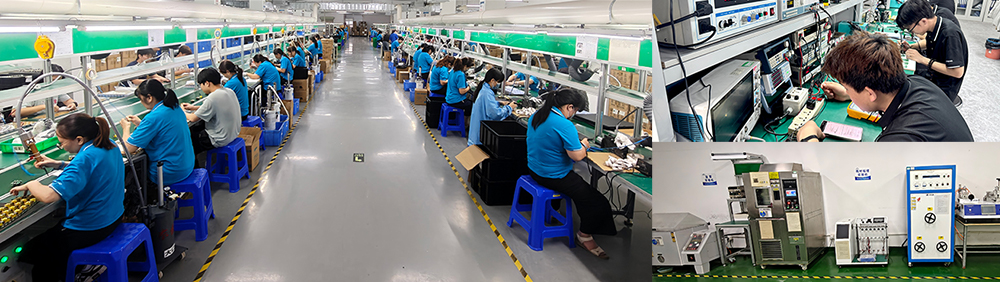
Professional charger factories focus not only on producing chargers but also on reducing failure rates before products ever reach customers.
In this article, we'll look inside how modern charger manufacturers reduce failure rates and why quality engineering has become one of the most important competitive advantages in the fast-charging industry.
What Is a Charger Failure Rate?
A charger failure rate refers to the percentage of products that develop defects during production, testing, shipment, or customer use.
Common charger failures include:
• USB-C port damage
• PD communication instability
• Overheating
• Component failure
• Transformer issues
• Capacitor degradation
• Solder joint cracking
• Protection circuit malfunction
For professional OEM charger manufacturers, reducing failure rates is one of the most important performance indicators.
Even a 1% improvement in reliability can significantly reduce:
• Warranty claims
• Product returns
• Customer complaints
• Brand reputation risks
For large distributors and retailers, failure rates often matter more than small differences in price.
Quality Starts Before Production Begins
One of the biggest misconceptions in manufacturing is that quality control starts at the end of production.
In reality, quality begins long before the first PCB enters the SMT line.
Professional charger factories reduce failures by controlling product quality from the design stage.
This includes:
• PCB architecture review
• Component selection
• Thermal simulation
• Power topology validation
• USB-C PD protocol verification
• Safety protection design
A well-designed charger naturally produces fewer failures because potential weaknesses are eliminated before mass production begins.
Component Selection Plays a Bigger Role Than Most People Realize
Not all electronic components are created equal.
Two chargers with identical specifications may contain completely different internal parts.
Professional charger manufacturers carefully evaluate:
• Capacitor lifespan
• Transformer quality
• Power IC reliability
• GaN transistor performance
• Connector durability
• Thermal material stability
For example, electrolytic capacitors often determine the long-term lifespan of a charger.
Higher-grade components generally provide:
• Better heat resistance
• Longer operating life
• Improved voltage stability
• Lower failure rates
This is one reason why extremely low-cost chargers often experience higher return rates.
SMT Precision Directly Affects Reliability
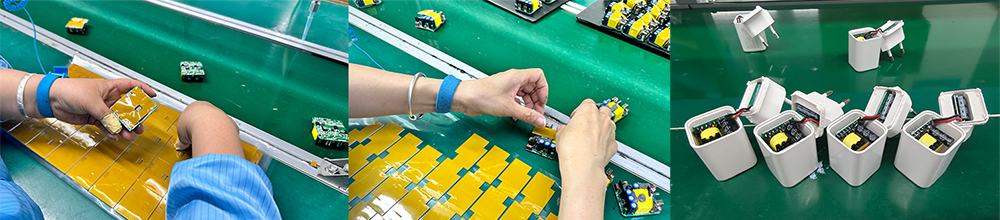
Many charger failures originate from manufacturing defects rather than design issues.
This is where SMT quality becomes critical.
Modern USB-C PD chargers and GaN chargers contain highly compact PCB layouts.
Even small assembly errors may eventually cause:
• Unstable charging
• Excessive heat generation
• Electrical leakage
• Intermittent operation
Professional factories therefore invest heavily in:
• Automated SMT placement
• Solder paste inspection
• AOI inspection systems
• Process monitoring
Maintaining SMT consistency is one of the most effective ways to reduce production defects.

Testing Is Where Hidden Defects Are Found
A charger may appear perfectly functional during a brief power-on test.
However, hidden defects often reveal themselves only under stress conditions.
This is why professional factories conduct multiple testing stages.
Typical charger testing includes:
• Functional testing
• USB-C PD testing
• PPS verification
• Aging testing
• Temperature rise testing
• Short-circuit testing
• Protection verification
The goal is simple:
Identify failures inside the factory instead of allowing customers to discover them later.
Reliability Engineering Is More Important Than Ever
Fast charging technology continues evolving rapidly.
Modern chargers are becoming:
• Smaller
• More powerful
• More compact
• Multi-port capable
A 140W PD3.1 charger today contains far more engineering complexity than a traditional 20W charger from several years ago.
This means reliability engineering is becoming increasingly important.
Professional charger manufacturers continuously analyze:
• Failure trends
• Thermal behavior
• Production data
• Field performance
• Customer feedback
to improve future products.
Reducing failure rates is not a one-time project.
It is an ongoing engineering process.
Why Quality Control Is a Competitive Advantage
Many buyers assume charger manufacturing is simply about producing products faster and cheaper.
In reality, the factories that consistently deliver low failure rates often have the strongest competitive advantage.
Reliable products create:
• Lower warranty costs
• Better customer reviews
• Higher reorder rates
• Stronger brand reputation
For OEM and ODM customers, quality control directly affects long-term business success.
This is why experienced buyers often ask detailed questions about:
• Testing procedures
• SMT processes
• Reliability systems
• Certification standards
instead of focusing solely on price.

How ZONSAN Controls Charger Quality
As a professional charger manufacturer with more than 16 years of experience, ZONSAN integrates quality control throughout the entire product lifecycle.
Rather than relying on final inspection alone, quality management begins during:
• Product development
• Component qualification
• PCB engineering
• SMT production
• Assembly
• Reliability testing
The factory performs comprehensive testing for:
• 20W USB-C chargers
• 25W Samsung chargers
• 35W GaN chargers
• 45W PPS chargers
• 65W laptop chargers
• 100W USB-C PD chargers
• 140W PD3.1 chargers
• Multi-port desktop chargers
Through engineering verification, automated inspection, aging testing, and thermal validation, ZONSAN continuously works to reduce product failure rates and improve long-term reliability for OEM and ODM customers worldwide.
As a professional charger manufacturer with more than 16 years of experience, ZONSAN integrates quality control throughout the entire product lifecycle.
Rather than relying on final inspection alone, quality management begins during:
• Product development
• Component qualification
• PCB engineering
• SMT production
• Assembly
• Reliability testing
The factory performs comprehensive testing for:
• 20W USB-C chargers
• 25W Samsung chargers
• 35W GaN chargers
• 45W PPS chargers
• 65W laptop chargers
• 100W USB-C PD chargers
• 140W PD3.1 chargers
• Multi-port desktop chargers
Through engineering verification, automated inspection, aging testing, and thermal validation, ZONSAN continuously works to reduce product failure rates and improve long-term reliability for OEM and ODM customers worldwide.

What Buyers Should Ask a Charger Factory
If you're sourcing chargers for your brand, don't only ask about price.
Ask questions such as:
• How do you control SMT quality?
• What aging tests do you perform?
• How is thermal performance verified?
• What is your quality inspection process?
• How do you reduce production defects?
• What certifications do your chargers meet?
The answers often reveal far more about a supplier's reliability than a quotation sheet ever can.
Final Thoughts
The difference between a reliable charger and an unreliable one is rarely visible from the outside.
What matters happens behind the scenes:
• Engineering design
• Component selection
• SMT precision
• Reliability testing
• Quality control systems
Professional charger factories invest heavily in these processes because reducing failure rates is essential for long-term product performance.
As charging technology continues advancing toward higher power and greater complexity, quality engineering will become even more important in determining which products succeed in the market.
FAQ
Q1: What is a charger failure rate?
A: A charger failure rate measures the percentage of chargers that develop defects during manufacturing or customer use.
Q2: What causes charger failures?
A: Common causes include poor component quality, manufacturing defects, overheating, unstable PCB design, and insufficient testing.
Q3: Why do some chargers last longer than others?
A: Long-lasting chargers typically use higher-quality components, better thermal design, stricter quality control, and more extensive reliability testing.
Q4: How do charger factories reduce failure rates?
A: Factories reduce failures through engineering validation, SMT inspection, aging testing, thermal testing, and continuous quality monitoring.
Q5: What tests are performed before chargers are shipped?
A: Professional factories often perform functional testing, PD protocol verification, aging tests, temperature rise tests, and safety protection testing.
Q6: Why is SMT quality important?
A: Poor SMT assembly can create solder defects, unstable connections, overheating, and premature product failure.
Q7: Does certification guarantee charger quality?
A: Certification verifies compliance with specific standards but does not automatically guarantee long-term reliability or manufacturing quality.
Q8: What should buyers ask a charger manufacturer?
A: Buyers should ask about testing procedures, quality control systems, reliability engineering, certifications, and failure rate management.
Learn more about how factories produce high-quality chargers
• Inside SMT Production for Fast Chargers.↗
• How Chargers Go Through Aging Tests Before Shipping.↗
If you're sourcing chargers for your brand, don't only ask about price.
Ask questions such as:
• How do you control SMT quality?
• What aging tests do you perform?
• How is thermal performance verified?
• What is your quality inspection process?
• How do you reduce production defects?
• What certifications do your chargers meet?
The answers often reveal far more about a supplier's reliability than a quotation sheet ever can.
Final Thoughts
The difference between a reliable charger and an unreliable one is rarely visible from the outside.
What matters happens behind the scenes:
• Engineering design
• Component selection
• SMT precision
• Reliability testing
• Quality control systems
Professional charger factories invest heavily in these processes because reducing failure rates is essential for long-term product performance.
As charging technology continues advancing toward higher power and greater complexity, quality engineering will become even more important in determining which products succeed in the market.
FAQ
Q1: What is a charger failure rate?
A: A charger failure rate measures the percentage of chargers that develop defects during manufacturing or customer use.
Q2: What causes charger failures?
A: Common causes include poor component quality, manufacturing defects, overheating, unstable PCB design, and insufficient testing.
Q3: Why do some chargers last longer than others?
A: Long-lasting chargers typically use higher-quality components, better thermal design, stricter quality control, and more extensive reliability testing.
Q4: How do charger factories reduce failure rates?
A: Factories reduce failures through engineering validation, SMT inspection, aging testing, thermal testing, and continuous quality monitoring.
Q5: What tests are performed before chargers are shipped?
A: Professional factories often perform functional testing, PD protocol verification, aging tests, temperature rise tests, and safety protection testing.
Q6: Why is SMT quality important?
A: Poor SMT assembly can create solder defects, unstable connections, overheating, and premature product failure.
Q7: Does certification guarantee charger quality?
A: Certification verifies compliance with specific standards but does not automatically guarantee long-term reliability or manufacturing quality.
Q8: What should buyers ask a charger manufacturer?
A: Buyers should ask about testing procedures, quality control systems, reliability engineering, certifications, and failure rate management.
Learn more about how factories produce high-quality chargers
• Inside SMT Production for Fast Chargers.↗
• How Chargers Go Through Aging Tests Before Shipping.↗