How Chargers Go Through Aging Tests Before Shipping
When consumers buy a USB-C charger, most people focus on charging speed, power output, or price.
But inside professional charger factories, one of the most important stages happens after production is already finished: Aging testing.
A charger may look perfect externally, but without proper reliability testing, hidden defects can still exist inside the product.
These defects may not appear immediately.
Instead, they often show up days, weeks, or months later as:
• Charger overheating
• Random charging interruption
• USB-C PD instability
• Abnormal shutdowns
• Coil noise
• Reduced charging speed
• Complete failure
This is why professional charger manufacturers perform aging tests before shipment.
For modern GaN chargers, PD3.1 chargers, PPS chargers, laptop chargers, and high-power multi-port chargers, aging verification has become even more important because internal thermal stress is much higher than in traditional chargers.
In this article, we will explain how charger aging tests work, why they matter, and how reliability engineering has become one of the biggest differences between professional charger factories and low-cost manufacturers.
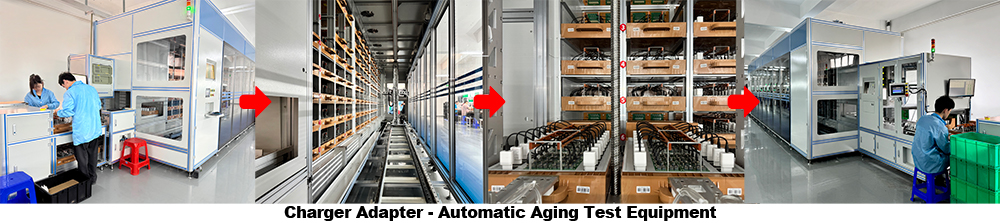
What Is an Aging Test for Chargers?
An aging test is a reliability verification process where chargers operate continuously under controlled electrical loads for extended periods of time.
The purpose is simple: Detect hidden failures before products reach customers.
During aging tests, chargers may run continuously for:
• Several hours
• Overnight
• 24 hours
• Or even longer for special projects
depending on product type and customer requirements.
Professional charger factories test products under realistic operating conditions to simulate long-term usage stress.
For example:
A 100W GaN charger may operate continuously near full load while engineers monitor:
• Temperature rise
• Voltage stability
• Current consistency
• USB-C PD communication
• Thermal protection behavior
This process helps identify unstable products before shipment.
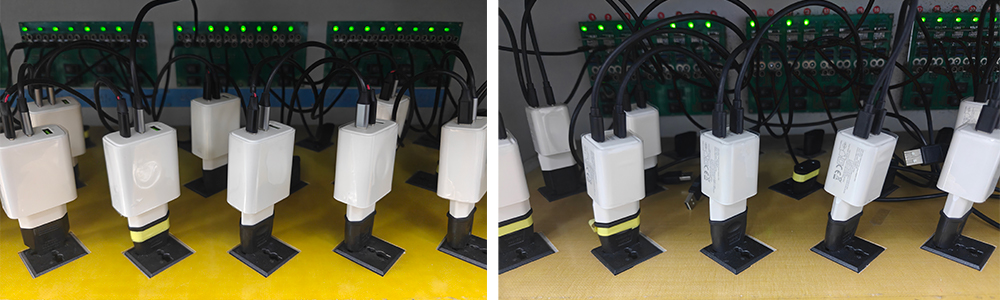
Why Modern GaN Chargers Need More Reliability Testing
Traditional low-power chargers generated relatively limited heat.
Modern fast chargers are very different.
Today’s chargers are becoming:
• Smaller
• More powerful
• More compact
• More thermally dense
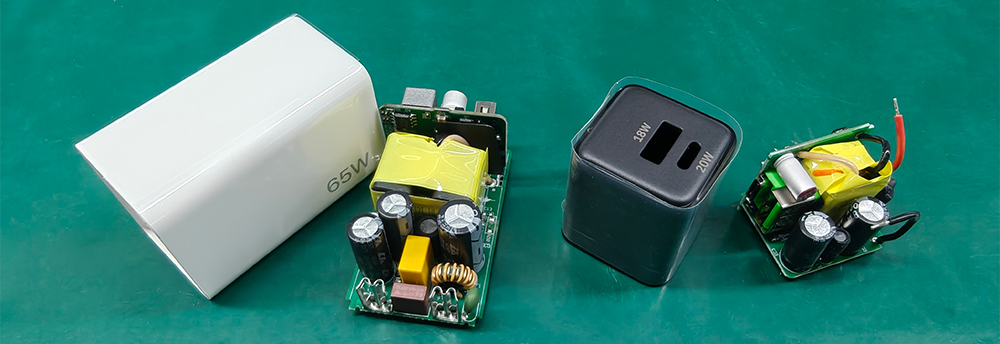
A modern 140W PD3.1 GaN charger may contain:
• Multiple power ICs
• High-frequency switching circuits
• Multi-port power allocation systems
• Compact transformers
• Dense PCB layouts
all packed into a small housing.
This creates significantly higher thermal stress inside the charger.
As a result, aging tests have become increasingly important for:
• Thermal stability verification
• Long-term reliability
• Safety protection validation
• USB-C protocol stability
• Component consistency
Without proper testing, small manufacturing defects can eventually turn into field failures.
What Happens During Charger Aging Tests?
Professional charger aging tests involve much more than simply “plugging in chargers.”
Inside professional USB-C charger factories, engineers monitor multiple operating conditions simultaneously.
1. Continuous Full-Load Operation
Chargers operate under heavy electrical load for extended periods.
For example:
• 65W chargers may run near 60W output
• 100W chargers may run near 95W output
• 140W chargers may run near maximum PD3.1 load
This helps simulate real-world charging stress.
The goal is to identify products that may fail under prolonged thermal conditions.
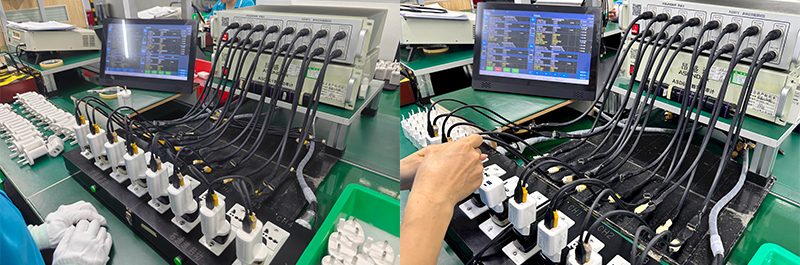
2. Thermal Monitoring
Heat is one of the biggest enemies of charger reliability.
During aging tests, engineers closely monitor:
• Surface temperature
• Internal thermal hotspots
• Transformer heat
• GaN IC temperature
• USB-C port temperature
Factories often use thermal cameras and temperature sensors to analyze heat distribution across the charger.
This is especially important for compact GaN chargers because internal heat concentration is much higher.
3. USB-C PD Protocol Verification
Modern chargers are no longer simple power adapters.
USB-C PD chargers constantly communicate with devices using intelligent power negotiation protocols.
During aging tests, engineers verify:
• PD voltage switching
• PPS adjustment stability
• AVS communication
• Multi-port power allocation
• Device compatibility
This becomes especially important for:
• MacBook chargers
• Samsung PPS chargers
• AI laptop chargers
• Gaming laptop chargers
• Multi-device desktop chargers
Protocol instability may not appear during short tests, but aging tests often reveal communication problems after prolonged operation.
4. Protection System Verification
Professional charger factories also verify safety protection systems during aging tests.
This includes:
• Over-current protection
• Over-voltage protection
• Short-circuit protection
• Over-temperature protection
• Auto recovery behavior
Reliable chargers must react correctly during abnormal operating conditions.
Protection systems are especially important for high-power PD chargers because electrical stress levels are much higher than in low-power chargers.
Leggi di più
Why Cheap Chargers Often Skip Proper Aging Tests
Aging tests require:
• Time
• Equipment
• Electricity
• Engineering systems
• Production space
For low-cost factories, these processes increase manufacturing cost.
As a result, some suppliers shorten testing procedures or skip parts of reliability verification entirely.
This may reduce production cost temporarily, but it often leads to:
• Higher return rates
• Unstable charging
• Overheating problems
• Shortened product lifespan
• Poor long-term reliability
This is one reason why two chargers with similar specifications can perform very differently in real-world usage.
How ZONSAN Performs Charger Aging Tests
As a professional USB-C charger manufacturer, ZONSAN places strong emphasis on reliability engineering and long-term product stability.
The factory performs aging verification on various charging products including:
• 20W USB-C chargers
• 35W GaN chargers
• 65W laptop chargers
• 100W PD chargers
• 140W PD3.1 chargers
• PPS fast chargers
• Multi-port desktop chargers
ZONSAN's reliability testing procedures include:
• Continuous load testing
• Thermal monitoring
• PD protocol verification
• Temperature rise analysis
• Multiple protection tests
• Stability verification
The engineering team continuously optimizes thermal architecture, PCB design, and power stability to improve long-term reliability for OEM and ODM customers worldwide.

Reliability Engineering Is Becoming More Important
As charging technology continues evolving, reliability engineering is becoming one of the most important competitive advantages in the charger industry.
Future chargers will continue moving toward:
• Higher power density
• Smaller form factors
• Multi-port charging
• AI-device compatibility
• Higher thermal loads
This means aging tests and reliability verification will become even more important in future charger manufacturing.
For professional charger factories, reliability engineering is no longer optional.
It is becoming a core part of product development itself.
Final Thoughts
Most consumers never see what happens inside a charger factory before products are shipped.
But behind every reliable USB-C charger is a long process of thermal verification, electrical stress testing, protocol analysis, and aging validation.
As modern GaN chargers become more powerful and compact, reliability testing is becoming one of the most important parts of charger engineering.
For OEM buyers, distributors, and brand owners, understanding how a charger factory performs aging tests is increasingly important when evaluating long-term product quality.
Because in fast charging technology, reliability is built long before the product reaches the customer.
FAQ
Q1: What is a charger aging test?
A: A charger aging test is a reliability testing process where chargers operate continuously under electrical load to detect hidden defects before shipment.
Q2: Why are aging tests important for GaN chargers?
A: GaN chargers generate higher thermal density and operate at higher switching frequencies, making reliability verification more critical.
Q3: How long do charger aging tests last?
A: Depending on product requirements, aging tests may last several hours, overnight, or longer for special OEM projects.
Q4: What problems can aging tests detect?
A: Aging tests can identify overheating, unstable charging, voltage fluctuations, PD communication failures, and component instability.
Q5: Why do cheap chargers fail more often?
A: Low-cost chargers may use lower-quality components or incomplete reliability testing procedures, increasing long-term failure risk.
Q6: What equipment is used during aging tests?
A: Factories use electronic loads, thermal cameras, USB-C PD analyzers, temperature sensors, and automated monitoring systems.
Q7: Why is thermal testing important for chargers?
A: Heat directly affects charger lifespan, safety, efficiency, and charging stability.
Q8: What makes a reliable charger factory?
A: Reliable factories invest heavily in engineering systems, thermal verification, protocol testing, SMT precision, and aging reliability procedures.
Learn more about the charger manufacturing process