How USB-C Chargers Are Manufactured Step by Step
Most people use a USB-C charger every day without ever thinking about how it is made.
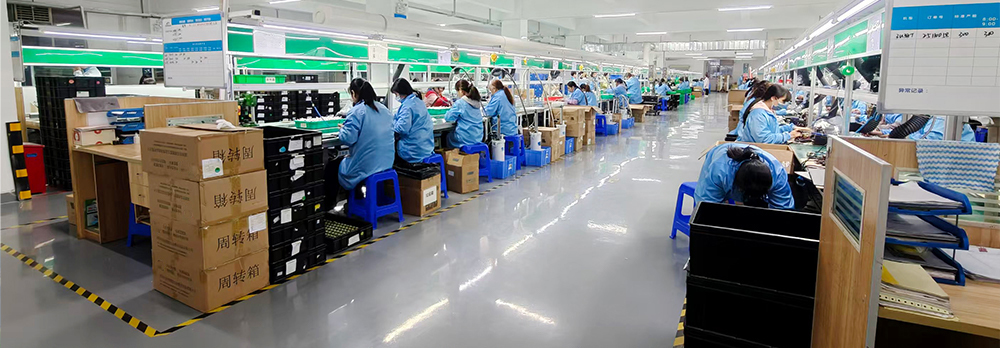
A charger may look simple from the outside, but behind that compact shell is a surprisingly detailed manufacturing process involving PCB engineering, SMT precision production, thermal design, safety testing, protocol verification, and reliability inspection.
As fast charging technology continues evolving from 20W and 30W smartphone chargers to 100W, 140W, and PD3.1 laptop chargers, manufacturing standards inside professional charger factories have become far more demanding than they were just a few years ago.
Today, a high-quality USB-C fast charger is not only about charging speed. It is about thermal stability, long-term reliability, power efficiency, and safe power delivery across different devices.
In this article, we will walk through the actual manufacturing process of a modern USB-C charger — step by step — from raw PCB boards to finished retail packaging.
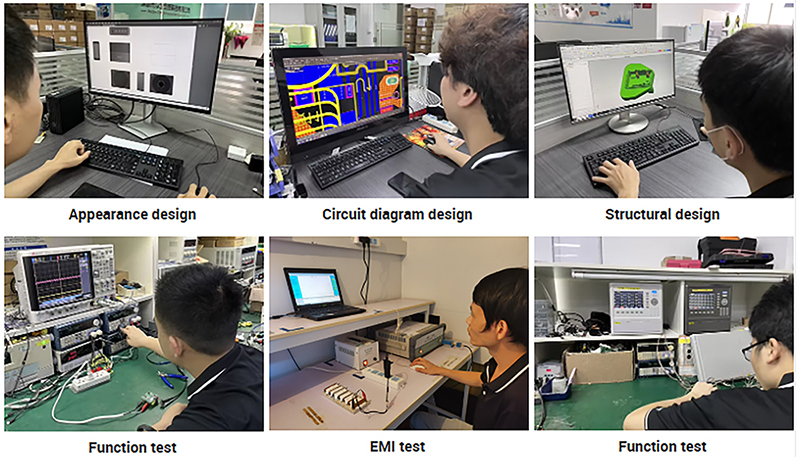
Step 1 — Electronic Engineering and PCB Development
Every charger begins with engineering design.
Before manufacturing starts, engineers must first develop the charger’s internal electronic architecture based on:
• Output power requirements
• USB-C PD standards
• PPS fast charging support
• Thermal limitations
• Safety certifications
• Multi-device compatibility
For modern GaN chargers and PD3.1 chargers, PCB layout design becomes extremely important because internal space is limited while power density continues increasing.
Engineers carefully optimize:
• PCB trace routing
• Component spacing
• Transformer positioning
• Heat dissipation paths
• EMI suppression circuits
• USB-C protocol communication
A well-designed PCB directly affects:
• Charging stability
• Heat generation
• Power efficiency
• roduct lifespan
• Certification success rate
In many charger factories, PCB optimization may continue through multiple engineering revisions before final production approval.
Step 2 — SMT Component Placement
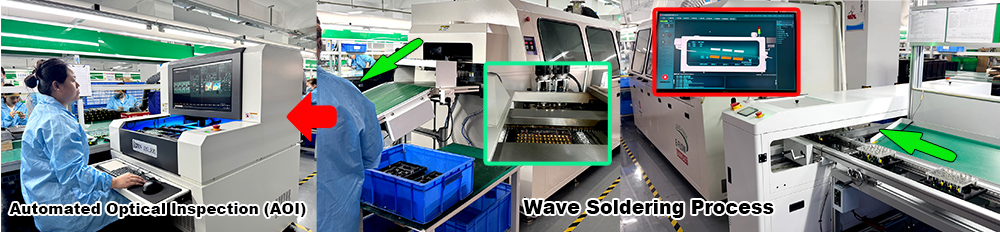
Once PCB design is finalized, production moves into SMT manufacturing.
SMT stands for Surface Mount Technology, which is one of the most important production stages for fast chargers.
At this stage, high-speed SMT machines automatically place electronic components onto the PCB with extreme precision.
These components include:
• GaN power ICs
• Capacitors
• MOSFETs
• USB-C PD controllers
• Transformers
• Synchronous rectifiers
• Protection chips
For modern 65W, 100W, and 140W chargers, SMT accuracy is critical because power density inside the charger is very high.
Even tiny soldering defects can eventually lead to:
• Overheating
• Voltage instability
• Charging interruptions
• Reduced product lifespan
This is why professional charger manufacturers use AOI (Automated Optical Inspection) systems after SMT assembly to inspect every PCB automatically.
Step 3 — Reflow Soldering and PCB Inspection
After components are mounted, the PCB enters a reflow soldering oven.
Inside the reflow system, carefully controlled temperatures melt solder paste and permanently connect electronic components to the PCB.
Temperature control during reflow soldering is extremely important.
If the temperature profile is too high or too low, it may affect:
• Solder joint reliability
• Component lifespan
• PCB warping
• Electrical performance
After soldering is completed, engineers inspect the PCB again for:
• Cold solder joints
• Misaligned components
• Insufficient solder
• Short circuits
• Surface defects
For high-end charger manufacturing, multiple inspection stages are usually performed before the PCB moves to final assembly.
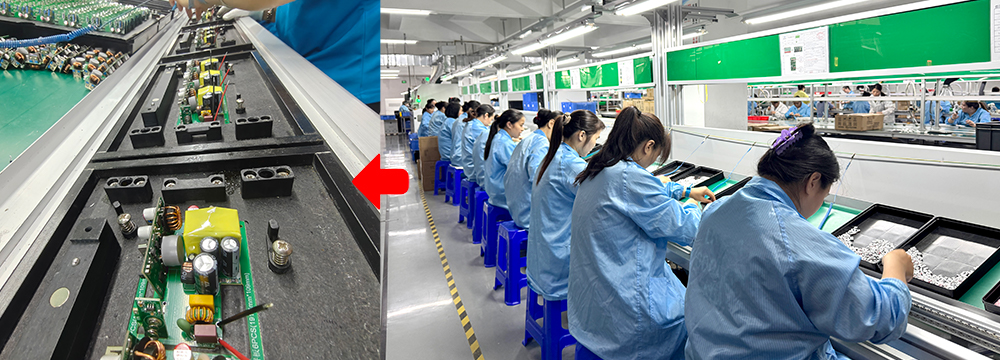
Step 4 — Transformer Assembly and Internal Wiring
The transformer is one of the most important components inside a fast charger.
It controls energy conversion efficiency and plays a major role in voltage regulation and thermal performance.
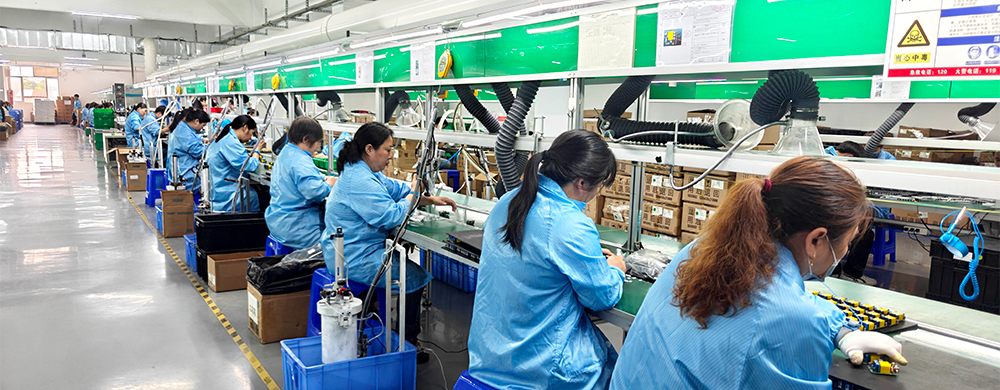
Although many production stages are automated today, transformer assembly and internal wiring often still require skilled manual work.
Engineers carefully inspect:
• Transformer positioning
• High-voltage insulation
• Internal cable routing
• Thermal pad placement
• Safety spacing
• Potting areas
This stage becomes especially important for compact multi-port GaN chargers where internal space is extremely limited.
Poor internal layout can trap heat inside the charger and reduce long-term reliability.
Step 5 — Housing Assembly and Exterior Finishing
Once internal assembly is completed, the charger moves to housing installation.
The external housing of a charger is more than cosmetic design. It also affects:
• Structural durability
• Heat dissipation
• Plug stability
• Fire resistance
• User safety
Most professional USB-C charger manufacturers use flame-retardant PC materials that comply with CE, FCC, RoHS, ETL, or KC safety standards.
At this stage, factories also inspect:
• USB-C port alignment
• Surface finish quality
• Plug fitting accuracy
• Housing sealing
• Branding and logo printing
For OEM and ODM charger manufacturing, customized colors, packaging, and logos are also integrated during this stage.
Step 6 — Aging Test and Reliability Testing
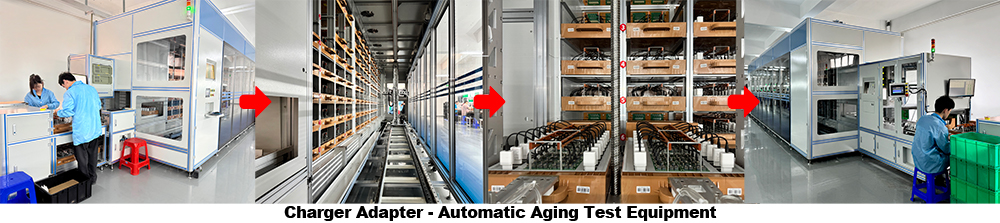
Before shipment, professional charger factories perform aging tests on every production batch.
This is one of the most important quality control procedures in fast charger manufacturing.
During aging tests, chargers run continuously under electrical load for several hours to verify stability and detect early failures.
The purpose is to identify issues such as:
• Abnormal heat generation
• Voltage fluctuations
• Component instability
• PD handshake failures
• Unexpected shutdowns
For high-power PD3.1 chargers and multi-port GaN chargers, aging tests are especially important because thermal stress is much higher than in low-power chargers.
Many professional charger factories also perform additional tests including:
• Hi-pot testing
• Short-circuit testing
• Over-current testing
• Temperature rise testing
• Drop testing
• EMI testing
Step 7 — Final Inspection and Packaging
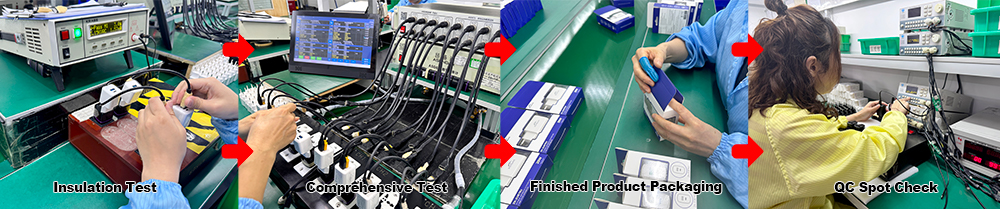
Before products leave the factory, final quality inspections are performed.
This includes:
• Appearance inspection
• USB-C charging verification
• Power output testing
• Label checking
• Packaging inspection
Professional charger manufacturers also verify that:
• Power ratings match specifications
• USB-C protocols work correctly
• Ports remain mechanically stable
• Packaging complies with export standards
Only after passing final inspection can chargers move into shipment preparation.
Why Charger Manufacturing Quality Matters
Two chargers may advertise the same specifications online:
• 100W USB-C charger
• PPS fast charging
• GaN technology
• Multi-port charging
But their internal engineering and manufacturing quality can be completely different.
A professionally manufactured charger typically provides:
• Better heat dissipation
• More stable charging
• Higher efficiency
• Better safety protection
• Longer lifespan
• Lower failure rates
This is why professional OEM charger factories invest heavily in engineering optimization, SMT precision, thermal testing, and production consistency.
Read More
How ZONSAN Manufactures USB-C Fast Chargers
As a professional USB-C charger manufacturer with 16 years of experience, ZONSAN focuses heavily on charger engineering, SMT precision manufacturing, thermal optimization, and long-term reliability.
The company's production system integrates:
• Automated SMT production
• AOI inspection systems
• Aging test verification
• PD protocol testing
• Thermal testing procedures
• Multiple quality inspection stages
ZONSAN manufactures various charging solutions including:
• 20W USB-C chargers
• 35W GaN chargers
• 65W laptop chargers
• 100W PD chargers
• 140W PD3.1 chargers
• PPS fast chargers
• Multi-port desktop chargers
for OEM and ODM customers worldwide.

Read More
Final Thoughts
Modern USB-C chargers may appear simple, but behind every reliable charger is a highly engineered manufacturing system involving PCB development, SMT precision assembly, thermal engineering, safety verification, and reliability testing.
As charging technology continues evolving toward higher power and smaller sizes, charger manufacturing standards will become even more demanding.
For this reason, choosing the right charger manufacturer is no longer only about pricing. Engineering capability, testing standards, production consistency, and long-term reliability are becoming far more important in today’s fast-charging industry.
FAQ
Q1: How are USB-C chargers manufactured?
A: USB-C chargers are manufactured through multiple stages including PCB design, SMT assembly, reflow soldering, transformer installation, housing assembly, aging tests, and final inspection.
Q2: What is SMT in charger manufacturing?
A: SMT (Surface Mount Technology) is the automated process of placing miniature electronic components onto a PCB using high-speed precision machines.
Q3: Why are aging tests important for chargers?
A: Aging tests help detect early failures, thermal instability, and charging issues before products are shipped to customers.
Q4: What components are inside a USB-C charger?
A: Typical components include transformers, capacitors, GaN ICs, MOSFETs, USB-C PD controllers, protection chips, and thermal materials.
Q5: Why do GaN chargers require more advanced production?
A: GaN chargers operate at higher frequencies and power densities, requiring more precise thermal design, PCB layout, and manufacturing accuracy.
Q6: What safety tests do charger factories perform?
A: Professional charger factories perform thermal tests, short-circuit tests, EMI tests, hi-pot tests, aging tests, and protocol verification.
Q7: What makes a high-quality USB-C charger factory?
A: A reliable charger factory usually has strong engineering capability, SMT precision systems, automated testing equipment, and strict quality control procedures.
Q8: Why can two chargers with the same wattage perform differently?
A: Performance differences often come from PCB quality, thermal architecture, component selection, testing standards, and manufacturing consistency.