iPhone-Ladegerät-Leitfaden 2026: Vom 5-W-Adapter zur GaN-, PD- und AVS-Schnellladetechnologie (Teil 2)
Read:iPhone Charger Guide 2026: From 5W Adapter to GaN, PD and AVS Fast Charging Technology (Part 1)↗
6. iPhone 18 and iPhone 18 Pro Max Charging Technology: How It May Change the Charger Market
The upcoming iPhone 18 series has already created significant discussion among Apple users and the charging industry.
Searches such as:
• iphone 18 charger
• iphone 18 pro max charger
• new iphone 18 charger
• iphone 18 charging technology
continue to grow as consumers prepare for the next generation of Apple devices.
(Note: Final specifications depend on Apple's official release information.)
Expected Charging Trends for iPhone 18 Series
Although exact charging specifications have not been officially confirmed, several industry trends suggest future iPhone charging will continue moving toward:
Higher Charging Efficiency
Future smartphones are expected to focus less on simply increasing wattage and more on:
• reducing charging losses
• improving thermal control
• extending battery lifespan
Wider Adoption of Advanced USB-C Charging
USB-C has become the foundation of Apple's future charging ecosystem.
This benefits:
• USB-C PD chargers
• GaN chargers
• multi-port desktop chargers
• travel chargers
Growing Demand for Compact High-Power Chargers
As users own more devices, they prefer one charger for everything.
A modern Apple user may carry:
• iPhone, Apple Watch, AirPods, iPad, MacBook
This increases demand for:
• 65W GaN chargers
• 100W GaN chargers
• desktop multi-port chargers
• display chargers
How iPhone 18 Could Impact Charger Manufacturers
For charger brands and OEM suppliers, future iPhone upgrades create new opportunities.
The market is moving toward:
1. GaN Technology
• GaN allows manufacturers to create:
• smaller chargers
• higher power density
• better thermal performance
2. Intelligent Charging Protocols
Future chargers will need stronger compatibility with:
• USB PD, PD 3.1, PPS, AVS
3. Better User Experience
Premium chargers increasingly include:
• charging displays
• temperature monitoring
• multiple USB-C ports
• customizable designs
7. Understanding AVS Charging Protocol: The Next Step Beyond PD and PPS
As charging power increases, traditional charging methods face new challenges:
• More heat
• Higher conversion loss
• More complex power management
This is where newer charging technologies such as AVS (Adjustable Voltage Supply) become important.
What Is AVS Charging?
AVS is an advanced voltage adjustment technology introduced as part of the USB Power Delivery ecosystem.
Unlike traditional fixed voltage charging, AVS allows more flexible voltage adjustment between the charger and device.
The goal is:
• Better power efficiency
• Reduced energy loss
• More precise voltage control
• Improved high-power charging performance
AVS is especially important for:
• high-power USB-C chargers
• laptop chargers
• advanced GaN chargers
• future fast charging products
AVS vs QC vs PD vs PD 3.1 vs PPS Charging Protocol Comparison
| Charging Protocol | Maximum Power Range | Main Application | Key Advantage |
| QC (Quick Charge) | Up to around 100W | Android smartphones | Qualcomm ecosystem compatibility |
| USB PD | Up to 240W | Universal USB-C charging | Wide device compatibility |
| USB PD 3.1 | Up to 240W | Laptops and high-power devices | Extended Power Range (EPR) support |
| PPS | Commonly up to 100W+ | Samsung and Android fast charging | Dynamic voltage adjustment |
| AVS | High-power USB-C applications | Next-generation charging | More precise voltage control and efficiency |
AVS vs PPS: What Is the Difference?
Many users confuse AVS and PPS because both provide dynamic voltage adjustment.
However, their roles are different.
PPS
Programmable Power Supply is widely used today.
Common applications:
• Samsung Galaxy fast charging
• Android smartphones
• USB-C PD chargers
AVS
AVS focuses more on:
• higher power levels
• improved efficiency
• future USB-C charging systems
Both technologies aim to make charging smarter and more efficient.
Weiterlesen
Why GaN + AVS Chargers Could Become More Important
The combination of:
GaN technology + advanced charging protocols
represents the future direction of charger development.
GaN improves:
• hardware efficiency
• size reduction
• thermal performance
AVS improves:
• voltage adjustment
• power delivery efficiency
• high-power charging management
Together, they help create chargers that are:
• smaller, cooler, smarter, more powerful
8. Zonsan AVS GaN Charger Factory: Developing the Next Generation of iPhone Charging Solutions
As the iPhone ecosystem continues moving toward USB-C, higher charging efficiency, and multi-device compatibility, the charger industry is also experiencing significant changes.
For charger manufacturers, the challenge is no longer simply producing a charger with higher wattage.
Modern charger development requires a balance between:
• Power output
• Charging protocol compatibility
• Thermal management
• Compact design
• Safety standards
• Long-term reliability
At Zonsan, the focus is on developing and manufacturing advanced charging solutions including:
• GaN chargers
• USB-C PD chargers
• PPS fast chargers
• AVS-compatible chargers
• Multi-port desktop chargers
• Custom OEM charger solutions
Zonsan GaN Charger Manufacturing Capability
As a professional charger manufacturer, Zonsan develops charging products designed for global markets, supporting different applications including:
• Smartphone charging, Laptop charging, Tablet charging, Travel charging, Desktop charging solutions
The product range covers:
1. Compact wall chargers
2. Foldable plug chargers
3. Display GaN chargers
4. Multi-port USB-C chargers
5. High-power GaN chargers
Power output solutions include:
• 20W, 30W, 45W, 65W, 67W, 100W, 120W, 140W, Up to 240W charging solutions.
Why OEM Brands Choose GaN Charger Manufacturers
The iPhone accessory market is highly competitive.
For brands, retailers, and distributors, selecting the right charger factory is not only about price.
A reliable OEM charger supplier should provide:
1. Advanced Charging Technology Support
Modern iPhone-compatible chargers require support for:
• USB PD, PD 3.1, QC, AVS technology development
This ensures compatibility with:
iPhone 15 series
iPhone 16 series
iPhone 17 series
Future USB-C devices
2. OEM and Custom Charger Development
Different markets have different requirements.
Professional charger manufacturers can provide customization options including:
1. Product color
2. Logo printing
3. Packaging design
4. Cable customization
5. Plug types
6. Private mold development
For example:
A European retailer may require:
• EU plug charger with CE RoHS ErP certification
• recyclable packaging
A Korean customer may require:
• Korean plug design Charger with KC/KCC certification
A US customer may require:
• US plug charger with FCC ETL or UL certification
A UK customer may require:
• UK plug charger with UKCA certification
3. Strict Quality Control and Safety Standards
A charger is a power product.
Quality control is one of the most important factors affecting:
• user safety
• product lifetime
• brand reputation
A professional charger factory should conduct testing including:
1. Input voltage testing
2. Output power testing
3. Charging protocol testing
4. Temperature testing
5. Aging testing
6. Safety protection testing
Common international certifications include:
• CE, RoHS, FCC, ETL, KC, KCC, CB, ERP, GS, EAC, UKCA, UL
9. How to Choose the Best iPhone Charger: Consumer Guide and B2B Buyer Guide
Choosing the right charger depends on the user's needs.
There is no single "best charger" for everyone.
For Everyday iPhone Users
A 20W–30W USB-C PD charger is usually the best choice.
Advantages:
1. Affordable
2. Compact
3. Fast enough for daily charging
4. Compatible with most iPhone models
For iPhone + iPad Users
A 45W GaN charger provides more flexibility.
It can support:
1. iPhone fast charging
2. iPad charging
3. AirPods charging
For Apple Ecosystem Users
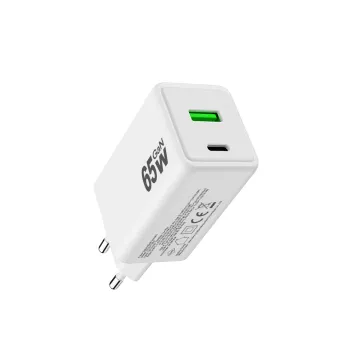
A 65W GaN charger is often the most practical option.
One charger can support: All Apple iPhone Phone Model, iPad, MacBook Air, accessories
For Business Travelers
A multi-port GaN charger is ideal.
Features to consider:
• Multiple USB-C ports
• Foldable plug
• Compact design
• International plug compatibility
For Charger Brands and Wholesalers
The market opportunity is shifting toward:
Premium GaN Chargers
Customers increasingly prefer:
1. Smaller size
2. Higher power
3. Better design
Display Chargers
Charging displays are becoming popular because users want:
1. Real-time power information
2. Charging status visibility
3. Better user experience
Custom OEM Chargers
Brands are looking for:
1. Unique industrial design
2. Private labeling
3. Regional certification support
Frequently Asked Questions About iPhone Chargers
Q1: Do I need Apple's original charger for my iPhone?
No. Certified third-party chargers can safely charge iPhones.
Important factors include:
1. Safety certification
2. PD compatibility
3. Reliable manufacturer quality
Q2: Is a GaN charger better for iPhone?
GaN chargers offer several advantages:
1. Smaller size
2. Higher efficiency
3. Better power density
4. Lower heat generation
They are especially useful for users with multiple devices.
Q3: What is the difference between PD and PPS chargers?
USB PD is a universal USB-C charging standard.
PPS is a more flexible charging technology that allows dynamic voltage adjustment.
Many modern fast chargers support both PD and PPS.
Q4: What is an AVS charger?
AVS (Adjustable Voltage Supply) is an advanced charging technology designed for more precise voltage control.
It is important for future high-power USB-C charging solutions.
Q5: Will iPhone 18 require a new charger?
Most existing USB-C chargers are expected to remain compatible.
However, future iPhone models may benefit from newer chargers with improved efficiency and higher charging performance.
Q6: What watt charger should I buy for iPhone?
Recommended choices:
20W–30W: iPhone only
45W: iPhone + tablet
65W: iPhone + laptop
100W+: multiple high-power devices
Conclusion: The Future of iPhone Charging Is Smaller, Smarter, and More Powerful
The evolution of iPhone chargers reflects the development of the smartphone industry itself.
From the early 5W adapter to today's GaN, PD, PPS, and AVS charging technologies, chargers have become more intelligent, efficient, and versatile.
For consumers, choosing the right charger means looking beyond wattage.
The most important factors are:
1. Charging protocol compatibility
2. Safety certification
3. Product quality
4. Real usage requirements
For charger brands, OEM buyers, and wholesalers, the future opportunity lies in developing:
1. High-quality GaN chargers
2. USB-C PD solutions
3. Multi-port charging products
4. Advanced AVS-compatible chargers
As Apple continues expanding the USB-C ecosystem, the demand for innovative iPhone chargers, GaN chargers, and OEM charging solutions will continue growing globally.
Recommended USB Factory
• How a USB-C Charger Is Designed.↗
• How Charger Manufacturers Maintain Certification Compliance After Mass Production.↗
• Inside Temperature Rise Testing for Fast Chargers.↗