Inside Temperature Rise Testing for Fast Chargers
One of the most common questions consumers ask is surprisingly simple:
> Why does my charger get hot?
Whether it's a 20W phone charger, a 45W PPS charger, a 65W GaN charger, or a 140W PD3.1 laptop charger, heat is an unavoidable part of power conversion.
In fact, every charger generates heat.
The real question isn't whether a charger becomes warm.
The real question is:
> How much heat is acceptable?
And more importantly:
> How do charger manufacturers verify that a charger remains safe under real-world operating conditions?
This is where temperature rise testing becomes critical.
For professional charger manufacturers, temperature rise testing is one of the most important reliability and safety evaluations performed before mass production.
In this article, we'll explore how fast charger temperature testing works, what engineers measure, and why thermal performance plays such a major role in charger quality.
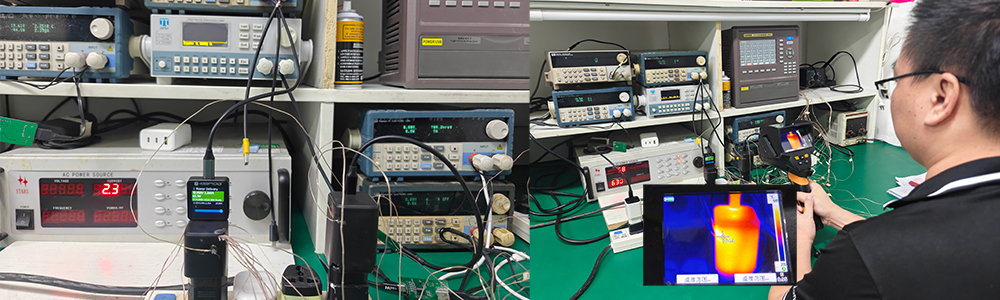
What Is Temperature Rise Testing?
Temperature rise testing measures how much a charger's temperature increases while operating under specified conditions.
Unlike a simple functional test, temperature testing focuses on thermal behavior during sustained operation.
Engineers evaluate:
• Surface temperature
• Internal temperature
• Component hotspots
• Thermal distribution
• Housing temperature
The objective is not to eliminate heat.
That would be impossible.
Instead, the goal is to ensure temperatures remain within safe design limits.
Every professional charger factory performs thermal validation because excessive heat is one of the leading causes of long-term reliability problems.
Why Chargers Naturally Generate Heat
Many consumers believe a quality charger should remain completely cool.
In reality, this is impossible.
Whenever electrical energy is converted, some energy is lost as heat.
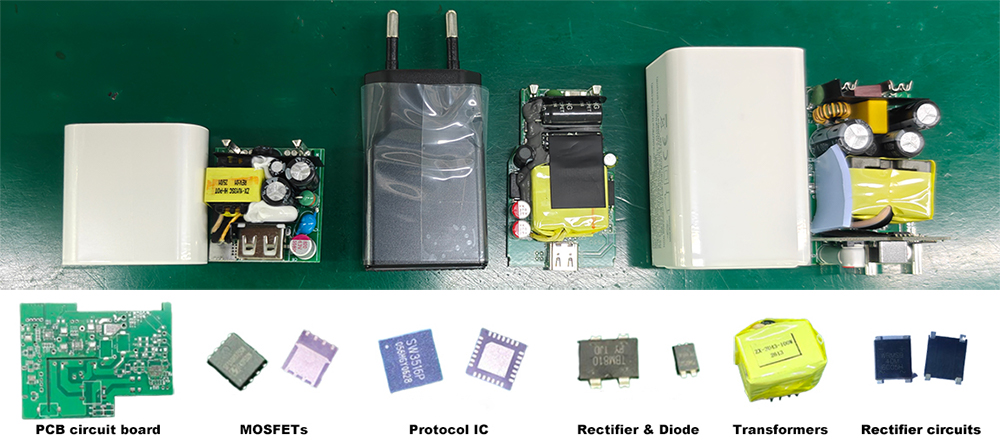
Inside a modern USB-C charger, heat is generated by:
• Power ICs
• Transformers
• MOSFETs
• GaN transistors
• Rectifier circuits & diode
Higher-power chargers naturally produce more thermal energy.
For example:
• 20W charger
• 25W charger
• 35W charger
• 45W charger
• 65W charger
• 100W charger
• 140W charger
all operate under different thermal conditions.
The challenge for engineers is not avoiding heat generation.
The challenge is controlling it effectively.
Why Heat Matters So Much
Heat affects nearly every aspect of charger performance.
Higher temperatures can accelerate:
• Capacitor aging
• Material degradation
• Solder fatigue
• Efficiency loss
• Component stress
Over time, excessive heat may reduce:
• Charger lifespan
• Charging stability
• Reliability
• Safety margins
This is why thermal engineering has become one of the most important disciplines in modern charger development.
For fast chargers, heat management often determines whether a product performs reliably for years or fails prematurely.
How Temperature Rise Testing Is Performed
Professional charger manufacturers typically test products under full-load operating conditions.
The charger is connected to an electronic load that continuously draws power.
For example:
A 65W charger may operate at:
• 65W output
• Extended duration
• Controlled ambient temperature
Engineers monitor temperature continuously throughout the test.
Measurements are usually taken at:
• USB-C ports
• Housing surfaces
• Internal transformers
• Power devices
• Thermal hotspots
Testing often continues for several hours to simulate sustained real-world operation.
The real question isn't whether a charger becomes warm.
The real question is:
> How much heat is acceptable?
And more importantly:
> How do charger manufacturers verify that a charger remains safe under real-world operating conditions?
This is where temperature rise testing becomes critical.
For professional charger manufacturers, temperature rise testing is one of the most important reliability and safety evaluations performed before mass production.
In this article, we'll explore how fast charger temperature testing works, what engineers measure, and why thermal performance plays such a major role in charger quality.
What Is Temperature Rise Testing?
Temperature rise testing measures how much a charger's temperature increases while operating under specified conditions.
Unlike a simple functional test, temperature testing focuses on thermal behavior during sustained operation.
Engineers evaluate:
• Surface temperature
• Internal temperature
• Component hotspots
• Thermal distribution
• Housing temperature
The objective is not to eliminate heat.
That would be impossible.
Instead, the goal is to ensure temperatures remain within safe design limits.
Every professional charger factory performs thermal validation because excessive heat is one of the leading causes of long-term reliability problems.
Why Chargers Naturally Generate Heat
Many consumers believe a quality charger should remain completely cool.
In reality, this is impossible.
Whenever electrical energy is converted, some energy is lost as heat.
Inside a modern USB-C charger, heat is generated by:
• Power ICs
• Transformers
• MOSFETs
• GaN transistors
• Rectifier circuits & diode
Higher-power chargers naturally produce more thermal energy.
For example:
• 20W charger
• 25W charger
• 35W charger
• 45W charger
• 65W charger
• 100W charger
• 140W charger
all operate under different thermal conditions.
The challenge for engineers is not avoiding heat generation.
The challenge is controlling it effectively.
Why Heat Matters So Much
Heat affects nearly every aspect of charger performance.
Higher temperatures can accelerate:
• Capacitor aging
• Material degradation
• Solder fatigue
• Efficiency loss
• Component stress
Over time, excessive heat may reduce:
• Charger lifespan
• Charging stability
• Reliability
• Safety margins
This is why thermal engineering has become one of the most important disciplines in modern charger development.
For fast chargers, heat management often determines whether a product performs reliably for years or fails prematurely.
How Temperature Rise Testing Is Performed
Professional charger manufacturers typically test products under full-load operating conditions.
The charger is connected to an electronic load that continuously draws power.
For example:
A 65W charger may operate at:
• 65W output
• Extended duration
• Controlled ambient temperature
Engineers monitor temperature continuously throughout the test.
Measurements are usually taken at:
• USB-C ports
• Housing surfaces
• Internal transformers
• Power devices
• Thermal hotspots
Testing often continues for several hours to simulate sustained real-world operation.
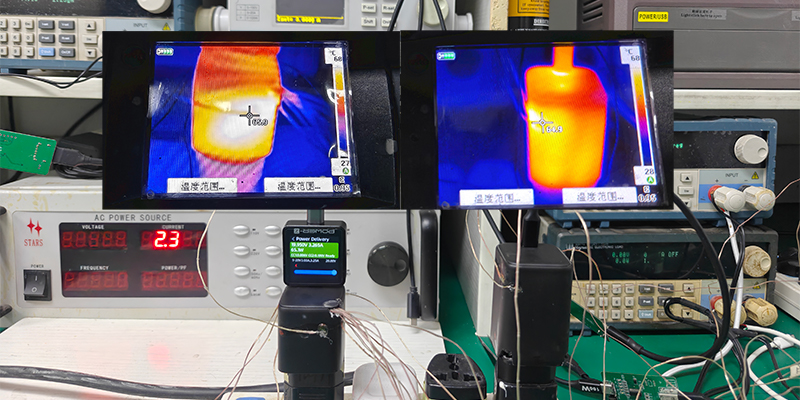
Thermal Cameras Reveal What the Eye Cannot See
One of the most useful tools in charger thermal engineering is the infrared thermal camera.
A charger may appear normal externally.
However, internal hotspots can remain invisible to the naked eye.
Thermal cameras allow engineers to identify:
• Localized overheating
• Uneven heat distribution
• PCB hotspots
• Component thermal stress
These insights help engineers optimize:
• PCB layouts
• Component placement
• Thermal pads
• Internal structures
Many charger design improvements begin with thermal imaging analysis.
What Temperatures Are Considered Safe?
There is no single universal temperature that applies to every charger.
Acceptable temperatures depend on:
• Product design
• Component ratings
• Material specifications
• Certification requirements
However, engineers focus on ensuring:
• Critical components remain within design limits
• Housing temperatures remain safe for users
• Long-term reliability targets are maintained
Products that exceed acceptable limits typically require redesign before production approval.
This may involve:
• Better airflow paths
• Improved thermal materials
• PCB optimization
• Component upgrades
Why GaN Chargers Require Advanced Thermal Design
GaN chargers are often much smaller than traditional silicon chargers.
Smaller size means:
• Higher power density
• More concentrated heat
At first glance, this seems like a disadvantage.
However, GaN devices typically operate with higher efficiency than traditional silicon designs.
Higher efficiency means:
• Less wasted energy
• Lower heat generation
• Better power conversion
The result is that a well-designed GaN charger often runs cooler than many traditional chargers despite being significantly smaller.
This is one reason why thermal engineering plays such an important role in modern GaN charger development.
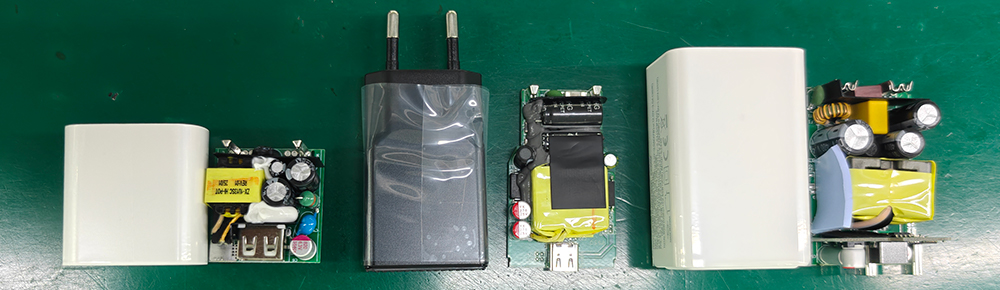
Temperature Rise Testing Helps Reduce Failure Rates
Many charger failures begin as thermal problems.
High temperatures can accelerate component wear long before visible symptoms appear.
By identifying thermal weaknesses early, engineers can:
• Improve reliability
• Extend lifespan
• Reduce warranty claims
• Improve safety margins
Temperature rise testing therefore plays a direct role in reducing long-term product failure rates.
This is why professional charger manufacturers invest heavily in thermal verification equipment and engineering expertise.
How ZONSAN Performs Thermal Verification
At ZONSAN, temperature rise testing is integrated into the charger development and validation process.
Engineers evaluate thermal performance across products including:
• 20W USB-C Chargers
• 25W Samsung Chargers
• 35W GaN Chargers
• 45W PPS Chargers
• 65W Laptop Chargers
• 100W PD Chargers
• 140W PD3.1 Chargers
Testing includes:
• Full-load operation
• Thermal imaging
• Component temperature measurement
• Reliability verification
The objective is not only to meet certification requirements but also to improve long-term reliability and user safety.

Read More
Final Thoughts
Every fast charger generates heat.
What separates a reliable charger from an unreliable one is not whether heat exists—but how effectively it is managed.
Temperature rise testing provides engineers with critical insights into charger safety, reliability, and long-term performance.
As charging power continues increasing from 20W to 140W and beyond, thermal engineering will remain one of the most important foundations of charger design.
Behind every reliable charger is a thermal system that has been carefully tested, analyzed, and optimized.
FAQ
Q1: Is it normal for a charger to get warm?
A: Yes. All chargers generate some heat during power conversion. Moderate warmth is completely normal.
Q2: What is temperature rise testing?
A: Temperature rise testing measures how much a charger's temperature increases during operation under specified conditions.
Q3: Why do fast chargers get hotter?
A: Fast chargers process more power, which naturally creates more thermal energy during operation.
Q4: What causes charger overheating?
A: Possible causes include poor thermal design, inadequate ventilation, component defects, or operating conditions outside design limits.
Q5: Are GaN chargers cooler than traditional chargers?
A: In many cases, yes. GaN technology typically provides higher efficiency, which reduces energy loss and heat generation.
Q6: How do manufacturers measure charger temperature?
A: Manufacturers use thermal sensors, electronic loads, thermocouples, and infrared thermal cameras.
Q7: Can heat shorten charger lifespan?
A: Yes. Excessive heat accelerates component aging and may reduce long-term reliability.
Q8: Why is temperature rise testing important?
A: It helps verify safety, reliability, thermal performance, and compliance with product design requirements.
Other recommended articles about charger engineering
• Thermal verification is one of the most effective ways to reduce long-term product failures. Learn more in How Charger Factories Reduce Failure Rates.↗
• Heat is one of the biggest factors affecting charger lifespan. Explore Why Some Chargers Last 10 Years and Others Fail in 1 Year.↗
• Temperature rise testing is a critical part of the overall charger verification process described in How We Test USB-C Chargers Before Shipment.↗