How We Test USB-C Chargers Before Shipment
Every charger looks reliable when it's brand new.
Plug it in.
Connect a phone.
The charging icon appears.
Everything seems fine.
But professional charger manufacturers know that this simple test is nowhere near enough.
A charger may work perfectly for a few minutes and still contain hidden issues that could lead to:
• Charging instability
• Overheating
• USB-C compatibility problems
• Power fluctuations
• Early component failure
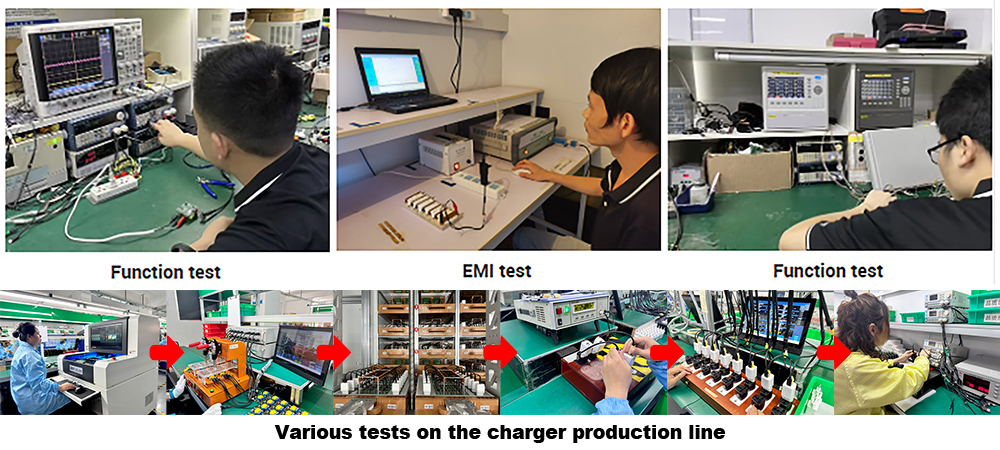
This is why serious charger factories perform multiple layers of testing before products leave the factory.
The goal is simple: Find problems before customers do.
In this article, we'll walk through the actual testing process used for modern USB-C chargers, PD chargers, PPS chargers, GaN chargers, and laptop chargers before shipment.
Why Charger Testing Matters More Than Ever
Today's chargers are significantly more complex than older power adapters.
Modern products may support:
• USB-C Power Delivery
• PPS Fast Charging
• PD3.1 AVS
• Multi-port charging
• Dynamic power allocation
• GaN power architectures
A single charger may need to communicate correctly with:
• iPhone 17
• Samsung S26
• iPad Pro
• MacBook Pro
• Gaming laptops
• Power banks
• USB-C monitors
The more advanced the charger becomes, the more important testing becomes.
One unnoticed issue can affect thousands of units during mass production.
Step 1: Incoming Material Inspection (IQC)
Testing actually begins before production starts.
Professional charger factories inspect incoming materials to verify quality and consistency.
Typical inspections include:
• PCB verification
• Capacitor inspection
• Transformer verification
• USB-C connector inspection
• Power IC qualification
• Packaging materials inspection
Even small variations in component quality can affect long-term reliability.
This is why many factories establish approved supplier systems and incoming quality standards.

Step 2: In-Process Quality Control (IPQC)
Once production begins, quality checks continue throughout manufacturing.
Instead of waiting until final assembly, inspectors monitor quality during every major production stage.
Typical IPQC checks include:
• SMT solder quality
• Component placement accuracy
• PCB cleanliness
• Assembly consistency
• Connector alignment
Finding defects early significantly reduces production waste and prevents larger quality issues later.
Professional factories understand that preventing defects is always more efficient than correcting them.

Step 3: Functional Testing
After assembly is completed, every charger must prove that it actually works.
Functional testing verifies:
• Power output
• Voltage stability
• Current delivery
• Port operation
• Indicator functionality
For USB-C chargers, this stage confirms that basic charging performance meets design specifications.
At this point, defective products are immediately identified and removed from the production flow.

Step 4: USB-C PD and PPS Protocol Testing
Modern chargers do much more than deliver power.
They also communicate with connected devices.
This communication determines:
• Charging voltage
• Charging current
• Power negotiation
• Fast charging compatibility
Engineers therefore verify:
• PD handshake accuracy
• PPS communication
• AVS performance
• Multi-device compatibility
Without proper protocol verification, a charger may charge one device correctly while failing on another.
Protocol testing is especially important for:
• Samsung PPS chargers
• MacBook chargers
• PD3.1 chargers
• Multi-port chargers
Step 5: Temperature Rise Testing
Heat is one of the biggest factors affecting charger lifespan.
Professional factories therefore evaluate how much temperature increases during operation.
Engineers measure:
• Surface temperature
• Internal temperature
• Hotspot locations
• Thermal balance
Testing is often performed under:
• Full-load conditions
• High ambient temperatures
• Extended operating periods
These results help verify thermal safety and long-term reliability.
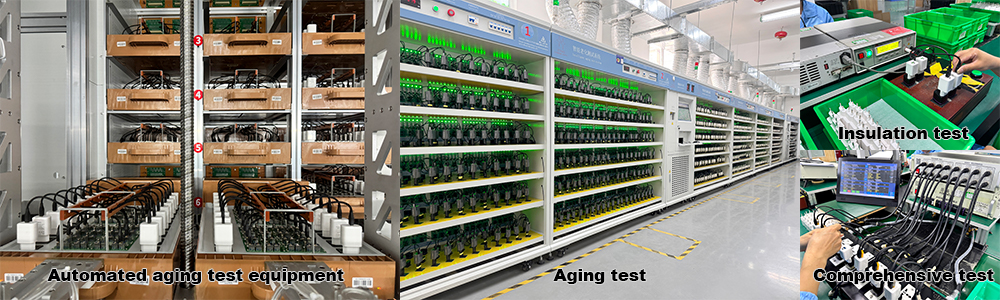
Step 6: Aging Testing
Aging testing simulates extended real-world usage.
Chargers operate continuously under controlled conditions for long periods.
The objective is to identify:
• Early-life failures
• Component instability
• Hidden manufacturing defects
• Thermal problems
Many reliability issues appear during aging tests long before customers would normally encounter them.
This makes aging testing one of the most valuable quality verification methods in charger manufacturing.
Step 7: Protection Function Verification
Modern fast chargers include multiple protection systems.
Before shipment, engineers verify:
• Over-current protection (OCP)
• Over-voltage protection (OVP)
• Short-circuit protection (SCP)
• Over-temperature protection (OTP)
These systems are critical because they help protect both the charger and the connected device.
Protection testing helps ensure safe operation even under abnormal conditions.
Step 8: Final Quality Inspection (OQC)
Before packaging and shipment, finished products undergo final inspection.
This stage verifies:
• Appearance quality
• Label accuracy
• Packaging condition
• Product functionality
• Certification markings
Only products that pass final inspection move to shipment.
Final inspection acts as the last quality gate before products reach customers.

Why Professional Testing Reduces Failure Rates
Testing is not simply about finding bad products.
It is about improving the entire manufacturing process.
Every defect discovered provides valuable engineering data.
Factories analyze:
• Failure trends
• Root causes
• Process weaknesses
• Component issues
This continuous improvement process helps reduce future failure rates and improve overall product reliability.
Testing therefore contributes not only to product quality but also to long-term manufacturing excellence.
How ZONSAN Tests USB-C Chargers
At ZONSAN, quality verification covers every major stage of charger manufacturing.
The testing process includes:
• Incoming material inspection
• SMT quality control
• Functional verification
• USB-C PD testing
• PPS compatibility testing
• Thermal evaluation
• Aging testing
• Final quality inspection
Products including:
• 20W USB-C Chargers
• 25W Samsung Chargers
• 35W GaN Chargers
• 45W PPS Chargers
• 65W Laptop Chargers
• 100W USB-C PD Chargers
• 140W PD3.1 Chargers
are verified through multiple testing procedures before shipment.
The objective is not simply to meet specifications but to ensure consistent long-term performance for OEM and ODM customers worldwide.

Final Thoughts
Reliable chargers do not happen by accident.
Behind every quality charger is a testing process designed to identify weaknesses before products reach customers.
From incoming material inspection and functional testing to protocol verification and aging tests, each stage plays an important role in improving reliability.
As charging technology continues becoming more advanced, comprehensive testing will remain one of the most important foundations of product quality.
Read More
FAQ
Q1: Why do charger factories test products before shipment?
A: Testing helps identify defects, verify performance, improve reliability, and reduce customer returns.
Q2: What is IQC in charger manufacturing?
A: IQC stands for Incoming Quality Control and focuses on verifying raw materials and components before production.
Q3: What is IPQC?
A: IPQC stands for In-Process Quality Control and monitors quality throughout production.
Q4: Why is USB-C PD testing important?
A: PD testing verifies proper communication between chargers and connected devices to ensure fast charging compatibility.
Q5: What is charger aging testing?
A: Aging testing operates chargers continuously under controlled conditions to identify early-life failures and hidden defects.
Q6: What protection functions are tested?
A: Common protection functions include OCP, OVP, SCP, and OTP.
Q7: Does every charger undergo testing?
A: Professional charger manufacturers typically perform multiple inspection and testing stages throughout production.
Q8: How does testing improve charger reliability?
A: Testing identifies weaknesses early, allowing manufacturers to improve products before shipment.
Recommended Reading
• Quality testing is one of the most effective methods used to reduce product defects. Learn more in How Charger Factories Reduce Failure Rates.↗
• Long-term reliability begins with proper engineering and verification. Read Why Some Chargers Last 10 Years and Others Fail in 1 Year.↗
• Aging tests are one of the most important reliability verification procedures in charger manufacturing. Explore How Chargers Go Through Aging Tests Before Shipping.↗