How Charger Manufacturers Maintain Certification Compliance After Mass Production
Charger certification does not end after a product passes CE, FCC, ETL, CB or KC testing. Professional charger manufacturers must continuously maintain compliance during mass production through strict quality control, incoming material inspection, production line testing, aging tests, and periodic reliability verification. Certification is a starting point for compliance—not a one-time approval.
Key Takeaways
• Certification is valid for design, not automatically for every production batch.
• Manufacturing consistency is critical for long-term compliance.
• Factories must continuously monitor quality after certification approval.
• Aging tests and production testing ensure ongoing safety.
• OEM buyers should evaluate factory QA systems, not only certificates.
Why Certification Does Not End After Approval
Many buyers assume that once a charger passes CE, FCC, ETL, CB or KC certification, the product is permanently compliant.
In reality, certification is based on a specific tested sample, not every future unit produced.
This creates a critical gap:
Engineering approval ≠ Manufacturing consistency
Once mass production begins, dozens of variables can affect compliance:
• Component supplier changes
• Material batch variation
• Production tolerance differences
• PCB soldering variations
• Thermal paste application differences
• Transformer winding consistency
Even small variations can affect:
• Temperature rise
• Efficiency
• EMI performance
• Protection behavior
• Long-term reliability
This is why professional charger manufacturers treat certification as the beginning of a controlled process—not the end.
The Hidden Gap Between Certified Design and Mass Production
One of the most misunderstood concepts in the charging industry is "certification drift."
This refers to the gradual deviation between:
• Certified prototype design
• Actual mass-produced units
Without strict quality control, this gap can widen over time.
For example:
A certified charger prototype may use:
• High-grade capacitor batch A
• Specific transformer winding ratio
• Optimized thermal pad thickness
But in mass production:
• Supplier changes capacitor batch
• Transformer winding tolerance increases
• Thermal interface material varies slightly
Individually, these changes seem minor.
But together, they can significantly impact:
• Heat distribution
• EMI noise levels
• Output stability
• Long-term durability
This is why factories must implement continuous compliance systems.
How Factories Maintain Compliance in Real Production
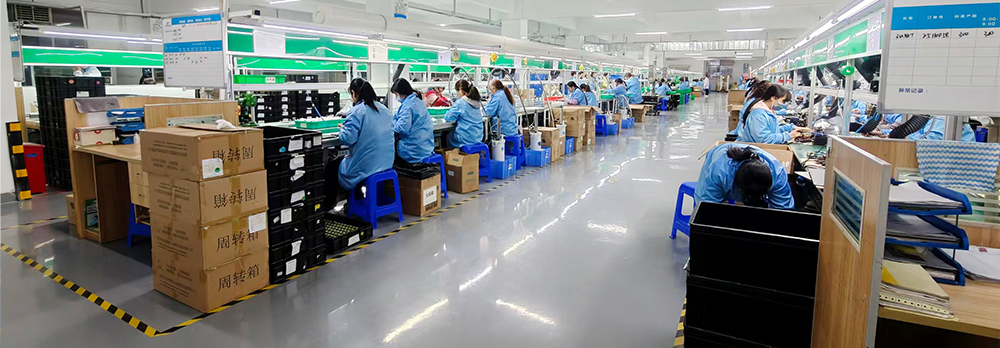
Professional charger factories use a multi-layer control system to ensure consistency.
This typically includes:
1. Incoming Material Inspection (IQC)
Before production begins, all materials are inspected:
• Capacitors
• MOSFETs
• Transformers
• IC chips
• PCB boards
• Housing materials
Only approved components enter production.
2. SMT & Assembly Quality Control
During production:
• Automated Optical Inspection (AOI)
• Solder quality checks
• PCB alignment verification
• Component placement accuracy
These steps ensure that every unit matches engineering specifications.
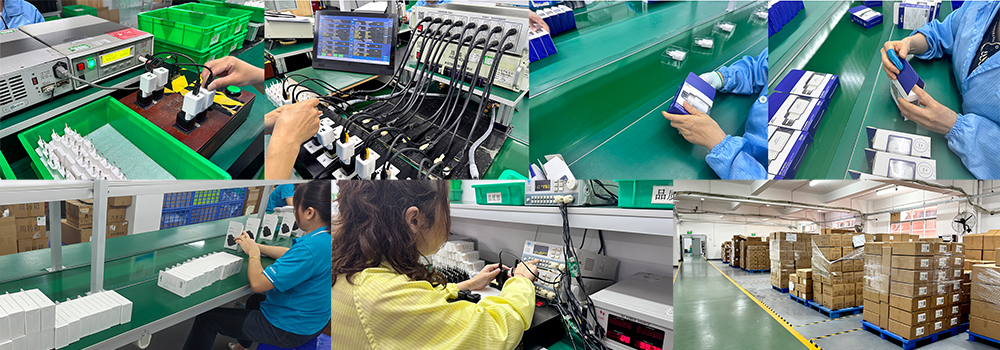
3. Electrical Function Testing
Each charger is tested for:
• Output voltage accuracy
• Current stability
• USB-C PD negotiation
• PPS performance
• Protection system activation
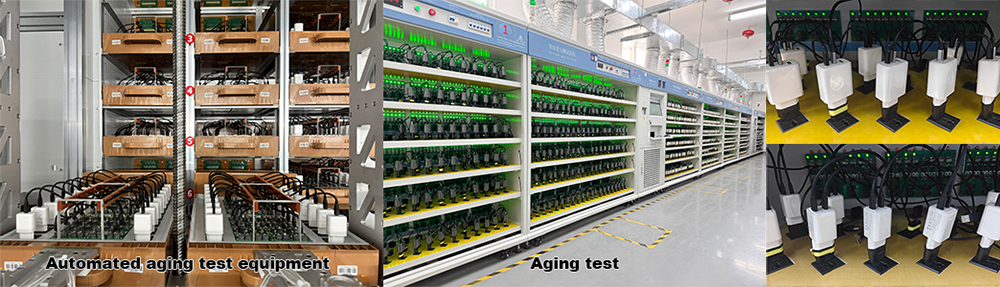
4. Aging Test (Burn-In)
Each unit is operated under:
• High load
• Elevated temperature
• Continuous operation
This simulates real-world long-term usage.
Why Aging Tests Are Critical for Certification Stability
Aging tests help identify:
• Weak solder joints
• Unstable components
• Thermal bottlenecks
• Early-life failure risks
Without aging tests, a charger may pass certification but fail in real-world usage.
This is why serious manufacturers invest heavily in burn-in systems.
Why Certification Drift Happens in Manufacturing
Certification drift usually comes from:
• Cost pressure on components
• Supplier inconsistency
• Process variation
• Lack of internal QA system
• Poor engineering oversight
This is more common in low-cost OEM factories.
In contrast, mature manufacturers prevent drift by:
• Locking component specifications
• Controlling supplier chain
• Maintaining strict process documentation
• Running continuous QA audits
How OEM Buyers Should Evaluate Factory Compliance Systems
For OEM/ODM buyers, certification documents are not enough.
Instead, they should evaluate:
• Does the factory control component sourcing?
• Is production monitored in real time?
• Are aging tests applied to every batch?
• Is there traceability for production batches?
• How are failure rates tracked?
These factors determine long-term product success more than certification alone.
ZONSAN Factory Compliance System Overview
At ZONSAN, certification compliance is integrated into every stage of manufacturing.
The system includes:
• IQC incoming inspection system
• SMT automated production monitoring
• 100% electrical testing
• Full-load aging verification
• Random batch reliability sampling
• Continuous engineering feedback loop
This ensures that products such as:
• 20W USB-C chargers
• 35W GaN chargers
• 65W laptop chargers
• 100W PD chargers
• 140W PD3.1 chargers
maintain consistent performance across production batches.
Engineer's Insight
Certification is often misunderstood as a one-time achievement.
In reality, it is a continuous responsibility.
The most reliable charger manufacturers do not “pass certification”—they maintain certification through disciplined production control.
This is the real difference between a prototype that passes testing and a product that performs consistently in millions of real-world units.
Final Thoughts
Certification marks such as CE, FCC, ETL, CB and KC represent compliance at a specific point in time.
However, product quality depends on what happens after certification.
Factories that fail to maintain process control will gradually drift away from certified standards.
Factories that implement strict QA systems ensure long-term compliance, reliability, and brand trust.
For OEM buyers, this distinction is critical.
Because in real-world manufacturing:
Certification is not the finish line—it is the starting point of consistency.
FAQ
Q1: Does certification guarantee all mass-produced chargers are identical?
No. Certification applies to tested samples, not every production unit.
Q2: What is certification drift?
It is the difference between the certified prototype and mass-produced products due to manufacturing variation.
Q3: Why are aging tests important?
They simulate long-term usage and detect early failures before products ship.
Q4: What is IQC in charger manufacturing?
Incoming Quality Control ensures all raw materials meet specifications before production.
Q5: Do all factories maintain certification after approval?
No. Only well-managed factories implement continuous compliance systems.
Q6: Why do OEM buyers care about factory QA systems?
Because QA systems determine real-world product consistency, not just certification.
Q7: Can poor components affect certified products?
Yes. Even small material changes can impact thermal, electrical and EMI performance.
Q8: How do professional factories prevent quality variation?
Through strict supplier control, production monitoring and continuous testing systems.
Recommended
• Inside Charger Aging Teats and Reliability Verification.↗