Control Plan in Charger Manufacturing: How Factories Keep Mass Production Stable
A charger can pass engineering validation and still become inconsistent during mass production. That is one of the problems that is easy to underestimate when buying chargers in bulk.
The first production unit might look great; electrical performance might be within specifications; the USB-C port might work; and the charger might pass functional testing. Then, production volume increases.
A small variation in soldering, component placement, assembly pressure, thermal material, connector alignment, or testing conditions starts appearing. If nobody is monitoring the right process points, the problem may continue until a larger batch is affected.
This is where a Control Plan in charger manufacturing becomes important.
A Control Plan turns quality requirements into actual production controls. It defines what needs to be controlled at each important manufacturing step, how it should be checked, how often it should be checked, what standard applies, and what happens when the result is outside the requirement.
In other words, PFMEA helps identify manufacturing risks. A Control Plan turns those identified risks into actions on the production floor.
For USB-C chargers, GaN chargers, PD chargers, PPS chargers, and other fast-charging products, this connection becomes increasingly important as power density and product complexity continue to increase.
consulte Mais informação
What Is a Control Plan in Charger Manufacturing?
A Control Plan is a structured manufacturing document that defines how a product and its production process will be controlled during manufacturing.
It connects three things: Product requirements → Manufacturing process → Quality controls
Instead of simply saying that a charger must deliver a certain power output, a Control Plan asks a more practical question: How will the factory consistently make sure that requirement is achieved during production?
A typical control plan defines manufacturing process steps, controlled product or process characteristics, applicable specifications, measurement or inspection methods, inspection frequency, responsible departments or operators, reaction plans for abnormal results, and records to be maintained.
The exact format can vary between factories and industries. The important point is not the spreadsheet itself.
The important point is that quality requirements are converted into repeatable production controls.
This is consistent with the process approach used in quality management: processes need defined controls, monitoring and measurement where appropriate, and actions that support consistent outputs.

Why Does a Charger Factory Need a Control Plan?
A production line can have excellent equipment and still produce inconsistent results.
That sounds contradictory, but it happens.
Automated SMT machines, AOI inspection, electrical testing equipment, burn-in racks, PD protocol testers, thermal testing equipment, skilled operators—none of these systems can automatically guarantee process consistency.
The real question is: Are the right characteristics being controlled at the right point in the process?
For example, final inspection may detect that a charger has an abnormal output. But if the problem was created much earlier during PCB assembly, transformer installation, component placement, soldering, or another process, simply rejecting the finished charger does not solve the manufacturing problem.
A Control Plan moves quality control closer to the point where variation can occur.
That is the difference between: Finding a defective charger and Controlling the process that could create the defect.
For Zonsan manufacturers producing thousands of chargers, that distinction matters.
Control Plan vs. PFMEA: What Is the Difference?
This is one of the most important points to understand.
A PFMEA and a Control Plan are closely connected, but they do different jobs.
PFMEA asks: What can go wrong in this manufacturing process?
Potential failure modes, effects of failure, causes, existing preventive controls, existing detection controls, risk priorities.
Control Plan asks: What are we actually going to control during production?
It defines which characteristics to control, the control locations, measurement methods, inspection frequency, applicable specifications, and the procedures to follow when results are abnormal.
A simple way to understand the relationship is:
PFMEA identifies the risk.
Control Plan operationalizes the control.
This relationship is also reflected in modern manufacturing quality systems. AIAG describes the Control Plan as a tool connected with FMEA and other quality methods, and its current Control Plan guidance emphasizes maintaining the document as production and process conditions evolve.
For a charger manufacturer, this means the Control Plan should not be created as a completely separate document that sits in a quality engineer's computer. It should reflect the actual risks identified during engineering and manufacturing analysis.
How a Charger Factory Builds a Control Plan
Creating a useful Control Plan starts with understanding the actual production process.
The charger manufacturing process generally includes: incoming materials → PCB/SMT → soldering → assembly → electrical testing → safety testing → burn-in → comprehensive testing → final inspection (visual) → packaging.
The control plan examines the critical characteristics within these steps. Our goal is not to control everything equally, as this would result in unnecessary inspections and paperwork.
Instead, engineers focus on characteristics that have a significant relationship with factors such as product performance, safety, reliability, regulatory requirements, customer specifications, manufacturing risks, and process stability.
This is where the control plan becomes more than just a checklist; it becomes a practical roadmap for maintaining quality.
Step 1 — Define the Process Steps
The first job is to map the manufacturing process clearly. For a USB PD charger, this could begin with incoming components and continue through PCB assembly, mechanical assembly, electrical verification, reliability testing, and final inspection.
Each major operation needs to be understood before deciding what should be controlled. This is important because a quality problem rarely belongs to the final inspection station alone.
For example, the resulting electrical failure may be associated with component variations, PCB assembly, soldering, incorrect assembly, wiring, connector installation, test equipment, process settings, etc.
The Control Plan therefore follows the manufacturing process instead of looking only at the finished product.
For a deeper look at how a charger moves from engineering through production, see [From PCB Design to Mass Production: How a Charger Is Developed]
Step 2 — Identify the Important Characteristics
Not every dimension or production parameter needs the same level of control. A Control Plan normally identifies characteristics that can affect product conformity or process performance.
For chargers, these characteristics include:
Electrical characteristics — Output voltage, output current, output power, voltage regulation, protection functions, PD communication, PPS operation, and port functionality.
Mechanical characteristics — USB-C port location, housing assembly, plug alignment, component positioning, and structural fit.
Process characteristics — Soldering conditions, component placement, assembly sequence, thermal interface material placement, and testing parameters.
Safety-related characteristics — Insulation, high-voltage spacing, withstand voltage (Hi-pot) requirements, grounding (where applicable), and protection functions.
The exact characteristics depend on the charger design.
The regulatory requirements for a compact 20W wall charger differ significantly from those for a 140W multi-port GaN charger. Higher-power products entail additional considerations regarding thermal management, electrical aspects, and process control.
Step 3 — Define the Specification
Once a specific characteristic has been determined, the Zonsan factory clearly defines what constitutes "acceptable performance."
This sounds obvious, but vague quality requirements are difficult to control.
"Good soldering" is not a useful production specification.
"Check the charger carefully" is not a useful inspection method either.
Production personnel need objective requirements wherever practical.
Depending on specific characteristics, specification requirements include engineering drawings, product specifications, electrical requirements, customer requirements, certification requirements, approved samples, manufacturing specifications, and testing procedures.
The purpose is simple: The production team needs to know what acceptable means.
Without a defined standard, two inspectors may make different decisions about the same product.
That creates variation in the inspection process itself.
Step 4 — Decide How the Characteristic Will Be Controlled
This is the stage where the "Control Plan" is put into actual practice. The Zonsan factory determines the specific monitoring methods for each critical characteristic.
Applicable control methods include—but are not limited to—automated inspection, measurement, functional testing, visual inspection, electrical testing, sampling, process parameter monitoring, automated production testing, and operator verification; the chosen method must be commensurate with the level of risk.
Characteristics that could impact charger safety cannot be treated in the same way as minor cosmetic defects. Similarly, processes prone to significant variation require a higher monitoring frequency than highly stable, automated operations.
The goal goes beyond simply adding inspection steps; the true objective is to implement effective control measures at critical control points.
Step 5 — Define the Inspection Frequency
Another important part of the Control Plan is frequency.
Should a parameter be checked:
• Every unit?
• Every batch?
• At the beginning of a production run?
• At fixed time intervals?
• After equipment adjustment?
• After a material change?
• Through automated continuous monitoring?
There is no universal answer.
The appropriate frequency depends on the characteristic, process capability, risk level, equipment, and production conditions.
For example, some finished electrical functions may be suitable for 100% automated testing.
Other characteristics may be monitored through sampling because continuous measurement is unnecessary or impractical.
A professional Control Plan therefore avoids the idea that "more inspection is always better."
Insufficient control leads to the escape of defects, while excessive inspection can slow down production without significantly improving quality.
The ultimate goal is to achieve balanced process control.
Step 6 — Establish the Reaction Plan
This is one of the most overlooked parts of manufacturing quality control. Suppose a production measurement falls outside the defined specification.
What happens next?
If the answer is unclear, the Control Plan has a major weakness.
The response plan specifies the measures the factory will take when an anomaly is detected.
Depending on the specific circumstances, these measures generally include:
1. Stop or contain the affected process.
2. Identify potentially affected products.
3. Separate nonconforming material.
4. Verify the measurement or test result.
5. Investigate the cause.
6. Correct the process.
7. Reinspect affected products.
8. Record the event.
9. Escalate the issue when necessary.
10. Determine whether broader corrective action is required.
The exact response depends on the failure.
A small cosmetic issue may require a different response from a safety-related electrical abnormality.
The important thing is that the response should be defined before the problem occurs. That prevents operators from making inconsistent decisions under production pressure.
Why Reaction Plans Matter in High-Volume Charger Production
Imagine a factory producing a large batch of USB-C chargers. An electrical test station suddenly detects an abnormal result.
There are two possible approaches.
→ The first is simply to remove the failed unit and continue production.
→ The second is to ask: Why did this happen, and which other units could be affected?
The second approach is much closer to quality engineering.
If the abnormality comes from a process condition, replacing one failed charger does not eliminate the risk. There may be dozens or hundreds of units produced under the same condition.
A good reaction plan therefore connects production control with investigation and containment.
This is also why a Control Plan should be treated as a living manufacturing document, rather than a document created once and forgotten. AIAG's current guidance specifically emphasizes maintaining and updating Control Plans as processes evolve and lessons are learned.
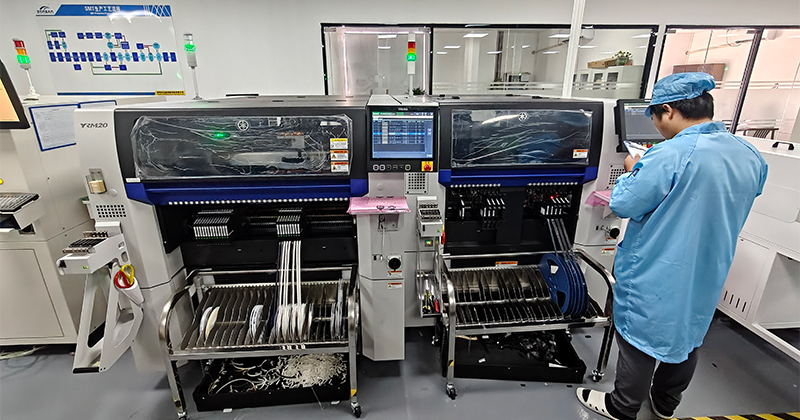
Control Plan for SMT and PCB Assembly
SMT is an important area for process control because small variations in PCB assembly can later become electrical or reliability problems.
The control plan for this process also specifies control measures for aspects such as component placement, solder joint quality, PCB orientation, component verification, AOI (Automated Optical Inspection), reflow soldering process parameters, PCB cleanliness, and defect classification.
A control plan cannot simply state "Perform AOI inspection." It must effectively integrate the inspection step with the controlled characteristics and the response measures to be taken when anomalies are detected.
This detailed linkage enhances the practical value of the control system.
The machine itself is not synonymous with the quality system; processes, requirements, measurements, decision-making, and response measures collectively constitute a complete control system.
Control Plan for Charger Assembly
After PCB production, mechanical and electrical assembly introduce another group of potential variations.
Such as transformer installation, placement of thermal interface materials, connector installation, internal wiring, insulation component assembly, housing assembly, plug assembly, port alignment, etc.
These controls are especially important for compact GaN chargers.
As power density increases, the available internal space becomes tighter. Small assembly differences can therefore affect thermal paths, mechanical fit, insulation spacing, or connector reliability.
The Control Plan helps define which assembly characteristics need verification rather than leaving everything to final inspection.
Control Plan for Electrical Testing
Electrical testing is another important control point.
Chargers are typically tested for the following parameters:
• Input characteristics, output voltage, output current, and output power;
• USB-C PD negotiation, PPS behavior, multi-port power allocation, and protection functions;
The specific test sequence depends on the charger's specifications.
A 45W single-port PPS charger will not necessarily require the same production test configuration as a 140W multi-port PD3.1 charger.
A control plan tailored to a specific product is of particular importance. While generic quality checklists are easy to create, they may not necessarily reflect the actual risks associated with a specific charger platform.
An effective control plan must be closely aligned with the specific product and its manufacturing process.
For more detail on production testing, see [How We Test USB-C Chargers Before Shipment]
Control Plan and Final Inspection Are Not the Same Thing
👉 Final inspection checks the finished product.
👉 A Control Plan controls the process that creates the finished product.
Final inspection is certainly important! It serves as the last quality checkpoint before product shipment, but it cannot replace process control.
Just imagine: what happens if a finished charger fails the test?
Final inspection can detect this failure.
It cannot automatically tell you:
• Why it happened
• When it started
• How many other units are affected
• Whether the process is drifting
• Whether the same issue will appear tomorrow
Obtaining this information requires monitoring and investigation at the process level. Professional quality systems employ multi-layered control strategies rather than relying entirely on final inspection.
How Control Plans Help Keep Mass Production Stable
The core of mass production lies in repeatability. While manufacturing a single high-performance charger is not difficult, producing thousands of chargers with consistent performance is far more challenging.
A Control Plan helps establish that repeatability by defining: What to control → Where to control it → How to measure it → How often to check → What to do if it fails
This establishes a unified operational framework for the engineering, production, and quality departments.
Without such a framework, these departments might operate based on differing priorities:
Engineering might focus on product specifications;
Production might focus on output volume;
Quality might focus on defect detection.
A comprehensive control plan, however, effectively integrates these diverse priorities.
When Should a Charger Control Plan Be Updated?
A Control Plan should change when the manufacturing reality changes.
New charger platform —— A new 65W or 100W charger may introduce different components, thermal requirements, assembly steps, or testing requirements.
Engineering changes —— Changing a component, PCB, transformer, enclosure, connector, or thermal material can affect existing controls.
Process changes —— New equipment, new production methods, automation changes, or revised assembly procedures may require new control points.
Quality problems —— If a recurring defect appears, the Control Plan may need additional prevention or detection controls.
Customer requirements —— OEM and ODM projects may introduce additional inspection or documentation requirements.
Lessons learned —— Information from production, field returns, reliability testing, audits, and failure analysis can all provide reasons to revise the Control Plan.
This creates an important feedback loop: Production data → Quality findings → Process improvement → Control Plan update
And then the updated controls become part of the next production cycle.
Control Plan, PFMEA and Continuous Improvement
The real value of a Control Plan becomes clearer when it is connected to the broader quality system.
A simplified charger manufacturing quality loop looks like this:
PFMEA —— Identify potential process risks.
↓
Control Plan —— Define how those risks will be controlled during production.
↓
Production Data —— Collect inspection, test and process information.
↓
Failure Analysis —— Investigate abnormal results and recurring defects.
↓
Corrective Action —— Address the underlying process problem.
↓
Control Plan Update —— Add or modify controls when necessary.
↓
Updated PFMEA —— Reassess the process risk based on what was learned.
This is not a one-off task, but rather a continuous manufacturing feedback loop.
This also aligns with the principles of the "process approach" and "continual improvement" embodied in ISO 9001. The current ISO 9001 framework emphasizes controlled processes, performance evaluation, and improvements based on data and results.

What OEM Buyers Should Ask a Charger Manufacturer About Its Control Plan
For OEM and ODM buyers, asking whether a factory “has quality control” is usually too broad.
A more useful conversation is about how the production process is actually controlled.
You can ask:
1. How are critical process characteristics identified?
This helps determine whether the factory is controlling meaningful risks or simply performing routine inspections.
2. How are production inspection points defined?
A professional factory should be able to explain where important controls are placed in the process.
3. What happens when a process result is abnormal?
The answer should involve containment, investigation and corrective action rather than simply removing the failed unit.
4. How are engineering changes reflected in production controls?
This matters particularly for customized OEM chargers.
5. How are recurring quality problems fed back into the manufacturing process?
A mature system should learn from production problems instead of treating every failure as an isolated event.
6. How is production consistency monitored?
This helps buyers understand whether the factory is managing mass-production variation rather than relying only on final inspection.
These questions provide a much clearer picture of manufacturing maturity than simply asking how many inspection machines a factory owns.
How ZONSAN Uses Process-Based Quality Control
At ZONSAN, charger quality control is integrated across engineering, production and testing rather than being limited to final inspection.
For USB-C chargers, GaN chargers, PD or PPS chargers and higher-power charging products, the manufacturing process includes multiple quality-control stages covering materials, PCB production, assembly, electrical verification, reliability testing and final inspection.
The purpose of this system is not simply to find defective chargers. It is to control the manufacturing process so that the same specifications can be reproduced consistently during mass production.
For OEM and ODM projects, this process-based approach is particularly important because customized chargers may involve different PCB designs, components, housings, power levels, plugs and charging protocols.
A Control Plan provides the production team with a practical framework for translating those product requirements into repeatable manufacturing controls.
Control Plan vs. Quality Inspection: The Simple Difference
It is useful to remember the difference this way:
| Quality Activity | Main Question |
| PFMEA | What could go wrong? |
| Control Plan | How will we control it? |
| Process Inspection | Is the process currently within control? |
| Functional Testing | Does the finished charger work correctly? |
| Reliability Testing | Can the product remain stable under defined conditions? |
| Failure Analysis | Why did the problem occur? |
| Corrective Action | How do we prevent it from happening again? |
These activities work best as a connected system. No single document or test can replace the others.
For charger manufacturers, the goal is not to create more paperwork. The goal is to build a manufacturing process where important risks are identified, controlled, measured and improved over time.
Why Control Plans Matter More as Chargers Become More Powerful
The evolution from traditional low-power adapters to compact 65W, 100W, 140W and higher-power GaN chargers has increased manufacturing complexity.
More power inside a smaller enclosure means less tolerance for uncontrolled variation.
→ Thermal behavior becomes more important.
→ Component selection becomes more important.
→ PCB layout becomes more important.
→ Assembly consistency becomes more important.
→ Testing becomes more important.
This does not imply that every charger requires an exhaustive quality document; the key is that control measures must reflect the actual risks associated with the specific product being manufactured.
For chargers with simple, mature designs, control measures may be relatively straightforward, whereas high-power, multi-port GaN chargers may require a more detailed control framework.
Control plans should be developed based on product characteristics, rather than the other way around.
Final Thoughts
A Control Plan is not simply a quality spreadsheet. Done properly, it is a practical connection between engineering requirements and everyday production.
PFMEA identifies manufacturing risks.
The Control Plan translates those risks into production controls.
Inspection and testing provide data.
Failure analysis explains abnormal results.
Corrective action improves the process.
Then the Control Plan is updated again. That cycle is what helps a charger factory move from "we can make a working charger" to "we can repeatedly manufacture the same charger to the required standard."
For OEM and ODM buyers, that distinction is important.
A factory's manufacturing capability is not defined only by its SMT machines, production volume, or testing equipment. It is also reflected in how systematically the factory controls its processes, reacts to abnormal conditions, learns from failures, and maintains consistency as production scales.
And that is where a well-designed Control Plan in charger manufacturing becomes a real quality tool rather than just another document.
FAQ - Control Plan in PD Gan Charger Manufacturing
Q1: What is a Control Plan in charger manufacturing?
A Control Plan is a manufacturing quality document that defines which product and process characteristics need to be controlled, how they are measured, how often they are checked, and what actions should be taken when results are abnormal.
Q2: What is the difference between PFMEA and a Control Plan?
PFMEA identifies potential manufacturing failure modes, their effects and causes. A Control Plan turns the important risks identified by PFMEA into specific production controls, inspections and reaction procedures.
Q3: Why is a Control Plan important for USB-C chargers?
USB-C chargers contain multiple electrical, mechanical and thermal processes. A Control Plan helps the factory monitor important characteristics throughout production instead of relying only on final inspection.
Q4: Does a Control Plan replace final inspection?
No. Final inspection remains an important quality gate, while a Control Plan controls the manufacturing process before the product reaches final inspection.
Q5: What information is included in a Control Plan?
Typical information includes process steps, controlled characteristics, specifications, measurement methods, inspection frequency, responsible personnel and reaction plans for abnormal conditions.
Q6: How does a Control Plan help reduce charger defects?
It helps identify where important characteristics should be monitored and defines what to do when the process moves outside the required condition. This allows problems to be contained and investigated earlier.
Q7: Should a Control Plan be updated?
Yes. Engineering changes, process changes, new products, recurring defects, customer requirements and production lessons can all require updates to the Control Plan.
Q8: Is a Control Plan useful for OEM charger manufacturing?
Yes. OEM and ODM chargers often involve customized specifications, components, PCB designs, housings, plugs and charging protocols. A product-specific Control Plan helps translate these requirements into controlled production processes.
Q9: Is a Control Plan only used for high-power GaN chargers?
No. Control Plans can be used for chargers across different power levels. However, higher-power and more complex chargers may require additional controls because of increased electrical, thermal and manufacturing complexity.
Q10: How is a Control Plan connected to continuous improvement?
Production results, inspection data, failures and corrective actions can reveal weaknesses in the manufacturing process. These findings can then be used to update the Control Plan and strengthen future production controls.
Reviewer: Zonsan R&D and Engineer Assistant — Luis and David
Second Reviewer: Luke, Ken
Final Review Date: [September 25, 2026]
For charger manufacturers, the goal is not to create more paperwork. The goal is to build a manufacturing process where important risks are identified, controlled, measured and improved over time.
Why Control Plans Matter More as Chargers Become More Powerful
The evolution from traditional low-power adapters to compact 65W, 100W, 140W and higher-power GaN chargers has increased manufacturing complexity.
More power inside a smaller enclosure means less tolerance for uncontrolled variation.
→ Thermal behavior becomes more important.
→ Component selection becomes more important.
→ PCB layout becomes more important.
→ Assembly consistency becomes more important.
→ Testing becomes more important.
This does not imply that every charger requires an exhaustive quality document; the key is that control measures must reflect the actual risks associated with the specific product being manufactured.
For chargers with simple, mature designs, control measures may be relatively straightforward, whereas high-power, multi-port GaN chargers may require a more detailed control framework.
Control plans should be developed based on product characteristics, rather than the other way around.
Final Thoughts
A Control Plan is not simply a quality spreadsheet. Done properly, it is a practical connection between engineering requirements and everyday production.
PFMEA identifies manufacturing risks.
The Control Plan translates those risks into production controls.
Inspection and testing provide data.
Failure analysis explains abnormal results.
Corrective action improves the process.
Then the Control Plan is updated again. That cycle is what helps a charger factory move from "we can make a working charger" to "we can repeatedly manufacture the same charger to the required standard."
For OEM and ODM buyers, that distinction is important.
A factory's manufacturing capability is not defined only by its SMT machines, production volume, or testing equipment. It is also reflected in how systematically the factory controls its processes, reacts to abnormal conditions, learns from failures, and maintains consistency as production scales.
And that is where a well-designed Control Plan in charger manufacturing becomes a real quality tool rather than just another document.
FAQ - Control Plan in PD Gan Charger Manufacturing
Q1: What is a Control Plan in charger manufacturing?
A Control Plan is a manufacturing quality document that defines which product and process characteristics need to be controlled, how they are measured, how often they are checked, and what actions should be taken when results are abnormal.
Q2: What is the difference between PFMEA and a Control Plan?
PFMEA identifies potential manufacturing failure modes, their effects and causes. A Control Plan turns the important risks identified by PFMEA into specific production controls, inspections and reaction procedures.
Q3: Why is a Control Plan important for USB-C chargers?
USB-C chargers contain multiple electrical, mechanical and thermal processes. A Control Plan helps the factory monitor important characteristics throughout production instead of relying only on final inspection.
Q4: Does a Control Plan replace final inspection?
No. Final inspection remains an important quality gate, while a Control Plan controls the manufacturing process before the product reaches final inspection.
Q5: What information is included in a Control Plan?
Typical information includes process steps, controlled characteristics, specifications, measurement methods, inspection frequency, responsible personnel and reaction plans for abnormal conditions.
Q6: How does a Control Plan help reduce charger defects?
It helps identify where important characteristics should be monitored and defines what to do when the process moves outside the required condition. This allows problems to be contained and investigated earlier.
Q7: Should a Control Plan be updated?
Yes. Engineering changes, process changes, new products, recurring defects, customer requirements and production lessons can all require updates to the Control Plan.
Q8: Is a Control Plan useful for OEM charger manufacturing?
Yes. OEM and ODM chargers often involve customized specifications, components, PCB designs, housings, plugs and charging protocols. A product-specific Control Plan helps translate these requirements into controlled production processes.
Q9: Is a Control Plan only used for high-power GaN chargers?
No. Control Plans can be used for chargers across different power levels. However, higher-power and more complex chargers may require additional controls because of increased electrical, thermal and manufacturing complexity.
Q10: How is a Control Plan connected to continuous improvement?
Production results, inspection data, failures and corrective actions can reveal weaknesses in the manufacturing process. These findings can then be used to update the Control Plan and strengthen future production controls.
Reviewer: Zonsan R&D and Engineer Assistant — Luis and David
Second Reviewer: Luke, Ken
Final Review Date: [September 25, 2026]