How to Choose a Reliable USB-C Cable and Charger Manufacturer in 2026
The USB-C charging industry has changed dramatically over the past few years.
What used to be a relatively simple market for:• phone chargers
• USB cables
• basic adapters
has evolved into a highly technical ecosystem involving:
• PD3.1 charging
• EPR cable systems
• Thunderbolt compatibility
• intelligent power negotiation
• multi-port GaN charging
• laptop charging optimization
As a result:
choosing a USB-C charger manufacturer in 2026 is no longer just about finding the lowest price.
It is now about: engineering capability.
Why the USB-C Industry Became More Complex
A few years ago, most chargers operated below:
• 20W / 30W
Cable requirements were relatively simple.
But modern charging systems now support:
• 65W charging
• 100W charging
• 140W charging
• 240W PD3.1 charging
This dramatically increases:
• thermal demands
• protocol complexity
• safety requirements
• cable engineering difficulty
Which means:
low-end manufacturing is no longer sufficient for premium charging products.
The Biggest Mistake Many Buyers Make
Many sourcing teams still compare suppliers mainly based on:
• unit cost
• appearance
• wattage claims
But in today's market, these factors alone are extremely misleading.
Two chargers may both claim: “100W GaN Charger”
while having completely different:
• thermal performance
• PCB quality
• PD stability
• safety margins
• lifespan
• cable compatibility
This is why technical evaluation has become critical.
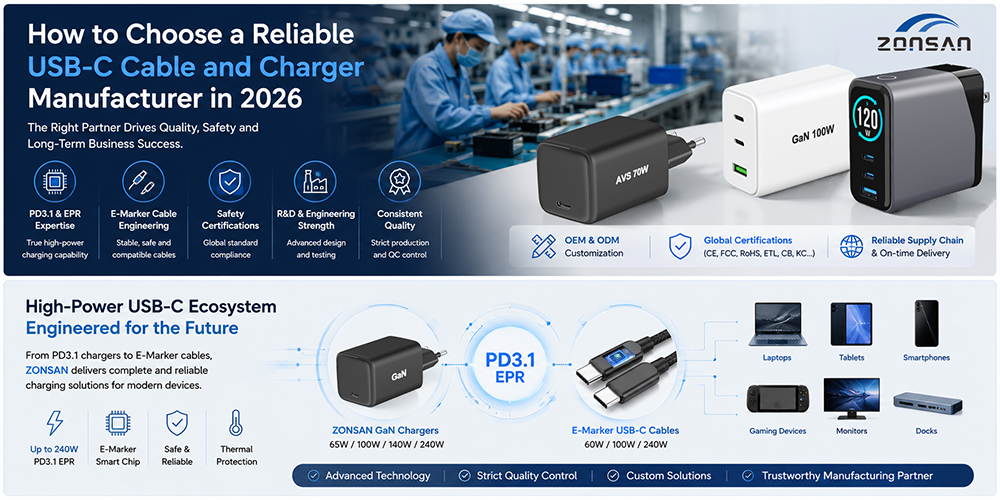
Step 1: Verify Real PD3.1 and EPR Capability
One of the first things buyers should confirm is whether the supplier truly understands:
• PD3.1
• EPR charging
• high-power USB-C architecture
Many factories advertise:
• 140W charging
• 240W charging
without having mature high-power engineering capability.
Real PD3.1 optimization requires:
• E-Marker compatibility
• voltage stability
• thermal balancing
• intelligent power negotiation
• high-quality PCB layout
Step 2: Evaluate Cable Engineering — Not Just the Charger
Modern charging performance depends heavily on the cable ecosystem.
Professional manufacturers should understand:
• cable resistance
• conductor quality
• shielding
• E-Marker communication
• connector durability
This is especially important for:
• gaming laptop charging
• MacBook charging
• workstation charging
• docking stations
• Thunderbolt ecosystems
Many charging failures blamed on chargers are actually caused by poor cable engineering.
Step 3: Check Safety Certifications Carefully
Reliable charger manufacturers should support certifications such as:
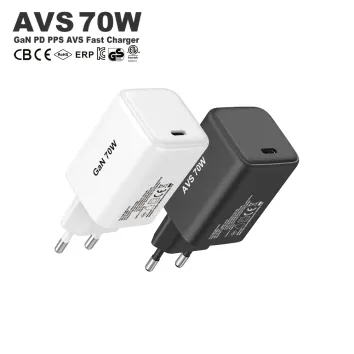
• CE / RoHS / FCC / KC / ETL / CB / ERP
But buyers should also verify: whether certifications are truly valid.
Some suppliers only provide partial reports or outdated testing documents.
Professional OEM charger factories usually maintain:
• updated certification databases
• compliance testing procedures
• regional regulatory experience
for global markets.
Step 4: Understand the Factory's Real Engineering Capability
In 2026, charger development increasingly requires:
• power electronics expertise
• thermal simulation
• protocol optimization
• EMI management
• PCB engineering
A factory focused only on assembly may struggle with advanced USB-C ecosystems.
Professional GaN charger manufacturers often maintain:
• independent R&D teams
• protocol engineers
• thermal testing labs
• reliability testing systems
Why Thermal Engineering Matters More Than Ever
As charging power increases: heat becomes one of the industry's biggest challenges.
Modern 100W-240W chargers require advanced thermal optimization for:
• long-term stability
• safety
• charging consistency
• lifespan
This is especially important for:
• desktop GaN chargers
• multi-port chargers
• travel chargers
• laptop charging stations
Factories without strong thermal design capability may produce chargers that:
• throttle performance
• overheat easily
• age faster
• fail long-term reliability testing
Step 5: Evaluate Production Consistency
Mass production quality matters just as much as engineering.
A strong OEM charger manufacturer should maintain:
• SMT quality control
• automated testing
• aging tests
• burn-in procedures
• incoming material inspection
Consistency is critical for:
• Amazon brands
• retail brands
• telecom projects
• enterprise procurement
Why GaN Manufacturing Experience Matters
GaN chargers operate differently from traditional silicon chargers.
They require more advanced optimization for:
• switching frequency
• heat dissipation
• compact PCB layouts
• EMI suppression
• efficiency balancing
An experienced GaN charger factory usually develops:
• smaller chargers
• cooler operation
• better efficiency
• more stable PD performance
than low-experience suppliers.
Step 6: Look Beyond Wattage Marketing
The industry often focuses excessively on wattage numbers.
But real charging experience depends on:
• protocol stability
• thermal control
• voltage consistency
• port allocation logic
• cable compatibility
A well-engineered 65W charger may outperform a poorly optimized “100W” charger in real usage.
ZONSAN's Perspective on OEM USB-C Manufacturing
As a professional GaN charger manufacturer and OEM fast charging supplier, Zonsan Power has observed that the USB-C industry is rapidly shifting toward more integrated ecosystem engineering.
Modern charging products increasingly require coordination between:
• charger architecture
• cable engineering
• PD protocol optimization
• thermal management
• safety certification
Especially for:
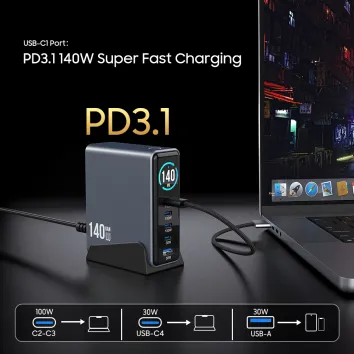
• PD3.1 chargers
• 140W laptop chargers
• multi-port GaN chargers
• PPS charging systems
• gaming laptop charging
engineering capability now plays a much larger role than simple wattage specifications.
Step 7: Ask About Long-Term Product Roadmaps
Forward-thinking suppliers should already be preparing for:
• wider PD3.1 adoption
• AI laptop charging
• higher-power USB-C ecosystems
• next-generation GaN platforms
• USB4 / Thunderbolt integration
Choosing a future-ready supplier helps reduce redesign cycles later.
Why B2B Buyers Now Prefer Technical Partners — Not Just Factories
The market is becoming increasingly technical.
Today, many successful brands look for suppliers that can provide:
• engineering support
• charging optimization
• compliance guidance
• protocol expertise
• ecosystem understanding
rather than simple contract manufacturing.
This trend will likely continue accelerating over the next few years.
Final Thoughts
The USB-C charging industry is evolving rapidly.
And in 2026, choosing the right charger manufacturer is no longer only about cost.
It is about:
• engineering reliability
• protocol expertise
• safety consistency
• ecosystem compatibility
• future scalability
As charging ecosystems continue advancing toward:
• PD3.1
• EPR charging
• Thunderbolt integration
• high-power GaN systems
the gap between low-end suppliers and true engineering manufacturers will become even larger.
For brands, distributors, and B2B buyers, selecting the right manufacturing partner may become one of the most important competitive decisions in the entire charging business.
Read more related content
• “USB-C PD3.1 and EPR Charging Explained”↗
• “Why Some USB-C Cables Cannot Charge Laptops Properly”↗
FAQ (People Also Ask)
Q1: How do I choose a reliable charger manufacturer?
Focus on engineering capability, certifications, PD expertise, and quality control systems.
Q2: What certifications should a charger factory have?
Common certifications include CE, FCC, RoHS, KC, ETL, CB, and ERP.
Q3: Why does PD3.1 manufacturing require advanced engineering?
Higher charging power increases demands on thermal management, protocol stability, and cable compatibility.
Q4: What makes a good USB-C cable supplier?
Reliable suppliers understand E-Marker chips, cable resistance, shielding, and PD compatibility.
Q5: Are all GaN charger factories the same?
No. Engineering capability varies significantly between manufacturers.
Q6: Why is thermal design important in chargers?
Poor thermal management can reduce lifespan, stability, and charging safety.
Q7: Can a low-quality cable affect laptop charging?
Yes. Weak cables often cause unstable charging and reduced power delivery.
Q8: What should B2B buyers prioritize besides price?
Engineering reliability, certification compliance, ecosystem expertise, and production consistency are increasingly important.
Read More
Read More