Is It Safe to Charge Your Phone Overnight?
Charging your phone overnight is something most of us do without thinking twice. You plug in your phone, go to sleep, and wake up to a full battery. But is it actually safe? Will it damage your battery, waste electricity, or even cause overheating?
The short answer is: yes, it's generally safe — but not always risk-free.
The long answer depends on the charger you use, the charging technology, and how modern your device really is.
Let's break it down clearly, without fear-mongering or outdated myths.
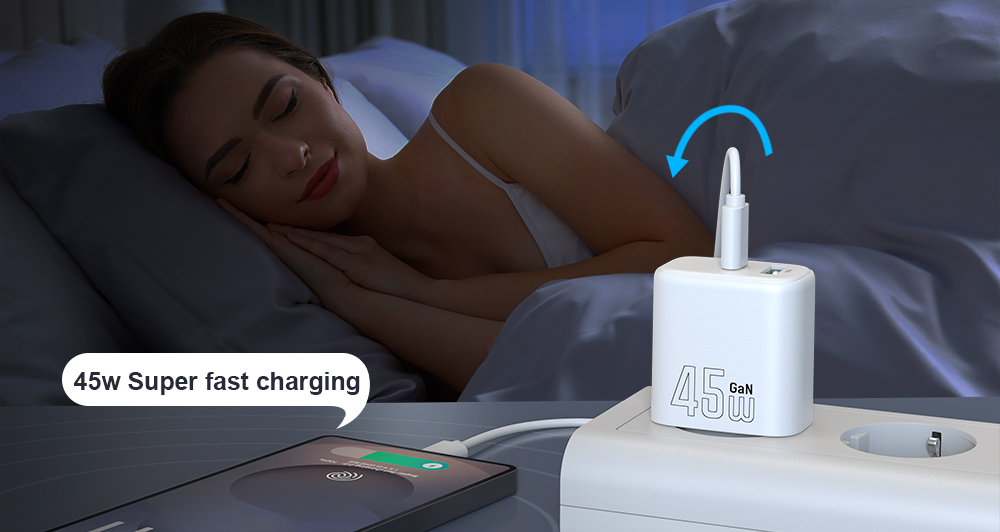
How Overnight Phone Charging Works Today
Modern smartphones are much smarter than they were years ago. When you connect a phone charger — whether it's a USB-C charger adapter, PD fast charger, or GaN charger — your phone communicates with the charger before power starts flowing.
Most modern devices now use:
· Smart charging algorithms
· Battery management ICs
· Trickle charging at high battery levels
Once your phone reaches around 80–90%, charging slows down significantly. At 100%, the charger either stops supplying power or switches to a very low maintenance current.
This means your phone is not being force-charged all night the way older phones once were.
Does Overnight Charging Damage the Battery?
This is one of the most searched questions globally — and the answer is nuanced.
What really affects battery health:
· Heat, not charging time
· Sustained high temperature
· Cheap or unstable chargers
Using a high-quality phone charger, especially a USB-C fast charger with PD or PPS, dramatically reduces battery stress.
However, keeping a phone at 100% for many hours in a hot environment can slightly accelerate battery aging over time. This is why some phones now offer "Optimized Charging", delaying the final 10–20% until just before you wake up.
👉 Key takeaway: Overnight charging is safe, but heat control matters more than hours plugged in.
Is It Safe to Use a Fast Charger Overnight?
Many users worry that using a 20W, 30W, 45W, or even 65W fast charger overnight is dangerous. In reality, fast chargers don't "force" power into your phone.
A fast charger only supplies what the phone requests.
For example:
· A 65W GaN charger can safely charge a phone that only needs 18–27W
· The charger automatically steps down voltage and current
This applies to:
· USB-C charger adapters
· PD chargers
· GaN fast chargers
· Display chargers with real-time power monitoring
As long as the charger is compliant and certified, higher wattage does not mean higher risk.

Problems usually come from the charger, not the phone.
⚠️ Higher risk scenarios include:
· Using unbranded or counterfeit chargers
· Poor-quality wall chargers without safety protections
· Chargers that lack over-current, over-voltage, or thermal protection
· Charging under pillows, blankets, or on heat-trapping surfaces
A cheap USB charger with unstable output may generate excess heat or electrical noise, increasing long-term risk.
That’s why professionals recommend chargers from:
· Certified charger manufacturers
· OEM charger factories with safety testing
· Suppliers offering CE, RoHS, FCC, or UL compliance
Does Charging Overnight Waste Electricity?
Another common question is whether a charger keeps drawing power when the phone is full.
The truth:
· A phone charger uses very little electricity once charging is complete
· Modern chargers enter standby or idle mode
· Energy loss is usually measured in fractions of a watt
Using an efficient GaN charger or PD wall charger reduces standby consumption even further.
So yes, there is some power use — but it’s minimal and not a major energy concern.
Is Wireless Overnight Charging Worse Than Wired?
Wireless charging generates more heat than wired charging, especially during long sessions.
If you charge overnight:
· Wired USB-C chargers are generally better for heat control
· Wireless pads can cause heat buildup, especially with thick cases
If you prefer wireless charging, choose:
· Certified wireless chargers
· Proper alignment
· Open, ventilated surfaces

If you want to charge overnight with confidence, follow these simple rules:
✔ Use a high-quality phone charger or USB-C charger adapter
✔ Choose PD or PPS fast chargers with intelligent power control
✔ Avoid covering your phone while charging
✔ Keep the charging area well-ventilated
✔ Enable optimized charging if your phone supports it
For brands, resellers, and distributors, offering safe, certified fast chargers is now a key purchasing factor for consumers.
Final Verdict: Should You Charge Your Phone Overnight?
Yes — overnight charging is generally safe with modern phones and quality chargers.
The real risks don’t come from charging overnight itself, but from:
· Poor-quality chargers
· Excessive heat
· Outdated charging designs
Choosing a reliable phone charger, especially a USB-C fast charger or GaN charger from a trusted manufacturer, makes all the difference.
Why Charger Quality Matters More Than Ever
As charging speeds increase and devices become more power-hungry, charger design, component quality, and safety testing are no longer optional — they’re essential.
For consumers, it means peace of mind.
For brands and B2B buyers, it means fewer returns, better reputation, and long-term trust.
FAQ
Q1: Is overnight phone charging bad for battery health?
No. Modern phones manage charging automatically to protect long-term battery health.
Q2: Does charging at 100% damage the battery?
Staying at 100% for extended periods can slightly accelerate aging, but smart charging systems minimize this effect.
Q3: Does a charger use electricity when the phone is full?
Yes, but only minimal standby power if the charger is well designed.
Q4: Are GaN chargers safe for overnight charging?
Yes. Certified GaN chargers are efficient, stable, and suitable for long charging sessions.
Q5: What is the safest charger type for overnight use?
A certified USB-C PD charger with temperature and overcurrent protection.