Small Charger vs Power Bank: Which Charges Your Phone Faster in 2026?
A small wall charger usually charges devices faster than a power bank because it connects directly to electrical power and can deliver higher wattage. Power banks prioritize portability and battery storage, which introduces energy conversion losses and often limits charging output compared with modern USB-C fast chargers.
Introduction
When your phone battery drops to 10% during a busy day, you usually reach for two possible solutions:
a compact wall charger or a portable power bank.
Both are designed to keep your devices running—but they work very differently.
In today’s mobile ecosystem of USB-C fast chargers, GaN chargers, and high-capacity power banks, many users ask the same question:
Which one actually charges your device faster?
This guide explains the real differences in charging speed, efficiency, and convenience, while also exploring how modern fast charger manufacturers and OEM charger factories design compact chargers for smartphones, tablets, and laptops.
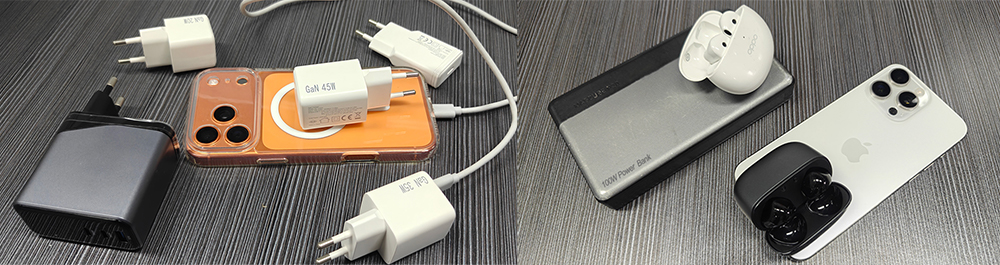
Small Charger vs Power Bank: Core Difference
The biggest difference is where the energy comes from.
The biggest difference is where the energy comes from.
| Feature | Small Wall Charger | Power Bank |
| Power Source | Direct AC electricity | Internal battery |
| Typical Output | 20W – 100W+ | 10W – 30W (most models) |
| Charging Efficiency | Very high | Lower due to conversion |
| Best Use | Fast charging | Portable backup power |
A wall charger connects directly to mains electricity, allowing it to deliver higher and more stable power output.
A power bank stores electricity in an internal lithium battery, then releases it later—this process introduces energy losses and usually reduces output power.
Why Small Chargers Usually Charge Faster
1. Direct Power Supply
Wall chargers draw energy directly from an outlet, enabling consistent high-watt charging.
Many modern USB-C chargers now support:
• 30W 65W 100W smartphone fast charging
• 65W laptop charging
• 100W 140W multi-device charging
USB-C Power Delivery can even support up to 240W with the latest PD 3.1 standard, making it suitable for laptops and high-power devices.
2. Higher Wattage Output
Most compact wall chargers deliver significantly higher output compared with typical power banks.
Typical outputs:
• Basic phone charger → 20W-45W
• Fast GaN charger → 45W-65W+
• Smart Phones & Laptop USB-C charger → 100W+
Meanwhile, many power banks still output 12W–30W, which limits charging speed.
This is why plugging into a fast wall charger often charges your phone 30–60% faster than using a portable battery.
3. Better Charging Efficiency
Charging from a power bank involves multiple energy conversions:
①Electricity stored in lithium battery
②Converted through internal circuit
③Output adjusted for device voltage
These steps typically cause 10–20% energy loss, reducing overall efficiency.
In contrast, a wall charger converts AC power directly to the required voltage, making charging faster and more efficient.
When Power Banks Are the Better Option
Despite slower speeds, power banks are essential in many situations.
Best use cases
Power banks excel in situations where mobility matters more than speed:
• Traveling
• Outdoor activities
• Long flights
• Emergency backup power
• Digital nomad workflows
They allow devices to charge anywhere without an electrical outlet.
Modern USB-C power banks with 30W–100W output are improving performance, but they still typically cannot match the sustained power of dedicated wall chargers.
Modern Compact Chargers: Smaller but More Powerful
The rise of GaN (Gallium Nitride) technology has changed the charging industry dramatically.
GaN chargers are:
• Smaller
• More efficient
• Higher power density
• Lower heat generation
This is why many charger manufacturers and OEM fast charger factories are now focusing on compact high-watt USB-C chargers.
A pocket-size charger today can deliver:
• 65W laptop charging
• Fast charging for smartphones
• Multi-device power via USB-C ports
For example, many compact chargers can power a laptop, phone, and earbuds simultaneously.
For a deeper explanation of fast-charging technology, see:
➡ https://www.anker.com/blogs/chargers/does-usb-c-charge-faster
How Charger Manufacturers Design Compact Fast Chargers
Behind every compact fast charger is complex power electronics engineering.
Professional charger manufacturers and OEM charger factories focus on:
• USB-C Power Delivery protocol optimization
• GaN semiconductor efficiency
• Thermal management design
• multi-port power distribution
• international safety certifications
Companies like Anker, Belkin, Zonsan, and many professional OEM charger suppliers are pushing the industry toward smaller yet more powerful charging solutions.
For B2B electronics brands and retailers, partnering with a reliable USB-C charger manufacturer is essential for producing competitive fast-charging products.
Small Charger vs Power Bank: Which Should You Choose?
The answer depends on your scenario.
Choose a small charger if you want:
• Fastest charging speed
• Laptop or tablet charging
• High-power USB-C charging
• Daily office or home use
Choose a power bank if you want:
• Charging while traveling
• Emergency battery backup
• Outdoor mobility
• Charging away from outlets
In many cases, the best setup is both:
• A compact GaN charger for fast charging
• A power bank for mobility
Future Trend: Hybrid Charging Ecosystems
Charging technology is moving toward multi-device ecosystems.
Trends include:
• 100W+ compact GaN chargers
• USB-C PD universal charging
• laptop + phone shared chargers
• power banks with laptop charging capability
For device manufacturers and brands, sourcing chargers from experienced fast charger factories ensures compatibility with evolving standards such as PD3.0, PPS, and PD3.1.
FAQ (People Also Ask)
Q1: Do power banks charge phones slower than wall chargers?
Yes, in most cases. Power banks often provide lower output wattage and experience energy loss during power conversion, which makes charging slower compared with direct wall chargers.
Q2: What is the fastest way to charge a phone?
Using a USB-C fast wall charger that supports Power Delivery or PPS is usually the fastest method. These chargers can deliver significantly higher power compared with standard USB ports or portable batteries.
Q3: Can power banks support fast charging?
Yes, many modern power banks support USB-C PD fast charging, but the maximum output is often lower than high-power wall chargers.
Q4: Are compact GaN chargers better than traditional chargers?
Yes. GaN chargers are more efficient, produce less heat, and allow higher power output in smaller designs.
Q5: Can a 65W charger charge both phones and laptops?
Yes. A 65W USB-C charger can charge smartphones, tablets, and many laptops because devices automatically negotiate the required power through USB-C Power Delivery.
A power bank stores electricity in an internal lithium battery, then releases it later—this process introduces energy losses and usually reduces output power.
Why Small Chargers Usually Charge Faster
1. Direct Power Supply
Wall chargers draw energy directly from an outlet, enabling consistent high-watt charging.
Many modern USB-C chargers now support:
• 30W 65W 100W smartphone fast charging
• 65W laptop charging
• 100W 140W multi-device charging
USB-C Power Delivery can even support up to 240W with the latest PD 3.1 standard, making it suitable for laptops and high-power devices.
2. Higher Wattage Output
Most compact wall chargers deliver significantly higher output compared with typical power banks.
Typical outputs:
• Basic phone charger → 20W-45W
• Fast GaN charger → 45W-65W+
• Smart Phones & Laptop USB-C charger → 100W+
Meanwhile, many power banks still output 12W–30W, which limits charging speed.
This is why plugging into a fast wall charger often charges your phone 30–60% faster than using a portable battery.
3. Better Charging Efficiency
Charging from a power bank involves multiple energy conversions:
①Electricity stored in lithium battery
②Converted through internal circuit
③Output adjusted for device voltage
These steps typically cause 10–20% energy loss, reducing overall efficiency.
In contrast, a wall charger converts AC power directly to the required voltage, making charging faster and more efficient.
When Power Banks Are the Better Option
Despite slower speeds, power banks are essential in many situations.
Best use cases
Power banks excel in situations where mobility matters more than speed:
• Traveling
• Outdoor activities
• Long flights
• Emergency backup power
• Digital nomad workflows
They allow devices to charge anywhere without an electrical outlet.
Modern USB-C power banks with 30W–100W output are improving performance, but they still typically cannot match the sustained power of dedicated wall chargers.
Modern Compact Chargers: Smaller but More Powerful
The rise of GaN (Gallium Nitride) technology has changed the charging industry dramatically.
GaN chargers are:
• Smaller
• More efficient
• Higher power density
• Lower heat generation
This is why many charger manufacturers and OEM fast charger factories are now focusing on compact high-watt USB-C chargers.
A pocket-size charger today can deliver:
• 65W laptop charging
• Fast charging for smartphones
• Multi-device power via USB-C ports
For example, many compact chargers can power a laptop, phone, and earbuds simultaneously.
For a deeper explanation of fast-charging technology, see:
➡ https://www.anker.com/blogs/chargers/does-usb-c-charge-faster
How Charger Manufacturers Design Compact Fast Chargers
Behind every compact fast charger is complex power electronics engineering.
Professional charger manufacturers and OEM charger factories focus on:
• USB-C Power Delivery protocol optimization
• GaN semiconductor efficiency
• Thermal management design
• multi-port power distribution
• international safety certifications
Companies like Anker, Belkin, Zonsan, and many professional OEM charger suppliers are pushing the industry toward smaller yet more powerful charging solutions.
For B2B electronics brands and retailers, partnering with a reliable USB-C charger manufacturer is essential for producing competitive fast-charging products.
Small Charger vs Power Bank: Which Should You Choose?
The answer depends on your scenario.
Choose a small charger if you want:
• Fastest charging speed
• Laptop or tablet charging
• High-power USB-C charging
• Daily office or home use
Choose a power bank if you want:
• Charging while traveling
• Emergency battery backup
• Outdoor mobility
• Charging away from outlets
In many cases, the best setup is both:
• A compact GaN charger for fast charging
• A power bank for mobility
Future Trend: Hybrid Charging Ecosystems
Charging technology is moving toward multi-device ecosystems.
Trends include:
• 100W+ compact GaN chargers
• USB-C PD universal charging
• laptop + phone shared chargers
• power banks with laptop charging capability
For device manufacturers and brands, sourcing chargers from experienced fast charger factories ensures compatibility with evolving standards such as PD3.0, PPS, and PD3.1.
FAQ (People Also Ask)
Q1: Do power banks charge phones slower than wall chargers?
Yes, in most cases. Power banks often provide lower output wattage and experience energy loss during power conversion, which makes charging slower compared with direct wall chargers.
Q2: What is the fastest way to charge a phone?
Using a USB-C fast wall charger that supports Power Delivery or PPS is usually the fastest method. These chargers can deliver significantly higher power compared with standard USB ports or portable batteries.
Q3: Can power banks support fast charging?
Yes, many modern power banks support USB-C PD fast charging, but the maximum output is often lower than high-power wall chargers.
Q4: Are compact GaN chargers better than traditional chargers?
Yes. GaN chargers are more efficient, produce less heat, and allow higher power output in smaller designs.
Q5: Can a 65W charger charge both phones and laptops?
Yes. A 65W USB-C charger can charge smartphones, tablets, and many laptops because devices automatically negotiate the required power through USB-C Power Delivery.