What Is a Charger? Understanding Portable Chargers in 2026
This guide explains what a charger is, how it works, and why choosing the right charger matters, especially for mobile phone chargers and USB-C fast chargers.
What Is a Charger?
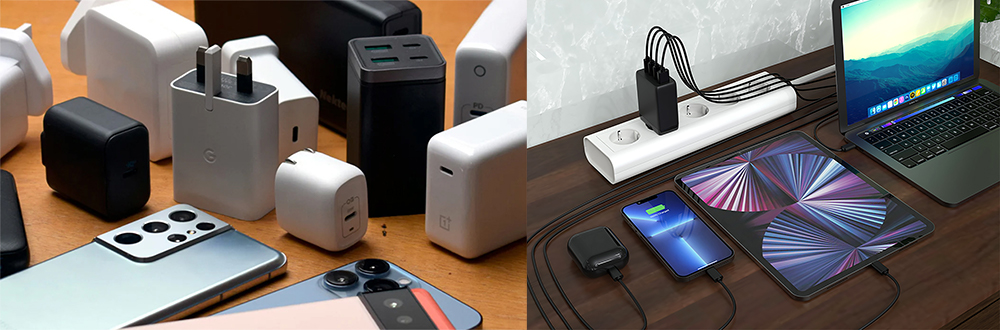
A charger is a power conversion device that safely transfers electrical energy from a power source to an electronic device by regulating voltage, current, and charging protocols. Its primary function is to convert AC or DC input power into a stable output that matches the device’s battery and power management system.
In daily use, chargers are designed for different applications, including mobile phone chargers, laptop chargers, USB-C fast chargers, wall chargers, and portable chargers. Modern chargers also integrate intelligent charging protocols such as USB Power Delivery (PD) and PPS, allowing devices to negotiate power levels dynamically for faster and safer charging.
Chargers are used across multiple industries and scenarios, including:
· Consumer electronics (mobile phones, tablets, laptops)
· Industrial equipment (tools, scanners, handheld terminals)
· Medical devices
· Automotive and EV accessories
· Smart home and IoT devices
Types of Chargers by Industry and Use Case
Industry / Scenario Typical Charger Type
Mobile phones USB wall charger, fast charger
Laptops High-power USB-C charger (65W–240W)
Travel Portable charger, universal charger
Industrial Customized DC chargers
Retail & OEM Branded wall chargers from manufacturers
How Does a Charger Work?
A charger works by converting incoming electrical power into a controlled output that matches a device’s battery requirements, then continuously adjusting that output through real-time communication.
In practice, a charger works in four key steps:
Step 1: Power input conversion
The charger receives AC power from a wall outlet or DC power from a source, then converts it into usable DC power through internal rectifiers and transformers.
Step 2: Voltage and current regulation
Internal control circuits adjust voltage and current to safe levels required by the device, preventing overcharging or unstable power delivery.
Step 3: Charging protocol negotiation
Modern chargers use protocols such as USB Power Delivery (PD) or PPS to communicate with the device. The charger and device negotiate the optimal power level before charging begins.
Step 4: Continuous safety monitoring
During charging, the charger constantly monitors temperature, current, and voltage. If abnormal conditions are detected, power output is reduced or shut off to protect the battery and device.
Common Charger Brands in the Market
In 2026, the charger market includes both consumer brands and OEM/ODM manufacturers.
Popular Consumer Brands
• Apple / Samsung / Anker / Belkin / UGREEN / Baseus
• Toocki / Hama / INIU / Zonsan / IKEA / ....
Manufacturer & Supplier Side
Behind most global brands are charger factories and suppliers specializing in:
• OEM charger manufacturing
• ODM fast charger development
• Custom USB-C charger design
• Multi-certification compliance (CE, FCC, KC, UKCA, etc.)
For B2B buyers, sourcing directly from a charger manufacturer or factory offers cost control, customization, and long-term supply stability.

Why Are Chargers So Important?
A charger is important because it directly controls how safely, efficiently, and quickly electrical power is delivered to your device. The right charger protects battery health, ensures stable performance, and prevents long-term damage caused by overheating or unstable voltage.
At a technical level, chargers matter for four core reasons:
• Power output accuracy – A well-designed charger delivers the correct wattage and voltage required by the device. Insufficient power leads to slow charging, while unstable output can reduce charging efficiency and shorten battery lifespan.
• Charging protocol compatibility – Modern fast chargers support intelligent protocols such as USB Power Delivery (PD) and PPS. These standards allow real-time communication between the charger and the device, enabling faster charging without increasing safety risks.
• Interface and connection quality – USB-C chargers provide lower resistance, higher power capacity, and more reliable connections than legacy USB-A designs. This reduces energy loss and improves overall charging stability.
• Built-in safety protection – High-quality chargers include multiple safety layers, such as over-voltage, over-current, over-temperature, and short-circuit protection. These safeguards prevent overheating, electrical failure, and battery degradation during daily use.
Daily Applications of Chargers
Chargers are used in nearly every daily scenario, and different environments place different demands on performance, portability, and reliability.
Home Charging
At home, wall chargers are commonly used for overnight or desk charging. A reliable fast wall charger ensures stable power delivery without excessive heat, helping extend battery lifespan over long-term daily use.
Office & Remote Work
In office or hybrid work setups, multi-port USB-C chargers allow users to charge phones, tablets, and laptops simultaneously, reducing cable clutter and improving workspace efficiency.
Travel
Whether on long flights or sightseeing trips, a dependable charger ensures navigation, communication, and photography remain uninterrupted. For example, a portable charger with a 99Wh capacity complies with airline regulations, making it ideal for international travel.
Public & Shared Spaces
In airports, hotels, and cafes, compact universal chargers with wide voltage input (100–240V) provide reliable charging across different regions and power standards.
Portable Chargers vs Wall Chargers
| Feature | Portable Power Bank | Wall Charger |
| Power source | Internal battery | AC outlet |
| Mobility | High | Low |
| Charging speed | Medium | Fast |
| Best use | Travel, emergencies | Daily fast charging |
In 2026, many users combine both:
a fast wall charger at home and a portable power bank on the go.
Choosing the Right Charger in 2026
When selecting a charger, consider:
· Device compatibility
· Required wattage
· Support for PD and PPS
· Number of ports
· Certification and safety compliance
· Manufacturer reliability
Avoid low-quality chargers with unclear specifications or no certifications.
Read More
The Role of Charger Manufacturers and Suppliers
Behind every reliable charger is a capable manufacturer.
Professional charger factories focus on:
· Power electronics R&D
· Fast-charging protocol tuning
· Quality control and aging tests
· International compliance certifications
For brands, retailers, and distributors, working with a trusted charger supplier or manufacturer(Zonsan) ensures consistent performance and regulatory compliance.
FAQ: Chargers Explained
Choosing the Right Charger in 2026
When selecting a charger, consider:
· Device compatibility
· Required wattage
· Support for PD and PPS
· Number of ports
· Certification and safety compliance
· Manufacturer reliability
Avoid low-quality chargers with unclear specifications or no certifications.
Read More
The Role of Charger Manufacturers and Suppliers
Behind every reliable charger is a capable manufacturer.
Professional charger factories focus on:
· Power electronics R&D
· Fast-charging protocol tuning
· Quality control and aging tests
· International compliance certifications
For brands, retailers, and distributors, working with a trusted charger supplier or manufacturer(Zonsan) ensures consistent performance and regulatory compliance.
FAQ: Chargers Explained
What is the difference between a fast charger and a normal charger?
A fast charger supports higher power output and smart charging protocols like PD or PPS, allowing devices to charge significantly faster than standard 5W chargers.
Is a USB-C charger safe for all phones?
Yes, if the charger follows USB-C and PD standards. Devices automatically negotiate safe power levels.
Can using the wrong charger damage my phone?
Low-quality or uncertified chargers may deliver unstable power, increasing heat and battery degradation risk.
How long does a phone charger usually last?
A quality charger typically lasts 2–3 years under normal use, depending on heat exposure and usage frequency.
Are universal chargers really universal?
Modern universal USB-C chargers support multiple devices, but maximum speed depends on device compatibility.
Should businesses buy chargers directly from factories?
Yes. Direct sourcing from a manufacturer offers better pricing, customization, and certification support.
A fast charger supports higher power output and smart charging protocols like PD or PPS, allowing devices to charge significantly faster than standard 5W chargers.
Is a USB-C charger safe for all phones?
Yes, if the charger follows USB-C and PD standards. Devices automatically negotiate safe power levels.
Can using the wrong charger damage my phone?
Low-quality or uncertified chargers may deliver unstable power, increasing heat and battery degradation risk.
How long does a phone charger usually last?
A quality charger typically lasts 2–3 years under normal use, depending on heat exposure and usage frequency.
Are universal chargers really universal?
Modern universal USB-C chargers support multiple devices, but maximum speed depends on device compatibility.
Should businesses buy chargers directly from factories?
Yes. Direct sourcing from a manufacturer offers better pricing, customization, and certification support.