GaN Charger vs Normal Charger: What’s Really the Difference? (2026 Update) | ZONSAN
Choosing the right charger isn’t just about how fast it can top up your phone. As more devices — from smartphones to laptops — demand higher power and smarter charging logic, understanding the difference between GaN chargers and traditional (normal) chargers becomes essential. This updated guide breaks down the technology, performance, and real-world benefits so you can make the best decision for your needs.
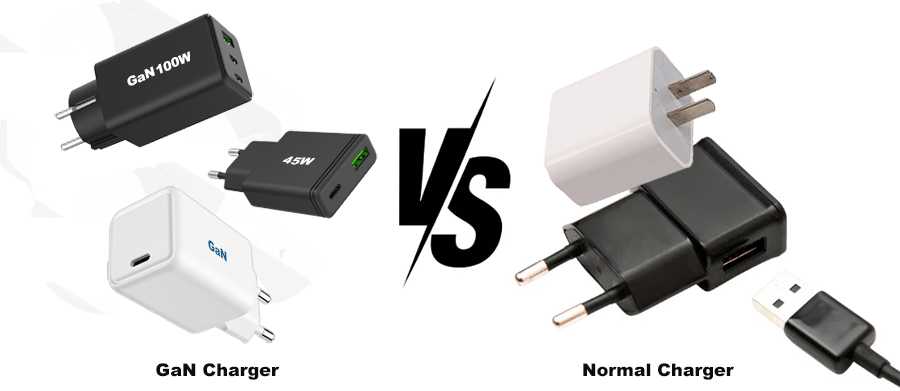
What Is a GaN Charger?
A GaN (Gallium Nitride) charger uses gallium nitride semiconductors instead of traditional silicon to convert AC power into DC power for charging devices. Because GaN devices can operate at higher frequencies with lower energy loss, they deliver power more efficiently, with less heat and smaller size.
GaN vs Normal Charger: Key Differences
1. Size and Portability
One of the most visible differences is size.
· GaN Charger: Significantly smaller and lighter due to efficient semiconductor switching and reduced component requirements. This makes GaN chargers ideal for travel, multi-port designs, and compact charging stations.
· Normal Charger: Silicon-based designs require larger transformers and heat sinks, leading to bulkier and heavier units.
2. Charging Speed and Efficiency
Efficiency matters when delivering power:
· GaN Charger: Higher efficiency (often ~94–95%) means more power reaches your device, enabling faster charging with less heat.
· Normal Charger: Lower conversion efficiency (typically ~85–90%) leads to more energy wasted as heat and slower power delivery.
This higher efficiency also translates into lower energy loss and better thermal behavior under sustained loads.
3. Heat Management
Heat affects both safety and lifespan:
· GaN Chargers stay cooler even at high output because they generate less waste heat and use faster switching components.
· Normal Chargers tend to heat up more under load, which can reduce internal component life and sometimes trigger thermal throttling.
4. Multi-Device Charging & Protocol Support
As modern users carry multiple devices, chargers must handle a range of standards:
· GaN Chargers integrate easily with USB-C Power Delivery (PD), Quick Charge (QC), and other fast-charging protocols, often across multiple ports with high power output.
· Normal Chargers may support basic fast charging but are less often designed for multiple high-wattage outputs.
5. Durability and Longevity
Longer life is a real cost saving:
· GaN Chargers generally handle thermal stress better, leading to fewer failures and longer service life.
· Normal Chargers working at higher temperatures often degrade faster under sustained use.
Real-World Benefits: What Users Actually Experience
Here’s what most users notice when upgrading from a normal charger to a GaN model:
· Smaller, more travel-friendly size
· Less heat under sustained charging
· Faster and more consistent delivery of power
· Better handling of high-power devices like laptops and tablets
These practical improvements are why many professionals, frequent travelers, and tech enthusiasts prefer GaN chargers today.
Are GaN Chargers Compatible With All Devices?
Yes — most GaN chargers are designed with universal output standards like USB-C PD and QC, meaning they work with smartphones, tablets, laptops, and other USB-powered gadgets. Just make sure the charger’s power rating matches your device’s requirements.
Why Choose a GaN Charger From a Professional Manufacturer?
Working with a factory-grade supplier like ZONSAN ensures that:
· The GaN charger is engineered for real-world performance
· Multiple fast-charge protocols (PD, QC, PPS) are implemented correctly
· Heat management and safety protections are validated through internal testing
· Certifications (CE, RoHS, FCC, ETL, etc.) are provided for global markets
ZONSAN’s GaN chargers deliver compact form factors, efficient performance, and reliable quality for OEM and ODM customers worldwide.
Gauging Cost vs Value
It’s true that GaN chargers often cost more upfront than traditional chargers. However, when you consider:
· Smaller size and better portability
· Higher efficiency and faster output
· Lower thermal stress on both the charger and the device
many users and businesses find GaN chargers to be better long-term investments.
Quick Comparison: GaN vs Normal Charger
| Feature | GaN Charger | Normal Charger |
| Size | Compact & lightweight | Larger, heavier |
| Efficiency | High (~94–95%) | Lower (~85–90%) |
| Heat | Low generation | More heat |
| Charging Speed | Faster | Moderate |
| Multi-Device | Excellent | More limited |
| Durability | Strong | Limited |
| Protocol Support | PD / QC / PPS | Basic fast charging |
GaN Chargers FAQ
Q: Are GaN chargers safer to use than normal chargers?
A: GaN chargers generally run cooler and offer better heat management, reducing thermal risk and improving durability.
Q: Does GaN technology make chargers faster?
A: Yes — because GaN semiconductors are more efficient, they waste less energy as heat and deliver more power to your device faster.
Q: Does a GaN charger work with all devices?
A: Most GaN chargers support universal standards like USB-C PD and QC, making them compatible with phones, tablets, and laptops.
Q: Are GaN chargers worth the higher price?
A: For modern power needs, portability, and long-term reliability, many users and businesses find GaN chargers to be a good investment.
Normal Chargers FAQ
Q1: Are normal chargers still good enough for modern smartphones?
Yes, normal chargers can still handle everyday charging for many smartphones, especially lower-power devices or older models. However, as phones support faster charging standards like USB-C PD and PPS, traditional chargers may not fully utilize the device’s charging capability. This is why many users experience slower charging speeds with normal chargers.
Q2: Why do normal chargers get warmer than GaN chargers?
Normal chargers use traditional silicon components, which are less efficient at converting power. More energy is lost as heat during the charging process. This doesn’t always mean the charger is unsafe, but higher operating temperature can reduce component lifespan over time.
Q3: When is a normal charger a better choice than a GaN charger?
A normal charger can be a practical choice for basic charging needs, budget-friendly products, or low-wattage applications. For example, many accessories, Bluetooth devices, or older phones do not require high power output. In these cases, a normal charger offers stable performance at a lower cost.
OEM GaN Charger Recommendation
Read More
Read More
Read More
Q: Are GaN chargers safer to use than normal chargers?
A: GaN chargers generally run cooler and offer better heat management, reducing thermal risk and improving durability.
Q: Does GaN technology make chargers faster?
A: Yes — because GaN semiconductors are more efficient, they waste less energy as heat and deliver more power to your device faster.
Q: Does a GaN charger work with all devices?
A: Most GaN chargers support universal standards like USB-C PD and QC, making them compatible with phones, tablets, and laptops.
Q: Are GaN chargers worth the higher price?
A: For modern power needs, portability, and long-term reliability, many users and businesses find GaN chargers to be a good investment.
Normal Chargers FAQ
Q1: Are normal chargers still good enough for modern smartphones?
Yes, normal chargers can still handle everyday charging for many smartphones, especially lower-power devices or older models. However, as phones support faster charging standards like USB-C PD and PPS, traditional chargers may not fully utilize the device’s charging capability. This is why many users experience slower charging speeds with normal chargers.
Q2: Why do normal chargers get warmer than GaN chargers?
Normal chargers use traditional silicon components, which are less efficient at converting power. More energy is lost as heat during the charging process. This doesn’t always mean the charger is unsafe, but higher operating temperature can reduce component lifespan over time.
Q3: When is a normal charger a better choice than a GaN charger?
A normal charger can be a practical choice for basic charging needs, budget-friendly products, or low-wattage applications. For example, many accessories, Bluetooth devices, or older phones do not require high power output. In these cases, a normal charger offers stable performance at a lower cost.
OEM GaN Charger Recommendation
Read More
Read More
Read More