GaN Chargers Explained: Everything You Need to Know (GaN 1/2/3/4/5, Battery Safety, OEM Insights & Buyer Guide)
GaN fast chargers (Gallium Nitride chargers) are now among the most searched charging topics across Google, Reddit, and tech communities. Consumers are asking:
·What does GaN mean in charging?
·Are GaN chargers actually better?
·Do GaN chargers damage the battery?
·What is GaN 2/3/4/5?
·Why do all new 65W / 100W / 140W chargers use GaN?
At the same time, B2B buyers and OEM/ODM sourcing managers are actively searching for terms like:
·gan charger wholesaler
·gan charger factory
·OEM gan charger
·gan charger manufacturer with certifications
This article covers all major GaN topics — scientific principles, generational differences, safety, performance, and OEM manufacturing insights — to help both consumers and B2B buyers fully understand GaN fast charging.
GaN = Gallium Nitride, a semiconductor material that replaces traditional silicon (Si) in power electronics.
Why is GaN so important?
✔ Higher efficiency
GaN reduces energy loss during voltage conversion.
✔ Smaller size
GaN switches at higher frequencies → smaller coils → smaller PCB layout.
✔ Lower heat
GaN components sustain high power with cooler operation.
✔ Higher wattages in small chargers
This is why today’s 65W, 100W, 140W chargers can be palm-sized.
👉 In short:
GaN = smaller + cooler + faster + more efficient chargers.
2. GaN Charger Generations: GaN 1, GaN 2, GaN 3, GaN 4, GaN 5
Consumers and even brands often misunderstand “GaN generations.”
Here is the industry-accepted explanation used by charger engineers and OEM factories:
GaN 1 (First Generation) – Early Stage
·Basic GaN transistors
·Limited design integration
·Large heatsinks still needed
·Mostly used in early 45W–65W chargers
GaN 2 – Efficiency Improvement
·Smaller MOSFET packages
·Lower switching loss
·Better thermal performance
·Supports 65W–100W chargers
GaN 3 – Currently the Most Widely Used
This is the generation used in most mainstream GaN chargers globally.
Key improvements:
·Higher switching frequencies
·More compact PCB
·Lower temperature rise
·Easier EMI suppression
·Supports 100W–140W designs
GaN 3 is widely used in:
·65W USB-C GaN chargers
·100W GaN chargers for laptops
·120W GaN multi-port chargers
GaN 4 – High Power Density Era
GaN 4 began appearing in late 2024–2025 high-end chargers.
Improvements include:
·Integrated driver + GaN in one chip (Half-bridge integration)
·Reduced external components
·Higher power density
Used in:
·140W GaN chargers
·Compact multi-port chargers with displays
GaN 5 – The Newest Trend (2025)
Still emerging but gaining traction.
Features:
·Highest switching frequency
·Ultra low Rds(on)
·Extremely compact board design
·Enables next-gen slim chargers
Expected to dominate:
·Ultra-slim 30W/45W/65W chargers
·Foldable plug travel GaN chargers
·140W+ laptop chargers
3. Are GaN Chargers Really Better?
✔ Smaller
GaN chargers reduce PCB size by 20–40%.
✔ Cooler
Less heat = safer operation + longer charger lifespan.
✔ More power
GaN chargers commonly support: 65W, 100W, 120W, 140W
Making them ideal for laptops and multi-device charging.
✔ Higher efficiency
Less wasted heat = lower electricity cost.
✔ Better travel charger option
Lightweight and compact.
Conclusion:
Yes — GaN chargers are objectively better than silicon chargers in almost every technical metric.
4. Do GaN Chargers Damage Your Battery? (Most Asked on Google & Reddit)
Short answer: No — GaN chargers do NOT damage batteries.
✔ Safety depends on the protocol, not GaN
Whether GaN or silicon, the phone controls the charging process:
·Voltage regulation
·Current control
·Temperature protection
The battery NEVER directly receives “raw GaN power.”
✔ Modern phones use:
·BMS (Battery Management System)
·PMIC (Power Management IC)
·Thermal sensors
·Charge cycle algorithms
GaN only affects how the charger converts AC to DC, not how the battery charges.
✔ Poor-quality chargers (not GaN itself) are the real danger
Unsafe chargers may have:
·Voltage spikes
·No temperature protection
·Overcurrent issues
·So the correct question is:
Is the charger well-made and certified?
Not “Is it GaN?”
5. Hidden Questions from Forums (Reddit/XDA/Quora Trending Topics)
Below are the top real-world user questions related to GaN charging:
❓ Why do some GaN chargers feel warm?
GaN runs cooler than silicon — but high power density means heat is more concentrated in a smaller body.
This is normal.
❓ Why are some 65W GaN chargers smaller than others?
Depends on:
·GaN generation
·PCB design
·Heat dissipation
·EMI layout
·Capacitor size
Not all “65W GaN chargers” are engineered equally.
❓ Why does my laptop charge slower with some GaN chargers?
Possible reasons:
·PD protocol mismatch
·PPS not supported
·Cable is not e-marked
·Laptop limits third-party charger power
❓ Can a GaN charger charge my gaming handheld (Steam Deck, ROG Ally)?
Yes.
Steam Deck prefers 45W–65W PD.
ROG Ally prefers 65W PD or PD PPS.
❓ Are multi-port GaN chargers safe?
Yes — if they have:
·Independent power paths
·Smart load distribution
·Certified protection ICs
High-end OEM factories (like Zonsan) use all of these.
6. What to Look for When Buying a GaN Charger (Consumer & OEM Guide)
Must-have features
·PD 3.0 / PD 3.1
·PPS (for Samsung)
·QC4+/QC3.0
·CE/FCC/UL/RoHS certification
·Temperature control
·Low ripple design
·High-quality capacitors
Recommended wattages
·30W for iPhone
·45W for Samsung PPS
·65W for laptops + phones
·100W–140W for multi-device use
7. Insights for B2B Buyers: How to Choose an Excellent GaN Charger Factory
When sourcing GaN chargers, look for factories with:
✔ Strong R&D capability
Ability to design GaN 3 / GaN 4 / GaN 5 systems.
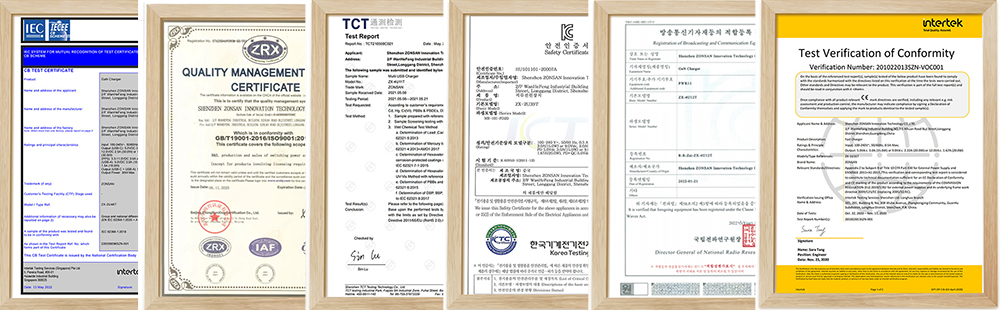
✔ Full safety certifications
CE, FCC, UL, KC, ETL, UKCA, RoHS, etc.
✔ Large production capacity
Supports bulk OEM/ODM orders.
✔ Engineering experience
Factories with 10+ years experience tend to deliver:
·lower failure rates
·better thermal design
·more stable PD/PPS performance
✔ Custom solutions
A premium OEM gan charger manufacturer should offer:
·custom molds
·custom PCB layouts
·custom power configurations
·custom colors
·custom packaging
8. Best GaN Charger Types (Market Trends 2025)
65W GaN USB-C Charger
Best seller globally.
100W GaN Multi-Port Charger
Perfect for laptops + tablets + phones.
120W GaN Chargers (Dual/Triple Port)
Popular in Europe & Middle East.
140W GaN Laptop Charger
For MacBook Pro 16’’ and high-end laptops.
Ultra-Slim GaN Chargers (30W/45W)
Huge growth in 2024–2025.
9.FAQ
Q1: What does GaN mean in charging?
GaN stands for Gallium Nitride, a high-efficiency semiconductor used to make smaller and faster chargers.
Q2: Are GaN chargers really better?
Yes — they are smaller, cooler, and support higher wattages.
Q3: Do GaN chargers damage the battery?
No. Battery management happens inside the phone, not the charger.
Q4: Is GaN 3 better than GaN 1 or 2?
Yes — GaN 3 is the mainstream generation offering better efficiency and size reduction.
Q5: Are GaN chargers safe for laptops?
Yes, as long as they support PD 3.0 / PD 3.1 and proper safety certification.
Q6: Who manufactures high-quality GaN chargers?
Professional GaN charger factories / OEM manufacturers offering certified PD/PPS solutions.
10. Conclusion: GaN Is the Future of Fast Charging
GaN chargers — they’re the new standard for fast, compact, and efficient charging.
For consumers:
✔ GaN is safe
✔ GaN is powerful
✔ GaN is the best choice for all modern smartphones and laptops
For OEM/ODM buyers:
✔ GaN chargers offer higher value
✔ GaN 3/4/5 solutions provide competitive advantages
✔ Partnering with a certified GaN charger factory ensures long-term reliability
GaN = the next decade of charging technology.
When sourcing GaN chargers, look for factories with:
✔ Strong R&D capability
Ability to design GaN 3 / GaN 4 / GaN 5 systems.
✔ Full safety certifications
CE, FCC, UL, KC, ETL, UKCA, RoHS, etc.
✔ Large production capacity
Supports bulk OEM/ODM orders.
✔ Engineering experience
Factories with 10+ years experience tend to deliver:
·lower failure rates
·better thermal design
·more stable PD/PPS performance
✔ Custom solutions
A premium OEM gan charger manufacturer should offer:
·custom molds
·custom PCB layouts
·custom power configurations
·custom colors
·custom packaging
8. Best GaN Charger Types (Market Trends 2025)
65W GaN USB-C Charger
Best seller globally.
100W GaN Multi-Port Charger
Perfect for laptops + tablets + phones.
120W GaN Chargers (Dual/Triple Port)
Popular in Europe & Middle East.
140W GaN Laptop Charger
For MacBook Pro 16’’ and high-end laptops.
Ultra-Slim GaN Chargers (30W/45W)
Huge growth in 2024–2025.
9.FAQ
Q1: What does GaN mean in charging?
GaN stands for Gallium Nitride, a high-efficiency semiconductor used to make smaller and faster chargers.
Q2: Are GaN chargers really better?
Yes — they are smaller, cooler, and support higher wattages.
Q3: Do GaN chargers damage the battery?
No. Battery management happens inside the phone, not the charger.
Q4: Is GaN 3 better than GaN 1 or 2?
Yes — GaN 3 is the mainstream generation offering better efficiency and size reduction.
Q5: Are GaN chargers safe for laptops?
Yes, as long as they support PD 3.0 / PD 3.1 and proper safety certification.
Q6: Who manufactures high-quality GaN chargers?
Professional GaN charger factories / OEM manufacturers offering certified PD/PPS solutions.
10. Conclusion: GaN Is the Future of Fast Charging
GaN chargers — they’re the new standard for fast, compact, and efficient charging.
For consumers:
✔ GaN is safe
✔ GaN is powerful
✔ GaN is the best choice for all modern smartphones and laptops
For OEM/ODM buyers:
✔ GaN chargers offer higher value
✔ GaN 3/4/5 solutions provide competitive advantages
✔ Partnering with a certified GaN charger factory ensures long-term reliability
GaN = the next decade of charging technology.