Charger Factory Audit Guide: How to Evaluate a Reliable OEM Charger Manufacturer
A charger factory audit is a systematic evaluation process used by buyers to verify whether a charger manufacturer has the engineering capability, production capacity, quality control system and compliance management needed for long-term cooperation. A reliable factory should not only produce chargers but also demonstrate stable manufacturing processes, testing capability and continuous quality improvement.
Key Takeaways
1. A factory audit helps buyers identify reliable charger suppliers.
2. Production capacity alone does not represent manufacturing capability.
3. R&D, testing, quality control and certifications are critical evaluation areas.
4. A professional charger factory should have a complete development-to-production system.
5. Supplier evaluation reduces risks before large-volume orders.
Introduction: Why Auditing a Charger Factory Matters
Choosing a charger supplier is not simply choosing a product.
For many buyers, especially OEM brands, distributors and retailers, the charger supplier becomes part of their long-term business chain.
At first glance, the charger seems very simple:
A plastic housing.
A USB port.
A power label.
But inside, a modern charger contains complex technology:
• Power conversion circuits.
• Control ICs.
• GaN components.
• Transformers.
• Protection systems.
• Thermal management design.
• Firmware or intelligent communication functions.
A small design or manufacturing problem can create serious consequences: Product returns, Customer complaints, Certification problems, Delivery delays, Brand reputation damage.
This is why a factory audit is important.
A professional buyer should not only ask: "Can this factory make chargers?"
The better question is: "Can this factory consistently produce safe, reliable and competitive chargers for long-term cooperation?"
Factory audits are designed precisely to answer this question.

What Is a Charger Factory Audit?
A charger factory audit is a structured evaluation of a manufacturer's capabilities, processes and management systems. The purpose is to understand whether the supplier can meet the customer's expectations in areas such as:
Product quality.
Production capacity.
Technical capability.
Delivery reliability.
Certification compliance.
Continuous improvement.
Complete audit usually covers several areas:
Factory Background
↓
R&D Capability
↓
Production Capability
↓
Quality Management
↓
Testing Laboratory
↓
Certification System
↓
Supply Chain Management
↓
OEM/ODM Capability
Different buyers may focus on different areas.
A large retailer may focus heavily on compliance and quality systems.
A startup brand may focus more on engineering support and customization ability.
A distributor may care about production capacity and delivery stability.
Why Charger Factory Audits Are More Important Today
The charger market has changed significantly.
In the past, many chargers were simple low-power products.
Today, the market is moving toward:
• USB-C charging.
• Fast charging technology.
• GaN chargers.
• PD 3.1.
• PPS compatibility.
• Multi-port charging solutions.
• Higher power products.
Examples include:
65W laptop chargers.
100W USB-C PD chargers.
140W GaN chargers.
240W USB-C power solutions.
Higher performance creates higher manufacturing requirements. Supplier that can produce a basic charger may not necessarily have the capability to develop and manufacture advanced products.
This is why supplier evaluation becomes increasingly important.
Factory Background and Company Capability Audit
The first step of a factory audit is understanding the supplier itself.
Before discussing products, buyers should understand: Who is the manufacturer?
1. Company History and Manufacturing Experience
Experience does not automatically guarantee quality. However, long-term manufacturing experience often indicates that a company has developed:
• Stable production processes.
• Engineering knowledge.
• Supplier relationships.
• Quality management experience.
During an audit, buyers may review:
• Year of establishment.
• Main product categories.
• Manufacturing history.
• Customer markets.
• Export experience.
For example: A factory producing chargers for many years may have accumulated experience dealing with:
• Different certification requirements.
• Regional market differences.
• Product customization.
• Issues arising during the production process and changes in customer requirements.
This experience can reduce risks during cooperation.
2. Is the Company a Real Manufacturer?
This is one of the most important questions. The market includes different types of suppliers:
Factory Manufacturer — Owns production facilities and controls manufacturing processes.
Advantages:
Better production control.
Faster technical communication.
More customization capability.
Trading Company — Connects buyers with factories.
Advantages:
May provide broader product options.
Potential limitations:
Less control over production.
Slower technical communication.
Limited visibility into manufacturing processes.
Factory + Trading Model — Some companies combine manufacturing and export capabilities.
This can provide:
Production control.
International customer service.
Export experience.
For OEM charger projects, understanding the supplier's actual role is important.
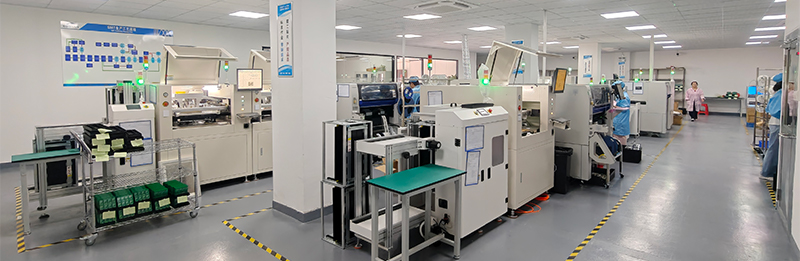
3. Factory Size and Production Environment
Factory size is not the only factor that determines quality. A large factory does not automatically mean better products.
However, the production environment can provide useful information.
During an audit, buyers may review:
1. Factory area(Area size and environment).
2. Production lines(Instruments and Equipment).
3. Assembly areas(Operational Standards).
4. Testing areas(Quality Inspection & Control).
5. Packaging & Warehousing
6. Warehouse management.
7. Material storage.
8. R&D Capabilities & Laboratories
A professional charger factory should have organized production areas.
• Incoming materials should not be mixed randomly with finished products.
• Production processes should have clear separation.
• Quality checkpoints should be visible and controlled.
• A clean and organized factory usually reflects stronger process management.

R&D Capability Audit: Can the Factory Develop Chargers?
For OEM and ODM customers, R&D capability is one of the most important audit areas. A factory that only assembles existing products has different capabilities compared with a manufacturer that can develop new charger solutions.
1. Hardware Engineering Capability
A professional charger manufacturer should have engineers who understand:
• Power electronics.
• AC/DC conversion.
• USB-C PD protocols.
• GaN technology.
• Thermal design.
• Circuit optimization.
This becomes especially important for customized projects.
For example: A customer may request: "Create a compact 100W GaN charger with two USB-C ports for the European market."
The supplier needs to evaluate: Circuit architecture, Component selection, Size limitations, Heat management, and Certification requirements.
Without strong engineering support, customization becomes difficult.
2. Product Development Process
A mature charger factory normally follows a structured development process. Typical stages include:
Requirement Analysis
↓
Engineering Design
↓
Prototype Development
↓
Testing
↓
Validation
↓
Pilot Production
↓
Mass Production
This process is typically part of a factory's New Product Introduction (NPI) system. Suppliers lacking a clear development process often rely excessively on "trial and error."
That can increase: Development time, Product risks, Engineering changes.
3. Prototype and Testing Capability
A good supplier should be able to create and evaluate prototypes internally. During an audit, buyers can check whether the factory has:
• Prototype equipment.
• Engineering testing tools.
• Sample production capability.
• Technical documentation.
The objective goes beyond merely producing charger samples; it is primarily about rapidly identifying and resolving issues prior to mass production.
Production Capability Audit: Can the Factory Manufacture Consistently?
A factory may have a good product design. But can it produce thousands of units with stable quality?
This is where production capability evaluation becomes important.
1. Production Line Evaluation
During a factory audit, buyers should review:
• Assembly lines.
• Production equipment.
• Operator workflow.
• Production capacity.
• Process control.
For charger production, important processes may include:
• PCB assembly.
• Soldering.
• Component installation.
• Housing assembly.
• Functional testing.
• Final inspection.
A mature factory should have clearly defined production procedures.
2. Production Capacity Assessment
Capacity is often discussed during supplier selection.
However, buyers should look beyond a simple monthly quantity number.
Important questions include:
1. Is the capacity based on actual production?
2. How many production lines are available?
3. How is capacity managed during peak seasons?
4. Can the factory support urgent orders?
A supplier claiming: "100,000 units per month" does not provide enough information.
Buyers need to understand whether that capacity can be achieved while maintaining quality.
Quality Management System Audit
Quality is one of the most important parts of a charger factory audit. A charger failure can directly affect end users.
Therefore, quality management should cover the entire product lifecycle.
1. Incoming Quality Control (IQC)
Before production begins, incoming materials should be checked.
Examples:
PCB.
• Components.
• Plastic housing.
• USB connectors.
• Packaging materials.
A supplier should have procedures to identify defective materials before they enter production.
2. In-Process Quality Control (IPQC)
Quality control should not happen only at the end. During production, factories should monitor key processes.
Examples:
• Soldering quality.
• Assembly accuracy.
• Component placement.
• Electrical testing.
Early detection prevents larger production problems.
3. Final Quality Control (FQC)
Before shipment, finished chargers should be inspected.
Testing may include:
• Appearance inspection.
• Functional testing.
• Charging performance.
• Label verification.
• Packaging inspection.
The final inspection is the last checkpoint before products reach customers.
Why Quality Systems Matter for OEM Customers
For OEM buyers, quality is not only about receiving good samples. The bigger challenge is maintaining consistency across:
• 1,000 units.
• 10,000 units.
• 100,000 units.
A mature quality system helps ensure that production units match approved samples.
Testing Laboratory Capability Audit
A charger factory's testing capability is one of the most important areas during supplier evaluation.
Many suppliers can produce a charger sample. But a professional manufacturer should also be able to verify:
Does the charger meet specifications?
Is the power output stable?
Is the temperature controlled?
Are safety functions working correctly?
Can production units maintain the same quality?
Testing capability shows whether a factory understands product reliability, not only assembly.
1. Electrical Testing Capability
For modern USB-C PD and GaN chargers, electrical testing is essential.
During an audit, buyers can check whether the factory has appropriate testing equipment:
• Power analyzers.
• Electronic loads.
• Oscilloscopes.
• Multimeters.
• PD protocol testers.
These tools help evaluate:
• Input characteristics.
• Output voltage.
• Output current.
• Power efficiency.
• Charging protocols.
• Load performance.
For example: A 100W USB-C charger should not only achieve 100W output under ideal conditions.
The factory should also understand:
How stable the output is.
How the charger behaves under different loads.
How the charger responds when multiple ports are used.
2. Reliability Testing Capability
A charger is expected to work reliably over time. Therefore, reliability testing is an important part of factory evaluation.
A professional charger factory may perform tests such as:
• Aging test.
• Burn-in test.
• High-temperature operation.
• Full-load testing.
• Repeated charging cycles.
• Protection testing.
These tests help identify potential problems before products reach customers.
For high-power chargers, especially:
• 65W GaN chargers.
• 100W PD chargers.
• 140W chargers.
reliability validation becomes even more important.
3. Thermal Testing Capability
Heat management is a major challenge for modern charger design. A small charger with high power density needs careful thermal control.
During an audit, buyers should understand:
• Does the factory perform temperature testing?
• How are thermal issues analyzed?
• Are high-load conditions tested?
Thermal testing may evaluate:
• Housing temperature.
• Internal component temperature.
• Temperature rise under different loads.
• Long-term heat stability.
A charger that delivers high power but overheats easily is not a successful product.
4. Production Testing Capability
Laboratory testing and production testing are different. A factory may have excellent engineering equipment but weak production testing.
During mass production, testing needs to be: Fast. Repeatable. Reliable. Suitable for high volume.
A buyer should ask:
What tests are performed on every unit?
Are test records saved?
How are failed units handled?
Can production data be traced?
A mature production system does not simply find defective products. It also helps prevent repeated failures.
Certification and Compliance Audit
For chargers sold globally, certification compliance is a critical requirement. Phone charger manufacturer should understand the requirements of different markets.
Common certifications may include: CE, RoHS, CB, KC, KCC, UKCA, FCC, ETL, KC, ERP, and ANATEL more.
The exact requirements depend on: Product type. Target market. Power level. Regional regulations.
Why Certification Capability Matters
Some buyers make the mistake of checking certifications only after product development. This can create problems.
Certification requirements should be considered during the early development stage.
A design change made after testing may affect:
• Safety.
• EMC performance.
• Certification results.
A factory with certification experience can usually identify these risks earlier.
What Buyers Should Check During Certification Audit
Important questions include: Does the factory understand target market requirements?
A fast charger designed for Europe may require different compliance considerations compared with a charger for South Korea or North America.
Are certificates valid and traceable?
Buyers should confirm: Certificate owner. Product model. Test report information. Certification scope.
Does the factory have experience with similar products?
A supplier that has previously developed: USB-C PD chargers, GaN chargers, Multi-port chargers.
may better understand certification challenges.
Supply Chain Management Audit
A charger factory is not only managing production. It is also managing a supply chain.
A reliable supplier needs stable control over: Components. Materials. Suppliers. Inventory. Delivery schedules.
1. Component Supplier Management
Chargers contain many critical components.
Examples:
• Power ICs.
• GaN components.
• Capacitors.
• Transformers.
• Connectors.
• PCB materials.
A factory should have processes to evaluate suppliers. Important factors include:
• Quality stability.
• Delivery capability.
• Technical support.
• Long-term availability.
2. Component Traceability
Traceability is an important quality management practice. A professional factory should be able to track:
• Component batches.
• Production dates.
• Finished product records.
Why does this matter?
Imagine a quality issue appears after shipment. Without traceability, it is difficult to know:
• Which production batch is affected?
• Which components were used?
• How many products need investigation?
Traceability allows faster problem analysis.
3. Supply Chain Risk Management
Global electronics supply chains can change quickly. Possible risks include:
• Component shortages.
• Price fluctuations.
• Supplier changes.
• Logistics problems.
A mature manufacturer should have plans to manage these risks:
• Alternative suppliers.
• Approved replacement components.
• Inventory planning.
• Long-term supplier relationships.
OEM/ODM Capability Audit
For many B2B buyers, OEM and ODM capability is a key reason for choosing a charger factory.
A supplier may be able to manufacture standard products. But can it support customization?
OEM Capability
OEM means the factory manufactures products according to customer requirements:
• Customer logo.
• Packaging design.
• Product appearance.
• Label customization.
• Market-specific versions.
A good OEM supplier should have systems to manage customized orders.
ODM Capability
ODM involves deeper product development cooperation. The supplier may support:
• Product concept.
• Industrial design.
• Engineering optimization.
• Prototype development.
• Manufacturing.
For companies entering the charger market, ODM capability can significantly reduce development challenges.
What Makes a Strong Gan Charger OEM Partner?
A reliable OEM/ODM charger supplier should provide:
Technical Communication
The fast charger supplier should understand customer requirements and provide engineering feedback.
Development Support
The gan charger supplier should support:
• Prototype creation.
• Testing.
• Certification.
• Product improvement.
Production Support
The pd charger supplier should manage:
• Materials.
• Production.
• Quality control.
• Delivery.
A true manufacturing partner supports the entire product lifecycle.
Common Charger Factory Audit Mistakes
Even experienced buyers can make mistakes during supplier evaluation.
Mistake 1: Choosing Only Based on Price
A lower price may look attractive. But a cheaper supplier may create hidden costs:
• Higher defect rates.
• Delayed shipments.
• Quality complaints.
• Additional inspection costs.
The lowest price is not always the lowest total cost.
Mistake 2: Checking Only Product Samples
A sample shows product appearance and basic function.
It does not show:
• Production consistency.
• Quality system.
• Manufacturing capability.
A good sample does not always mean a good factory.
Mistake 3: Ignoring Engineering Capability
For simple products, engineering support may seem less important.
But for:
• GaN chargers.
• High-power PD chargers.
• Custom designs.
engineering capability directly affects project success.
Mistake 4: Not Reviewing Quality Processes
A factory should explain:
• How defects are detected.
• How failures are analyzed.
• How improvements are implemented.
Quality should be a system, not a final inspection.
Charger Factory Audit Checklist for Buyers
Before selecting a charger manufacturer, buyers can review the following areas.
Company
✓ Manufacturing experience
✓ Factory ownership
✓ Export experience
✓ Main product focus
Engineering
✓ R&D team
✓ Product development process
✓ Prototype capability
✓ Technical support
Production
✓ Production lines
✓ Capacity management
✓ Manufacturing process control
✓ Pilot production capability
Quality
✓ IQC / IPQC / FQC system
✓ Reliability testing
✓ Failure analysis process
✓ Traceability system
Compliance
✓ Certifications
✓ Test reports
✓ Market experience
OEM/ODM
✓ Custom design capability
✓ Packaging support
✓ Product customization
✓ Long-term cooperation ability
How to Choose a Long-Term Charger Manufacturing Partner
An excellent super gan charger supplier must answer not only "How many units can we produce?"
but also—even more importantly—"How do we ensure that every single unit meets quality standards?"
Long-term cooperation depends on more than production capacity. It depends on:
• Engineering capability.
• Quality management.
• Communication.
• Transparency.
• Continuous improvement.
For OEM buyers, a factory audit is not about finding problems. It is about understanding whether the supplier has the capability to support future growth.
Final Thoughts
The charger industry is becoming more competitive. Products are becoming: Smaller. Faster. More powerful. More intelligent.
This means supplier selection is becoming more important. A reliable charger manufacturer should have more than production equipment. It should have:
• Engineering experience.
• Testing capability.
• Quality systems.
• Certification knowledge.
• Manufacturing discipline.
A factory audit provides buyers with a clearer understanding of supplier capability before making important decisions.
The goal is simple: Choose a manufacturer that can deliver consistent quality, not just the first successful sample.
For OEM and ODM charger projects, the right factory partner can become a long-term advantage.
Frequently Asked Questions (FAQ)
Q1: What is a charger factory audit?
A charger factory audit is a supplier evaluation process that reviews manufacturing capability, engineering ability, quality systems and compliance management.
Q2: Why should buyers audit a charger manufacturer?
A factory audit helps reduce risks related to product quality, delivery, certification and long-term cooperation.
Q3: What should be checked during a charger factory audit?
Key areas include:
• R&D capability.
• Production capacity.
• Quality control.
• Testing equipment.
• Certifications.
• Supply chain management.
Q4: How do I know if a charger factory is reliable?
A reliable factory should demonstrate stable production processes, strong testing capability, clear quality systems and engineering support.
Q5: What is the difference between a charger factory and a trading company?
A factory controls manufacturing directly, while a trading company usually connects buyers with manufacturers.
Q6: Why is testing capability important for GaN chargers?
GaN chargers have higher power density, making electrical and thermal validation especially important.
Q7: Should OEM buyers visit the factory before ordering?
For large projects, a factory audit or supplier evaluation can help verify manufacturing capability and reduce risks.
Reviewed by: Zonsan R&D team — Michael and Linda
Technical Review: Charging Producrs & Power Solutions
Last reviewed: [August 20, 2026]