Inside a Charger: Key Components Explained (PCB, Transformer, IC & More)
⭐ Featured Snippet
A charger contains several key components, including a PCB (circuit board), transformer, power IC, capacitors, and protection circuits. These parts work together to convert AC power into stable DC output for safe charging. High-quality chargers use advanced components and design to improve efficiency, reduce heat, and support fast charging technologies like USB-C PD and PPS.
Introduction
Most people judge a charger by what they can see:
• size
• power rating (20W, 65W, 100W…)
• ports
But what really determines performance and safety lies inside.
👉 A modern phone charger, wall charger, or USB-C charger is a complex piece of power electronics.
And if you're sourcing from a charger manufacturer or OEM factory, understanding these components isn’t optional—it’s essential.
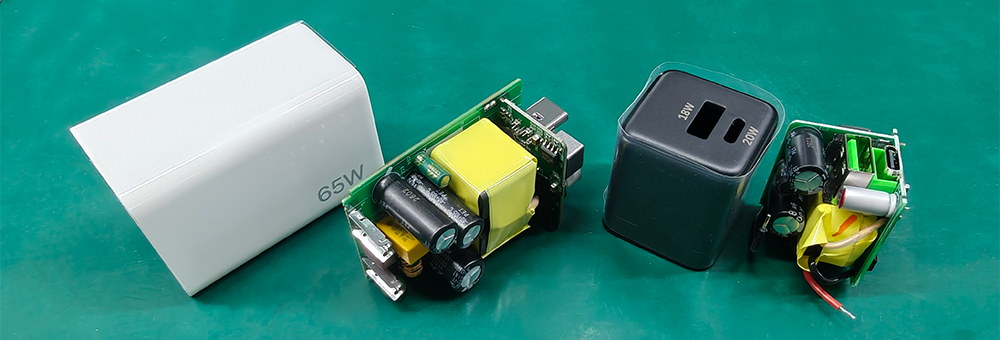
What’s Inside a Charger?
A typical fast charger includes:
• PCB (Printed Circuit Board)
• transformer
• power IC (integrated circuit)
• capacitors & inductors
• rectifier & MOSFETs
• protection circuits
👉 These components are found in everything from a 5W phone charger to a 140W PD3.1 laptop charger.
1. PCB (Printed Circuit Board): The Brain Platform
What It Does
The PCB connects all components and controls current flow.
Why It Matters
A high-quality PCB ensures:
• stable power delivery
• reduced signal interference
• efficient layout for heat dissipation
In Fast Charging
For:
• USB-C PD charger
• PPS charger
• GaN charger
👉 PCB design directly affects charging speed and safety.
2. Transformer: Voltage Conversion Core
What It Does
The transformer converts:
👉 high-voltage AC → low-voltage DC
Why It Matters
A well-designed transformer:
• improves efficiency
• reduces heat
• ensures stable output
Application
Critical in:
• wall chargers
• laptop charger (65W–140W)
• MacBook AVS charger factory solutions
3. Power IC (Integrated Circuit): The Smart Controller
What It Does
The IC manages:
• voltage regulation
• current control
• fast charging protocols
Why It Matters
Modern ICs enable:
• PD3.0 / PD3.1 charging
• PPS dynamic voltage
• device recognition
Real Impact
Without advanced ICs:
❌ no fast charging
❌ unstable output
❌ overheating risk
4. Capacitors & Inductors: Power Stabilizers
Capacitors
• store and release energy
• smooth voltage fluctuations
Inductors
• control current flow
• reduce electrical noise
👉 Together, they ensure your USB charger or phone charger delivers stable power.
5. Rectifier & MOSFETs: Power Conversion System
Rectifier
• converts AC to DC
MOSFETs
• act as high-speed switches
• improve efficiency
👉 Essential in PD charger factory designs and high-power fast chargers.
6. Protection Circuits: Safety First
Every quality charger includes protection against:
• overvoltage
• overcurrent
• short circuits
• overheating
👉 This is what separates a reliable phone charger manufacturer from low-cost alternatives.
How These Components Work Together
Here’s a simplified flow:
1. AC power enters charger
2. rectifier converts to DC
3. transformer adjusts voltage
4. IC regulates output
5. capacitors stabilize power
6. PCB distributes energy to output
👉 Result: safe, stable charging for your device.
Why Internal Design Matters More Than Power Rating
Two chargers may both be:
👉 65W or 100W
But internally:
• one uses high-quality components
• the other cuts corners
👉 The difference?
• heat generation
• lifespan
• safety

Zonsan Engineering Insight
As a professional charger manufacturer, Zonsan focuses heavily on internal component optimization—not just external design.
From PCB layout to IC selection, every detail is engineered to:
• improve efficiency
• reduce thermal stress
• support PD and PPS fast charging
High-Power Chargers Require Better Components
📱 Smartphones
20W charger
25W charger
30W charger
35W charger
💻 Laptops
45W charger
65W charger
100W charger
140W charger
👉 As power increases, component quality becomes more critical.
GaN Technology: Changing Charger Design
Traditional chargers use silicon.
Modern chargers use:
👉 GaN (Gallium Nitride)
Benefits:
• smaller size
• higher efficiency
• lower heat
👉 Widely used by advanced charger type C manufacturers and OEM factories.
Zonsan Factory Capability
Zonsan integrates advanced components such as high-performance ICs and optimized transformers into its production line.
Combined with GaN technology and strict quality control, Zonsan delivers:
• reliable fast chargers
• global certification compliance
• scalable OEM solutions for brands
How to Evaluate a Charger (Buyer Guide)
When sourcing from a PD charger factory or laptop charger manufacturer, check:
✔ internal component quality
✔ certification standards
✔ thermal performance
✔ consistency in output
👉 Not all chargers are built the same—even if specs look identical.
Conclusion
A charger is more than just a power adapter—it’s a complete power system.
Understanding its internal components helps you:
✔ choose better products
✔ avoid overheating issues
✔ source from reliable manufacturers
👉 Whether you're a consumer or a B2B buyer, knowing what’s inside a charger gives you a real advantage.
FAQ (People Also Ask)
Q1: What components are inside a charger?A charger includes PCB, transformer, IC, capacitors, inductors, and protection circuits.
Q2: What does a transformer do in a charger?
It converts high-voltage AC into lower voltage suitable for charging devices.
Q3: Why is the IC important in fast charging?
It controls voltage and current, enabling PD and PPS fast charging protocols.
Q4: Do better components reduce overheating?
Yes. High-quality components improve efficiency and reduce heat generation.
Q5: Are all chargers built the same inside?
No. Internal design and component quality vary significantly.
Q6: What is the role of PCB in a charger?
The PCB connects and manages all electronic components.
Q7: How do I choose a good charger manufacturer?
Look for experience, certifications, and strong engineering capabilities.
Q8: Are GaN chargers better inside?
Yes. They use advanced components for higher efficiency and smaller size.