How Short Circuit Protection Is Tested in Modern USB-C Chargers
A charger may look simple from the outside.
You plug it into a wall outlet, connect your phone or laptop, and charging begins.
However, inside every quality USB-C charger is a complex network of protection systems designed to handle situations that users never see.
One of the most important of these protections is Short Circuit Protection (SCP).
Without SCP, a simple fault in a charging cable, USB-C connector, PCB assembly, or connected device could potentially cause excessive current flow, component damage, overheating, or even complete charger failure.
This is why professional charger manufacturers invest significant engineering resources into short circuit testing before a charger reaches mass production.
In this article, we'll explore what short circuit protection is, how engineers test it, and why SCP verification has become a critical part of modern charger safety engineering.
What Is Short Circuit Protection (SCP)?
A short circuit occurs when electrical current finds an unintended low-resistance path.
In simple terms, electricity suddenly flows where it shouldn't.
Examples include:
• Damaged charging cables
• Broken USB-C connectors
• Metal debris inside a charging port
• Manufacturing defects
• PCB failures
• User misuse
Without protection mechanisms, a short circuit can cause current to rise extremely quickly.
This can lead to:
• Excessive heat generation
• Component stress
• PCB damage
• Connector failure
• Safety risks
Short Circuit Protection is designed to detect abnormal current conditions and immediately reduce or shut down power output.
Modern USB-C PD chargers, PPS chargers, GaN chargers, laptop chargers, and multi-port chargers all rely heavily on SCP systems.
Why Short Circuit Testing Matters
Many consumers assume certifications alone guarantee charger safety.
In reality, safety comes from engineering validation.
A protection circuit that exists on paper is meaningless unless it works under real-world fault conditions.
This is why professional charger factories intentionally create short-circuit conditions during testing.
The purpose is straightforward:
• Create the failure before the customer does.
If a charger can safely survive controlled fault conditions in the laboratory, it is much more likely to remain safe during years of real-world use.
What Happens During a Short Circuit?
To understand testing, it's important to understand the event itself.
When a short circuit occurs:
1. Current rises rapidly.
2. Protection ICs detect abnormal behavior.
3. Control circuits respond.
4. Output power is reduced or disconnected.
5. System enters a safe state.
A properly designed charger should react within milliseconds.
The goal is not simply to stop charging.
The goal is to prevent damage before it occurs.
The Key Components Behind SCP
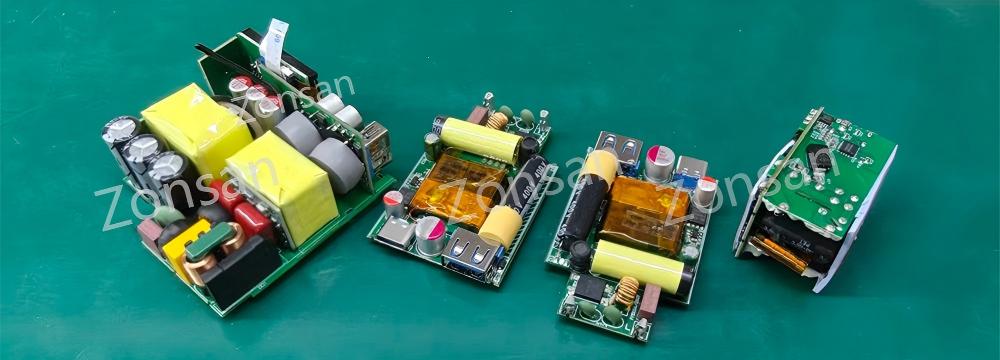
Several internal components work together to provide short circuit protection.
Power Management ICs
These chips monitor current flow continuously.
When abnormal conditions are detected, they trigger protective actions.
Current Sense Circuits
These circuits measure actual current output and provide real-time feedback.
MOSFET Protection Systems
MOSFETs can rapidly disconnect power when faults occur.
USB-C PD Controllers
Modern PD controllers often include advanced protection logic and fault management functions.
Firmware Algorithms
In many smart chargers, firmware helps determine whether abnormal current conditions represent a temporary event or a genuine fault.
The protection system is therefore a combination of hardware and software engineering.
How Engineers Perform Short Circuit Testing
Professional charger manufacturers do not wait for accidental failures.
Instead, they deliberately create short circuits under controlled laboratory conditions.
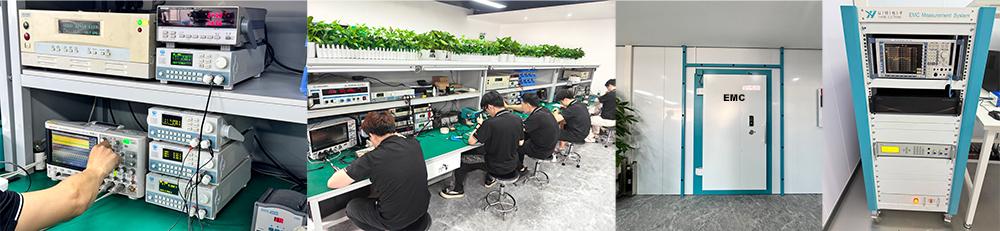
Testing typically involves:
• Electronic loads
• Fault simulation equipment
• Current monitoring systems
• Thermal monitoring equipment
• Oscilloscopes
• Data acquisition systems
Engineers monitor:
• Response speed
• Peak current levels
• Temperature changes
• Recovery behavior
• Component stress
The objective is to verify that protection activates before damage occurs.
What Is Fault Injection Testing?
One of the most advanced forms of charger safety verification is known as Fault Injection Testing.
Instead of waiting for faults to happen naturally, engineers intentionally create them.
Examples include:
• Output short circuits
• Abnormal current spikes
• Connector failures
• Component failure simulations
• Rapid load transitions
This allows engineers to observe how the charger responds under extreme conditions.
Fault injection testing often reveals weaknesses that normal operation would never expose.
For this reason, it is widely used during charger development and reliability verification.
What Engineers Look for During SCP Testing
Passing a short circuit test involves much more than simply shutting off power.
Engineers evaluate several critical factors.
Response Time
How quickly does protection activate?
Faster response generally improves protection effectiveness.
Thermal Stability
Does the charger remain thermally stable during the fault event?
Recovery Capability
Can the charger resume normal operation safely after the fault is removed?
Component Stress
Did internal components remain within safe operating limits?
Repeatability
Can the charger pass the same test repeatedly without degradation?
Reliable products must consistently perform under multiple fault cycles.
Why Cheap Chargers Often Fail SCP Testing
One of the biggest differences between high-quality chargers and low-cost alternatives is protection engineering.
Cost-focused products often reduce expenses by:
• Using lower-grade protection ICs
• Simplifying protection circuits
• Reducing testing procedures
• Limiting thermal validation
The result may be a charger that functions normally during basic use but struggles under abnormal conditions.
Protection systems are rarely visible to consumers.
Yet they often determine whether a charger remains safe when unexpected situations occur.
How SCP Testing Supports Long-Term Reliability
Short circuit testing is commonly viewed as a safety test.
In reality, it also contributes significantly to reliability.
Repeated fault testing helps engineers identify:
• Weak PCB traces
• Thermal weaknesses
• Connector limitations
• Component stress points
• Design vulnerabilities
Many reliability improvements originate from safety testing programs.
A charger that survives severe fault conditions often performs better during normal daily operation as well.

How ZONSAN Verifies Short Circuit Protection
At ZONSAN, short circuit protection verification is integrated into charger development and production validation processes.
Engineering teams evaluate SCP performance across multiple product categories, including:
• 20W USB-C Chargers
• 25W Samsung Fast Chargers
• 35W GaN Chargers
• 45W PPS Chargers
• 65W Laptop Chargers
• 100W USB-C PD Chargers
• 140W PD3.1 Chargers
Testing focuses on:
• Protection response speed
• Thermal stability
• Recovery behavior
• Component integrity
• Long-term reliability
The objective is not only to meet certification requirements but to ensure products remain safe and reliable throughout their operational lifespan.
Final Thoughts
Most users never think about short circuit protection until something goes wrong.
Yet SCP is one of the most important safety systems inside every modern charger.
A properly engineered protection system can detect faults within milliseconds, prevent damage, protect connected devices, and improve long-term reliability.
This level of protection is not achieved through marketing claims.
It is achieved through engineering design, rigorous testing, and continuous verification.
For professional charger manufacturers, short circuit testing is not simply a requirement.
It is a fundamental part of building safer and more reliable charging products.
FAQ
Q1: What is Short Circuit Protection (SCP)?
A: Short Circuit Protection is a safety feature that detects abnormal low-resistance faults and quickly limits or shuts down power output to prevent damage.
Q2: Why is SCP important in USB-C chargers?
A: USB-C chargers support high power levels, making fast fault detection essential for protecting devices and internal components.
Q3: Can a charger recover after a short circuit?
A: Most quality chargers automatically recover after the fault is removed and conditions return to normal.
Q4: How fast does SCP activate?
A: Professional chargers often respond within milliseconds, depending on the protection architecture and control IC design.
Q5: Does every charger include SCP?
A: Most modern certified chargers include SCP, but implementation quality can vary significantly.
Q6: Can short circuits damage a charger?
A: Without proper protection, yes. A severe short circuit may damage components, PCB traces, or connectors.
Q7: How do manufacturers test SCP?
A: Manufacturers intentionally create controlled short-circuit conditions using specialized testing equipment and monitor charger behavior.
Q8: Is SCP different from Over-Current Protection?
A: Yes. SCP addresses direct short-circuit faults, while Over-Current Protection (OCP) focuses on excessive current demand during operation.