How to Choose High-Quality Accessories for Electronic Products: A Guide to Reliable Suppliers
That approach can create problems.
A smart device may work perfectly during development, for example, but the charger supplied with it may deliver the wrong power profile, generate excessive heat, or fail to meet the requirements of the destination market. A retailer may receive the main products on time, only to discover that the accessories are delayed or inconsistent from one shipment to the next.
For electronics manufacturers, importers, and brand owners, choosing high-quality product accessories is not simply a purchasing decision. It is part of product planning, quality management, and supplier selection.
Among these accessories, the power adapter or USB-C charger deserves particular attention. It directly affects how a device receives power, how reliably it operates, and how customers experience the complete product.
This guide explains what businesses should look for when sourcing electronic product accessories, how to evaluate a supplier, and why working with a specialized charger manufacturer can make a difference.
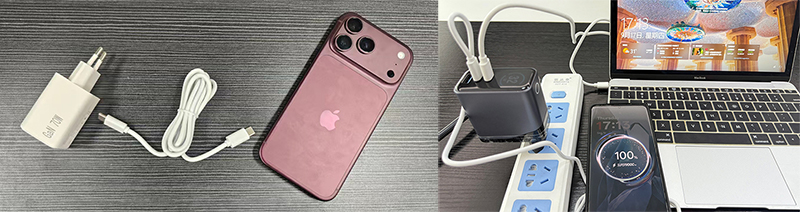
Why Product Accessories Deserve More Attention
An accessory may look like a small part of a product package, but its performance can affect the entire customer experience.
Consider a company selling a smart display, network device, security camera, portable monitor, or other electronic equipment. The device may be designed and manufactured by one company, while its power adapter comes from a separate supplier.
If the adapter is poorly matched to the device, the customer may experience unstable operation, unexpected shutdowns, excessive heat, or charging problems. Even when the main device is not defective, the customer may blame the complete product.
The same issue can arise with accessories supplied in bulk. A supplier may deliver an acceptable sample but use different components or production processes in a later batch. Small inconsistencies can become expensive when products are shipped to multiple markets.
For B2B buyers, the cost of an accessory should therefore be evaluated alongside its performance, reliability, compatibility, and supply consistency.
A lower purchase price is useful only when the product continues to meet the agreed requirements.
What Types of Accessories Should Electronics Businesses Source Carefully?
Different products require different accessories. The important point is to identify which components have a direct effect on safety, compatibility, or the user's ability to operate the main device.
1. Power Adapters and USB-C Chargers
Power adapters are essential for many electronic products, including smart home devices, monitors, tablets, networking equipment, and consumer electronics.
The correct adapter must match the device's electrical requirements. Buyers should check the required output voltage, current, power rating, connector, polarity where applicable, and supported charging protocol.
For USB-C-powered devices, compatibility may also depend on USB Power Delivery (USB PD), Programmable Power Supply (PPS), and the device's supported power profiles. A charger with a higher wattage rating does not automatically make a device charge faster; the device and charger must negotiate a compatible power level.
For example, a device designed for a 20W USB-C power supply does not necessarily benefit from a 100W charger. A higher-power adapter may be suitable if it supports the required standards and voltage profiles, but the device will still draw power according to its own design.
When sourcing a charger as an accessory, buyers should confirm the complete electrical specification rather than selecting a product based on wattage alone.
2. Cables and Connection Components
Cables, connectors, and other connection components can also affect product performance. Their suitability depends on the device's current requirements, data functions, connector type, and intended use.
If a product requires a separate cable, the buyer should confirm whether the cable is included, what specifications it must meet, and whether it has been tested with the intended device. Where the charger and cable are sourced from different suppliers, responsibility for compatibility should be agreed upon before mass production.
3. Market-Specific Plug and Power Accessories
A product intended for international distribution may need different plug configurations, power labels, packaging, or documentation depending on its destination.
A charger supplied for the European market may require a different plug arrangement from one intended for the United Kingdom, the United States, or South Korea. Buyers should confirm these requirements early instead of treating them as last-minute packaging details.
The destination market also affects applicable safety, electromagnetic compatibility, energy-efficiency, and environmental requirements. The exact obligations depend on the product, its classification, and the country where it will be sold.
How to Choose a High-Quality Product Accessories Supplier
Finding a supplier is relatively easy. Finding one that can consistently deliver accessories matching your product specifications is more demanding.
The following criteria are especially useful for manufacturers, brands, and wholesale buyers.
1. Start With Technical Compatibility, Not the Quotation
Before comparing prices, prepare a clear accessory specification.
For a power adapter or USB-C charger, the specification should cover at least:
• Required output voltage, current, and wattage.
• Connector type and physical dimensions.
• Supported charging protocols, where applicable.
• Input voltage and frequency requirements.
• Safety protection and applicable compliance requirements.
• Plug type and destination market.
• Branding, labeling, and packaging requirements.
• Required samples, test reports, and approval procedures.
This document gives every supplier the same starting point. It also makes quotations easier to compare. Without a clear specification, one supplier may quote a fully tested product with the correct certifications, while another quotes a cheaper model with different electrical performance or incomplete documentation. Those quotations may look comparable on paper when they are not.
If your main product is still under development, involve the accessory supplier early enough to confirm that the proposed power solution is technically feasible.
2. Check Whether the Supplier Specializes in the Product
Not every accessory supplier has the same technical capabilities.
A general trading company may be able to source a wide range of products. That can be useful when a buyer needs several unrelated accessories from one purchasing contact. However, when the accessory requires detailed electrical engineering, customized specifications, or product-level reliability testing, a specialist manufacturer may provide better technical support.
For chargers, ask whether the supplier has direct experience with the relevant product category, such as standard USB chargers, USB-C PD chargers, GaN fast chargers, laptop adapters, or multi-port charging products.
It is also worth understanding which processes are controlled in-house and which are outsourced. A supplier's ability to explain its engineering, production, testing, and quality-control arrangements is more informative than a broad claim that it can manufacture almost anything.
For businesses developing a new electronic product, this distinction matters. The supplier may need to help resolve questions about power requirements, thermal performance, connector placement, or charging compatibility—not simply deliver a finished item.
3. Evaluate Quality Control Across the Whole Production Process
A high-quality sample is a useful starting point, but it does not prove that every future shipment will have the same quality. Ask how the supplier controls quality from incoming materials through assembly and final inspection. For a charger manufacturer, this may include incoming component inspection, production-process checks, electrical testing, aging tests, and final product verification.
The exact tests depend on the product design and applicable standards. Buyers should ask which tests are performed, how results are recorded, and what happens when a product fails.
It is also sensible to agree on the approval process before mass production. If the supplier changes a critical component, housing material, PCB design, or electrical specification, the change should be reviewed rather than introduced without notice.
This is particularly important for repeat orders. A product that has already passed approval should not gradually change in ways the buyer cannot see.
4. Verify Compliance for the Intended Market
Compliance should be discussed before an order is placed, especially when products will be sold in multiple countries.
Depending on the product and destination, a charger may be subject to requirements relating to electrical safety, electromagnetic compatibility, energy efficiency, and restricted substances. The specific standards and certification routes vary by market and product type.
Do not rely solely on a logo printed on a product or a general statement that the supplier's factory is certified. Ask for the relevant documentation for the actual model being purchased and confirm that it applies to the intended configuration.
A different plug, revised circuit design, or change to a product's rated output may affect which documents or tests are needed.
If you are supplying a charger together with your own branded electronic device, establish in advance which party is responsible for providing documentation, coordinating testing, and addressing any compliance questions.
Clear responsibility at the beginning can prevent costly delays near the launch date.
5. Look at Long-Term Supply Consistency
For a brand owner or electronics manufacturer, the first order is only one part of the relationship. The supplier also needs to support repeat production.
Ask practical questions:
• Can the supplier maintain the approved specification across repeat orders?
• How does it manage component sourcing and potential shortages?
• Can it communicate production delays before they affect your schedule?
• Does it retain appropriate production and quality records?
• How are product changes reviewed and approved?
• Who handles technical questions and quality issues after delivery?
These questions are particularly important when the accessory is included with every unit of your main product. A shortage of chargers can delay an otherwise complete shipment, while inconsistent quality can create extra work for your customer service and warranty teams.
A dependable supplier should be able to explain how it manages these risks rather than promising that problems will never occur.
6. Compare Total Cost, Not Just Unit Price
The cheapest accessory is not always the least expensive option in the long run. A more realistic purchasing calculation considers the quoted unit price alongside inspection costs, product failures, warranty claims, packaging requirements, shipping arrangements, and the consequences of delivery delays.
A simple example illustrates the point. If one charger model costs slightly less but has inconsistent output performance, the buyer may spend more on incoming inspection, replacement shipments, and customer complaints. A more stable product can offer better commercial value even when its initial price is higher.
This does not mean that buyers should always select the most expensive supplier. It means that price comparisons should be made between products with equivalent specifications, compliance status, testing requirements, and service expectations.
For large-volume orders, these details should be discussed before the purchase order is finalized.
Why Electronics Manufacturers Often Source Chargers Separately
Some companies design and manufacture their own electronic products but do not manufacture power adapters internally. Others are brand owners or trading companies coordinating products from several factories.
In both cases, sourcing the charger from a specialized manufacturer can simplify the project. The main device manufacturer can focus on its core product, while the charger supplier concentrates on power conversion, electrical protection, charging protocols, thermal design, and charger production.
This arrangement is useful when the project requires a specific output rating, a customized plug, branded housing, retail packaging, or a charger configuration that is not available from a general accessory supplier.
It also gives the buyer a clearer point of contact for technical questions about the power adapter itself. However, separate sourcing works best when the two sides agree on the interface between the device and its power supply. The device team should provide the required electrical specifications, while the charger manufacturer should confirm what its product can deliver. Both parties should review and approve samples before the final configuration enters mass production.
OEM and ODM Charger Solutions for Branded Electronic Products
Businesses do not always need to develop a charger from scratch. The appropriate sourcing model depends on the level of customization required.
When an Existing Charger Platform Is Enough
An existing charger platform may be suitable when the electrical requirements are standard and the buyer mainly needs a reliable product with its own branding.
Depending on the model, customization may include the logo, packaging, product labels, or supported plug configuration. This approach can reduce development work compared with creating a completely new design.
It can be especially practical for companies adding a charger to an existing product line or preparing a new product for market testing.
When a Customized Charger Is Worth Considering
A more customized solution may be necessary when the product has unusual power requirements, limited installation space, a specific port arrangement, or particular branding and industrial-design needs.
In such projects, the buyer should discuss technical feasibility, engineering costs, sample approval, certification implications, tooling if required, and the expected production schedule.
Not every request can be implemented without changing the design or testing requirements. A good supplier should explain those trade-offs clearly before the project moves forward.
For a closer look at the difference between the two approaches, see our guide to OEM vs. ODM charger manufacturing.

Why Work With a Specialized Charger Manufacturer Like ZONSAN?
For companies that need chargers as accessories for their own electronic products, a supplier's technical focus can be just as important as its commercial offer.
ZONSAN, operated by Shenzhen Zonsan Innovation Technology Co., Ltd., specializes in charger manufacturing and OEM/ODM supply. Its product range covers USB wall chargers, USB-C PD chargers, GaN fast chargers, multi-port chargers, and desktop charging solutions.
For B2B customers, the project may begin with a standard charger model and customized branding, or it may require a more specific power configuration. The appropriate route depends on the device's electrical requirements, the target market, and the level of customization needed.
When evaluating a charger for your product, ZONSAN can discuss requirements such as output power, USB-C charging protocols, plug type, product labeling, and packaging. Buyers should confirm the available configuration, applicable documentation, minimum order quantity, and lead time for the specific project before placing an order.
The company also has experience supporting OEM/ODM customers that need chargers for branded products and distribution channels. For businesses that already have a device specification, starting with that document is usually the most efficient way to assess feasibility.
You can learn more about ZONSAN's charger manufacturing process.
If you are sourcing a charger for an electronic product, provide the intended use, required output, destination market, expected order quantity, and customization needs. Those details help establish whether an existing model is suitable or whether further development is required.
A Practical Checklist Before You Place an Order
Before approving an accessory supplier, make sure the essential details have been covered.
□ The accessory specification matches the main product.
□ The supplier has experience with the relevant product category.
□ Samples have been evaluated against agreed requirements.
□ Applicable compliance documents have been reviewed for the exact model.
□ Quality-control procedures and test records are understood.
□ Changes to critical components or specifications require approval.
□ Branding, labels, plugs, and packaging are confirmed.
□ MOQ, lead time, payment terms, and delivery responsibilities are clear.
□ Warranty arrangements and the process for handling quality issues are agreed.
□ The supplier can support repeat orders using the approved configuration.
You do not need an unnecessarily complicated procurement process for every accessory. The aim is to identify the risks that matter for your product and make sure they are addressed before the order reaches mass production.
Final Thoughts
Choosing high-quality product accessories requires more than comparing catalogues and quotations. Buyers need to consider compatibility, manufacturing capability, quality control, compliance, and the supplier's ability to support repeat orders.
For electronic products that require an external power supply, the charger deserves particular attention. It is a functional part of the complete product, and its performance can influence reliability, customer satisfaction, and the cost of after-sales support.
Whether you are an electronics manufacturer, brand owner, importer, or trading company, begin with a clear specification and select a supplier that can explain how the product will be developed, tested, manufactured, and supported.
If your business needs a charger for its own electronic product, working directly with a specialized charger manufacturer such as ZONSAN can help you evaluate suitable standard models or discuss OEM/ODM requirements before production begins.
The best supplier is not simply the one that offers the lowest price. It is the one that understands your requirements and can deliver the approved product consistently.
Frequently Asked Questions
Q1. How do I choose a reliable accessories supplier for electronic products?
Start by defining the accessory's technical requirements, target market, expected order volume, and customization needs. Then evaluate the supplier's relevant manufacturing experience, sample quality, quality-control process, compliance documentation, communication, and ability to support repeat orders.
Q2. Why is choosing the right charger supplier important for an electronic product
A charger must match the device's power requirements and applicable safety standards. An unsuitable or inconsistent charger can cause compatibility problems, operating interruptions, delays, or additional after-sales costs. Choosing a suitable supplier helps reduce these risks.
Q3. Should I buy chargers from a general accessories supplier or a specialized charger manufacturer?
A general supplier may be convenient when sourcing many different accessory categories. A specialized charger manufacturer may be a better fit when the project requires detailed electrical specifications, USB-C PD or PPS compatibility, customized output, engineering support, or charger-specific testing.
Q4. What information should I provide when requesting a charger quotation?
Provide the required output voltage and current, wattage, connector type, supported charging protocols, plug type, target market, expected quantity, packaging requirements, branding needs, and any relevant compliance requirements. If the device is still under development, share its current power specification and sample requirements.
Q5. Is a higher-wattage charger always better?
No. The charger must support the device's required voltage and charging protocol. A higher-wattage charger may be compatible with a lower-power device if it follows the relevant standards, but the device will not necessarily charge faster. Compatibility should be verified rather than inferred from the wattage rating.
Q6. What is the difference between OEM and ODM chargers?
OEM projects generally involve building or adapting a product to a customer's defined requirements, while ODM projects commonly start from an existing manufacturer-developed design or platform. The exact scope varies by supplier, so buyers should clarify which design elements, specifications, and intellectual-property arrangements are included.
Q7. What quality checks should buyers request for chargers?
The checks depend on the charger design and destination market. They may include output verification, load testing, protection-function checks, temperature testing, aging tests, and applicable safety and electromagnetic compatibility testing. Buyers should request relevant records and confirm the acceptance criteria before mass production.
Q8. Can a charger manufacturer customize products for my brand?
Many charger manufacturers offer OEM/ODM services. Depending on the model and project, customization may include logos, packaging, labels, plug types, housing design, port configurations, or electrical specifications. Buyers should confirm feasibility, MOQ, development costs, and certification implications for each request.
Q9. What should I check before ordering accessories in bulk?
Confirm the approved sample, complete specifications, compliance documentation, quality-control requirements, packaging, delivery schedule, change-control process, and warranty terms. It is also useful to agree on how defects will be reported, investigated, and resolved.
Q10. Can ZONSAN supply chargers for electronic products made by other companies?
ZONSAN specializes in charger manufacturing and supports B2B OEM/ODM projects. Companies can discuss their power requirements, destination markets, quantities, and customization needs to determine whether an existing charger model or a more customized solution is appropriate.
Reviewers: Zonsan teams: Lucas
Second Reviewers: Linda
Final Review Date: [October 9, 2026]