Why “100W USB-C Charging” Almost Never Means 100W in Real Use
In 2025, USB-C charging has become the universal charging standard for phones, tablets, laptops, and many modern gadgets. A frequent marketing claim you'll see on chargers—from PD charger 65W to full-power 100W USB-C chargers—is "100W fast charging."
But here's the catch:
A 100W-rated charger rarely delivers a sustained 100W output in real-world conditions.
This article explains why that happens, how PD charging negotiation works, and what factors—like cables, devices, and thermal limits—affect the actual power delivery. We'll also explain what this means for OEM charger manufacturers, wholesalers, and savvy buyers in markets like Europe and Korea.
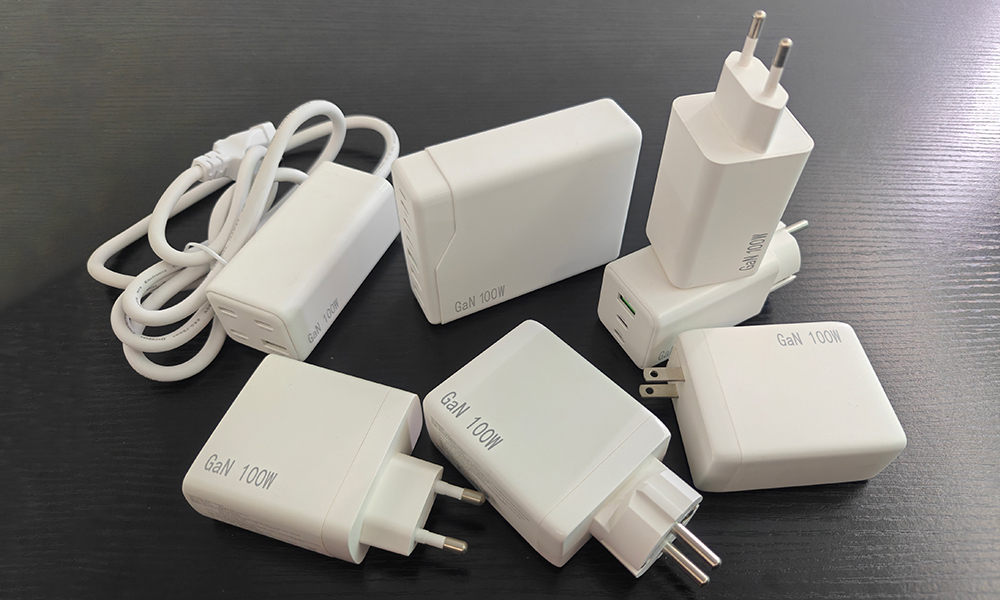
🔌 What "100W" on the Box Actually Means
When a charger is labeled 100W USB-C PD or 100W GaN charger, it means:
The charger can deliver up to 100 watts under ideal conditions.
⚠️ It does not guarantee 100W to your device at all times.
Why? Because real power delivery depends on two major things:
1. Power Delivery (PD) negotiation between the device and the charger
2. The USB-C cable and its rating (especially 5A cables with e-marker)
A cable rated below 100W will prevent higher power, even if the charger and device support it.
🔄 How USB-C PD Charging Negotiation Affects Power
USB-C PD charging isn’t a plug-and-force system. Instead:
· A phone or laptop requests how much power it needs through the USB Power Delivery protocol.
· The charger replies with a list of power options it supports.
· The two sides "agree" on a power profile.
The final power used is often less than the maximum rating because:
✅ The device may not request the full 100W
✅ The battery management system limits power already
✅ The device reduces charging as the battery approaches full
✅ System load (e.g., gaming or high CPU use) affects draw
Most real-world charging tests show sustained power is often ~60–80W instead of 100W even with a 100W charger.
🔧 Cables, Ports, and Power Limits
Even if your charger can provide 100W, your setup could limit it:
📌 Cable Limitations
Standard USB-C cables support only up to 60W unless they have:
· A 5A e-marker chip
· Certification for higher power
If the cable lacks the correct rating, the system will fall back to a safer, lower power limit.
📌 Multi-Port Charging
If you plug multiple devices into a multi-port charger, total output may be shared—meaning even the USB-C port might not see full 100W.
📌 Device Power Profile
Many devices don't actually need 100W. A phone might only request 25–30W. A tablet might pull 45W. Only some laptops truly benefit from 100W or more.
🔥 Thermal & Real-World Limitations
Another reality of high-power chargers is thermal throttling:
· Chargers and devices generate heat as they deliver/receive power.
· To protect internal circuitry, both sides may reduce power output over time.
· This is especially true in compact GaN chargers, which pack a lot of power in a small body.
This makes "peak 100W output" more of a momentary or test-bench number rather than a steady real-world figure.
📊 Typical Charging Scenarios
Here's what you might see in real use with a 100W USB-C charger:
| Device Type | Expected Real-World Power |
| Smartphone (iPhone/Samsung/Pixel) | 20–30W |
| Tablet (iPad/Android) | 30–45W |
| Mid-Range Laptop | ~60–80W |
| High-Demand Laptop | 80–95W (varies) |
| Multi-Device Charging Combined | <100W |

🏭 What This Means for Charger Buyers & Manufacturers
For charger OEMs, wholesalers, and mobile charger suppliers, understanding this is vital:
1. A charger’s rated wattage is a maximum, not a guaranteed output.
2. Real-world performance hinges on:
· Quality of internal components
· Cable specifications
· Device support for PD/PPS protocols
· Thermal design and safety features
3. Marketing should reflect usable power, not just peak numbers.
High-quality power adapters from reputable charger manufacturers offer better performance and reliability than cheap unverified units, especially for high-power applications
🔗 Related Internal Blog Articles
1. What Is Power Delivery (PD) & Why It Matters
2. How Fast Chargers Work & Why They Are Safe
3. GaN Charger vs Normal Charger: What's Best for 2026?
🧠 Conclusion
100W USB-C charging often doesn't mean you'll see 100 watts delivered continuously. In most real-world usage scenarios, actual output is influenced by negotiation, cables, device limitations, and thermal throttling.
Despite this, high-rated PD chargers remain valuable:
· They provide higher peak power capacity
· They can supply more power where needed
· They support multiple devices with smart distribution
For buyers searching for reliable, efficient power delivery in 2025, focusing on certified, high-quality 100W PD chargers from reputable charger manufacturers is the real key—not just the number printed on the box.
For charger OEMs, wholesalers, and mobile charger suppliers, understanding this is vital:
1. A charger’s rated wattage is a maximum, not a guaranteed output.
2. Real-world performance hinges on:
· Quality of internal components
· Cable specifications
· Device support for PD/PPS protocols
· Thermal design and safety features
3. Marketing should reflect usable power, not just peak numbers.
High-quality power adapters from reputable charger manufacturers offer better performance and reliability than cheap unverified units, especially for high-power applications
🔗 Related Internal Blog Articles
1. What Is Power Delivery (PD) & Why It Matters
2. How Fast Chargers Work & Why They Are Safe
3. GaN Charger vs Normal Charger: What's Best for 2026?
🧠 Conclusion
100W USB-C charging often doesn't mean you'll see 100 watts delivered continuously. In most real-world usage scenarios, actual output is influenced by negotiation, cables, device limitations, and thermal throttling.
Despite this, high-rated PD chargers remain valuable:
· They provide higher peak power capacity
· They can supply more power where needed
· They support multiple devices with smart distribution
For buyers searching for reliable, efficient power delivery in 2025, focusing on certified, high-quality 100W PD chargers from reputable charger manufacturers is the real key—not just the number printed on the box.