Wireless Charging VS Wired Charging (Definitive Guide)
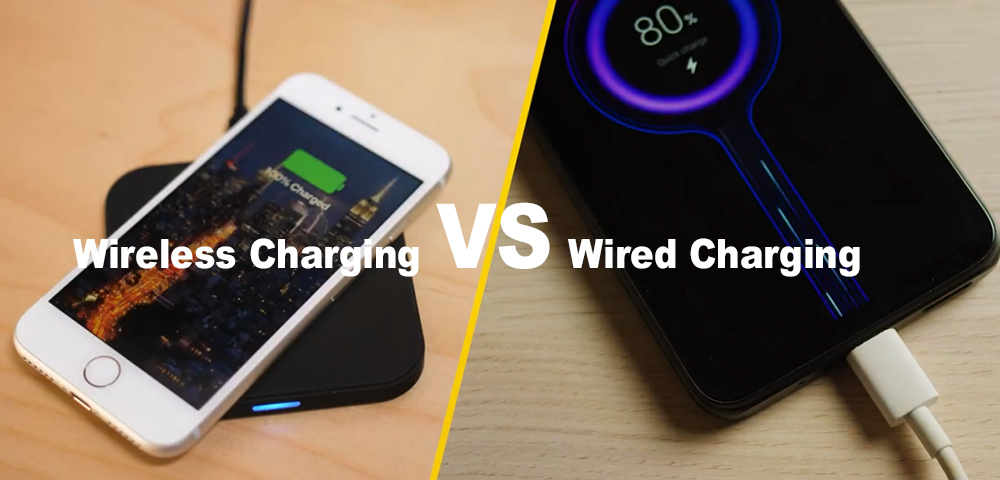
Hey there! Let's kick things off with the basics.
Wireless charging lets you power up your device without plugging in a cable. Instead, you just place your phone or gadget on a charging pad or stand — and voilà, power flows.
The most popular wireless standard is Qi (pronounced "chee"). This is supported by:
·iPhone models (from iPhone 8 onward)
·Samsung Galaxy series
·Google Pixel phones
·Many earbuds and smartwatches
💡 How it works (in plain language!)
Wireless chargers use electromagnetic induction:
·The charging pad creates a magnetic field.
·Your phone's receiver coil catches that field.
·It converts the magnetic energy back into electricity — without a connector cable.
Cool, right?
2. What Is Wired Charging? (Old School, Still Gold)
Wired charging is what most of us grew up with — plug the cable into your phone and power it up.
Examples:
·USB-C to USB-C cable
·USB-A to Lightning cable (older iPhones)
·Lightning to USB-C cable (newer iPhones)
And when we talk about fast charging today, wired charging usually means:
·PD fast charging (Power Delivery)
·Quick Charge (QC)
·Proprietary versions (Samsung Super Fast Charging, Xiaomi Turbo Fast Charging, etc.)
These all negotiate power between the charger and your phone so the device can pull as much power as it safely and efficiently can handle.
3. Wireless vs Wired: Side-by-Side Comparison
Let's compare the two charging styles in a real-world way.
📊 Speed (Fastest First)
| Aspect | Wireless Charging |
Wired Charging |
| Typical Speed | Slow to moderate | Fastest |
| Fast Charging | Yes (Qi2 & high-watt pads) | Yes with PD/Quick Charge |
| Best Use | Overnight, convenience | Daily quick top-ups |
👉 In short: wired charging is almost always faster — especially when you use PD chargers (e.g., 30W, 45W, 65W).
🔋 Convenience
·Wireless: Just place & go. No cable wear.
·Wired: You need the cable — sometimes a pain at night.
Wireless wins in comfort — but only if speed isn't a priority.
🔋 Convenience
·Wireless: Just place & go. No cable wear.
·Wired: You need the cable — sometimes a pain at night.
Wireless wins in comfort — but only if speed isn't a priority.

4. Efficiency: How Much Power Actually Gets to Your Phone?
Every charging system has power loss.
·Wired charging: loses very little power — most energy goes into the battery.
·Wireless charging: loses more power as heat — some energy is wasted in the air gap between coils.
That's why you might see your phone get warm on a wireless charger — and slow down charging to protect the battery.
💡 Pro tip: Never cover your wireless charging pad with extra thick cases — it weakens the magnetic field and increases heat.
5. Battery Health: Does One Damage Your Phone Less?
Short answer: Not really — if you use good chargers.
Wired Charging
·Batteries have temperature sensors and power management
·Fast charging protocols protect against heat and overcurrent
Wireless Charging
·Slightly slower means less stress in some cases
·Heat buildup can happen on cheaper pads
But overall, brand-certified chargers — wireless or wired — are safe.
Big dangers come from:
❌ Cheap, uncertified chargers
❌ Broken or low-quality cables
❌ Frequent rapid heating
So whether you choose wireless or wired — just pick quality. That's the real key to battery health.
Every charging system has power loss.
·Wired charging: loses very little power — most energy goes into the battery.
·Wireless charging: loses more power as heat — some energy is wasted in the air gap between coils.
That's why you might see your phone get warm on a wireless charger — and slow down charging to protect the battery.
💡 Pro tip: Never cover your wireless charging pad with extra thick cases — it weakens the magnetic field and increases heat.
5. Battery Health: Does One Damage Your Phone Less?
Short answer: Not really — if you use good chargers.
Wired Charging
·Batteries have temperature sensors and power management
·Fast charging protocols protect against heat and overcurrent
Wireless Charging
·Slightly slower means less stress in some cases
·Heat buildup can happen on cheaper pads
But overall, brand-certified chargers — wireless or wired — are safe.
Big dangers come from:
❌ Cheap, uncertified chargers
❌ Broken or low-quality cables
❌ Frequent rapid heating
So whether you choose wireless or wired — just pick quality. That's the real key to battery health.

6. Pros and Cons (Let's Be Real)
😊 Wireless Charging — Pros
✔ No cable wear or port stress
✔ Easy to drop your phone in place
✔ Great for bedside tables or desks
✔ Clean, cable-free look
✔ Many modern cars & accessories support it
😕 Wireless Charging — Cons
❌ Slower than wired
❌ Usually causes a bit more heat
❌ Must align phone on pad
❌ Case thickness matters (avoid metal cases)
😊 Wired Charging — Pros
✔ Fastest way to charge your phone
✔ Supports high-wattage (30W / 45W / 65W / 100W / 140W)
✔ Works well for laptops & tablets too
✔ Reliable power delivery
😕 Wired Charging — Cons
❌ Cables wear over time
❌ Port can get loose or dirty
❌ Not as convenient as drop-and-charge
😊 Wireless Charging — Pros
✔ No cable wear or port stress
✔ Easy to drop your phone in place
✔ Great for bedside tables or desks
✔ Clean, cable-free look
✔ Many modern cars & accessories support it
😕 Wireless Charging — Cons
❌ Slower than wired
❌ Usually causes a bit more heat
❌ Must align phone on pad
❌ Case thickness matters (avoid metal cases)
😊 Wired Charging — Pros
✔ Fastest way to charge your phone
✔ Supports high-wattage (30W / 45W / 65W / 100W / 140W)
✔ Works well for laptops & tablets too
✔ Reliable power delivery
😕 Wired Charging — Cons
❌ Cables wear over time
❌ Port can get loose or dirty
❌ Not as convenient as drop-and-charge

7. Personal experience in actual application and usage scenarios
🏠 Bedside Charging
Wireless > Wired
Just drop your phone and go to sleep.
📱 Quick Top-Up Before Heading Out
Wired > Wireless
Need 30% to 70% in 15–20 minutes? Cable wins.
🚗 In-Car Charging
Both can work:
·Wireless pads built into some cars (convenient)
·Wired fast charger for navigation + battery
8. Latest Tech: Qi2 & Magnetic Charging
The latest wireless standard, Qi2, brings:
·Improved power transfer
·Better alignment
·Support for higher watts (e.g., 15W and beyond)
And newer phones use magnetic alignment (MagSafe on iPhone) so coils snap into place — boosting wireless efficiency.
This reduces some past drawbacks of wireless charging and brings performance closer to wired speeds — but we're not there yet for peak performance.
9. Safety Tips for Wireless & Wired Charging
🔌 Wired Charging Safety
✔ Use certified PD chargers
✔ Avoid cheap, uncertified cables
✔ Don’t bend or kink cables
✔ Keep ports clean
📶 Wireless Charging Safety
✔ Use Qi-certified pads
✔ Avoid metal or magnetic interference in phone cases
✔ Keep phone centered on pad
✔ Avoid high heat buildup
Heat is the enemy of battery health — and both charging systems have safety features that throttle power to protect your device.
🏠 Bedside Charging
Wireless > Wired
Just drop your phone and go to sleep.
📱 Quick Top-Up Before Heading Out
Wired > Wireless
Need 30% to 70% in 15–20 minutes? Cable wins.
🚗 In-Car Charging
Both can work:
·Wireless pads built into some cars (convenient)
·Wired fast charger for navigation + battery
8. Latest Tech: Qi2 & Magnetic Charging
The latest wireless standard, Qi2, brings:
·Improved power transfer
·Better alignment
·Support for higher watts (e.g., 15W and beyond)
And newer phones use magnetic alignment (MagSafe on iPhone) so coils snap into place — boosting wireless efficiency.
This reduces some past drawbacks of wireless charging and brings performance closer to wired speeds — but we're not there yet for peak performance.
9. Safety Tips for Wireless & Wired Charging
🔌 Wired Charging Safety
✔ Use certified PD chargers
✔ Avoid cheap, uncertified cables
✔ Don’t bend or kink cables
✔ Keep ports clean
📶 Wireless Charging Safety
✔ Use Qi-certified pads
✔ Avoid metal or magnetic interference in phone cases
✔ Keep phone centered on pad
✔ Avoid high heat buildup
Heat is the enemy of battery health — and both charging systems have safety features that throttle power to protect your device.

10. Which Should You Choose?
| Priority | Best Choice |
| Speed | Wired PF fast charging |
| Convenience | Wireless charging |
| Battery health | Both (quality chargers) |
| Travel | GaN PD charger + cable |
| Desk setup | Wireless + Wired combo |
👉 Pro recommendation:
Have both sets — wireless for convenience, wired for speed. Use quality chargers from reputable sources.
11.Product Categories Worth Searching
·65W USB-C charger — excellent for phones & laptops
·GaN fast charger — compact & energy efficient
·Wireless charging pad (Qi2) — bedside convenience
·Portable charger (power bank) with wireless & wired output
·Certified PD chargers and cables — safest for daily use
People are actively searching these now — and Google favors articles that answer real questions people are typing.
12.FAQ
Q: Is wireless charging slower than wired?
Yes. Wireless charging is generally slower due to energy loss through induction and heat.
Q: Does wireless charging damage your battery?
No. If using a quality wireless charger, it won’t harm your battery. Heat is the main concern — quality pads regulate power.
Q: Are GaN chargers better than traditional ones?
Yes. GaN chargers are smaller, more efficient, and generate less heat.
Q: Should I use an original charger or third-party?
Use certified chargers (CE/FCC/UL/UKCA). Many third-party PD/GaN chargers are just as safe and often cheaper.
Q: Can I use wireless and wired chargers interchangeably?
Yes. Just pick the method that fits your situation (speed vs. convenience).
Conclusion (Happy Wrap-Up)
Wireless charging is no longer a luxury — it’s a part of daily life.
But when you need speed, reliability, and power, nothing still beats a good, wired PD fast charger, especially ones powered by modern GaN technology.
In 2025, the best setup for most users is:
📍 Wireless pad for convenience + Wired GaN PD charger for speed — both from certified brands.
That combo gives you the best of both worlds. 😊
More articles you might be interested in:
·GaN Charger Explained.
Have both sets — wireless for convenience, wired for speed. Use quality chargers from reputable sources.
11.Product Categories Worth Searching
·65W USB-C charger — excellent for phones & laptops
·GaN fast charger — compact & energy efficient
·Wireless charging pad (Qi2) — bedside convenience
·Portable charger (power bank) with wireless & wired output
·Certified PD chargers and cables — safest for daily use
People are actively searching these now — and Google favors articles that answer real questions people are typing.
12.FAQ
Q: Is wireless charging slower than wired?
Yes. Wireless charging is generally slower due to energy loss through induction and heat.
Q: Does wireless charging damage your battery?
No. If using a quality wireless charger, it won’t harm your battery. Heat is the main concern — quality pads regulate power.
Q: Are GaN chargers better than traditional ones?
Yes. GaN chargers are smaller, more efficient, and generate less heat.
Q: Should I use an original charger or third-party?
Use certified chargers (CE/FCC/UL/UKCA). Many third-party PD/GaN chargers are just as safe and often cheaper.
Q: Can I use wireless and wired chargers interchangeably?
Yes. Just pick the method that fits your situation (speed vs. convenience).
Conclusion (Happy Wrap-Up)
Wireless charging is no longer a luxury — it’s a part of daily life.
But when you need speed, reliability, and power, nothing still beats a good, wired PD fast charger, especially ones powered by modern GaN technology.
In 2025, the best setup for most users is:
📍 Wireless pad for convenience + Wired GaN PD charger for speed — both from certified brands.
That combo gives you the best of both worlds. 😊
More articles you might be interested in:
·GaN Charger Explained.