How to Compare Quotations from Charger Manufacturers: A Practical Guide for OEM Buyers
Provider of Information: Miller and Selike (Engineer)
Why the Lowest USB-C Charger Price Is Not Always the Best Deal
When sourcing USB-C chargers for a retail brand, distribution business or e-commerce store, buyers usually contact several manufacturers to request quotations.
The responses may look similar at first. Each supplier provides a unit price, minimum order quantity, sample cost and estimated lead time. Some may even quote the same wattage and port configuration.
But once the technical details are reviewed, the differences can become significant.
One manufacturer may quote a standard 65W charger with a universal AC input. Another may offer a customized version with a different PD profile, housing material or plug structure. A third may exclude packaging, testing or certification-related costs from its initial price.
All three quotations may be labeled "65W USB-C charger," but they are not necessarily quotations for the same product.
For an OEM buyer, comparing prices without checking the underlying specifications can lead to incorrect purchasing decisions. A low initial quotation may later increase when missing requirements are added, or the buyer may discover that the supplied product does not match the intended market.
This guide explains how to compare charger manufacturer quotations on an equivalent basis, identify hidden cost differences and evaluate suppliers beyond the unit price.
Quick Answer: How Should You Compare Charger Manufacturer Quotations?
Compare charger quotations using the same product specifications, order quantities, customization scope, certification requirements, packaging and delivery terms. Then review the unit price, MOQ, sample charges, tooling costs, lead time, payment terms and supplier capabilities. The lowest quotation is only meaningful when the products and commercial conditions being compared are equivalent.
1. Make Sure Every Supplier Is Quoting the Same Product
This is the first check, and it is often the one buyers overlook. A charger quotation should be reviewed against the original RFQ or technical specification, not just the product name.
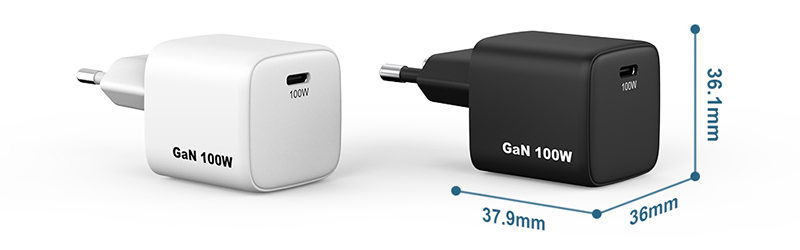
For example, two suppliers may both quote a 100W USB-C charger. However, their proposed products may differ in:
• USB-C port count and configuration
• Maximum output per port
• PD voltage and current profiles
• PPS or AVS support and AC input voltage range
• Plug type and Housing dimensions and material
• Thermal design and Certification scope
These differences can affect the BOM, engineering work, testing and final production cost.
Build a specification comparison before reviewing prices
| Specification | Supplier A | Supplier B | Supplier C |
| Rated output | |||
| USB port configuration | |||
| PD profiles | |||
| PPS / AVS | |||
| AC input range | |||
| Plug type | |||
| Product dimensions | |||
| Housing material | |||
| Certification status | |||
| Customized packaging | |||
| Internal charger components | |||
| Charging Solution |
Why request a list of internal components for a charger from the manufacturer?
In the case of procurement by enterprises or major brands, there are often stringent requirements regarding the quality and production consistency of the chargers. If even a minor change occurs—such as replacing a chip or capacitor due to its discontinuation or scarcity—the manufacturer is required to provide detailed documentation and relevant supporting evidence.
Do not mark a quotation as equivalent simply because the supplier has repeated the wattage and port count from your RFQ. (Differences in charger prices often reflect variations in material quality and technical design.)
If a supplier proposes an alternative model, ask for its complete datasheet and clearly identify every difference from the requested configuration. A manufacturer that explains these differences before confirming the price makes the comparison much more useful.
2. Compare Output Performance, Not Just Rated Wattage
Output power is one of the most visible specifications in a charger quotation, but it does not describe the complete charging capability.
A 65W USB-C charger may support different PD profiles, while two multi-port models with the same total output may distribute power differently.
For a multi-port charger, buyers should review the output allocation under different operating conditions.
| Operating condition | What to verify |
| USB-C1 only | Maximum voltage, current and wattage |
| USB-C2 only | Maximum voltage, current and wattage |
| USB-A only | Supported output and protocol |
| Two ports in use | Combined output allocation |
| All ports in use | Total available power |
| Connected devices change | Whether power is renegotiated as expected |
If the project requires PPS or AVS, those profiles should also be checked. A supplier should not assume that every charger with the same advertised wattage supports identical charging protocols.
This is particularly important for laptop chargers and higher-power GaN models. A product may reach its headline wattage under one operating condition but have a different output distribution when multiple ports are used.
Buyers should compare the actual output tables, not rely on marketing descriptions.
For projects involving several USB ports, the technical explanation in Multi-Port USB-C Charger Power Allocation can help clarify why power distribution is an important part of product comparison.
3. Check the Input Voltage and Plug Configuration
Input specifications can create a substantial difference between two apparently similar products.
A charger rated for 100–240V AC universal input may require a different input-stage design from a model intended only for 200–240V AC.
The input range affects the product's intended operating conditions and market suitability. It should be treated as a core specification, not a minor label detail.
The quotation should clearly state:
• AC input voltage range and Input frequency
• Maximum input current, where specified
• Plug type and Whether the plug is fixed, foldable or interchangeable
• Whether regional versions are available
For buyers selling across Europe, the Middle East, South Korea or North America, the destination market must be considered before choosing a product.
A charger that is suitable for one electrical system may not be suitable for another. The same applies to plug configurations and market-specific compliance requirements.
If a supplier quotes a lower price because it is offering a product with a narrower input range or a different plug structure, that difference should be visible in the comparison sheet.
4. Separate Standard Models From Customized Products
Not every quotation represents the same level of customization.
A supplier may quote an existing charger model with a printed logo. Another may include a customized color, retail packaging and a modified housing. A third may be proposing a new internal structure or private mold.
These are different project scopes.
Before comparing prices, identify which customization items are included.
| Customization item | Standard model | Customized project |
| Logo | May be standard or optional | Customized printing or marking |
| Product color | Existing options | Special color requirement |
| Packaging | Standard or buyer-supplied | Private-label retail packaging |
| Plug type | Existing configuration | Modified or regional configuration |
| Housing | Existing mold | Modified structure or private mold |
| PCB / power design | Existing platform | Engineering modification or new design |
| Accessories | Standard configuration | Customized accessories, where available |
For an OEM project, it is also important to distinguish between a minor modification and a new product development request.
Changing a logo does not involve the same engineering work as changing the port layout, output power, plug structure or internal PCB design. If a quotation includes customized tooling, ask the supplier to separate the one-time development cost from the recurring unit price.
This makes it easier to understand the actual investment required for the project.
5. Review Certification and Testing Costs Carefully
Certification is another area where quotations can appear different even when the product specifications look similar.
A supplier may quote an existing model with available certification documents. Another may need to arrange additional testing or a new certification application for the requested configuration.
The buyer should clarify:
• Which certificates are already available
• Whether they cover the exact model
• Whether the quoted plug and product configuration are included
• Whether additional testing is required
• Who pays for certification-related costs
• Whether test reports will be provided
• Whether product modifications could affect the certification scope
Common requirements may involve CE-related European compliance, RoHS, CB, FCC, ETL or KC, depending on the destination market and product category.
These should not be treated as a universal list that every charger needs. The actual requirements must be determined for the product and intended sales territory.
A quotation that excludes certification costs may look cheaper, but the buyer needs to understand what remains to be completed before the product can be sold. It is also important to check whether the quoted sample represents the final production configuration. A certification document for a different PCB, plug or model variant should not automatically be treated as evidence for the proposed product.
6. Compare MOQ, Sample Charges and Tooling Separately
Unit price is only one part of the commercial offer. For a new charger project, the buyer should review at least three cost categories:
Recurring production costs - These are the costs associated with each unit produced, including the charger itself and any agreed accessories or packaging.
Sample and development costs - These may include engineering samples, sample assembly, prototype modifications and evaluation work.
One-time tooling or setup costs - These may include private molds, special fixtures, customized production tooling or other project-specific setup expenses.
The quotation should make clear which costs are one-time and which will be charged again for future orders.
Compare quantity-based prices - A charger manufacturer may offer different unit prices at different order quantities because purchasing, setup and production costs are distributed differently.
For wholesalers of mobile phone chargers, unit price is often the primary concern, as the products are intended for resale. However, for OEM clients, the costs associated with developing the right product—along with the need to ensure a stable, ongoing supply—are equally critical.
If product specifications, quality requirements, or future supply conditions remain undefined, then a "low minimum order quantity (MOQ)" is not necessarily the best option.
7. Understand What Is Included in the Quoted Unit Price
One of the most common reasons for quotation differences is that suppliers include different items in their prices. For example, one quotation may include a retail box, user manual and customized label. Another may cover only the charger itself.
The buyer should confirm whether the price includes:
• Charger unit
• Retail packaging, User manual and Product label
• Accessories or cables
• Inner box and outer carton
• Required inspection or testing
• Customized logo
• Any special production requirements
The quotation should also state whether shipping, insurance, duties or other logistics charges are included.
When comparing offers, use the same Incoterm and destination assumptions wherever possible. An EXW quotation and a DDP quotation are not directly comparable because the responsibilities and included costs are different.
The buyer should also check the quotation's validity period. Component costs and availability can change, especially for power semiconductors, controllers, magnetic components and other electronic parts.
A quotation that is valid for a short period may reflect a different purchasing situation from one that remains valid for several months.
8. Compare Lead Time Based on the Same Starting Point
Lead time is often presented as a single number, but suppliers may calculate it differently.
One supplier may quote production lead time after deposit and specification confirmation. Another may include time for material preparation. A third may be quoting only the assembly period after all materials are available.
For a customized charger project, the overall schedule may include:
1. Technical specification confirmation
2. Sample preparation, Sample evaluation and approval
3. Tooling or structural modification, if needed
4. Certification or additional testing, if required
5. Material preparation
6. Mass production
7. Final inspection and shipment preparation
The buyer should ask when the quoted lead time begins and what conditions must be met before production starts.
For example, does the production schedule begin after deposit, after final sample approval, or after all packaging artwork and labels are confirmed?
This distinction matters because a supplier may appear faster simply because it has excluded several stages from its quoted schedule.
For a new product, the buyer should compare the complete project timeline rather than only the number of days stated for mass production.
9. Evaluate the Manufacturer's Engineering and Production Capability
A quotation is also an indication of what the supplier understands about the project. If a manufacturer responds with a price but does not address important technical questions, the buyer should be careful.
A capable OEM charger manufacturer should be able to discuss the product's electrical requirements, port configuration, thermal design, mechanical constraints, testing and production feasibility.
This does not mean that the most expensive supplier is automatically the best. It means that buyers should evaluate whether the supplier can actually deliver the specified product.
Consider the following areas:
Engineering capability - Can the manufacturer review the power architecture, USB-C PD/PPS requirements, PCB layout and thermal constraints?
Production capability - Does the factory have the processes and equipment needed for the quoted product and order volume?
Quality management - Can the supplier explain incoming inspection, production testing, aging procedures and final inspection?
Supply-chain management - Can the manufacturer identify critical components, manage approved suppliers and communicate material availability risks?
Documentation - Can the supplier provide datasheets, drawings, test records and controlled product specifications?
For a deeper supplier evaluation, see Why Charger Engineering Matters More Than Price.
A low quotation from a supplier that cannot explain the design or production assumptions may create more work later. Buyers should look for clear technical answers, not simply a quick price response.
10. Look for Cost Differences That May Affect Long-Term Supply
A quotation should not be evaluated only against the first purchase order. For a product that will be sold repeatedly, component availability, production consistency and engineering change control can affect the total cost of ownership.
A supplier may quote a competitive price using components that are difficult to source consistently. Another may propose a slightly different component arrangement with better supply availability.
Neither option should be accepted without technical review.
Buyers should ask:
• Are the key components available for repeat production?
• Are any components approaching end-of-life?
• Are alternative components already evaluated?
• Will the supplier notify the buyer before a critical material change?
• Are product specifications and approved materials documented?
• Can the supplier maintain the agreed configuration across repeat orders?
A component substitution should not be treated as a simple purchasing decision. Even when two components have similar nominal specifications, their electrical, thermal, mechanical or reliability characteristics may differ.
For OEM buyers, supplier quality management is also an important part of long-term supply stability. It helps manufacturers monitor component consistency, evaluate supplier performance, and reduce the risk of quality variations during mass production. Learn more about Supplier Quality Management in Charger Manufacturing.
For this reason, the buyer should understand how the manufacturer controls approved materials and supplier changes. This is particularly important for brands that expect to keep the same charger model in their product catalog for an extended period.
11. A Practical Charger Manufacturer Quotation Comparison Scorecard
After reviewing the technical and commercial details, buyers can use a scorecard to organize the decision.
The weighting should reflect the project's priorities. For example, a retail brand launching a customized 100W charger may place more emphasis on engineering and certification, while a distributor purchasing an existing model may prioritize price, MOQ and delivery.
A sample evaluation structure is shown below.
| Evaluation area | Suggested weight |
| Technical specification match | 25% |
| Product quality and testing | 20% |
| Total commercial cost | 20% |
| Engineering and customization capability | 15% |
| Production and delivery capability | 10% |
| Communication and documentation | 10% |
| Total | 100% |
The scorecard is a decision aid, not an industry standard. Buyers should adjust the weights according to their product and business model.
If a supplier fails to meet mandatory technical or compliance requirements, they should not receive a high score, even if their bid is low.
An effective approach is to distinguish between "mandatory pass/fail" criteria and "weighted evaluation" factors. First, exclude any bids that do not meet the essential product requirements; then, use a scoring matrix to evaluate and compare the remaining suppliers.
12. Questions to Ask Before Accepting a Charger Quotation
Before approving a quotation, buyers should confirm several points in writing.
• Is the quoted model exactly the same as the requested configuration?
• Are all required PD, PPS and AVS profiles included?
• Does the input-voltage range match the target market?
• Are the required plug type and product dimensions confirmed?
• Does the price include customized branding and packaging?
• Are certification and testing costs included or excluded?
• What is the MOQ and the price at different quantities?
• Are tooling and development costs one-time charges?
• When does the quoted lead time begin?
• What happens if a component or specification needs to change?
• How long is the quotation valid?
• Which product documents and test records will be provided?
These questions help turn a preliminary price offer into a more complete commercial agreement.
How ZONSAN Approaches OEM Charger Quotations
ZONSAN develops and manufactures USB wall chargers, GaN fast chargers, USB-C PD/PPS chargers, desktop chargers and multi-port charging products for OEM and ODM customers.
A quotation for a charger project needs to reflect more than the advertised wattage. The required port configuration, input range, charging protocols, plug type, mechanical structure, target market and customization scope all influence the product configuration and manufacturing cost.
For projects based on an existing model, the quotation process can focus on confirming the required configuration, branding, packaging and order quantity.
For a more customized project, engineering and production requirements need to be reviewed before the final quotation can be confirmed. With 17 years of charger manufacturing experience and a 6,358㎡ production facility, ZONSAN supports customers in evaluating product requirements, customization possibilities and manufacturing feasibility.
For buyers comparing suppliers, the most useful quotation is one that clearly explains what is included, what is excluded and which specifications the proposed price covers.
Final Thoughts
Comparing charger manufacturer quotations is not simply a matter of sorting suppliers from the lowest price to the highest. The real task is to determine whether each supplier is quoting the same product, under the same technical and commercial conditions.
Output profiles, input voltage, plug type, certification scope, customization, packaging, MOQ and delivery terms all need to be considered. Engineering capability and production consistency also matter, particularly when the charger will become a long-term product in a brand's catalog.
A well-prepared comparison helps buyers identify the real cost of a project, avoid unexpected charges and choose a supplier that can meet the agreed requirements.
For OEM buyers, the best quotation is not necessarily the cheapest one. It is the quotation that offers a clear, technically suitable and commercially sustainable path from product specification to repeat production.
FAQ: Comparing Charger Manufacturer Quotations
Q1: Why do charger manufacturers quote different prices for the same wattage?
The quoted products may have different output profiles, components, input ranges, port configurations, housing materials, certification requirements or packaging. Buyers should compare complete specifications rather than wattage alone.
Q2: What should I check in a USB-C charger quotation?
Check the exact model, USB port configuration, PD/PPS profiles, AC input range, plug type, dimensions, certification status, customization scope, MOQ, sample charges, tooling costs, lead time and payment terms.
Q3: Is the cheapest charger manufacturer always the best choice?
No. A low price may exclude customization, packaging, testing or certification costs. It may also be based on a different product specification. Buyers should compare equivalent configurations and evaluate the manufacturer's engineering and production capability.
Q4: Should I compare EXW and DDP charger quotations directly?
No. EXW and DDP assign different responsibilities and include different logistics costs. For a meaningful comparison, ask suppliers to quote using the same Incoterm and destination assumptions.
Q5: What costs should be separated from the charger unit price?
Buyers should identify sample charges, tooling, engineering development, certification, customized packaging, accessories, testing and logistics costs. One-time charges should be separated from recurring production costs.
Q6: How do MOQ and order quantity affect charger pricing?
Unit prices can change with order quantity because material purchasing, production setup and manufacturing costs are distributed differently. Buyers should request quotations at consistent quantity levels to compare suppliers fairly.
Q7: What should I ask about charger production lead time?
Ask when the lead time begins, whether it includes material preparation, and whether it assumes final specification and sample approval. For customized products, distinguish development time from mass-production time.
Q8: Why should buyers evaluate a manufacturer's engineering capability?
A charger manufacturer needs to deliver the required electrical performance, thermal behavior, mechanical structure and compliance. Engineering capability helps determine whether the proposed configuration can be developed and manufactured consistently.
Q9: Should certification costs be included in the charger quotation?
The quotation should clearly state whether existing certification documents are available and whether additional testing or certification work is required. The applicable requirements depend on the product configuration and target market.
Q10: How can I compare quotations from multiple phone charger wholesalers or manufacturers?
Send the same RFQ to each supplier, request complete technical datasheets and compare the exact configuration, price basis, MOQ, customization, certification, lead time and exclusions. Do not compare unit prices until the underlying offers are equivalent.
Reviewer: Luke and Jeroen Groen
Second Reviewers: Lucas and Jessica
Final Review Date: [November 11, 2026]