iPhone 18 Pro Max Charger Recommendation: Why a 70W AVS GaN Charger Makes Sense
For years, choosing an iPhone charger was fairly straightforward. A good USB-C PD charger around 20W, 30W, or 45W was enough for most users. Higher-wattage chargers were useful mainly when the same adapter also needed to power an iPad or MacBook.
With the iPhone 18 Pro Max, the situation is more interesting.
Apple now specifies that the iPhone 18 Pro and iPhone 18 Pro Max can reach up to 50% charge in around 15 minutes when used with a 60W-capable adapter or higher with Adjustable Voltage Supply (AVS) and a USB-C charging cable.
That one specification changes what buyers should look for.
A charger simply labeled "65W USB-C" is not necessarily the same thing as a charger designed around USB PD 3.2 SPR AVS.
This is why, for the iPhone 18 Pro Max, I would look at a charger such as the ZONSAN ZX-1U90T 70W AVS GaN USB-C charger.
The important part is not just its 70W output.
It is the combination of 70W power, USB PD, PPS, and AVS in a compact GaN charger.
Quick Answer: What Charger Is Recommended for iPhone 18 Pro Max?
The iPhone 18 Pro Max supports up to 50% charging in around 15 minutes when using a 60W-capable adapter or higher with Adjustable Voltage Supply (AVS) and a USB-C charging cable. A 70W AVS GaN charger such as the ZONSAN ZX-1U90T provides additional output headroom while supporting USB PD, PPS and AVS in a compact USB-C design.
For users who want to take advantage of the iPhone 18 Pro Max's latest wired fast-charging capability, a 60W-or-higher USB-C charger with AVS is the specification to look for.
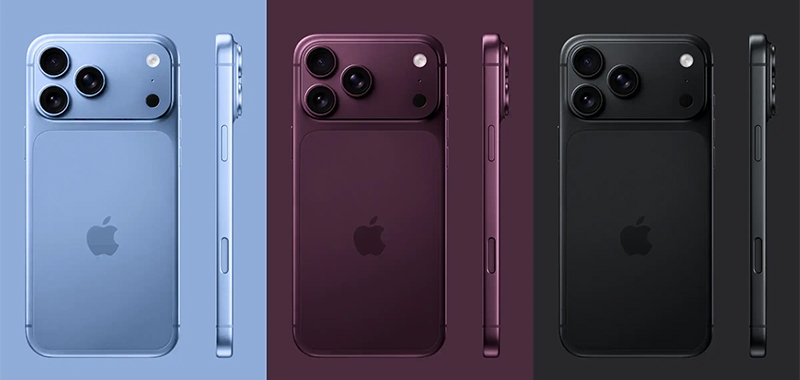
1. Why the iPhone 18 Pro Max Needs a Different Charger Recommendation
The phrase "fast charger" has become too broad.
A 30W USB-C PD charger is a fast charger.
A 45W GaN charger is also a fast charger.
A 65W laptop charger is a fast charger.
A 140W PD 3.1 charger is obviously a fast charger.
But these products do not necessarily provide the same charging behavior to an iPhone. (iPhone charger guide for GaN, PD and AVS fast charging)
The iPhone communicates with the charger and determines what power profile it can use. The charger then provides an appropriate negotiated output.
That means a charger can have plenty of available power but still fail to provide the specific charging mode required for maximum performance.
This distinction matters much more with the iPhone 18 Pro Max.
Apple's current technical specification specifically connects the approximately 15-minute 50% fast-charge result with a 60W-capable adapter or higher using Adjustable Voltage Supply.
So the buying question is no longer simply: "How many watts does the charger have?"
A better question is: "Does the charger support at least 60W and the AVS charging mode required by the iPhone 18 Pro Max?"
That is a much more useful specification.
2. What Is AVS and Why Does It Matter for iPhone 18 Pro Max?
AVS stands for Adjustable Voltage Supply.
It is part of the newer USB Power Delivery architecture.
ChargerLAB explains that USB PD 3.2 introduced SPR AVS, which extends adjustable-voltage charging into the Standard Power Range. It allows the charger and device to negotiate voltage in 100mV steps within the relevant 9–20V range.
This is different from simply having fixed outputs such as: 5V, 9V, 15V, 20V.
Traditional USB PD can select an available fixed voltage profile.
AVS adds another layer of adjustment.
Instead of choosing only one fixed voltage, the connected device can request a voltage more closely matched to its actual charging requirements.
That is important because the voltage arriving at the phone is not the same thing as the voltage being used directly by the battery cells.
There are conversion stages inside the device.
The more accurately the external power source can match the device's power requirements, the more opportunities there are to reduce unnecessary conversion losses and thermal stress.
This is one of the reasons AVS has become relevant to the latest generation of smartphone fast charging.
3. iPhone 18 Pro Max Charging: 60W Is Not the Same as "Use Any 60W Charger"
This is probably the most important point for buyers.
Suppose you see two chargers:
Charger A: 65W USB-C PD
Charger B: 70W USB-C PD + AVS
On the product box, Charger A might actually look sufficient.
It has more than 60W.
But the wattage number alone does not tell you whether it supports the charging mode Apple specifies for the approximately 15-minute 50% result.
Apple's wording is specific: 60W-capable adapter or higher with Adjustable Voltage Supply.
That means AVS is not just an interesting technical feature on a charger specification sheet.
For the iPhone 18 Pro Max, it has become part of the fast-charging conversation.
This is also why some discussions around the new iPhone are already focusing on PD 3.2 SPR AVS rather than simply comparing 30W, 45W, 60W and 65W chargers. Recent charging-community reports have identified the iPhone 18 Pro series as using the newer SPR AVS charging approach.
Independent testing will still be important because the real charging curve depends on temperature, battery state, software, cable and charger implementation.
But the direction is clear: for maximum wired charging performance, AVS is now a specification worth checking.
4. Why the ZONSAN ZX-1U90T Is a Good Fit
The ZX-1U90T is interesting because its specifications line up closely with the new requirements.
It is not simply a 70W charger.
It combines three important charging technologies: USB PD + PPS + AVS
Its published specifications are:
| Specification | ZX-1U90T |
| Maximum power | 70W |
| USB-C | 5V/3A, 9V/3A, 15V/3A, 20V/3.5A |
| PPS | 5–11V/5A, 5–21V/3A |
| AVS | 9–15V/3.5A, 15–20V/3.5A |
| Size | 51.3 × 35.5 × 35.5 mm |
| Technology | GaN |
| Ports | 1 × USB-C |
The important specification for this particular iPhone article is the AVS range.
The charger supports up to 70W through AVS, giving it headroom above Apple's 60W-capable requirement.
That does not mean the phone will continuously consume 70W.
It should not.
The iPhone controls the charging process.
The charger simply needs to be capable of supplying the negotiated power mode.
5. Why 70W Is a Sensible Power Level for iPhone 18 Pro Max
At first glance, recommending a 70W charger for a smartphone may sound excessive.
The iPhone is not going to consume 70W continuously. But charger selection is not only about the device's average power consumption.
There is value in having some headroom.
Apple's fast-charge specification calls for a 60W-capable adapter or higher with AVS. A 70W charger therefore sits slightly above the stated threshold rather than operating exactly at it.
That gives the charger room to support the required charging profile without being marketed as an unnecessarily large 100W or 140W laptop charger.
For someone buying one charger specifically for the iPhone 18 Pro Max, this is a useful middle ground. It is high enough for the new fast-charging requirement, while still being compact enough to function as a dedicated phone/travel charger.
6. The GaN Advantage: More Power Without a Large Charger
The second reason the ZX-1U90T makes sense is GaN.
GaN, or gallium nitride(how GaN chargers improve power density and efficiency), is now widely used in compact high-power chargers because it allows manufacturers to design high-frequency power conversion systems with high power density.
That matters when putting 70W of output into a charger measuring only: 51.3 × 35.5 × 35.5 mm, according to the product specification.
For a smartphone charger, physical size matters.
Nobody wants to carry a laptop-sized power adapter simply to obtain faster phone charging.
The engineering challenge is to achieve:
• sufficient output power and efficient switching;
• controlled heat and stable voltage regulation;
• reliable protection and compact mechanical packaging.
GaN helps with the power-density side of that equation. It does not, however, automatically provide AVS.
The charger still needs the appropriate power architecture and controller implementation.
That distinction is worth remembering.
GaN is the semiconductor technology. AVS is the power-delivery mechanism.
They solve different parts of the engineering problem.
7. AVS vs PPS: Are They the Same Thing?
No. This is another area where charger specifications can become confusing.
PPS stands for Programmable Power Supply. It allows dynamic adjustment of voltage and current and has been widely used in modern smartphone fast charging.
AVS also provides adjustable voltage, but it belongs to the newer USB PD 3.2 architecture in the SPR range.
ChargerLAB describes SPR AVS as operating between 9V and 20V with 100mV adjustment steps, while PPS uses a different adjustment mechanism.
The practical reason this matters is simple: A charger can support PPS without supporting AVS. Likewise, a charger can support AVS without being designed around exactly the same PPS implementation.
The ZX-1U90T supports both. Its published PPS range reaches up to 63W, while AVS reaches up to 70W.
That makes the charger useful beyond a single iPhone or Samsung generation.
8. Does a 70W Charger Charge the iPhone 18 Pro Max at 70W?
No assumption like that should be made.
The number printed on the charger is its maximum available output, not a promise that the phone will continuously consume that amount.
The iPhone determines how much power it requests.
Charging power also changes throughout the charging cycle.
When the battery is relatively low, the system can accept higher power.
As the battery approaches a higher state of charge, charging power normally decreases.
Temperature also matters.
If the phone becomes too warm, the charging system can reduce power to maintain thermal control.
So the real-world charging curve may look nothing like a flat 60W line from 0% to 100%.
This is normal.
In fact, it is one reason why “60W charger” and “60W charging speed” should not be treated as identical statements.
Apple's 15-minute figure is a defined fast-charge result under specified test conditions, not a claim that the iPhone continuously charges at 60W for the entire battery cycle.
The charger supports up to 70W through AVS, giving it headroom above Apple's 60W-capable requirement.
That does not mean the phone will continuously consume 70W.
It should not.
The iPhone controls the charging process.
The charger simply needs to be capable of supplying the negotiated power mode.
5. Why 70W Is a Sensible Power Level for iPhone 18 Pro Max
At first glance, recommending a 70W charger for a smartphone may sound excessive.
The iPhone is not going to consume 70W continuously. But charger selection is not only about the device's average power consumption.
There is value in having some headroom.
Apple's fast-charge specification calls for a 60W-capable adapter or higher with AVS. A 70W charger therefore sits slightly above the stated threshold rather than operating exactly at it.
That gives the charger room to support the required charging profile without being marketed as an unnecessarily large 100W or 140W laptop charger.
For someone buying one charger specifically for the iPhone 18 Pro Max, this is a useful middle ground. It is high enough for the new fast-charging requirement, while still being compact enough to function as a dedicated phone/travel charger.
6. The GaN Advantage: More Power Without a Large Charger
The second reason the ZX-1U90T makes sense is GaN.
GaN, or gallium nitride(how GaN chargers improve power density and efficiency), is now widely used in compact high-power chargers because it allows manufacturers to design high-frequency power conversion systems with high power density.
That matters when putting 70W of output into a charger measuring only: 51.3 × 35.5 × 35.5 mm, according to the product specification.
For a smartphone charger, physical size matters.
Nobody wants to carry a laptop-sized power adapter simply to obtain faster phone charging.
The engineering challenge is to achieve:
• sufficient output power and efficient switching;
• controlled heat and stable voltage regulation;
• reliable protection and compact mechanical packaging.
GaN helps with the power-density side of that equation. It does not, however, automatically provide AVS.
The charger still needs the appropriate power architecture and controller implementation.
That distinction is worth remembering.
GaN is the semiconductor technology. AVS is the power-delivery mechanism.
They solve different parts of the engineering problem.
7. AVS vs PPS: Are They the Same Thing?
No. This is another area where charger specifications can become confusing.
PPS stands for Programmable Power Supply. It allows dynamic adjustment of voltage and current and has been widely used in modern smartphone fast charging.
AVS also provides adjustable voltage, but it belongs to the newer USB PD 3.2 architecture in the SPR range.
ChargerLAB describes SPR AVS as operating between 9V and 20V with 100mV adjustment steps, while PPS uses a different adjustment mechanism.
The practical reason this matters is simple: A charger can support PPS without supporting AVS. Likewise, a charger can support AVS without being designed around exactly the same PPS implementation.
The ZX-1U90T supports both. Its published PPS range reaches up to 63W, while AVS reaches up to 70W.
That makes the charger useful beyond a single iPhone or Samsung generation.
8. Does a 70W Charger Charge the iPhone 18 Pro Max at 70W?
No assumption like that should be made.
The number printed on the charger is its maximum available output, not a promise that the phone will continuously consume that amount.
The iPhone determines how much power it requests.
Charging power also changes throughout the charging cycle.
When the battery is relatively low, the system can accept higher power.
As the battery approaches a higher state of charge, charging power normally decreases.
Temperature also matters.
If the phone becomes too warm, the charging system can reduce power to maintain thermal control.
So the real-world charging curve may look nothing like a flat 60W line from 0% to 100%.
This is normal.
In fact, it is one reason why “60W charger” and “60W charging speed” should not be treated as identical statements.
Apple's 15-minute figure is a defined fast-charge result under specified test conditions, not a claim that the iPhone continuously charges at 60W for the entire battery cycle.
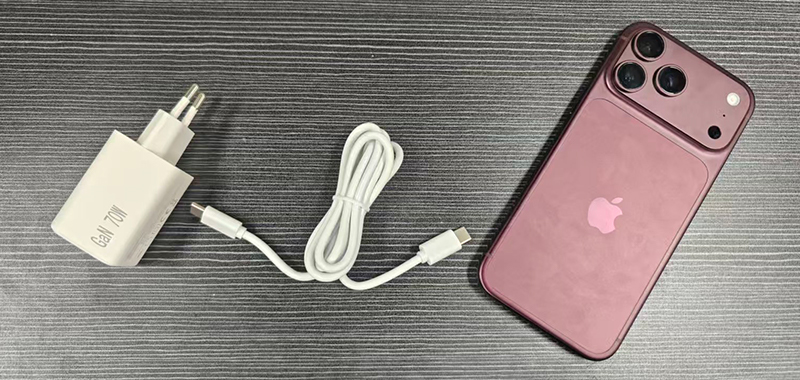
9. The Cable Matters More Than Many Buyers Realize
A high-power charger is only one part of the system.
The cable is another.
Apple's specification for the iPhone 18 Pro and Pro Max refers to a USB-C charging cable together with the 60W-capable AVS adapter.
For higher-power USB-C charging, buyers should therefore pay attention to the cable's power capability rather than choosing a cable only because it says "USB-C."
This is particularly important because USB-C is a connector standard, not a guarantee of a particular charging capability.
A charger may support 70W.
A cable may have a different power rating.
The phone may request a specific power profile.
The final result depends on the complete charging chain.
Charger + cable + protocol + device, all have to work together.
10. Can You Use a 100W or 140W Charger Instead?
Yes, higher-power USB-C chargers can still be useful.
A 100W or 140W GaN charger can provide more power for laptops, tablets and other devices.
But higher wattage does not automatically make it a better iPhone 18 Pro Max charger.
If two chargers are compared:
• 70W PD + PPS + AVS
• 140W PD without AVS
the second charger has a higher headline power rating.
The first charger may nevertheless be more directly aligned with the iPhone 18 Pro Max's specified fast-charging requirement because it includes AVS.
This is an important change in how consumers should evaluate modern chargers.
Protocol support can matter more than maximum wattage. (why some USB-C chargers charge faster than others.)
A charger designed specifically around the required charging standard can be more relevant than a much higher-powered charger that lacks that mode.
11. What About Apple's 40W Dynamic Power Adapter?
Apple's own 40W Dynamic Power Adapter is an important reference point because it helped bring SPR AVS into the mainstream charging conversation.
ChargerLAB's analysis found that Apple's adapter has a nominal 40W rating but can reach a 60W peak through its SPR AVS implementation.
The iPhone 18 Pro Max now takes the story one step further.
Apple's official specification calls for a 60W-capable adapter or higher with AVS for the approximately 15-minute 50% fast-charge result.
This creates a clear product-development opportunity for charger manufacturers.
Instead of simply increasing charger wattage, manufacturers can develop compact AVS-enabled chargers around the power range actually required by the newest smartphones.
The ZX-1U90T is positioned in exactly this space.
12. Why the ZX-1U90T Is Also Interesting for Charger Brands
There is another reason this product is worth discussing from a manufacturing perspective.
The ZX-1U90T is not only a consumer charger.
ZONSAN lists it as an OEM/ODM-oriented 70W GaN USB-C charger platform, with support for customized logo, packaging, housing color, plug type and other project requirements.
That makes the product particularly relevant for brands developing an iPhone 18 Pro Max charger product line.
A charger brand does not necessarily need to create a completely new 100W or 140W platform just because the new iPhone requires higher charging performance.
A compact 70W AVS platform can be a more targeted product.
It can be positioned around:
• iPhone 18 Pro Max fast charging
• USB-C AVS charging
• compact GaN design
• premium travel charging
• smartphone + tablet charging
• OEM private-label charger products
From an engineering perspective, the product also has to handle the thermal and electrical demands associated with the higher-power AVS operation.
That is where charger manufacturing experience becomes important.
13. What Should You Look for When Buying an iPhone 18 Pro Max Charger?
Instead of looking only at “65W,” “70W,” or “100W,” check the following specifications.
1. USB-C output - The charger should provide USB-C rather than relying on an older USB-A fast-charging architecture.
2. 60W or higher capability - Apple's current fast-charge specification calls for a 60W-capable adapter or higher.
3. AVS support - This is the key difference for the new iPhone 18 Pro Max fast-charge specification.
4. Suitable USB-C cable - The cable should be appropriate for the intended charging power.
5. Thermal design - Higher charging power means higher thermal demands. A compact charger needs proper power conversion, heat dissipation and protection design.
6. Safety certifications - For an everyday charger, certification and manufacturing quality matter more than simply finding the highest wattage number.
14. Recommended iPhone 18 Pro Max Charger: ZONSAN ZX-1U90T
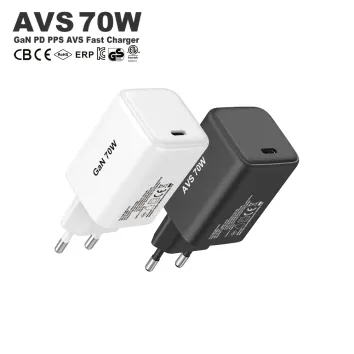
For a charger specifically aimed at the iPhone 18 Pro Max generation, the ZONSAN ZX-1U90T 70W AVS GaN USB-C charger is a strong product match based on its published specifications.
It offers:
70W maximum output, USB PD;
PPS up to 63W, AVS up to 70W;
GaN power technology, 51.3 × 35.5 × 35.5 mm compact size.
The AVS specification is particularly relevant: 9–15V / 3.5A, 15–20V / 3.5A (70W maximum)
That gives the product enough rated output to sit above Apple's 60W-capable AVS requirement.
Again, this should not be confused with a claim that every ZX-1U90T unit has already been independently tested to deliver exactly 60W to an iPhone 18 Pro Max.
The technically accurate conclusion is more straightforward: Its published power and AVS specifications make it a charger platform specifically aligned with the charging requirements Apple has published for the iPhone 18 Pro Max.
Read More
15. The Bigger Change: iPhone Chargers Are Becoming More Intelligent
The iPhone 18 Pro Max is part of a broader change in USB-C charging.
The industry is moving away from a simple model: charger wattage → device charging speed; toward a more intelligent model: charger capability → protocol negotiation → requested voltage/current → device power management → thermal control
USB PD itself has already evolved considerably.
Renesas notes that USB PD 3.2 supports power delivery up to 240W through the broader USB PD architecture, while the standard includes negotiation mechanisms so the source and sink can establish appropriate power levels.
The important point is that the future of fast charging is not just about making chargers more powerful.
It is about making the charger more adaptive.
That is precisely where AVS becomes interesting.
Final Thoughts
The best iPhone 18 Pro Max charger is not necessarily the charger with the biggest wattage printed on the package.
For this generation, the more meaningful specification is 60W or higher combined with AVS support if the goal is to target Apple's approximately 15-minute 50% fast-charge capability.
That makes the ZONSAN ZX-1U90T 70W AVS GaN USB-C charger a particularly relevant recommendation.
It provides 70W maximum output, USB PD, PPS and AVS, with AVS specified up to 70W across the 9–20V range. Its compact GaN design also makes it much more practical as a dedicated smartphone and travel charger than many larger high-power laptop adapters.
The more important lesson, however, is about how chargers should be evaluated.
70W is not the reason to choose this charger.
AVS + 70W + USB-C PD + compact GaN architecture is.
As smartphone charging continues to move toward higher power and more precise voltage control, protocol support will become just as important as the wattage printed on the charger.
For charger manufacturers and OEM brands, that shift is already changing how the next generation of USB-C fast chargers needs to be engineered.
More on iPhone security guidelines
→ Why Your iPhone Battery Might Swell.
→ iPhone Charger Not Working?
→ Can I Use Any USB Wall Charger for iPhone Without Damaging the Battery?
→ Why Does My Phone Get Hot While Charging?
→ How to effectively extend the battery life of iPhone
→ iPhone And Samsung Phones Support PPS Charging
FAQ - iPhone 18 Series Charging
Q1: What charger is recommended for iPhone 18 Pro Max?
A USB-C charger capable of 60W or more with Adjustable Voltage Supply (AVS) is the specification Apple currently identifies for up to 50% charge in around 15 minutes. The ZONSAN ZX-1U90T provides 70W and supports AVS.
Q2: Does iPhone 18 Pro Max support 60W charging?
Apple specifies up to 50% charge in around 15 minutes when using a 60W-capable adapter or higher with AVS and a USB-C charging cable.
Q3: Does iPhone 18 Pro Max need an AVS charger?
For Apple's specified approximately 15-minute 50% wired fast-charge result, Apple specifically lists a 60W-capable adapter or higher with Adjustable Voltage Supply.
Q4: Is a 70W charger safe for iPhone 18 Pro Max?
A 70W charger does not force 70W continuously into the iPhone. The phone negotiates and controls the charging power. The important factors are charger quality, protocol compatibility, cable capability and thermal management.
Q5: Is the ZONSAN ZX-1U90T compatible with iPhone 18 Pro Max?
The ZX-1U90T is a 70W USB-C GaN charger with PD, PPS and AVS support, and its published AVS output reaches 70W. These specifications align with Apple's published 60W-capable AVS requirement. Independent iPhone 18 Pro Max testing should still be used to confirm the exact charging curve in real-world conditions.
Q6: What is the difference between AVS and PPS?
Both allow dynamic voltage adjustment, but they belong to different USB PD mechanisms. SPR AVS is part of the newer USB PD 3.2 Standard Power Range architecture, while PPS is an earlier programmable power mechanism widely used for smartphone charging.
Q7: Can I use a 100W charger for iPhone 18 Pro Max?
Yes, a higher-power charger can be used, provided it supports the appropriate USB-C charging standards. However, 100W by itself does not guarantee the specific AVS charging mode Apple specifies for maximum wired fast charging.
Q8: Is GaN necessary for iPhone 18 Pro Max?
No. GaN is not a requirement for charging the iPhone. Its main advantage is allowing manufacturers to build compact, efficient, high-power chargers. The more important requirement for the latest fast-charging specification is the appropriate power-delivery capability and AVS support.
Q9: What cable should I use with iPhone 18 Pro Max?
Use a suitable USB-C charging cable rated for the intended charging power. Apple's fast-charge specification specifically references a USB-C charging cable together with the 60W-capable AVS adapter.
Q10: Is a 20W iPhone charger still usable with iPhone 18 Pro Max?
Yes. A lower-power USB-C charger can still charge the phone. The difference is that it will not target the maximum fast-charging performance described by Apple's 60W-capable AVS specification.
Reviewers: Zonsan R&D: Engineer Miller; Product Manager: Elie
Second Reviewers: Selike and Ken
Final Review Date: [September 18, 2026]