How to Build a USB-C Charger Product Range for Retail and Wholesale Buyers
Information provided by: Lily and Derek (Sales Managers)
A Practical Product Planning Guide for Brands, Importers, and Charger Distributors
A retailer or wholesaler choosing USB-C chargers is not simply deciding which wattage to buy. The bigger decision is how to build a product range that serves different customers without creating unnecessary overlap, slow-moving inventory, or avoidable sourcing complexity.
A product line containing only 20W chargers may cover everyday smartphone charging, but it will not meet every laptop user's needs. On the other hand, filling a catalogue with 100W and 140W models can make the range expensive and unnecessarily complicated for customers who only need a compact phone charger.
The challenge is finding the right balance.
For brands, importers, e-commerce sellers, and retail chains, a well-planned USB-C charger range should reflect the devices customers use, the charging power they actually need, the markets where products will be sold, and the price levels the business wants to cover.
From a manufacturer's perspective, this planning should also consider product platforms, plug configurations, port combinations, certification requirements, and minimum order quantities. These decisions affect not only the product itself but also purchasing costs and future replenishment.
This guide explains how to build a practical USB-C charger product range and what buyers should discuss with a charger manufacturer before placing bulk orders.
Quick Answer: How Should Buyers Build a USB-C Charger Product Range?
A practical USB-C charger product range should cover several clearly defined customer needs rather than offering many models with almost identical specifications. Buyers can begin with everyday smartphone charging, add mid-power models for tablets and selected laptops, and include higher-power GaN chargers for laptop users and multi-device charging. The final range should also account for port configuration, plug type, target-market requirements, retail price positioning, and expected order volume.
1. Start With Customer Groups, Not Charger Wattages
One common mistake in charger sourcing is starting with a list of available wattages. A buyer ask a supplier for 20W, 30W, 45W, 65W, 100W, and 140W chargers simply because these models are available. But having more wattage options does not automatically create a better product range.
A more useful starting point is to identify the customers each product is intended to serve.
For example, a retailer have several broad customer groups:
• Smartphone users who need a compact everyday wall charger.
• Tablet users who want more charging capacity.
• Laptop users who need USB-C Power Delivery.
• Travellers who prefer compact chargers with one or more ports.
• Customers who want to charge several devices from one adapter.
• Business users who need higher-power charging for compatible laptops and mobile devices.
These groups overlap, but their purchasing priorities are not identical.
A customer buying a 20W phone charger may care most about price, size, and compatibility. Someone purchasing a 100W laptop charger may pay more attention to power output, thermal performance, port allocation, and charging protocol support.
This distinction helps buyers avoid creating a catalogue based only on numbers.
A useful product planning question is: What customer requirement does each model solve, and why should it be included in the range?
If two models serve almost the same purpose and have little meaningful difference in price, size, or functionality, carrying both may not be necessary.
2. Build the Range Around Practical Power Categories
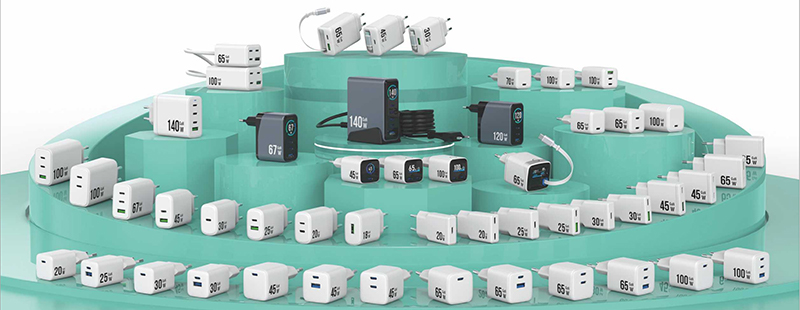
Wattage is one of the easiest ways for customers to understand charger products. It is also a useful starting point for organizing a retail or wholesale catalogue. However, the power categories below are planning references, not strict compatibility rules. Actual charging performance depends on the connected device, supported charging protocols, cable capability, and the charger's output profiles.
20W–30W: Everyday Smartphone Charging
This category is suitable for mainstream smartphone charging and other compatible smaller devices.
For many retail businesses, compact 20W and 30W USB-C chargers can serve as entry-level products. They are relatively easy for customers to understand and can fit into a broad range of retail channels.
When selecting models in this category, buyers should compare:
• USB-C output profiles.
• PD and PPS support where required.
• Housing size and weight.
• Plug configuration.
• Single-port or multi-port design.
• Retail packaging and branding options.
It is not always necessary to offer several models with only minor differences. A clear entry-level model with well-defined specifications may be easier to stock and explain.
35W–45W: A Mid-Range Charging Option
The 35W–45W category can provide a useful step between basic phone chargers and higher-power laptop adapters.
Depending on device compatibility, these chargers can serve smartphones, tablets, and some lightweight laptops. They can also appeal to customers who want more flexibility than a basic phone charger without moving to a larger, more expensive model.
For buyers, the important question is not simply whether a charger is rated at 45W. It is whether its output profiles and protocol support match the devices commonly purchased in the target market.
A 45W model with a suitable USB-C PD profile may be a stronger product choice than a charger selected only because its printed wattage looks attractive.
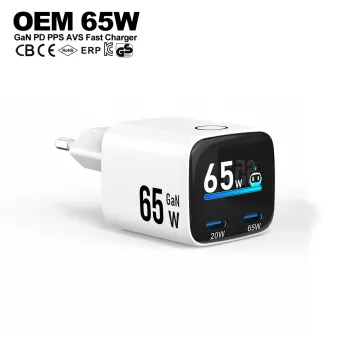
65W: A Versatile Category for Phones and Laptops
A 65W USB-C charger can occupy an important position in a product range because it can serve a broader mix of compatible devices. It may appeal to customers who want one charger for a laptop, smartphone, tablet, or other USB-C equipment. Compact GaN designs can also make this category attractive to customers who travel or work across different locations.
For retailers and wholesalers, 65W models can help connect the smartphone charger category with the laptop accessory category. However, buyers should check the actual output distribution. A 65W multi-port charger does not necessarily deliver 65W from every port at the same time. Its power allocation needs to be clearly documented.
For a more detailed explanation of this category, see 65W Charger Explained: What It Is, Who Needs It, and Why It’s the Most Versatile Fast Charger in 2026.
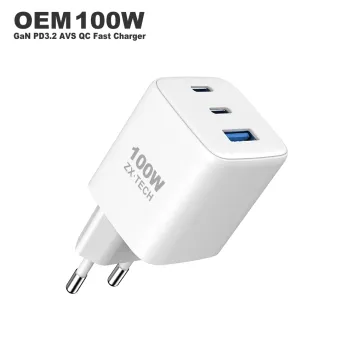
100W–140W: Higher-Power Charging for Laptops and Multiple Devices
Higher-power chargers are useful for customers who need more charging capacity, particularly for compatible laptops and multi-device setups.
A 100W USB-C charger can be positioned for laptop users who need a higher-power adapter. A 140W model may serve compatible devices that support higher USB-C Power Delivery output, including suitable PD 3.1 EPR applications.
In this power range, consumers will focus primarily on the following aspects:
• Supported PD and PPS or AVS profiles, where applicable.
• PD 3.1 EPR support when the product is intended for compatible high-power applications.
• Cable current and power rating.
• Thermal performance under sustained load.
• Multi-port power distribution.
• Target-market electrical and safety requirements.
A higher wattage printed on the housing does not guarantee that every connected device will charge at that power. The device and cable must support the relevant charging conditions.
For a retail range, one carefully selected 100W or 140W model may be more useful than several high-power models with nearly identical positioning.
3. Decide How Many Ports Each Product Needs
Power output is only one part of the product decision. Port configuration can change how customers use a charger and how a product should be positioned.
A simple way to organize the range is to consider three types of design.
Single-port chargers
Single-port models are straightforward. They are suitable for customers who normally charge one device at a time and prefer a compact, uncomplicated adapter.
They can work well in entry-level and mid-range categories, where price and ease of use are important.
Two-port chargers
Two-port models offer more flexibility. A USB-C plus USB-A configuration can support customers who still use older USB-A cables or accessories alongside newer USB-C devices.
A dual USB-C configuration may be more appropriate for customers whose devices and cables are already based on USB-C.
The choice should reflect the target customer rather than a preference for adding more ports.
Three-port and four-port chargers
Multi-port chargers are designed for customers who want to charge several devices from one adapter. They can be useful for travel, home-office setups, and shared charging environments. However, buyers should never evaluate a multi-port charger by looking only at its total wattage.
The product specification should clearly explain what happens when two or more ports are used together. For example, a charger may provide its maximum output through one USB-C port when used alone, but distribute power differently when additional ports are connected.
This information should appear in the product documentation and, where necessary, on packaging or product listings.
For a deeper explanation of multi-port output behavior, see Multi-Port USB-C Charger Power Allocation.
4. Avoid Creating Too Many Similar Models
A large product catalogue may look impressive, but it can create practical problems for a distributor or retailer.
Too many similar models can lead to:
• Inventory being spread across products with limited differences.
• More complicated purchasing and replenishment.
• Confusion among sales staff and customers.
• More packaging and listing work.
• Higher sample and product-management costs.
• Difficulty identifying which models actually sell.
Consider a product range with three different 30W chargers. If all three have one USB-C port, similar dimensions, the same plug type, and nearly identical output profiles, the customer may struggle to understand why the products are different.
There should be a clear reason for each model to exist.
A meaningful difference could be:
• One model is a compact single-port charger.
• Another has USB-C and USB-A ports.
• A third uses a different plug configuration for another market.
The same principle applies to 65W and 100W products. A model should have a defined purpose, not simply another product number.
For buyers, a smaller but better-structured range can be easier to manage than a catalogue filled with overlapping specifications.
5. Consider Plug Types and Target Markets Early
A charger that sells well in one market may not be suitable for another without changes to its plug, input configuration, labeling, documentation, or compliance arrangements.
This is particularly important for businesses selling across several regions.
For example, buyers may need to consider:
• EU plug configurations for relevant European markets.
• UK plug configurations for the United Kingdom.
• US plug configurations for the United States and other markets using compatible plug systems.
• KR plug configurations for South Korea.
The target market should be confirmed before finalizing the product selection.
Buyers should also confirm the applicable certification and regulatory requirements for the specific product and destination market. Requirements can vary according to product design, electrical characteristics, market rules, and the importer's responsibilities.
Manufacturers of mobile phone chargers should be able to clearly specify which certifications or test reports their proposed product models possess, and whether any additional work is required. It is best to discuss these details during the product planning stage to avoid discovering compliance requirements for specific markets only after packaging is complete and purchase orders have been placed.
Read More
6. Match Product Positioning With the Retail Price Structure
A product line of chargers should feature a clear commercial structure. Not every product needs to target the same customer segment or fall within the same price range. A well-balanced product portfolio can encompass entry-level models, mid-range offerings, and high-end, high-specification products.
The purpose is not to make every wattage available at every price point. It is to create understandable differences in value.
For example:
| Product position | Possible product type | Main selling point |
| Entry level | 20W single-port USB-C | Everyday phone charging |
| Mainstream | 30W–45W USB-C | More charging flexibility |
| Mid-to-upper range | 65W GaN charger | Compatible laptop and phone charging |
| Premium | 100W–140W GaN charger | Higher-power and multi-device use |
This is only a planning framework. The right selection depends on the market, competing products, target retail prices, and customer demand.
Buyers should also compare the complete landed cost rather than the factory unit price alone. Freight, import duties, packaging, certification, local distribution, and channel margins can all affect the final retail price. A product that looks attractive at the factory quotation stage may not fit the intended retail position once all costs are included.
7. Choose Product Platforms That Support Future Customization
For brands and importers, product selection is not always limited to choosing an existing charger from a catalogue.
Buyers typically request customization of the brand logo, retail packaging, and cables.
More comprehensive or high-end customization options include:
• Enclosure color and surface finish.
• Plug type.
• Combinations of USB-C and USB-A ports.
• Cable branding (logos) or accessory configurations (if applicable).
• Product structure or mold design.
• Electrical specifications and charging protocols.
The amount of customization required will affect development time, engineering work, tooling costs, and order quantities.
This is where buyers need to understand the difference between OEM and ODM arrangements.
With ODM, a buyer may select an existing product platform and customize selected details. This can be a practical route when the existing design already meets the required performance and market needs.
With OEM development, the buyer may require more substantial changes to the product design, electrical architecture, mechanical structure, or other specifications.
Neither approach is automatically better. The right choice depends on how much of the product needs to be changed and how much engineering investment the project can support.
For a more detailed comparison, see OEM vs ODM Charger Manufacturing: What Is the Difference and Which Is Better?.
Read More
8. Build the Range Around a Core Selection First
A buyer does not need to launch every planned product at the same time. For a new brand or distributor entering a market, it may be more practical to begin with a small core selection and expand after reviewing sales performance.
A possible starting structure could include:
1. One entry-level USB-C charger for everyday smartphone use.
2. One mid-range charger for customers who need more power.
3. One 65W model for compatible laptops and mobile devices.
4. One higher-power model for customers who need 100W-class charging.
5. One multi-port model for customers who charge several devices.
This is not a fixed purchasing recommendation. A business focused on mobile phone accessories may need a different mix from a laptop accessory distributor or a retailer serving business customers.
The initial selection should be based on the devices sold through the channel, the target price range, and the expected order volume.
After launch, buyers can review which products generate repeat orders, which models move slowly, and whether customers are asking for different plug types or port combinations.(Or the goal is to pursue a mid-to-high-end brand positioning)
That information is more useful for expanding a product line than simply adding models because a supplier has introduced them.
9. What Should Buyers Confirm With a Charger Manufacturer?
Once the product range has been planned, the next step is to confirm whether the supplier can support the selected models consistently.
A product catalogue alone is not enough. Buyers should request clear technical and commercial information for each proposed charger.
Before placing a bulk order, confirm the following:
Product specifications
• Rated output and supported voltage/current profiles.
• PD, PPS, QC, or AVS support where applicable.
• Port configuration and simultaneous power allocation.
• Input voltage and frequency and Plug type and physical dimensions.
Quality and compliance
• Applicable certification documents and test reports.
• Electrical safety and protection features.
• Thermal and reliability testing arrangements.
• Product labeling and packaging requirements.
• Warranty terms and defect-handling procedures.
OEM and ODM support
• Available housing and product platforms.
• Logo, color, and packaging customization.
• Mold and structural development options.
• Engineering support for specification changes.
• Sample and development arrangements.
Commercial and supply arrangements
• MOQ for each model and customization option.
• Sample cost and production lead time and Price validity and quotation scope.
• Component availability and approved alternatives.
• Reorder lead time and long-term supply arrangements.
The important point is to confirm these details model by model. A supplier may support customization on one platform but not on another. Likewise, a certification or test report for one configuration should not automatically be assumed to cover every variation.
A reliable USB charger manufacturer should be able to explain the differences between its product platforms and identify what can be customized without creating unnecessary development risk.
10. How ZONSAN Supports OEM and ODM Charger Product Ranges
For a buyer building a charger catalogue, working with a manufacturer that understands different power categories and product configurations can simplify product planning.
ZONSAN has 17 years of experience in charger manufacturing and operates a 6,583㎡ manufacturing facility. Its product range covers USB wall chargers, USB-C fast chargers, GaN chargers, desktop chargers, and laptop charging solutions from 5W to 240W.
For OEM and ODM customers, customization can include product branding, packaging, color, plug configurations, port arrangements, and selected structural or engineering requirements, depending on the product platform and project scope.
The company works with customers developing charger products for different markets, including Europe, the Middle East, South Korea, and North America. Relevant compliance requirements should be confirmed according to the product configuration and destination market.
For a retailer, importer, or phone charger wholesaler, the value of working directly with a charger manufacturer is not simply access to more models. It is the ability to discuss how those models fit together, which platforms can be customized, and how product selection can support future orders.
A product range should be commercially useful before it becomes large.
Final Thoughts
Building a successful USB charger product range is a product-planning decision, not simply a matter of selecting several wattages from a supplier catalogue.
Buyers need to understand their customers, identify the charging needs they want to cover, select suitable port configurations, and consider the requirements of each target market. They also need to avoid unnecessary product overlap and make sure the selected models can be supplied and customized on commercially reasonable terms.
For brands, importers, retailers, and wholesalers, a focused product range can make purchasing, inventory management, and product positioning easier.
The best starting point is not to ask a charger factory for every model it can produce. It is to explain the market you serve and the customers you want to reach. From there, a capable manufacturer can help translate those requirements into a practical product selection.
Frequently Asked Questions
Q1: What wattages should a USB-C charger product range include?
A product range may include 20W–30W models for everyday smartphone charging, 35W–45W models for broader device compatibility, 65W models for compatible laptops and mobile devices, and 100W–140W models for higher-power applications. The right mix depends on customer demand and the target market.
Q2: Is it better to sell 20W or 30W USB-C chargers?
Neither is universally better. A 20W charger can suit many everyday smartphone charging needs, while a 30W model may provide more flexibility for compatible devices. Buyers should compare supported output profiles, device compatibility, size, and price positioning.
Q3: Should retailers offer single-port and multi-port chargers?
Offering both can serve different customer needs. Single-port chargers are straightforward for individual-device charging, while multi-port chargers are useful for customers who want to charge several devices from one adapter. The power allocation between ports should be clearly explained.
Q4: Is a 65W charger suitable for laptop charging?
A 65W USB-C charger can charge many compatible laptops, but actual charging performance depends on the laptop's power requirements and supported USB-C PD profiles. Buyers should verify compatibility rather than relying on wattage alone.
Q5: What is the difference between a 100W and a 140W USB-C charger?
The main difference is their maximum rated output and the charging applications they can support. A 140W charger may support compatible high-power PD 3.1 EPR devices, while a 100W charger is suitable for many other laptop and mobile-device applications. The connected device and cable must support the required power level.
Q6: What should a wholesaler consider when choosing a charger manufacturer?
A wholesaler should evaluate product consistency, engineering and customization capability, relevant certification documentation, MOQ, quotation scope, production lead time, quality controls, and long-term supply arrangements.
Q7: Can a charger manufacturer customize a product range for a brand?
Yes, depending on the manufacturer's capabilities and the selected product platform. Common options include logo printing, packaging, color, plug type, port configuration, and selected structural or electrical changes. More substantial changes may require additional engineering, tooling, validation, and certification work.
Q8: How many charger models should a new retailer start with?
There is no fixed number. A new retailer can begin with a focused selection covering its main customer groups and price levels. It can then expand the range based on sales data, customer feedback, and repeat-order patterns.
Q9: Does every USB-C charger support PPS?
No. USB-C describes the connector, while PPS is an optional charging protocol supported by compatible chargers and devices. Buyers should check the charger's actual protocol specifications rather than assuming that every USB-C model includes PPS.
Q10: Why should buyers discuss product selection with a factory before ordering?
A factory can help clarify which existing platforms meet the buyer's requirements, which models need customization, and what the changes may mean for cost, MOQ, development time, and compliance. Early discussion can reduce unnecessary model overlap and avoidable sourcing problems.
Reviewer: Lina and Lucas
Second Reviewers: Jack and Jeroen Groen
Final Review Date: [November 13, 2026]
Buyers should also compare the complete landed cost rather than the factory unit price alone. Freight, import duties, packaging, certification, local distribution, and channel margins can all affect the final retail price. A product that looks attractive at the factory quotation stage may not fit the intended retail position once all costs are included.
7. Choose Product Platforms That Support Future Customization
For brands and importers, product selection is not always limited to choosing an existing charger from a catalogue.
Buyers typically request customization of the brand logo, retail packaging, and cables.
More comprehensive or high-end customization options include:
• Enclosure color and surface finish.
• Plug type.
• Combinations of USB-C and USB-A ports.
• Cable branding (logos) or accessory configurations (if applicable).
• Product structure or mold design.
• Electrical specifications and charging protocols.
The amount of customization required will affect development time, engineering work, tooling costs, and order quantities.
This is where buyers need to understand the difference between OEM and ODM arrangements.
With ODM, a buyer may select an existing product platform and customize selected details. This can be a practical route when the existing design already meets the required performance and market needs.
With OEM development, the buyer may require more substantial changes to the product design, electrical architecture, mechanical structure, or other specifications.
Neither approach is automatically better. The right choice depends on how much of the product needs to be changed and how much engineering investment the project can support.
For a more detailed comparison, see OEM vs ODM Charger Manufacturing: What Is the Difference and Which Is Better?.
Read More
8. Build the Range Around a Core Selection First
A buyer does not need to launch every planned product at the same time. For a new brand or distributor entering a market, it may be more practical to begin with a small core selection and expand after reviewing sales performance.
A possible starting structure could include:
1. One entry-level USB-C charger for everyday smartphone use.
2. One mid-range charger for customers who need more power.
3. One 65W model for compatible laptops and mobile devices.
4. One higher-power model for customers who need 100W-class charging.
5. One multi-port model for customers who charge several devices.
This is not a fixed purchasing recommendation. A business focused on mobile phone accessories may need a different mix from a laptop accessory distributor or a retailer serving business customers.
The initial selection should be based on the devices sold through the channel, the target price range, and the expected order volume.
After launch, buyers can review which products generate repeat orders, which models move slowly, and whether customers are asking for different plug types or port combinations.(Or the goal is to pursue a mid-to-high-end brand positioning)
That information is more useful for expanding a product line than simply adding models because a supplier has introduced them.
9. What Should Buyers Confirm With a Charger Manufacturer?
Once the product range has been planned, the next step is to confirm whether the supplier can support the selected models consistently.
A product catalogue alone is not enough. Buyers should request clear technical and commercial information for each proposed charger.
Before placing a bulk order, confirm the following:
Product specifications
• Rated output and supported voltage/current profiles.
• PD, PPS, QC, or AVS support where applicable.
• Port configuration and simultaneous power allocation.
• Input voltage and frequency and Plug type and physical dimensions.
Quality and compliance
• Applicable certification documents and test reports.
• Electrical safety and protection features.
• Thermal and reliability testing arrangements.
• Product labeling and packaging requirements.
• Warranty terms and defect-handling procedures.
OEM and ODM support
• Available housing and product platforms.
• Logo, color, and packaging customization.
• Mold and structural development options.
• Engineering support for specification changes.
• Sample and development arrangements.
Commercial and supply arrangements
• MOQ for each model and customization option.
• Sample cost and production lead time and Price validity and quotation scope.
• Component availability and approved alternatives.
• Reorder lead time and long-term supply arrangements.
The important point is to confirm these details model by model. A supplier may support customization on one platform but not on another. Likewise, a certification or test report for one configuration should not automatically be assumed to cover every variation.
A reliable USB charger manufacturer should be able to explain the differences between its product platforms and identify what can be customized without creating unnecessary development risk.
10. How ZONSAN Supports OEM and ODM Charger Product Ranges
For a buyer building a charger catalogue, working with a manufacturer that understands different power categories and product configurations can simplify product planning.
ZONSAN has 17 years of experience in charger manufacturing and operates a 6,583㎡ manufacturing facility. Its product range covers USB wall chargers, USB-C fast chargers, GaN chargers, desktop chargers, and laptop charging solutions from 5W to 240W.
For OEM and ODM customers, customization can include product branding, packaging, color, plug configurations, port arrangements, and selected structural or engineering requirements, depending on the product platform and project scope.
The company works with customers developing charger products for different markets, including Europe, the Middle East, South Korea, and North America. Relevant compliance requirements should be confirmed according to the product configuration and destination market.
For a retailer, importer, or phone charger wholesaler, the value of working directly with a charger manufacturer is not simply access to more models. It is the ability to discuss how those models fit together, which platforms can be customized, and how product selection can support future orders.
A product range should be commercially useful before it becomes large.
Final Thoughts
Building a successful USB charger product range is a product-planning decision, not simply a matter of selecting several wattages from a supplier catalogue.
Buyers need to understand their customers, identify the charging needs they want to cover, select suitable port configurations, and consider the requirements of each target market. They also need to avoid unnecessary product overlap and make sure the selected models can be supplied and customized on commercially reasonable terms.
For brands, importers, retailers, and wholesalers, a focused product range can make purchasing, inventory management, and product positioning easier.
The best starting point is not to ask a charger factory for every model it can produce. It is to explain the market you serve and the customers you want to reach. From there, a capable manufacturer can help translate those requirements into a practical product selection.
Frequently Asked Questions
Q1: What wattages should a USB-C charger product range include?
A product range may include 20W–30W models for everyday smartphone charging, 35W–45W models for broader device compatibility, 65W models for compatible laptops and mobile devices, and 100W–140W models for higher-power applications. The right mix depends on customer demand and the target market.
Q2: Is it better to sell 20W or 30W USB-C chargers?
Neither is universally better. A 20W charger can suit many everyday smartphone charging needs, while a 30W model may provide more flexibility for compatible devices. Buyers should compare supported output profiles, device compatibility, size, and price positioning.
Q3: Should retailers offer single-port and multi-port chargers?
Offering both can serve different customer needs. Single-port chargers are straightforward for individual-device charging, while multi-port chargers are useful for customers who want to charge several devices from one adapter. The power allocation between ports should be clearly explained.
Q4: Is a 65W charger suitable for laptop charging?
A 65W USB-C charger can charge many compatible laptops, but actual charging performance depends on the laptop's power requirements and supported USB-C PD profiles. Buyers should verify compatibility rather than relying on wattage alone.
Q5: What is the difference between a 100W and a 140W USB-C charger?
The main difference is their maximum rated output and the charging applications they can support. A 140W charger may support compatible high-power PD 3.1 EPR devices, while a 100W charger is suitable for many other laptop and mobile-device applications. The connected device and cable must support the required power level.
Q6: What should a wholesaler consider when choosing a charger manufacturer?
A wholesaler should evaluate product consistency, engineering and customization capability, relevant certification documentation, MOQ, quotation scope, production lead time, quality controls, and long-term supply arrangements.
Q7: Can a charger manufacturer customize a product range for a brand?
Yes, depending on the manufacturer's capabilities and the selected product platform. Common options include logo printing, packaging, color, plug type, port configuration, and selected structural or electrical changes. More substantial changes may require additional engineering, tooling, validation, and certification work.
Q8: How many charger models should a new retailer start with?
There is no fixed number. A new retailer can begin with a focused selection covering its main customer groups and price levels. It can then expand the range based on sales data, customer feedback, and repeat-order patterns.
Q9: Does every USB-C charger support PPS?
No. USB-C describes the connector, while PPS is an optional charging protocol supported by compatible chargers and devices. Buyers should check the charger's actual protocol specifications rather than assuming that every USB-C model includes PPS.
Q10: Why should buyers discuss product selection with a factory before ordering?
A factory can help clarify which existing platforms meet the buyer's requirements, which models need customization, and what the changes may mean for cost, MOQ, development time, and compliance. Early discussion can reduce unnecessary model overlap and avoidable sourcing problems.
Reviewer: Lina and Lucas
Second Reviewers: Jack and Jeroen Groen
Final Review Date: [November 13, 2026]