Traceability in Charger Manufacturing How Factories Track Every Production Step
Information provided by: Zonsan Production Supervisor and R&D Department
When a phone charger has a quality problem, finding the defective unit is only the beginning.
The harder question is usually: Where did the problem start?
Was it related to a component batch?
A PCB production run?
A particular assembly line?
A process adjustment?
A testing station?
Or something that happened several hours before the finished charger was even inspected?
For a professional phone charger manufacturer, these questions need answers. This is where traceability in charger manufacturing becomes important.
A good traceability system allows a factory to connect finished chargers with relevant production information, such as material batches, production dates, manufacturing lines, process records, inspection results and test data. It does not mean putting a tracking code on a box and calling the job finished.
Real manufacturing traceability is much deeper than that. The purpose is to create a reliable connection between the finished charger and the process that produced it.
For USB-C chargers, GaN chargers, PD/PPS chargers and OEM/ODM phone chargers, this becomes increasingly important as products become more powerful, more compact and more technically complicated.
When something goes wrong, a traceable production system helps the factory answer a very practical question: Which products could be affected, and which products are not?
What Is Traceability in Charger Manufacturing?
Traceability in charger manufacturing is the ability to track a product, component, material or production process through defined stages of manufacturing and connect that information to the finished product.
Depending on the factory and product, traceability data includes raw material batches, component suppliers, PCB (Printed Circuit Board) batches, production dates and times, production lines, workstations, manufacturing processes, operators or production teams, test results, inspection records, rework information, packaging records, and shipment details. The exact level of traceability depends on the product, customer requirements and quality system.
A simple phone charger may not need the same traceability depth as a high-power multi-port GaN charger supplied to an international brand.
But the principle remains the same: The factory should be able to connect the finished product with the manufacturing information needed to investigate its quality.
Why Traceability Matters for Phone Charger Factories
A charger factory can produce thousands of units in a relatively short period. If a problem appears after production, checking every charger individually may be impractical. Without traceability, the factory may only know: "Some chargers from this shipment have a problem."
With useful traceability, the factory may be able to determine: "The affected chargers came from a specific production period and material batch, while other production lots were made under different conditions."
That difference can have a major impact on quality management.
For OEM customers, traceability also provides another layer of confidence that the manufacturer has control over its production process.
Traceability Is More Than a Serial Number
This is one of the most common misunderstandings. A serial number can identify a product. But a serial number by itself does not create a complete traceability system.
Imagine a charger has a production code printed on the housing. That code is useful only if the factory can connect it to meaningful production records.
For example: Product code → Production batch → PCB batch → Component batch → Assembly process → Test results.
That connection is what makes the code useful. Without the underlying records, the number is little more than an identifier. A professional traceability system therefore consists of two parts: Identification.
The factory needs a way to identify the product, batch, material or process.
Record connection
The identification needs to connect to the relevant manufacturing information.
Both are necessary.
What Needs to Be Traced in Charger Manufacturing?
Not every factory tracks exactly the same information. However, a well-structured charger manufacturing traceability system may cover several important levels.
1. Raw Material Traceability
The first level begins before production. Inbound material information can be linked to the supplier, material type, batch number, incoming inspection results, receipt date, and approval status.
Components involved include power ICs, gallium nitride (GaN) devices, capacitors, resistors, transformers, USB-C connectors, PCBs (printed circuit boards), cables (where applicable), housing materials, and so on.
The purpose is not to record every piece of information simply because it exists. The useful question is: If a component-related problem appears later, can the factory identify which products used that material batch?
That is where material traceability becomes valuable.
2. PCB Traceability
The PCB is at the center of many charger designs. A finished phone charger may look simple from the outside, but the PCB contains the power architecture, control circuits, protection systems and communication functions that determine much of its performance.
For this reason, PCB traceability can be particularly useful.
For example: PCB model, PCB version, PCB batch, SMT production date, production line, AOI (Automated Optical Inspection) results, rework records, and relevant test results.
This becomes especially important when an engineering change is introduced. If a PCB revision changes, the factory needs to know which production units used the old version and which used the new version. Without that information, investigating a field problem becomes much harder.
3. SMT Process Traceability
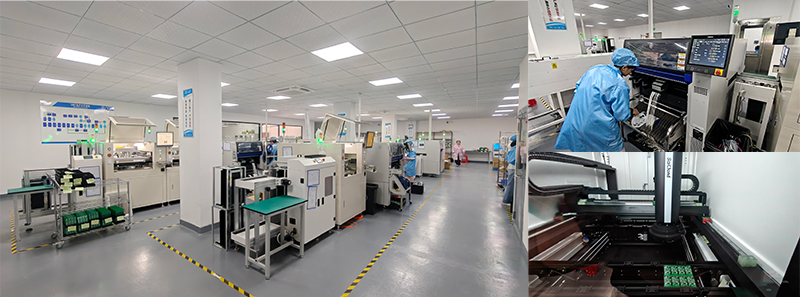
SMT production is another important point in the traceability chain. Modern phone chargers often use compact PCB designs with many surface-mounted components.
Production issues may stem from component placement, soldering, reflow process conditions, PCB handling, equipment parameter settings, or material variations.
If a quality problem is discovered later, engineers may need to determine whether affected products passed through the same SMT process. This is where process traceability connects with manufacturing data.
For example, a factory may need to identify: Which PCB batches were produced on which line during a specific production period?
That question becomes much easier to answer when manufacturing records are connected properly.
4. Assembly Traceability
After PCB production, the charger moves through assembly.
The assembly process includes transformer installation, thermal interface material installation, internal wiring, connector assembly, housing assembly, plug installation, and mechanical structure inspection.
Traceability at this stage can help identify when a problem was introduced. This is especially useful when the same PCB is used in different charger models or when several product configurations are being produced on the same manufacturing floor.
A good traceability system should make it possible to distinguish between products rather than treating the entire production floor as one large batch.
5. Testing and Inspection Traceability
Testing generates valuable quality information.
ZONSAN's current charger testing process includes incoming inspection, in-process quality control, functional verification, PD/PPS testing, thermal evaluation, aging and final quality inspection. The important traceability question is not simply whether these tests were performed, but whether the relevant results can be connected to the production units or batches being controlled. For a closer look at the actual inspection and testing stages, see how we test USB-C chargers before shipment.
This distinction matters.
A factory may have excellent testing equipment. But if test records cannot be connected to the products that were tested, those records become much less useful during a later investigation.
What Does a Traceability Chain Look Like?
A practical charger traceability chain can be understood like this: Supplier → Incoming Material Batch → PCB / Component Batch → SMT Production → Assembly → Electrical Testing → Reliability Testing → Final Inspection → Packaging → Shipment.
The exact structure varies by manufacturer.
The important idea is continuity. Each stage should provide enough information to connect the product to the next stage.
This creates a manufacturing history. When a problem appears, engineers can move backward through that history instead of starting the investigation from zero.
How Traceability Helps Find the Root Cause
Traceability does not automatically identify the root cause. It gives engineers the information needed to investigate it.
Suppose a customer reports an abnormal charging problem. The first step may be to identify the affected model and production code. From there, engineers can look at the relevant production records.
They may then investigate:
• Which material batches were used?
• Which PCB batch was involved?
• Which production line made the units?
• When were they produced?
• Did other products from the same period show similar results?
• Were there unusual test results?
• Was there a process adjustment?
• Was there rework?
• Was a component supplier changed?
This is much more efficient than examining the entire production history. Traceability helps narrow the investigation.
Traceability and SPC Work Together
Our previous guide to SPC in charger manufacturing explains how production data can reveal process drift before it develops into a larger quality problem.
Traceability provides an important connection to that system. SPC can show that a process characteristic is changing. Traceability can help answer: Where did that change occur?
For example, suppose production data shows an unusual trend.
Engineers need to compare the affected data against factors such as production lines, time periods, machinery and equipment, material batches, product models, shifts, and process stages.
Without traceability, the data may show a problem without providing enough context to investigate it.
With traceability, engineers can connect the process data to the physical production conditions.
This is why SPC and traceability are stronger when used together.
SPC shows process behavior.
Traceability provides process context.
Traceability and Control Plans
There is a significant link between traceability and the control plan.
A Control Plan in charger manufacturing defines what needs to be controlled, where it is controlled, how it is measured, and what happens when the result is abnormal.
Traceability adds another question: Can the result be connected to the product or production batch?
That connection becomes valuable when a control result is abnormal.
The more clearly production information is connected, the more accurately the factory can define the affected scope. This is one reason traceability should be designed into the manufacturing process rather than added later.
Traceability in OEM and ODM Charger Manufacturing
Traceability becomes particularly important for OEM and ODM production.
Customized mobile phone chargers involve customer-specific elements such as PCB design, components, housing and logo, plug configuration, rated power, charging protocols, packaging, and firmware or protocol settings.
When multiple customer projects are produced in the same factory, clear identification becomes essential.
The manufacturer needs to distinguish one product configuration from another.
A traceability system can help connect: Customer specification → Product version → Production batch → Test records → Shipment.
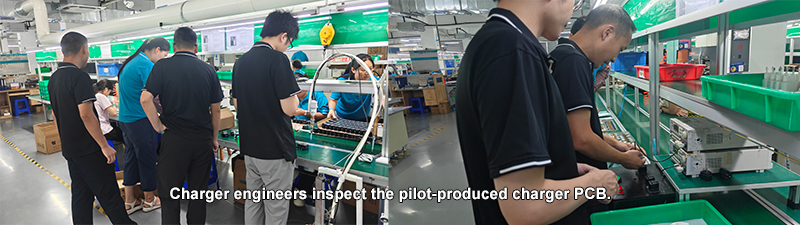
This becomes useful when a customer requests a production review months after the original order. Instead of relying entirely on memory or scattered paperwork, the manufacturer can retrieve the relevant production history.
For an OEM buyer, that is a meaningful part of supplier quality management.
How Traceability Helps Control a Quality Problem
One of the biggest benefits of traceability is containment. When a quality issue is confirmed, the factory needs to determine how far the problem extends.
Examples include: individual product units, small-batch production runs, specific raw material lots, production shifts, production lines, product versions, a series of related production batches, etc.
Without traceability, factories may have to assume a much larger scope because they cannot confidently separate affected and unaffected products.
This could lead to unnecessary re-testing, rework, product holds, shipment delays, and customer disruption.
Good traceability helps make the containment decision more precise.
Its goal is not merely to track more information; it is to track enough information to make higher-quality decisions.
Traceability After a Component Problem
Component-related issues are a good example of why traceability matters.
Suppose a factory discovers that a particular component batch has an unexpected quality issue. The first question is not simply: "Do we still have this component in the warehouse?"
The more important question is: "Which finished chargers used this batch?" A useful traceability system should help engineers move from the component batch to the affected production lots.
The investigation can then determine:
• Which products used the material
• When those products were produced
• Which customers received them
• Whether additional testing is required
• Whether other production should be contained
This type of backward and forward tracing is a fundamental reason why manufacturing traceability matters.
Backward Traceability and Forward Traceability
Traceability generally works in two directions.
Backward Traceability
Start with the finished charger and move backward. For example: Finished charger → Production batch → PCB → Component → Supplier.
This is useful when investigating a product failure.
Engineers can ask: What materials and processes went into this charger?
Forward Traceability
Start with a material or production batch and move forward. For example: Component batch → Production lots → Finished chargers → Shipments.
This is useful when a material problem is discovered.
Engineers can ask: Which finished products could be affected?
Both directions are important. A strong manufacturing system should support both.
Traceability and Engineering Changes
Charger products often evolve during development and mass production.
A component may be replaced.
A PCB may be revised.
A connector may change.
A housing may be modified.
A production process may be adjusted.
These changes need to be controlled carefully!
Traceability helps establish which products were manufactured before and after the change. That matters because a field problem may appear to be related to a product model while actually being limited to one specific engineering revision. Without version-level traceability, these distinctions can become difficult to make.
This is particularly relevant to OEM and ODM projects where different customers may have similar-looking chargers with different internal specifications.
Traceability Does Not Mean Tracking Everything
There is a temptation in modern manufacturing to record everything. More data must be better, right?
Not necessarily.
A traceability system that collects enormous amounts of disconnected information can become difficult to maintain and difficult to use. The better approach is to identify information that has real quality or production value.
Taking a mobile phone charger factory as an example, valuable traceability information includes: material identification, product version, production batch, manufacturing process, inspection results, test results, rework details, packaging information, and shipment information.
The goal is not to create a flawless historical archive, but to construct a practical record of the manufacturing process.
Paper Records vs. Digital Traceability
Traceability does not automatically require a sophisticated factory-wide digital platform.
Factories can employ a combination of various methods—such as production records, inspection documents, batch labels, barcodes, QR codes, test system logs, manufacturing software, and ERP/MES systems—utilizing a wide range of technical approaches.
What matters more is whether the information is: Accurate, connected, retrievable and maintained.
A digital system with poor data discipline is not necessarily better than a well-managed structured production record. The real value comes from the quality of the connection between records.
What Makes a Charger Traceability System Useful?
A practical traceability system should answer several questions quickly.
What product is this? —— The system should identify the model, version or production code.
When was it produced? —— Production date and batch information provide an important starting point.
Where was it produced? —— The relevant line, workstation or process may help narrow an investigation.
What materials were used? —— Material and component batch information can help identify supplier-related issues.
What inspections did it pass? —— Relevant quality records should be retrievable.
What tests did it pass? —— Electrical and reliability-related results can provide additional evidence.
Was the product reworked? —— Rework can be important when investigating unusual failures.
Where was it shipped? —— For OEM production, shipment records can help define customer impact when necessary.
The exact depth depends on the manufacturer's system. But the questions themselves are useful when evaluating a charger factory.
Traceability and Failure Analysis
The next step in the quality system is failure analysis; the relationship between the two is evident.
Traceability tells engineers: Which production history is relevant?
Failure analysis asks: What actually caused the problem?
Without traceability, failure analysis may begin with incomplete information. Engineers may know what failed but not exactly how the failed unit was manufactured.
Traceability allows the scope of an investigation to be narrowed down (covering component batches, manufacturing processes, production equipment, test results, engineering changes, and production timeframes), but it does not guarantee that the root cause will be found immediately.
It simply provides the engineering team with a better starting point for analysis.
How ZONSAN Approaches Charger Manufacturing Traceability
For a professional phone charger manufacturer, traceability needs to support the entire production process rather than exist only at the shipping stage.
At ZONSAN, charger production includes incoming material inspection, SMT production, assembly, in-process quality control, electrical testing, PD/PPS verification, aging, thermal evaluation and final inspection. The broader quality system is designed around process control and manufacturing consistency rather than relying only on the final product inspection.
For OEM and ODM customers, this process-based approach is important because customized chargers may have different PCB designs, components, power levels, plugs and product configurations.
Traceability provides the connection between those product requirements and the production records generated during manufacturing. That becomes particularly useful when production volume increases or when a customer needs to investigate a quality issue after shipment.
What OEM Buyers Should Ask a Phone Charger Factory About Traceability
When auditing a charger manufacturer, buyers often ask about certifications, production capacity and testing equipment.
Those questions are important, but traceability deserves attention too.
Here are several practical questions worth asking.
Can the factory identify production batches?
A manufacturer should have a defined way to distinguish different production lots.
Can material batches be connected to finished products?
This is important when investigating component-related problems.
Can production test results be retrieved?
The answer should explain how testing information is recorded and associated with production.
How are engineering revisions controlled?
This matters when different PCB or product versions are being manufactured.
How does the factory isolate potentially affected products?
This reveals how traceability works during an actual quality event.
How long are production records retained?
Retention requirements depend on the customer's requirements, product, market and quality system, but the factory should have a defined approach.
The goal of these questions is not to demand a particular software system. It is to understand whether the factory can actually reconstruct the manufacturing history of a product when necessary.
Traceability Is Part of Manufacturing Quality, Not Just Documentation
It is easy to think of traceability as paperwork. That is too narrow.
A useful traceability system directly supports manufacturing decisions.
When a process problem appears, traceability helps define the affected scope.
When a supplier issue appears, it helps identify affected products.
When a customer reports a failure, it helps reconstruct the product's manufacturing history.
When an engineering change is introduced, it helps distinguish product versions.
When corrective action is implemented, it helps verify which production lots were affected.
In other words, traceability turns production history into usable quality information.
The Quality Engineering Loop
At this point, the first four stages of the quality engineering system fit together naturally:
PFMEA —— What could go wrong?
↓
Control Plan —— What needs to be controlled?
↓
SPC —— Is the process behaving normally?
↓
Traceability —— Which product, material and process history is connected to the result?
↓
Failure Analysis —— What caused the problem?
↓
CAPA —— How do we prevent it from happening again?
This aligns more closely with the actual operational model of a mature manufacturing quality system. Each stage provides information to the next; none of the stages operate in isolation.
Final Thoughts
A charger factory does not become traceable simply because every box has a barcode. Real traceability connects the finished product with the manufacturing history behind it.
For a phone charger manufacturer, that may include the material batch, PCB version, production process, inspection records, electrical test results, rework history and shipment information.
The real test comes when something goes wrong.
Can the factory quickly identify: What happened? Which products may be affected? Which materials and processes were involved? Where did those products go? and perhaps most importantly: Which products are not affected?
When combined with PFMEA, Control Plans and SPC, it becomes part of a much stronger manufacturing quality system.
PFMEA identifies risk.
Control Plans define controls.
SPC monitors process behavior.
Traceability connects the data back to the physical production history.
Then failure analysis and corrective action can take the investigation further.
For modern USB-C and fast phone chargers, especially OEM and ODM products produced in significant volumes, that connection between product, process and production data is becoming an increasingly important part of professional manufacturing.
FAQ
Q1: What is traceability in charger manufacturing?
Traceability in charger manufacturing is the ability to connect a finished charger with relevant manufacturing information, such as material batches, production processes, inspection results, test records, product versions and shipment information.
Q2: Why is traceability important for phone charger factories?
Traceability helps factories investigate quality problems, identify potentially affected products, control production batches, investigate supplier issues and perform corrective actions more efficiently.
Q3: Is a serial number enough for charger traceability?
No. A serial number or production code is useful only when it can be connected to meaningful manufacturing records. Complete traceability requires both product identification and accessible production information.
Q4: What charger components should be traceable?
Depending on the product and quality requirements, traceability may include PCBs, power ICs, GaN devices, capacitors, transformers, USB-C connectors, housing materials and other important components.
Q5: How does traceability help with defective chargers?
It helps the factory identify when and where the affected products were produced and which materials, processes and test records are associated with them. This can reduce the scope of investigation and improve containment.
Q6: What is backward traceability?
Backward traceability starts with a finished charger and moves back through its production history to identify the production batch, components, materials and other relevant manufacturing information.
Q7: What is forward traceability?
Forward traceability starts with a material, component or production batch and identifies which finished products and shipments may have been affected.
Q8: How is traceability related to SPC?
SPC monitors process behavior using production data. Traceability provides the production context behind that data, helping engineers connect unusual trends with specific lines, batches, materials, products or production periods.
Q9: Does traceability require an MES system?
Not necessarily. Factories can use different combinations of production records, barcodes, QR codes, test-system records, ERP/MES software and structured inspection documents. The important factor is whether the information is accurate, connected and retrievable.
Q10: Why is traceability important for OEM charger manufacturing?
OEM chargers may have customized PCB designs, components, housings, plugs and charging specifications. Traceability helps manufacturers distinguish different product versions and connect production records with specific customer requirements and production batches.
Reviewer: Zonsan R&D and Engineer Assistant — Luis and David
Second Reviewer: Luke, Ken
Final Review Date: [September 30, 2026]