Statistical Process Control (SPC) in Gan Charger Manufacturing: How Data Helps Prevent Quality Problems Before They Happen
Quick Answer
Statistical Process Control (SPC) is a quality management method that uses real-time production data to monitor manufacturing processes and identify potential problems before defects occur. In USB-C charger manufacturing, SPC helps factories control critical parameters such as soldering quality, electrical performance, thermal behavior and production consistency.
Key Takeaways
1. SPC focuses on preventing defects rather than detecting defects after production.
2. Professional charger factories use SPC data from SMT, testing and assembly processes.
3. SPC helps identify production variation before it becomes a quality issue.
4. Data-driven manufacturing improves consistency for OEM and ODM projects.
5. SPC works together with AOI, ICT, FCT, Aging Testing and Failure Analysis.
Introduction
In electronics manufacturing, quality problems rarely appear suddenly.
Most failures are the result of small variations accumulating over time.
A solder joint becomes slightly weaker.
A component placement position slowly shifts.
A testing parameter moves closer to its limit.
A thermal performance value gradually changes between production batches.
Each individual change may seem insignificant.
However, when these small variations are not controlled, they can eventually create real product failures.
This is why professional manufacturers focus not only on finding defects but also on preventing defects from happening.
One of the most important tools for achieving this goal is:
Statistical Process Control (SPC).
SPC allows engineering teams to monitor manufacturing processes through data, identify abnormal trends and take action before quality issues affect large production volumes.
For USB-C charger manufacturing, where products involve compact PCB layouts, high-power circuits and strict safety requirements, SPC has become an important part of modern quality management.
What Is Statistical Process Control (SPC)?
Statistical Process Control is a manufacturing quality method that uses statistical analysis to monitor and control production processes.
The basic idea is simple:
A stable process produces predictable results.
When a process begins to move away from its normal condition, data trends can reveal the change before defective products appear.
Instead of waiting for failures at the end of production, SPC helps engineers detect early warning signals during manufacturing.
For example:
A traditional quality approach may discover a soldering problem after hundreds of defective PCBs are produced.
An SPC-based approach may detect gradual changes in solder paste printing performance before defects occur.
The difference is prevention.
Why SPC Matters in USB Charger Manufacturing
Modern chargers are becoming increasingly compact and powerful.
A small GaN charger may contain:
High-frequency switching components
• Power management ICs
• USB PD controllers
• Multiple protection circuits
• Advanced thermal designs
At the same time, production requirements are becoming more demanding.
Customers expect:
• Stable charging performance
• Low failure rates
• Consistent quality across large orders
• Reliable long-term operation
Small manufacturing variations can affect these expectations.
Examples include:
• Solder paste thickness variation
• Component placement accuracy
• Output voltage fluctuation
• Thermal performance differences
• Assembly process variation
SPC provides manufacturers with a systematic method to monitor these factors.
SPC vs Traditional Quality Inspection
Many people think quality control means checking finished products.
However, inspection alone has limitations.
Traditional inspection asks:
"Did this product pass or fail?"
SPC asks:
"Is our production process becoming unstable?"
This difference is important.
A finished product inspection may identify a defective charger.
SPC attempts to identify the process change that created the risk.
| Traditional Inspection | SPC Quality Control |
| Detects defects after production | Prevents defects through process monitoring |
| Focuses on individual products | Focuses on manufacturing trends |
| Reactive approach | Preventive approach |
| Finds problems after they occur | Identifies risks earlier |
Professional manufacturers use both approaches together.
Inspection confirms product quality.
SPC improves process stability.
How SPC Is Applied in Charger Manufacturing
SPC can be applied throughout different stages of charger production.
1. SMT Production Process Control
The SMT process is one of the most critical stages in charger manufacturing.
Small variations during PCB assembly may affect final product reliability.
SPC can monitor:
• Solder paste printing thickness
• Component placement accuracy
• Reflow temperature profiles
• Soldering consistency
For example:
If solder paste volume gradually decreases, SPC data can identify the trend before insufficient solder causes electrical failures.
2. Electrical Testing Data Monitoring
Testing equipment generates large amounts of valuable production data.
Examples include:
• ICT measurement results
• FCT output parameters
• Voltage stability records
• Power efficiency measurements
Instead of only recording PASS or FAIL results, SPC analyzes the data distribution.
For example:
A charger may still pass testing.
However, if output voltage values gradually move closer to the specification limit, engineers can investigate before failures increase.
3. Thermal Performance Monitoring
Thermal management is especially important for GaN chargers.
SPC can monitor:
• Operating temperature
• Temperature rise patterns
• Thermal test results
• Component temperature variation
This helps engineers identify changes caused by:
• Material variation
• Assembly differences
• Component aging
• Process inconsistency
Understanding Control Charts in Manufacturing
One of the most common SPC tools is the control chart.
A control chart tracks process measurements over time.
It includes:
• Average value
• Upper control limit
• Lower control limit
The purpose is not only to check whether a value is within specification.
It is to understand whether the process itself remains stable.
For example:
A charger output voltage may remain within acceptable limits.
However, if the value continuously moves in one direction over multiple production batches, it may indicate an upcoming problem.
SPC allows engineers to investigate early.
Why SPC Is Valuable for OEM and ODM Customers
For OEM customers, consistent quality matters as much as product design.
A factory may produce one excellent sample.
The real challenge is maintaining the same quality across:
• Thousands of units
• Multiple production batches
• Different production periods
SPC helps manufacturers achieve this consistency.
Benefits include:
• Lower defect rates
• More predictable production quality
• Faster problem identification
• Improved production transparency
• Better long-term reliability
For brands building their own charging products, this directly reduces market risks.
How SPC Works Together With AOI, ICT, FCT and Failure Analysis
Statistical Process Control does not replace traditional quality control methods.
Instead, it connects different quality systems together.
A modern charger factory does not rely on one single inspection point.
Quality is built through multiple layers:
Process Control → Inspection → Testing → Analysis → Improvement
SPC acts as the data connection between these stages.
For example:
AOI Inspection
AOI detects PCB assembly problems such as:
• Missing components
• Incorrect component placement
• Soldering abnormalities
SPC analyzes AOI data trends to identify whether the SMT process is becoming unstable.
ICT Testing
ICT verifies electrical connections and circuit performance.
SPC can monitor:
• Resistance values
• Electrical measurement trends
• Failure frequency
If certain parameters gradually move away from normal conditions, engineers can investigate before failures increase.
FCT Testing
FCT confirms real product operation.
SPC can analyze:
• Output voltage consistency
• Power delivery performance
• Charging protocol behavior
This helps ensure production remains stable over time.
Failure Analysis
Failure analysis explains why problems happen.
SPC helps prevent those problems from happening again by monitoring the improved process after corrective actions.
Together, these systems create a complete quality improvement cycle.
Inspection confirms product quality.
SPC improves process stability.
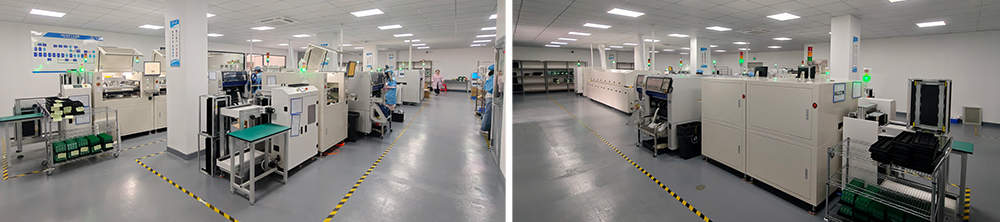
How SPC Is Applied in Charger Manufacturing
SPC can be applied throughout different stages of charger production.
1. SMT Production Process Control
The SMT process is one of the most critical stages in charger manufacturing.
Small variations during PCB assembly may affect final product reliability.
SPC can monitor:
• Solder paste printing thickness
• Component placement accuracy
• Reflow temperature profiles
• Soldering consistency
For example:
If solder paste volume gradually decreases, SPC data can identify the trend before insufficient solder causes electrical failures.
2. Electrical Testing Data Monitoring
Testing equipment generates large amounts of valuable production data.
Examples include:
• ICT measurement results
• FCT output parameters
• Voltage stability records
• Power efficiency measurements
Instead of only recording PASS or FAIL results, SPC analyzes the data distribution.
For example:
A charger may still pass testing.
However, if output voltage values gradually move closer to the specification limit, engineers can investigate before failures increase.
3. Thermal Performance Monitoring
Thermal management is especially important for GaN chargers.
SPC can monitor:
• Operating temperature
• Temperature rise patterns
• Thermal test results
• Component temperature variation
This helps engineers identify changes caused by:
• Material variation
• Assembly differences
• Component aging
• Process inconsistency
Understanding Control Charts in Manufacturing
One of the most common SPC tools is the control chart.
A control chart tracks process measurements over time.
It includes:
• Average value
• Upper control limit
• Lower control limit
The purpose is not only to check whether a value is within specification.
It is to understand whether the process itself remains stable.
For example:
A charger output voltage may remain within acceptable limits.
However, if the value continuously moves in one direction over multiple production batches, it may indicate an upcoming problem.
SPC allows engineers to investigate early.
Why SPC Is Valuable for OEM and ODM Customers
For OEM customers, consistent quality matters as much as product design.
A factory may produce one excellent sample.
The real challenge is maintaining the same quality across:
• Thousands of units
• Multiple production batches
• Different production periods
SPC helps manufacturers achieve this consistency.
Benefits include:
• Lower defect rates
• More predictable production quality
• Faster problem identification
• Improved production transparency
• Better long-term reliability
For brands building their own charging products, this directly reduces market risks.
How SPC Works Together With AOI, ICT, FCT and Failure Analysis
Statistical Process Control does not replace traditional quality control methods.
Instead, it connects different quality systems together.
A modern charger factory does not rely on one single inspection point.
Quality is built through multiple layers:
Process Control → Inspection → Testing → Analysis → Improvement
SPC acts as the data connection between these stages.
For example:
AOI Inspection
AOI detects PCB assembly problems such as:
• Missing components
• Incorrect component placement
• Soldering abnormalities
SPC analyzes AOI data trends to identify whether the SMT process is becoming unstable.
ICT Testing
ICT verifies electrical connections and circuit performance.
SPC can monitor:
• Resistance values
• Electrical measurement trends
• Failure frequency
If certain parameters gradually move away from normal conditions, engineers can investigate before failures increase.
FCT Testing
FCT confirms real product operation.
SPC can analyze:
• Output voltage consistency
• Power delivery performance
• Charging protocol behavior
This helps ensure production remains stable over time.
Failure Analysis
Failure analysis explains why problems happen.
SPC helps prevent those problems from happening again by monitoring the improved process after corrective actions.
Together, these systems create a complete quality improvement cycle.
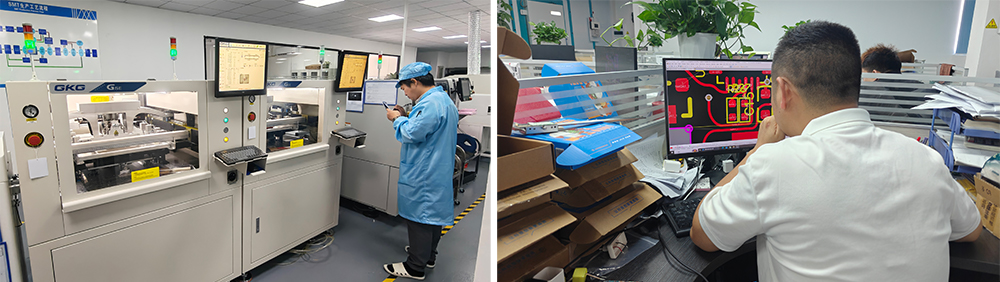
Common SPC Parameters Monitored in Phone Charger Manufacturing
The specific parameters monitored depend on the product design and production requirements.
For USB-C chargers, professional factories may monitor areas including:
SMT Process Parameters
During PCB assembly, important SPC data may include:
• Solder paste volume
• Component placement accuracy
• Reflow temperature profile
• Defect rate trends
Stable SMT production is the foundation of reliable charger manufacturing.
Electrical Performance Parameters
For finished chargers, SPC may track:
• Output voltage
• Output current
• Power efficiency
• Standby power consumption
• Ripple and noise levels
These measurements help maintain consistent charging performance.
Thermal Performance Parameters
For high-power GaN chargers, thermal data becomes increasingly important.
Examples include:
• Surface temperature
• Internal temperature rise
• Thermal test variation
• Cooling performance consistency
Small thermal changes may indicate manufacturing variation.
Production Yield Data
Yield is another important SPC indicator.
Factories monitor:
• First-pass yield
• Testing failure rate
• Repair rate
• Defect distribution
A sudden yield change often indicates a process abnormality.
How Engineers Respond When SPC Shows Abnormal Trends
SPC does not automatically solve problems.
Its value comes from helping engineers identify risks earlier.
When abnormal trends appear, engineers usually follow a structured response process.
Step 1: Confirm the Data
The first step is verifying whether the abnormal trend is real.
Engineers check:
• Measurement equipment calibration
• Testing conditions
• Data collection accuracy
Sometimes abnormal data may come from equipment issues rather than actual production changes.
Step 2: Identify the Process Stage
Engineers trace the issue back through the production process.
Possible sources include:
• Material changes
• Equipment adjustment
• Operator differences
• Environmental changes
• Supplier variation
Step 3: Implement Corrective Action
After identifying the possible cause, engineers may adjust:
• Machine parameters
• Production procedures
• Material handling methods
• Inspection standards
Step 4: Verify Improvement
After changes are implemented, new SPC data confirms whether the process has returned to a stable condition.
This verification step is important.
Without measurement, improvement cannot be proven.
Example: How SPC Prevents Charger Defects
Consider a production line manufacturing a 100W GaN charger.
During normal production, FCT testing shows that output performance remains within specification.
However, SPC monitoring detects a gradual increase in output voltage variation.
The chargers are still passing.
But the trend indicates that something is changing.
Engineering investigation begins.
The team reviews:
• Production records
• Component batches
• SMT parameters
• Testing equipment data
Eventually, engineers discover that a component supplier changed a material specification, causing slight electrical variation.
The issue is corrected before defective products are produced.
Without SPC, the problem might only be discovered after customer complaints.
With SPC, the factory identifies the risk earlier.
SPC and Continuous Improvement Culture
A strong manufacturing system is not built only through machines and equipment.
It also depends on how teams think about quality.
Factories with mature SPC systems develop a continuous improvement culture.
Engineers no longer ask only:
"Did this batch pass?"
They also ask:
"Is this process becoming better or worse?"
This change in mindset is important.
Because manufacturing excellence comes from controlling small details consistently over time.

Why Professional Charger Factories Invest in Data Management
Collecting production data requires investment.
Factories need:
• Testing equipment integration
• Data management systems
• Engineering analysis capability
• Trained quality teams
However, the value becomes clear during long-term production.
Data helps manufacturers:
• Reduce repeated failures
• Improve production efficiency
• Support customer audits
• Maintain consistent quality
• Optimize future product designs
For OEM and ODM customers, this means greater confidence when scaling from prototype samples to mass production.
SPC in High-Power GaN Charger Manufacturing
As charger power continues increasing from 65W to 100W, 140W and beyond, manufacturing control becomes even more important.
Higher power density means:
• More thermal stress
• Tighter electrical requirements
• More complex circuit interaction
A small variation that may be acceptable in a low-power charger could become a serious issue in a high-power product.
SPC helps manufacturers maintain control over these increasingly demanding designs.
This is especially important for:
• GaN chargers
• Multi-port PD chargers
• Laptop chargers
• USB PD 3.1 chargers
• High-power desktop charging solutions
Final Thoughts
Quality manufacturing is not only about finding defective products.
The best manufacturers build systems that prevent defects before they occur.
Statistical Process Control provides the visibility needed to understand manufacturing processes, identify risks early and continuously improve production performance.
For USB-C charger manufacturing, SPC connects every important quality activity:
• SMT process control
• AOI inspection
• ICT verification
• FCT testing
• Failure analysis
• Continuous improvement
Together, these systems create a more reliable and predictable manufacturing environment.
For OEM and ODM customers, this means more than receiving a quality charger.
It means partnering with a manufacturer that understands how to maintain quality at scale.
Frequently Asked Questions (FAQ)
Q1: What is SPC in charger manufacturing?
SPC (Statistical Process Control) is a data-based quality management method that monitors manufacturing processes and detects abnormal trends before they create defects.
Q2: Why is SPC important for USB-C charger factories?
USB-C chargers involve complex electronics and tight manufacturing requirements. SPC helps maintain stable production quality and reduce variation.
Q3: Does SPC replace product testing?
No. SPC works together with AOI, ICT, FCT and reliability testing to create a complete quality system.
Q4: What data does SPC monitor in charger production?
Common data includes SMT parameters, electrical measurements, thermal performance, testing results and production yield.
Q5: How does SPC reduce charger defects?
By identifying abnormal process trends early, engineers can correct problems before they result in large quantities of defective products.
Q6: Is SPC useful for GaN charger manufacturing?
Yes. GaN chargers have higher power density and tighter thermal requirements, making process control especially important.
Q7: Why do OEM buyers care about SPC systems?
Because SPC demonstrates that a factory can maintain consistent quality during large-scale production.
Q8: What is the difference between SPC and quality inspection?
Quality inspection finds existing defects. SPC focuses on controlling the process to prevent defects from occurring.
Recommended
• Failure Analysis in Charger Manufacturing: How Professional Engineering Teams Identify Root Causes and Prevent Future Defects.↗
• Functional Testing (FCT) in USB-C Charger Manufacturing: How Professional Factories Verify Real Charging Performance Before Shipment.↗
• How AOI Inspection Is Essential for Modern USB-C Charger Manufacturing.↗
• Statistical Process Control Overview.↗
• ISO 9001 Quality Management System Principles.↗