When Does a Charger Modification Become a New Design Engineering Reuse Limits for OEM Projects
Provider of Information: Luke and Selike (Engineer)
An OEM customer may approach a gan charger manufacturer with what sounds like a simple request: increase the output power, add another USB-C port, make the housing smaller, or adapt an existing charger for a different market.
From the outside, these changes can look like routine product customization. From an engineer's perspective, however, each one can affect a different part of the charger's electrical and mechanical design.
The important question is not whether an existing gan charger can be modified. It is how much of its validated design can still be reused after the requested changes.
For OEM projects, understanding charger design reuse limits helps both the customer and manufacturer make better decisions before development begins. It prevents a project from being treated as a minor modification when it actually requires a new power architecture, PCB layout, thermal design or validation plan.
This article explains how charger engineers distinguish between a reusable platform, a modified product and a fundamentally new design.
Quick Answer: When Does a Gan Charger Modification Require a New Design?
A charger modification may require a new design when the requested change affects the validated electrical architecture, power conversion stage, current path, thermal limits, mechanical structure or safety and certification conditions.
Changes such as logo printing, packaging or a compatible plug variation may be handled with limited engineering work. Increasing output power, changing port configuration, reducing enclosure size or altering power allocation can require deeper redesign and additional validation.
The decision depends on how the change affects the complete product—not simply how different the finished charger looks.
Start by Separating Product Changes From Engineering Changes
Not every custom charger project constitutes an entirely new engineering undertaking. Clients may request modifications to branding, packaging design, color, or plug configuration. Such changes typically do not require alterations to the core power-conversion design, though it remains necessary to verify compliance with the safety and certification requirements of specific markets.
Other requests, however, may affect the technical foundations of the product.
For example, changing a single-port charger into a multi-port model may require a different power allocation strategy, additional output circuitry and changes to the PCB layout. Increasing the output power may affect the switching stage, transformer, rectification components and thermal design.
It is useful to divide OEM customization into three broad levels. (For reference only)
| Customization level | Typical changes | Likely engineering impact |
| Product-level customization | Logo, packaging, color, labeling | Usually limited, subject to material and market requirements |
| Structural or interface modification | Housing, plug, port position, dimensions | May require mechanical, PCB and thermal review |
| Electrical or architecture modification | Higher wattage, new port configuration, changed power allocation or protocol requirements | May require circuit redesign and expanded validation |
This is a starting point, not a universal classification. Even a seemingly small housing change can affect internal spacing, insulation distances or thermal behavior. Likewise, a software or protocol change may influence output behavior without requiring a completely new power stage.
Before defining the scope of development, the engineering team will assess the actual interdependencies.
What Can Usually Be Reused From an Existing Charger Platform?
An existing charger platform can provide a valuable engineering foundation. It may contain circuit knowledge, qualified components, proven design blocks, test procedures and manufacturing experience.
However, reuse should be based on technical compatibility, not visual similarity.
Power Conversion Architecture
A validated power conversion topology may be reusable when the new product has similar electrical requirements and remains within the architecture's intended operating range.
For example, a related product may use the same basic conversion approach while adopting a different enclosure or branding.
But the fact that two chargers have similar wattage does not automatically mean they can share the same power architecture. Input conditions, output profiles, port configuration, switching behavior and thermal constraints all matter.
Qualified Components
A factory may be able to reuse components that have already been evaluated for a particular design.
This can reduce repeated selection work and help maintain supply consistency. Still, component reuse must be checked against the new product's electrical and mechanical conditions.
A component that works well in one charger may not be suitable after a change in output power, switching frequency, temperature or PCB arrangement.
USB-C PD and PPS Design Knowledge
Existing USB-C PD and PPS implementation experience can also be reused. Engineers may carry forward proven protocol behavior, controller configurations and compatibility test knowledge when the new product has comparable requirements.
However, a change in power profiles, port count or power-sharing logic can affect how the charger communicates with connected devices.
Protocol knowledge can be reused; the complete implementation should still be verified against the new product specification.
Mechanical and Manufacturing Knowledge
Existing housing concepts, plug structures, assembly methods and production experience may provide a useful starting point.
This does not mean that a new housing is automatically compatible with the old internal design. Mechanical dimensions, PCB placement, component clearance, insulation and heat transfer need to be reviewed together.
The goal is to reuse proven engineering work without assuming that every part of the previous product remains suitable.
For a broader explanation of how manufacturers build reusable product foundations, see How Charger Manufacturers Develop New Product Platforms.
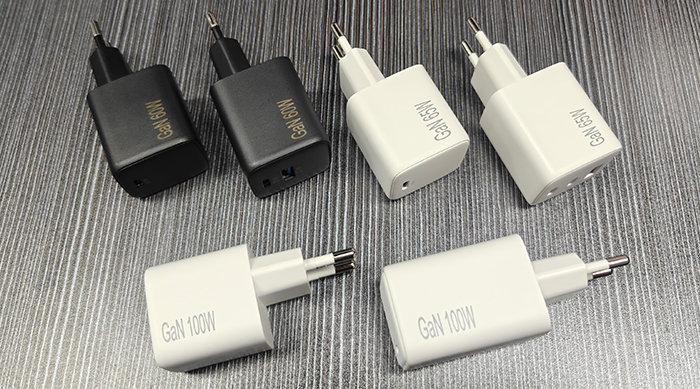
Five Changes That Can Push a Project Beyond Simple Customization
Some customer requests are more likely than others to cross the boundary between a modified product and a new design.
1. Increasing the Output Power
Increasing a charger's rated output is not simply a matter of changing the label or adjusting one controller parameter. Higher power targets will affect the following aspects:
• Switching devices and their operating stress.
• Transformer design and magnetic performance.
• Rectification and output components.
• PCB current paths and Component temperature.
• Protection settings and Power conversion efficiency.
The existing architecture may have enough capability to support the new target, but that needs to be demonstrated.
Engineers should review the actual operating conditions and component limits before deciding whether the original design can be extended. A 65W charger, for example, should not automatically be treated as a suitable starting point for a 100W model just because both products use USB-C PD. The power architecture and component requirements may be different.
2. Adding More Output Ports
Adding another USB-C or USB-A port can change much more than the exterior appearance.
The engineering team needs to reconsider the following aspects:
• Total output power; Individual port ratings.
• Power-sharing behavior; Output switching and control.
• Connector placement; PCB routing.
• Thermal distribution; Protocol compatibility.
A single-port charger and a multi-port charger with the same total wattage can have different internal requirements.
Therefore, manufacturers will specify the expected port combinations and power allocation schemes before determining whether an existing platform can be reused.
3. Reducing the Housing Size
A smaller charger enclosure can create a new set of engineering constraints.
The original PCB may no longer fit. Component spacing may need to change. The transformer or other magnetic components may require a different arrangement. The new structure may also affect heat transfer and insulation requirements.
For compact GaN chargers, these interactions can become particularly important because the design already works within a limited internal space.
A smaller external dimension should therefore trigger a mechanical and electrical review, not simply a new mold drawing.
4. Changing the USB-C PD or PPS Requirements
A customer may want to support additional voltage and current profiles, different PPS requirements or a new combination of connected devices.
Some protocol changes can be handled through controller configuration or firmware adjustment. Others may require changes to the power stage, output path or port control architecture.
The distinction depends on the existing controller, circuit design and intended operating range.
Gan charger manufacturers evaluate the requested PD/PPS specifications before committing to implementing changes solely via software.
For more detail, see How USB-C PD Protocol Tuning Works in Charger Development.
5. Changing the Target Market or Certification Requirements
If the charger is intended for sale in other markets, it will be necessary to replace the plug, adjust the labeling, update documentation, or undergo new certification assessments.
Some changes are relatively straightforward. Others can affect the physical construction, insulation system, component selection or testing requirements.
The important point is that a product's previous certification status should not automatically be assumed to cover a modified version.
Gan charger manufacturers know which changes will affect relevant requirements and determine whether additional assessments or certifications are necessary.
The Engineering Dependencies Matter More Than the Number of Changes
A common mistake in OEM development is to estimate project complexity by counting requested modifications.
One project may involve five cosmetic changes but require little electrical work. Another may involve only one change—such as increasing the output power—but affect the entire power conversion system.
Consider the following relationships:
| Requested change | Potentially affected areas |
| Higher output power | Power stage, transformer, components, PCB, thermal design, protection |
| Additional output port | Power allocation, controller, PCB, connectors, protocol behavior, housing |
| Smaller enclosure | PCB placement, component clearance, thermal behavior, insulation and tooling |
| New PD/PPS profiles | Controller configuration, output capability, compatibility and validation |
| New plug or market | Mechanical structure, input configuration, labeling and certification review |
This is why a change-impact assessment should happen before a development quotation is finalized.
The gan charger manufacturer needs to understand what the customer wants to change, what the existing design can support and which parts must be reviewed again.
How a Gan Charger Factory Should Decide Whether to Reuse or Redesign
A practical engineering review can follow a structured sequence.
Step 1 — Confirm the New Product Requirements
The customer and manufacturer should first agree on the complete product specification.
This includes rated output, port configuration, PD/PPS requirements, input range, plug type, enclosure dimensions, target market and any special device-compatibility requirements.
A request such as "make the existing 65W charger smaller" is not detailed enough for a reliable engineering decision.
Define the target dimensions, port layout, expected operating conditions, and other product constraints.
Step 2 — Identify Which Parts of the Existing Design Are Reusable
The engineering team reviews the existing design and identifies which elements can potentially remain unchanged.
This may include the power topology, controller family, selected components, PCB sections, firmware baseline, mechanical concepts or established test procedures.
Each item should be assessed individually. Reusing one part of a design does not mean the complete design is reusable.
Step 3 — Check the Technical Boundaries
Next, engineers compare the new requirements with the validated design conditions.
They should review whether the requested changes affect:
• Electrical ratings and operating limits.
• Current paths and component stress.
• Thermal conditions.
• Isolation and mechanical spacing.
• PD/PPS behavior and Power-sharing logic.
• Safety and certification requirements.
If new requirements exceed the capabilities supported by the original design, a redesign or additional engineering work will be necessary.
Step 4 — Define the Required Validation Scope
The verification plan must align with the changes being implemented.
An update to the enclosure (packaging) requires a completely different engineering verification process compared to one involving an entirely new power architecture. For instance, adopting a new multi-port configuration may necessitate testing across various port combinations, output specifications, and thermal conditions.
Therefore, it is essential to explicitly determine what requires re-verification, rather than simply assuming that previous verification results remain valid.
Step 5 — Confirm the Production and Documentation Impact
Before releasing the modified product, the team should update the relevant drawings, BOM, specifications, firmware records and production instructions.
If the change affects the validated design, the factory should also define how the revised version will be identified and controlled during production.
This prevents different design revisions from being mixed during manufacturing.

Why Reusing an Existing Design Can Become More Expensive Than Redesigning
Reusing an existing platform is often a sensible way to reduce development work. But reuse is not always the lowest-cost option.
Problems arise when a design is stretched beyond the conditions for which it was validated. The engineering team may spend time working around limitations in the original PCB, component arrangement, thermal structure or power architecture. Each workaround can introduce additional design dependencies.
In some cases, a project may end up evolving into a series of small, difficult-to-maintain modifications. While a complete redesign might require a greater initial engineering effort, it can provide a cleaner, more logical architecture that meets product specifications. When making decisions, one should look beyond just the initial development cost.
A useful comparison includes:
| Evaluation factor | Reuse existing design | Develop a new design |
| Initial engineering work | Often lower if requirements are compatible | Usually higher |
| Design flexibility | Limited by the existing architecture | Can be built around new requirements |
| Validation scope | Depends on the extent of changes | Requires validation of the new design |
| Component selection | May retain qualified parts | Can use components selected for the new target |
| Future product changes | Depends on remaining platform flexibility | Can be planned into the new architecture |
| Long-term maintenance | Efficient if the design remains suitable | May be easier if the old design has too many constraints |
Neither approach is automatically better. The correct decision depends on the requested product and the technical condition of the existing design.
For OEM buyers, this is also a useful way to evaluate a charger supplier. A capable manufacturer should be able to explain why a design can be reused—or why it should not be.
What This Means for GaN Charger Manufacturers and Wall Charger Factories
For a GaN charger manufacturer, design reuse needs to be handled carefully because compact, high-power products can have closely connected electrical, thermal and mechanical constraints.
A change in output power or enclosure size may affect more than one subsystem. The engineering team needs to understand whether the original design still provides an appropriate operating range after the change.
The same applies to a wall charger factory producing several models for different brands and markets.
A factory may have a broad product catalog, but the number of listed models does not reveal how much engineering work is actually reusable between them.
For a phone charger wholesaler or importer, this distinction matters when developing a private-label product or requesting a modified model. A supplier should be able to explain whether the requested version is based on a validated design, a modified platform or a newly developed architecture.
The goal is not to insist on a completely new design for every order. It is to avoid treating a technically significant change as a cosmetic customization.
Questions OEM Buyers Should Ask Before Approving a Charger Modification
Before confirming a modified charger project, buyers should ask the charger manufacturer a few practical questions:
1. Which parts of the existing design will remain unchanged?
2. Does the requested change affect the power conversion architecture?
3. Will the PCB layout or component selection need to change?
4. Does the new enclosure affect thermal or insulation conditions?
5. Will PD/PPS profiles or multi-port power allocation be different?
6. Which validation tests need to be repeated?
7. Will the modified product require a new certification assessment?
8. How will the new design revision be controlled during mass production?
The answers help establish whether the proposed project scope is realistic. They also make it easier to compare quotations from different suppliers. Two manufacturers may offer similar unit prices but have very different assumptions about engineering work and validation responsibilities.
How ZONSAN Supports OEM and ODM Charger Development
ZONSAN develops and manufactures USB charging products(Charging Accessories) across a range of power levels, from compact phone chargers to higher-power GaN and multi-port solutions.
For OEM and ODM projects, the development scope depends on the customer's requirements and the suitability of the existing design foundation.
Some projects may involve product-level customization, such as logo, packaging, color or plug options. Others require more detailed engineering work involving the PCB, power configuration, USB-C protocols, enclosure or internal structure.
The important first step is to review the requested changes before confirming the development route.
With 17 years of charger industry experience and a 5,143㎡ production facility, ZONSAN supports product development and manufacturing for B2B customers. Its work covers customized charging products for different power levels, port configurations and target markets.
For brands, importers and wholesalers, a clear engineering assessment helps establish the right balance between reuse, customization and new development before the project moves toward mass production.
Final Thoughts
An existing charger platform can save time and engineering effort, but it should never be treated as a universal solution for every new product requirement.
The real decision is whether the original design still supports the new electrical, mechanical, thermal and regulatory conditions.
If the requested change remains within the validated design boundaries, controlled reuse may be the most efficient route. If it changes the architecture or pushes the product beyond its original operating conditions, a deeper redesign and expanded validation may be the more responsible choice.
For OEM buyers, the most useful question is therefore not simply whether a factory can modify an existing charger. It is whether the manufacturer's engineering team can explain exactly what can be reused, what must change and how the modified product will be validated before mass production.
Frequently Asked Questions
Q1: What are charger design reuse limits?
Charger design reuse limits define which parts of an existing charger design can be carried into a new product without compromising its electrical, thermal, mechanical or safety requirements. The limits depend on the original architecture and the changes requested.
Q2: Can an existing charger platform be used for a different wattage?
Sometimes. The engineering team must check whether the power conversion architecture, components, transformer, PCB and thermal design can support the new output requirement. A higher wattage should not be assumed to work through a simple specification change.
Q3: Does adding another USB-C port require a new charger design?
Not always, but it usually requires an engineering review. The change may affect power allocation, controller configuration, PCB layout, output circuitry, thermal behavior and port combinations. The amount of redesign depends on the original platform.
Q4: Can a GaN charger use the same platform for multiple models?
A GaN platform may support related models when their electrical and mechanical requirements remain within its validated design boundaries. Different power levels, port configurations and enclosure sizes may still require specific engineering changes and validation.
Q5. What is the difference between charger customization and charger redesign?
Customization may involve changes that leave the core electrical architecture largely unchanged, such as branding or packaging. Redesign involves more substantial changes to the electrical, mechanical or thermal system, potentially requiring new prototypes and broader validation.
Q6: How does a phone charger manufacturer decide whether to reuse a PCB?
Engineers compare the new product requirements with the existing PCB's electrical ratings, current paths, component placement, thermal conditions, isolation requirements and mechanical constraints. If the new specification exceeds the original design conditions, the PCB may need modification or replacement.
Q7: Does changing a charger housing affect certification?
It can. A housing change may affect insulation, mechanical protection, temperature behavior, material requirements or other compliance conditions. (Customizing the enclosure color generally does not affect certification.)
Q8: Is developing a new charger always more expensive than modifying an existing model?
Not necessarily. A new design usually requires more initial engineering work, but modifying an unsuitable platform can create repeated redesign and validation work. The total project cost depends on the technical requirements and long-term maintenance needs.
Q9: What should a phone charger wholesaler ask before ordering a customized charger?
A wholesaler should ask which parts of the existing design will be reused, what technical changes are required, whether the output and port configuration will be revalidated, and whether the modified product meets the target market's requirements.
Q10: Why is engineering validation important after modifying an existing charger?
Validation confirms that the modified product still meets its intended electrical, thermal, mechanical, protocol and safety requirements. Previous test results may not cover the new design conditions, especially when the power architecture or enclosure has changed.
Reviewer: Li Zhang and Jeroen Groen
Second Reviewers: Lucas and Selike
Final Review Date: [November 4, 2026]