CAPA Process in Phone Fast Charger Manufacturing: How Factories Prevent Repeated Quality Problems
Quick Answer
CAPA (Corrective and Preventive Action) is a quality management process used by manufacturers to identify problems, determine root causes, implement corrective actions and prevent similar issues from happening again. In USB-C charger manufacturing, CAPA helps factories improve production processes, reduce repeated defects and strengthen long-term product reliability.
Key Takeaways
CAPA focuses on solving the root cause instead of only fixing visible defects.
Corrective Action addresses existing problems.
Preventive Action reduces the possibility of future problems.
Professional charger factories use CAPA together with PFMEA, Control Plans and Traceability systems.
A mature CAPA system helps OEM customers receive more stable and reliable products.
Introduction
In manufacturing, problems can happen. Even with advanced equipment, experienced engineers and strict quality systems, unexpected situations may still occur.
A batch of chargers may show:
• Abnormal temperature rise.
• Charging interruption.
• Component failure.
• Assembly inconsistency.
• Customer complaints.
The important question is not: "Did a problem happen?"
The more important question is: "How does the factory make sure this problem does not happen again?"
This is where CAPA becomes essential.
CAPA is not simply a method for handling defective products.
It is a structured improvement system that helps manufacturers understand problems, identify root causes and strengthen processes.
For professional USB-C charger manufacturers, CAPA is a critical part of building long-term quality capability.
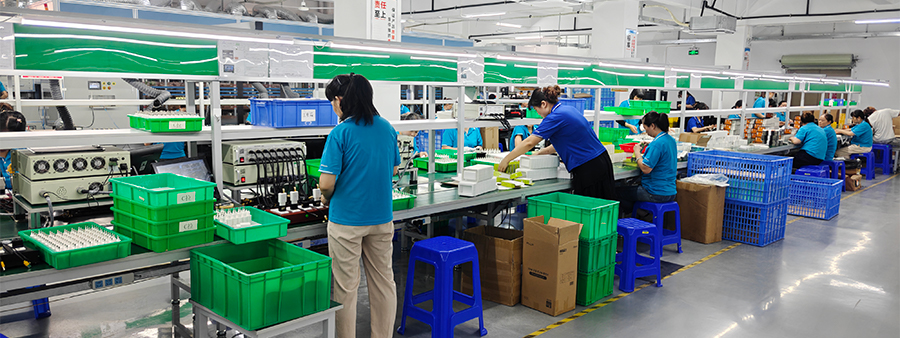
CAPA stands for: Corrective and Preventive Action
It contains two connected activities:
Corrective Action
Corrective Action focuses on solving problems that have already happened.
The main question is: "Why did this issue happen, and how can we fix it?"
Example:
A customer reports that some chargers fail after several weeks of use.
The factory investigates:
• Production records.
• Testing data.
• Material information.
• Assembly process.
Then engineers identify the cause and implement improvements.
Preventive Action
Preventive Action focuses on avoiding possible future problems.
The question becomes: "What similar risks could happen in the future?"
Example:
A factory discovers that a supplier's component variation could create reliability risks.
Even before failures occur, the factory may:
• Improve incoming inspection.
• Update supplier requirements.
• Modify the Control Plan.
Together:
Corrective Action fixes existing problems.
Preventive Action reduces future risks.
Why CAPA Is Important in Phone Fast Charger Manufacturing
Chargers may appear simple from the outside.
However, modern products contain complex systems:
• Power conversion circuits.
• USB-C PD communication.
• Thermal management structures.
• Protection systems.
• High-density PCB assemblies.
Because of this complexity, quality problems may have multiple possible causes.
For example:
A 100W GaN charger experiences overheating. Possible causes include:
• Component variation.
• Thermal material issue.
• PCB design limitation.
• Assembly inconsistency.
• Testing gap.
Simply replacing defective units does not solve the real problem.
A professional manufacturer needs to understand:
What caused the failure?
Why did existing controls not detect it?
What improvement prevents recurrence?
CAPA provides the structured approach to answer these questions.
The CAPA Process in Phone Charger Manufacturing
A professional CAPA process usually follows several steps.
Step 1: Identify the Problem
The first step is clearly defining the issue.
Information sources may include:
• Customer complaints.
• Production inspection.
• Testing failures.
• Supplier quality reports.
• Internal audits.
A good problem description should include:
• What happened?
• When did it happen?
• Which products are affected?
• How many units are involved?
Example:
Weak description: "Some chargers have problems."
Better description: "During aging testing, 0.8% of ZX series 65W chargers showed abnormal temperature protection activation after continuous high-load operation."
A clear problem statement helps engineers investigate efficiently.
Step 2: Contain the Problem
Before finding the root cause, factories must prevent further impact.
Containment actions may include:
• Stop shipment of affected batches.
• Isolate questionable products.
• Increase inspection frequency.
• Check inventory status.
The purpose is to protect customers while investigation continues.
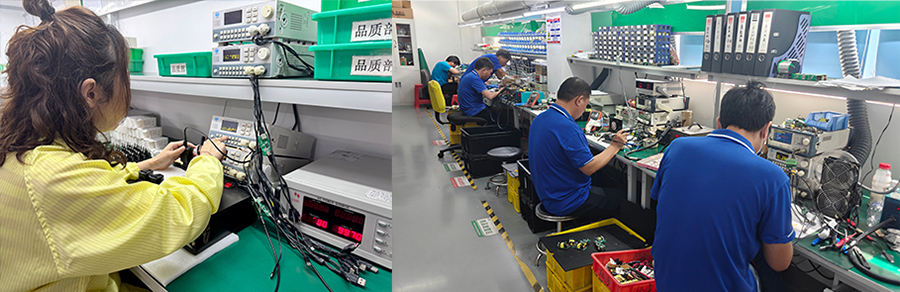
Step 3: Root Cause Analysis
Finding the root cause is the most important part of CAPA.
A weak investigation only identifies the symptom.
A strong investigation finds the actual reason.
Common root cause analysis methods include:
5 Why Analysis
Engineers repeatedly ask:
"Why?"
until reaching the fundamental cause.
Example:
Problem: Charger failed during aging test.
Why?
→ Component temperature exceeded limit.
Why?
→ Heat dissipation was insufficient.
Why?
→ Thermal pad position was incorrect.
Why?
→ Assembly guidance was unclear.
Why?
→ Work instruction was not updated after design change.
Root Cause: Process documentation did not reflect the updated design.
Fishbone Diagram
Another common method is analyzing possible causes through categories:
• Material.
• Machine.
• Method.
• Measurement.
• Environment.
• People.
This prevents engineers from focusing on only one possible explanation.
Step 4: Implement Corrective Actions
After identifying the root cause, the factory develops solutions.
Examples:
If the issue is:
Component Variation
Action:
• Improve supplier control.
• Add incoming inspection.
Assembly Error
Action:
• Update work instructions.
• Improve operator training.
• Add process verification.
Testing Gap
Action:
• Modify test conditions.
• Add additional verification steps.
The goal is not only fixing current products.
The goal is improving the manufacturing system.
Step 5: Verify Effectiveness
A CAPA action is not complete after implementation.
The factory must verify: "Did the improvement actually solve the problem?"
Verification methods may include:
• Additional testing.
• Production monitoring.
• Defect rate comparison.
• Customer feedback tracking.
If the problem disappears consistently, the CAPA can be closed.
If not, further investigation is required.
CAPA Example in USB-C Charger Manufacturing
To better understand how CAPA works in real production environments, let's look at a practical charger manufacturing example.
Example Scenario:
A customer reports: "Some 65W USB-C GaN chargers become unusually hot during long-time charging."
At first, the issue appears to be a simple thermal problem. However, a professional factory does not immediately replace products.
Instead, the quality team starts a structured CAPA investigation.
Step 1: Problem Investigation
The engineering team collects information:
• Product model.
• Production batch.
• Manufacturing date.
• Customer feedback.
• Failure conditions.
Through the traceability system, engineers identify:
Affected products:
• Same production period.
• Same thermal material batch.
• Same assembly line.
This narrows the investigation scope.
Step 2: Root Cause Analysis
The engineering team reviews:
• PCB design.
• Component specifications.
• Thermal testing data.
• Assembly records.
• Production parameters.
After analysis, they discover: The thermal pad position was slightly shifted during assembly.
This created:
• Reduced heat transfer efficiency.
• Higher internal temperature.
• Earlier thermal protection activation.
Step 3: Corrective Action
The factory implements immediate improvements:
Production Improvement
Update assembly instructions.
Add visual positioning guidance.
Operator Training
Provide additional training for assembly operators.
Process Verification
Add extra inspection points during assembly.
Step 4: Preventive Action
The factory goes further.
Instead of only solving this specific issue, engineers consider: "Could a similar problem happen on other charger models?"
Preventive improvements may include:
• Reviewing thermal assembly processes across product lines.
• Updating PFMEA documents.
• Revising Control Plans.
• Adding additional verification requirements.
This turns one problem into a broader improvement opportunity.

Read More
How CAPA Connects With PFMEA, Control Plan and Traceability
CAPA is most effective when it works together with other quality engineering systems.
A mature manufacturing quality system creates a continuous improvement cycle.
PFMEA + CAPA
PFMEA identifies possible risks before production.
CAPA improves the system after real problems occur.
Example:
PFMEA: "Thermal assembly variation may cause overheating."
CAPA: "Actual overheating occurred. Root cause identified. Process improved."
The information from CAPA can then update PFMEA.
This makes future risk analysis more accurate.
Control Plan + CAPA
The Control Plan defines how processes should be controlled.
When CAPA identifies a process weakness, the Control Plan may need updates.
Example:
Original Control Plan: Visual inspection of thermal pad placement.
After CAPA:
Add:
• Positioning fixture.
• Additional inspection frequency.
• Process verification record.
The manufacturing process becomes stronger.
Traceability + CAPA
Traceability provides the data needed for effective investigation.
Without production history, engineers may only guess.
With traceability, they can analyze:
• Production batches.
• Material records.
• Testing results.
• Process history.
This allows faster and more accurate CAPA actions.
The Complete Quality Improvement Loop
A professional charger factory follows a continuous cycle:
Risk Identification (PFMEA)
↓
Process Control (Control Plan)
↓
Production Monitoring (SPC + Traceability)
↓
Problem Investigation (Failure Analysis)
↓
Corrective & Preventive Action (CAPA)
↓
Updated Quality System
This cycle helps factories continuously improve.
Common CAPA Mistakes in Electronics Manufacturing
Although CAPA is a powerful quality tool, poor implementation can reduce its effectiveness.
Mistake 1: Treating CAPA as a Simple Complaint Response
Some companies only start CAPA after receiving customer complaints.
However, CAPA should also be triggered by:
• Internal failures.
• Audit findings.
• Production abnormalities.
• Supplier problems.
Early action prevents larger problems.
Mistake 2: Fixing Symptoms Instead of Root Causes
A common mistake is applying temporary solutions.
Example:
Problem: Charger fails during testing.
Weak action: Replace defective components.
Strong CAPA:
Investigate:
1. Why did the component fail?
2. Why was it not detected earlier?
3. How can the process prevent recurrence?
The goal is permanent improvement.
Mistake 3: No Effectiveness Verification
A CAPA action is incomplete without verification.
Factories should confirm:
1. Did defect rates decrease?
2. Did the process become more stable?
3. Did similar issues disappear?
Without verification, the same problem may return.
Mistake 4: Not Sharing Improvement Information
A quality improvement should benefit the entire organization.
For example:
A failure found in one charger model may provide lessons for:
• Other product lines.
• New product development.
• Supplier management.
Knowledge sharing helps prevent repeated mistakes.
Why Global Buyers Evaluate CAPA Capability
For international customers, especially brands and distributors, choosing a supplier is not only about product price.
They want a manufacturer that can manage unexpected situations professionally.
During supplier evaluation, buyers may ask:
1. How does the factory handle customer complaints?
2. How are quality issues investigated?
3. How are corrective actions documented?
4. How does the factory prevent recurrence?
A mature CAPA system demonstrates that the supplier has:
• Engineering capability.
• Quality responsibility.
• Continuous improvement culture.
CAPA in OEM and ODM Charger Projects
OEM and ODM projects often involve customized requirements.
Examples:
• Custom housing design.
• Special charging protocols.
• Unique packaging.
• Different market certifications.
During long-term cooperation, improvements are inevitable.
A strong CAPA system helps manufacturers respond professionally when:
• Design changes occur.
• Production volume increases.
• New suppliers are introduced.
• Customer requirements evolve.
Building a Continuous Improvement Culture
The best manufacturing companies do not view quality problems as failures only.
They view problems as opportunities to improve.
Every issue provides information:
1. Where can the process become stronger?
2. Which control point needs improvement?
3. What knowledge can be shared?
Over time, thousands of small improvements create a stronger manufacturing system.
CAPA and the Future of Gan Charger Manufacturing
As chargers become more advanced, manufacturing complexity will continue increasing.
Future products may include:
• Higher power GaN chargers.
• More compact designs.
• Multi-port intelligent charging solutions.
• Advanced USB PD technologies.
With increasing complexity, factories need stronger improvement systems.
CAPA will continue playing an important role by helping manufacturers:
• Reduce repeated failures.
• Improve production stability.
• Strengthen customer confidence.
Final Thoughts
A professional charger manufacturer is not defined by never having problems.
Manufacturing is a complex process, and challenges can occur.
The difference between an ordinary factory and a professional manufacturing partner is how they respond.
A mature CAPA system allows manufacturers to:
• Understand problems.
• Find root causes.
• Improve processes.
• Prevent recurrence.
When combined with:
• PFMEA.
• Control Plan.
• Traceability.
• SPC.
• Failure Analysis.
CAPA creates a complete quality improvement ecosystem.
For OEM and ODM customers, this means more than fewer defects.
It means working with a supplier that continuously improves and becomes more reliable over time.
In modern charger manufacturing, quality is not a final inspection result.
Quality is the result of continuous engineering improvement.
Frequently Asked Questions (FAQ)
Q1: What does CAPA mean in manufacturing?
CAPA means Corrective and Preventive Action. It is a structured process used to solve existing problems and prevent future issues.
Q2: Why is CAPA important for charger factories?
CAPA helps charger manufacturers identify root causes, improve processes and reduce repeated quality problems.
Q3: What is the difference between Corrective Action and Preventive Action?
Corrective Action solves problems that already happened. Preventive Action reduces the possibility of future problems.
Q4: How does CAPA improve USB-C charger quality?
CAPA helps factories analyze failures, update processes and strengthen quality control systems.
Q5: Is CAPA related to PFMEA?
Yes. CAPA findings can be used to update PFMEA and improve future risk prevention.
Q6: How does traceability support CAPA?
Traceability provides production history and testing data, helping engineers identify root causes faster.
Q7: Do OEM customers evaluate CAPA systems?
Many professional buyers evaluate CAPA capability because it shows the manufacturer's problem-solving ability.
Q8: Does CAPA only apply after customer complaints?
No. CAPA can also be triggered by internal failures, audits, supplier issues and production abnormalities.
Recommended read
• Traceability System in Electronics Manufacturing: How Charger Factories Track Every Production Step.↗
• Control Plan in Charger Manufacturing: How Professional Factories Maintain Stable Quality During Mass Production.↗
• PFMEA in Charger Manufacturing: How Professional Factories Identify and Prevent Production Risks Before Mass Production.↗
• ISO 9001 Quality Management Systems.↗