PFMEA in Gan Phone Charger Manufacturing: How Professional Factories Identify and Prevent Production Risks Before Mass Production
Quick Answer
PFMEA (Process Failure Mode and Effects Analysis) is a preventive engineering method used by professional charger manufacturers to identify potential production risks before mass manufacturing begins. By analyzing possible failure modes, their causes and their impacts, PFMEA helps factories improve production processes, reduce defects and build more reliable USB-C charger products.
Key Takeaways
• PFMEA focuses on preventing manufacturing problems before they occur.
• Professional charger factories use PFMEA during new product introduction and mass production preparation.
• PFMEA evaluates potential failures in materials, equipment, processes and human operations.
• PFMEA works together with SPC, AOI, ICT, FCT and Failure Analysis.
• A mature PFMEA system improves OEM/ODM production reliability.
Introduction
A successful charger product is not created only in the design stage.
Even when a product design looks perfect on paper, manufacturing introduces many additional variables.
A component may be installed incorrectly.
A soldering process may become unstable.
A testing procedure may not detect a potential issue.
A material variation may affect product performance.
For simple products, these risks may be easy to manage.
However, modern USB-C chargers are becoming increasingly complex.
A compact GaN charger may include:
• High-frequency power circuits
• USB PD controllers
• Protection ICs
• Thermal management structures
• Multiple charging protocols
• High-density PCB layouts
As product complexity increases, professional manufacturers need a systematic way to predict and control possible risks before production begins.
This is where PFMEA (Process Failure Mode and Effects Analysis) becomes essential.
PFMEA allows engineering teams to analyze manufacturing processes before mass production and answer a critical question:
"What could go wrong, and how can we prevent it before it affects customers?"
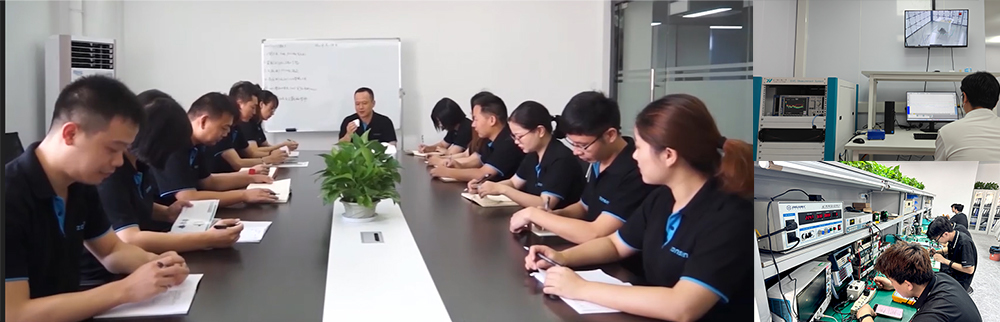
PFMEA stands for:
Process Failure Mode and Effects Analysis
It is a structured engineering method used to identify possible failures within a manufacturing process.
The goal is not to wait until defects appear.
Instead, engineers analyze each production step in advance.
For every process stage, they evaluate:
• What could fail?
• Why could it fail?
• What would happen if it failed?
• How can the risk be reduced?
For example:
A charger assembly process includes installing a USB-C connector.
PFMEA analysis may ask:
Potential failure:
USB-C connector soldering weakness.
Possible causes:
• Incorrect solder temperature
• Poor PCB positioning
• Equipment parameter variation
Possible impact:
• Intermittent charging connection
• Customer complaints
• Product returns
Preventive action:
• Optimize soldering parameters
• Add inspection checkpoints
• Monitor process stability through SPC
This structured thinking helps factories prevent problems before they reach customers.
PFMEA vs Failure Analysis: What Is the Difference?
Many people confuse PFMEA with Failure Analysis.
Although they are related, they happen at different stages.
| PFMEA | Failure Analysis |
| Before production | After a failure occurs |
| Prevents potential problems | Investigates actual problems |
| Risk prediction | Root cause investigation |
| Proactive approach | Reactive improvement |
A simple comparison:
PFMEA asks:
"What problems might happen?"
Failure Analysis asks:
"Why did this problem happen?"
Professional manufacturers need both.
PFMEA reduces risks before production.
Failure Analysis improves processes after real issues occur.
Why PFMEA Is Important for USB-C Charger Manufacturing
Modern chargers have many interconnected processes.
A small mistake during manufacturing may influence:
• Charging performance
• Safety protection
• Thermal behavior
• Product lifespan
• Customer experience
For example, a high-power GaN charger may fail because of:
• Incorrect component selection
• Poor thermal material application
• PCB assembly variation
• Insufficient testing coverage
Without PFMEA, these risks may only become visible after mass production.
With PFMEA, engineering teams can identify high-risk areas early and introduce preventive controls.
When Is PFMEA Used in Gan Charger Production?
PFMEA is especially important during:
New Product Introduction (NPI)
When a new charger model enters development, engineers review the entire manufacturing process before mass production.
Typical activities include:
• Reviewing assembly steps
• Identifying potential failure modes
• Defining inspection points
• Creating control plans
Process Changes
PFMEA should also be updated when production changes occur.
Examples:
• New supplier materials
• New production equipment
• PCB redesign
• Packaging changes
• Manufacturing location changes
A stable process today may become risky after significant changes.
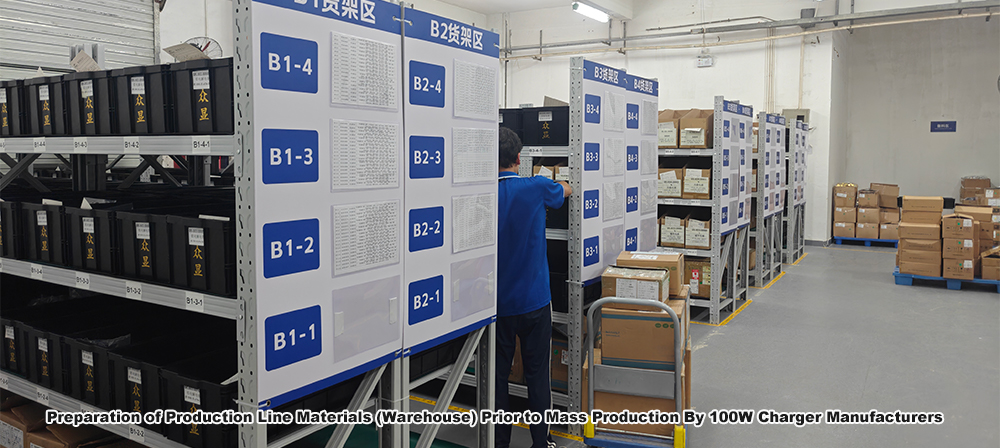
Mass Production Preparation
Before large-scale production begins, PFMEA helps confirm that:
• Production steps are controlled
• Risks are understood
• Inspection methods are appropriate
• Operators have clear instructions
PFMEA asks:
"What problems might happen?"
Failure Analysis asks:
"Why did this problem happen?"
Professional manufacturers need both.
PFMEA reduces risks before production.
Failure Analysis improves processes after real issues occur.
Why PFMEA Is Important for USB-C Charger Manufacturing
Modern chargers have many interconnected processes.
A small mistake during manufacturing may influence:
• Charging performance
• Safety protection
• Thermal behavior
• Product lifespan
• Customer experience
For example, a high-power GaN charger may fail because of:
• Incorrect component selection
• Poor thermal material application
• PCB assembly variation
• Insufficient testing coverage
Without PFMEA, these risks may only become visible after mass production.
With PFMEA, engineering teams can identify high-risk areas early and introduce preventive controls.
When Is PFMEA Used in Gan Charger Production?
PFMEA is especially important during:
New Product Introduction (NPI)
When a new charger model enters development, engineers review the entire manufacturing process before mass production.
Typical activities include:
• Reviewing assembly steps
• Identifying potential failure modes
• Defining inspection points
• Creating control plans
Process Changes
PFMEA should also be updated when production changes occur.
Examples:
• New supplier materials
• New production equipment
• PCB redesign
• Packaging changes
• Manufacturing location changes
A stable process today may become risky after significant changes.
Mass Production Preparation
Before large-scale production begins, PFMEA helps confirm that:
• Production steps are controlled
• Risks are understood
• Inspection methods are appropriate
• Operators have clear instructions
How Engineers Perform PFMEA in Phone Charger Manufacturing
A typical PFMEA process includes several steps.
Step 1: Map the Manufacturing Process
The first step is understanding every production stage.
For USB-C chargers, this may include:
1. Incoming material inspection
2. SMT assembly
3. Reflow soldering
4. PCB inspection
5. Component assembly
6. Housing assembly
7. Electrical testing
8. Aging testing
9. Final inspection
10. Packaging
Each step becomes a potential risk analysis point.
Step 2: Identify Possible Failure Modes
Engineers examine each process step and ask:
"What could fail here?"
Examples:
SMT Process
Possible failures:
• Missing components
• Wrong component placement
• Poor solder joints
Assembly Process
Possible failures:
• Incorrect housing installation
• Damaged cables
• Loose connections
Testing Process
Possible failures:
• Incorrect test parameters
• Equipment calibration issues
• Missing test coverage
Step 3: Evaluate Risk Levels
PFMEA commonly evaluates three factors:
Severity
How serious is the impact?
Example:
A safety-related failure has higher severity than a cosmetic issue.
Occurrence
How likely is the failure to happen?
Example:
A frequently repeated assembly issue requires more attention.
Detection
How easily can the problem be detected before shipment?
Example:
A failure that cannot be detected by normal testing requires stronger preventive controls.
Step 4: Define Preventive Controls
After identifying risks, engineers create preventive measures.
Examples include:
Process Controls
• Standard operating procedures
• Equipment parameter settings
• Operator training
Inspection Controls
• AOI inspection
• ICT testing
• FCT testing
• Reliability testing
Data Controls
• SPC monitoring
• Traceability systems
• Production data analysis
The goal is creating multiple protection layers.
How PFMEA Supports OEM and ODM Customers
For OEM buyers, manufacturing risk management is often more important than simply receiving a prototype sample.
A prototype only proves that one product works.
Mass production requires confidence that thousands or even millions of units can maintain the same quality.
PFMEA helps manufacturers achieve:
• More predictable production
• Lower defect rates
• Faster problem prevention
• Better quality consistency
• Reduced production risk
For brands entering competitive markets, these advantages directly influence reputation and customer satisfaction.
Real PFMEA Examples in Phone Charger Manufacturing
PFMEA becomes valuable when it is connected with real manufacturing situations.
The purpose is not to create documents only for audits.
A useful PFMEA system helps engineering teams understand where risks exist and how to control them during daily production.
Below are some typical examples in USB-C charger manufacturing.
Example 1: SMT Component Placement Risk
Process Step:
PCB component mounting during SMT production.
Potential Failure Mode:
Incorrect component placement.
Examples:
• Wrong resistor installed.
• Polarity-sensitive component mounted incorrectly.
• Missing component.
Possible Effects:
• Circuit malfunction.
• Charging failure.
• Product failure during testing.
• Field reliability issues.
Possible Causes:
• Incorrect material loading.
• Barcode verification failure.
• Machine programming error.
• Operator mistake.
Preventive Controls:
Professional factories may implement:
• Component barcode verification.
• SMT program verification.
• First Article Inspection (FAI).
• AOI inspection after assembly.
The key point is that PFMEA does not wait for hundreds of defective boards to appear.
It identifies the possible failure path before production starts.

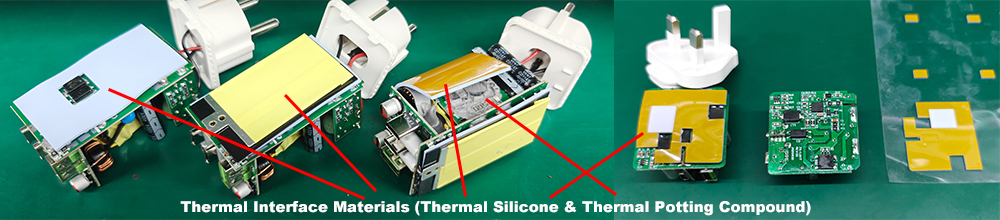
Example 2: Thermal Management Risk in GaN Chargers
High-power GaN chargers create additional manufacturing challenges because thermal performance directly affects product reliability.
Process Step:
Thermal material application and internal assembly.
Potential Failure Mode:
Poor heat transfer between power components and thermal structures.
Possible Effects:
• Higher operating temperature.
• Reduced efficiency.
• Shortened component lifespan.
• Thermal protection activation.
Possible Causes:
• Incorrect thermal pad position.
• Insufficient thermal material.
• Assembly variation.
• Incorrect mechanical pressure.
Preventive Controls:
Engineering teams may define:
• Standard thermal material specifications.
• Assembly positioning requirements.
• Visual inspection criteria.
• Thermal testing procedures.
This is a good example of why PFMEA is especially important for modern GaN chargers.
As charging power increases, manufacturing precision becomes more critical.
Example 3: USB-C Port Assembly Risk
USB-C connectors experience frequent mechanical stress during daily usage.
Therefore, connector reliability is an important manufacturing consideration.
Process Step:
USB-C connector soldering and mechanical assembly.
Potential Failure Mode:
Weak solder connection or mechanical instability.
Possible Effects:
• Intermittent charging.
• Connection interruption.
• Customer complaints.
Possible Causes:
• Incorrect solder profile.
• PCB positioning variation.
• Insufficient mechanical reinforcement.
Preventive Controls:
Possible solutions include:
• Optimizing soldering parameters.
• Increasing inspection frequency.
• Performing mechanical reliability tests.
• Monitoring production variation through SPC.
How PFMEA Connects With Control Plans and SPC
PFMEA does not work alone.
In professional manufacturing systems, PFMEA usually connects with other quality tools.
The relationship can be understood as:
PFMEA → Control Plan → SPC → Inspection → Continuous Improvement
PFMEA
Identifies:
"What could go wrong?"
Example:
A solder joint may become unreliable.
Control Plan
Defines:
"How do we control this risk?"
Example:
Monitor solder temperature and inspect solder quality.
SPC
Monitors:
"Is the process remaining stable?"
Example:
Tracking solder temperature variation during production.
Inspection and Testing
Confirms:
"Does the finished product meet requirements?"
Example:
AOI, ICT and FCT verification.
This connection creates a complete preventive quality system.
PFMEA in High-Power GaN Charger Production
The importance of PFMEA becomes even greater as charger power increases.
A 20W smartphone charger and a 140W USB PD 3.1 GaN charger may look similar externally.
However, their engineering challenges are very different.
Higher-power products require closer control of:
• Electrical stress.
• Thermal performance.
• Component selection.
• PCB layout.
• Safety distance.
• Manufacturing consistency.
For example:
A small variation in component quality may have little impact on a low-power charger.
However, the same variation in a high-power charger may affect:
• Efficiency.
• Heat generation.
• Long-term reliability.
PFMEA helps engineering teams identify these risks before production scaling.
PFMEA and New Product Introduction (NPI)
For OEM and ODM projects, PFMEA is especially important during New Product Introduction.
Before mass production begins, engineering teams review:
• Product design.
• Manufacturing process.
• Testing requirements.
• Supplier materials.
• Production equipment.
This stage allows teams to identify potential problems while changes are still easier and less expensive.
Making improvements during early development is much more efficient than solving issues after mass production.
Common Mistakes When Implementing PFMEA
Although PFMEA is a powerful engineering tool, poor implementation can reduce its effectiveness.
Mistake 1: Treating PFMEA as an Audit Document
Some companies create PFMEA documents only because customers request them.
However, a document without real engineering discussion has limited value.
A useful PFMEA should reflect actual production risks.
Mistake 2: Not Updating PFMEA After Changes
Manufacturing processes constantly evolve.
Changes such as:
• New suppliers.
• Equipment updates.
• Process adjustments.
• Product revisions.
should trigger PFMEA review.
Mistake 3: Ignoring Production Feedback
Real production experience is one of the most valuable sources of improvement.
Failure analysis results, testing data and customer feedback should continuously update PFMEA.
Mistake 4: Focusing Only on Detection
A weak quality system asks:
"How can we detect this problem?"
A stronger engineering approach asks:
"How can we prevent this problem from happening?"
PFMEA focuses on prevention.
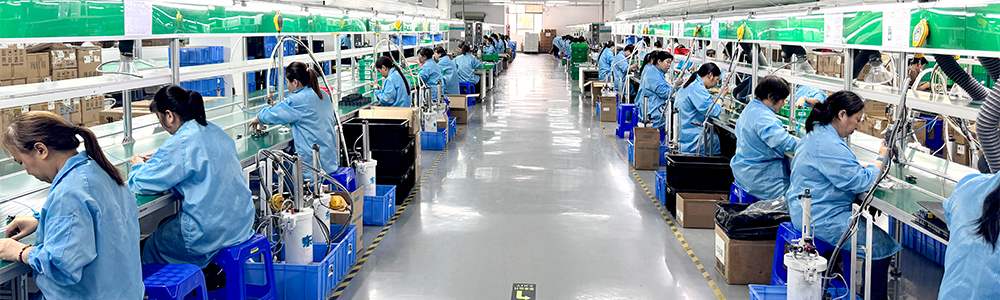
Why Professional Buyers Audit PFMEA Systems
Large international buyers usually evaluate more than product samples.
They want to understand whether a supplier can consistently deliver quality products.
During supplier audits, buyers may review:
• Manufacturing process controls.
• Risk analysis methods.
• Quality documentation.
• Corrective action procedures.
• Production monitoring systems.
A mature PFMEA system demonstrates that a factory understands manufacturing risks before they affect customers.
For brands developing long-term partnerships, this provides additional confidence.
Building a Complete Preventive Quality Engineering System
PFMEA is one important part of a larger manufacturing quality framework.
A mature charger factory combines:
Design Engineering
Ensures the product concept is reliable.
Process Engineering
Creates stable manufacturing methods.
Quality Engineering
Monitors and improves production performance.
Data Management
Uses production information for continuous improvement.
Together, these areas create a system where quality is designed, manufactured and improved continuously.
Final Thoughts
In modern charger manufacturing, quality cannot depend only on final inspection.
By the time a defect reaches final inspection, the cost of the problem has already increased.
Professional manufacturers focus on preventing problems earlier.
PFMEA provides the framework for identifying risks, improving processes and creating more reliable production systems.
For USB-C charger manufacturing, especially high-power GaN and USB PD products, PFMEA helps connect engineering knowledge with manufacturing execution.
Combined with:
• SPC, AOI, ICT, FCT, Failure Analysis, Reliability Testing
PFMEA becomes a critical foundation for achieving consistent quality at scale.
For OEM and ODM customers, choosing a manufacturer with strong preventive quality engineering means choosing a partner that understands not only how to make chargers, but also how to make them reliably.
Frequently Asked Questions (FAQ)
Q1: What does PFMEA mean in charger manufacturing?
PFMEA means Process Failure Mode and Effects Analysis. It is a preventive engineering method used to identify and reduce manufacturing risks before production begins.
Q2: What is the difference between PFMEA and FMEA?
FMEA is a general failure analysis methodology. PFMEA specifically focuses on manufacturing process risks.
Q3: When should PFMEA be created?
PFMEA is usually developed during new product introduction and reviewed before mass production starts.
Q4: Why is PFMEA important for GaN chargers?
GaN chargers have higher power density and tighter manufacturing requirements, making early risk identification especially important.
Q5: Does PFMEA replace quality inspection?
No. PFMEA prevents risks, while inspection and testing verify product quality.
Q6: How does PFMEA help OEM customers?
It improves production consistency, reduces defects and increases confidence in large-scale manufacturing capability.
Q7: Should PFMEA be updated after production changes?
Yes. Process changes, supplier changes or product improvements should trigger PFMEA review.
Q8: What quality tools work together with PFMEA?
PFMEA commonly works together with Control Plans, SPC, AOI, ICT, FCT and Failure Analysis.
Recommended
• Statistical Process Control (SPC) in Charger Manufacturing: How Data Helps Prevent Quality Problems Before They Happen.↗
• Failure Analysis in Charger Manufacturing: How Professional Engineering Teams Identify Root Causes and Prevent Future Defects.↗
• How Functional Testing (FCT) Verifies USB-C Charger Performance Before Shipment.↗
• AIAG FMEA Resources.↗
• ISO 9001 Quality Management Principles.↗