Traceability System in Electronics Manufacturing: How Phone Charger Factories Track Every Production Step
Quick Answer
A traceability system in electronics manufacturing is a process that records and tracks product information throughout the entire production journey, from incoming materials to final shipment. In USB-C charger manufacturing, traceability helps factories identify production history, analyze quality issues, improve process control and provide transparent information for OEM and ODM customers.
Key Takeaways
Traceability allows manufacturers to track every important production step.
Professional charger factories record material, process and testing information.
Traceability helps quickly identify the root cause of quality problems.
It supports PFMEA, Control Plans, SPC and continuous improvement.
Strong traceability systems increase confidence for global OEM customers.
Introduction
When customers purchase a charger, they usually only see the final product.
What they saw was: charger packaging, brand logo, charging power, charger casing, and USB-C port.
However, behind every finished charger is a long manufacturing journey.
A single product may involve:
• Multiple suppliers.
• Hundreds of electronic components.
• Several production processes.
• Different testing stages.
• Multiple quality inspections.
If a quality issue appears after shipment, one important question must be answered:
"Where did this problem come from?"
Was it:
A material issue?
A production process variation?
A supplier batch difference?
A testing problem?
An assembly mistake?
Without proper records, finding the answer can be extremely difficult.
This is why professional electronics manufacturers use traceability systems.
A strong traceability system creates a complete production history, allowing engineers to understand what happened, where it happened and how to prevent it from happening again.
For charger manufacturing, especially high-power GaN and USB PD products, traceability has become an essential part of modern quality management.
What Is Traceability in Electronics Manufacturing?
Traceability means the ability to track and identify the history, location and movement of a product or material throughout the manufacturing process.
In simple terms:
A traceability system answers:
What materials were used?
When was the product manufactured?
Which production line made it?
Which testing results belong to this product?
Who inspected or approved it?
For electronics manufacturing, traceability usually covers the complete product lifecycle:
Supplier Material
↓
Incoming Inspection
↓
Production Process
↓
Testing Records
↓
Final Inspection
↓
Shipment Information
A professional traceability system transforms each product from an anonymous item into a product with a complete manufacturing history.
Why Traceability Matters for USB-C Charger Manufacturing
Modern chargers are becoming increasingly advanced.
A single USB-C PD charger include:
• GaN power components.
• Controller ICs.
• Protection circuits.
• Multiple USB-C ports.
• Thermal management materials.
• High-density PCB assemblies.
Because of this complexity, quality problems can have multiple possible causes.
For example:
A customer reported that a 100W GaN charger stopped working after several months of use and sent photos and videos showing the malfunction. The business manager will promptly relay this information to the R&D and engineering departments to determine the cause of the malfunction (if necessary, the customer will need to return the faulty 100W GaN charger).
Without traceability, engineers may need to investigate: all raw material suppliers for the product, the original production batch, and the manufacturing cycle(to confirm whether it's an isolated case or multiple incidents). Furthermore, they may only be able to analyze the cause of the failure based on photos or descriptions.
This can take significant time.
With traceability, engineers can quickly identify:
• Production date.
• Material batch.
• PCB lot.
• Testing records.
• Assembly line information.
The investigation becomes faster and more accurate.
What Information Is Recorded in a PD Charger Traceability System?
Different factories use different levels of traceability.
However, professional charger manufacturers typically track several key areas.
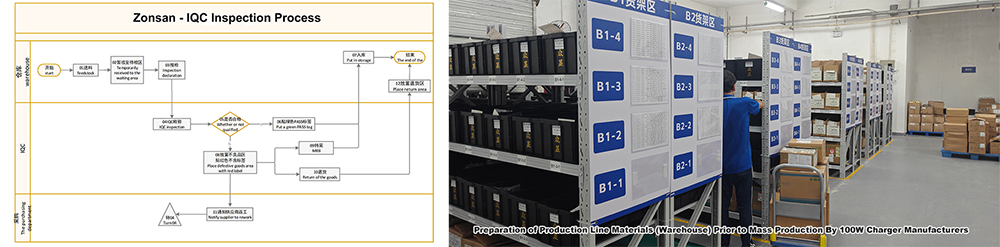
1. Material Traceability
Every charger starts with incoming materials.
Important information may include: Supplier information, Component model, Batch number, Inspection results, Incoming date.
Examples:
Electronic components:
• Power IC batch.
• GaN transistor batch.
• Capacitor supplier lot.
Mechanical parts:
• Housing material batch.
• USB-C connector batch.
• Cable material information.
Material traceability helps factories identify whether a quality issue is related to a specific supplier batch.
2. PCB Production Traceability
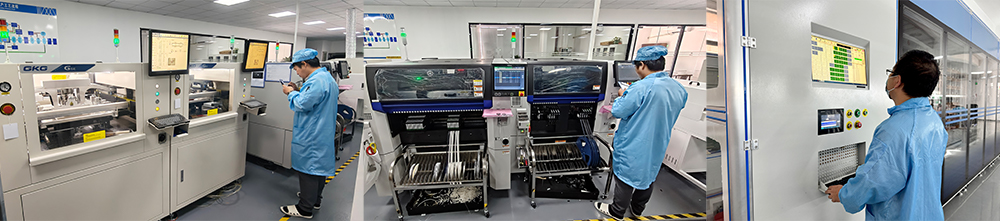
The PCB assembly process contains many important quality checkpoints.
Traceability may include:
• SMT production date.
• Production line information.
• PCB board number.
• AOI inspection results.
• Operator information.
For example:
If a PD charger PCB failure occurs during testing, engineers can check the following:
• Which SMT production line produced it.
• Which components were installed.
• What test results were recorded.
• At which stage of production did the charger PCB failure occur?
This helps shorten troubleshooting time and allows for timely improvements and solutions.
3. Assembly Process Traceability
After PCB production, the charger enters assembly.
Important records may include:
• Assembly workstation.
• Production operator.
• Housing batch.
• Assembly time.
• Process inspection results.
This is especially important for chargers because mechanical assembly can affect:
• Thermal performance.
• Structural reliability.
• Product safety.
4. Testing Data Traceability
Testing data is one of the most valuable parts of a charger traceability system.
Professional factories may record:
• ICT results.
• FCT results.
• Aging test results.
• Safety test results.
• Final inspection records.
For example:
A charger that passes final testing is not only marked as "PASS."
The system can store:
• Test time.
• Test equipment.
• Test parameters.
• Measurement results.
This forms objective quality proof and enables traceability of charger quality.
How Traceability Supports Failure Analysis
Traceability becomes especially valuable when unexpected problems occur.
Imagine a customer reports: "A small percentage of chargers from a specific shipment have abnormal heating."
The engineering team can use traceability data to investigate:
Step 1: Identify affected products.
↓
Step 2: Check production batches.
↓
Step 3: Compare material information.
↓
Step 4: Review testing records.
↓
Step 5: Identify possible causes.
Without traceability: Engineers search broadly.
With traceability: Engineers investigate precisely.
Traceability and Quality Improvement
Traceability is not only used for solving problems.
It also helps improve manufacturing processes.
By analyzing historical production data, factories can identify:
• Repeated failure patterns.
• Supplier quality trends.
• Process variation.
• Improvement opportunities.
This information supports:
• PFMEA updates.
• Control Plan improvements.
• SPC monitoring.
• CAPA actions.
In this way, traceability becomes part of continuous improvement.
Traceability Requirements for OEM and ODM Customers
For international customers, supplier transparency is becoming increasingly important.
Many brands want confidence that their manufacturing partners can provide:
• Clear production records.
• Reliable quality control.
• Fast problem investigation.
• Consistent manufacturing performance.
A factory with strong traceability capability demonstrates manufacturing maturity.
It shows that quality management is based on systems and data, not only experience.
Traceability in High-Power GaN Charger Manufacturing
High-power chargers create additional requirements for manufacturing control.
Products such as:
• 65W GaN chargers.
• 100W USB-C PD chargers.
• 140W PD 3.1 chargers.
have tighter requirements for:
• Thermal performance.
• Component reliability.
• Electrical stability.
Traceability helps manufacturers monitor:
• Critical component batches.
• Thermal material usage.
• Testing performance.
• Production variation.
This becomes increasingly important as charger technology continues advancing.
Different Levels of Traceability Systems in Charger Manufacturing
Not every manufacturing factory has the same level of traceability capability.
Some factories only record basic production information.
More advanced manufacturers build complete digital traceability systems covering the entire manufacturing process.
Generally, traceability can be divided into several levels.
Level 1: Basic Batch Traceability
The most basic system tracks products according to production batches.
Information may include:
• Production date.
• Product model.
• Production quantity.
• Shipment batch.
For example:
A factory may know that: "These 20,000 units of 65W chargers were produced in March 2026."
However, this level provides limited details.
If a problem occurs, engineers may only identify the general production period.
Level 2: Process-Level Traceability
A more advanced system records information from different manufacturing stages.
Examples:
• SMT production records.
• Assembly records.
• Testing results.
• Inspection reports.
Engineers can identify:
• Which production line was involved.
• Which process created the issue.
• Which inspection stage detected the problem.
This significantly improves problem-solving efficiency.
Level 3: Unit-Level Traceability
The most advanced systems can track individual products.
Each charger may have a unique identification number.
The system can connect:
Product ID
↓
Material Information
↓
Production Records
↓
Testing Data
↓
Shipment Information
For high-value products and professional OEM projects, unit-level traceability provides the highest level of quality transparency.
Barcode and MES Systems in PD Charger Manufacturing
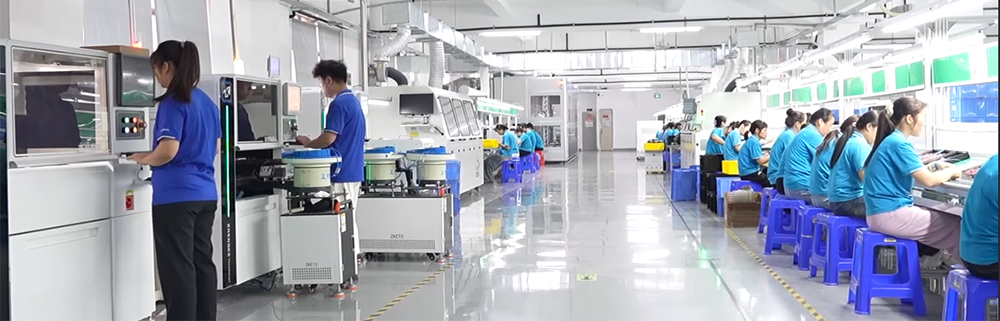
Modern electronics factories increasingly use digital systems to improve production visibility.
One important system is MES.
MES stands for: Manufacturing Execution System
It connects production activities with real-time manufacturing data.
In charger manufacturing, MES can help manage:
• Production scheduling.
• Material tracking.
• Process records.
• Testing information.
• Quality reports.
How Barcode Systems Support Traceability
Barcodes provide a simple way to connect physical products with digital information.
During production, operators may scan:
• Material labels.
• PCB boards.
• Finished chargers.
• Packaging cartons.
Each scan creates a record in the manufacturing system.
For example:
A PCB enters SMT production.
The barcode is scanned.
The system records:
• Production time.
• Equipment information.
• Operator.
• Component batch.
Later, if a quality issue appears, engineers can quickly trace the production history.
How Traceability Helps Product Recall Management
Nobody wants quality problems after shipment.
However, professional manufacturers understand that unexpected situations can happen.
The difference between a mature supplier and an immature supplier is how quickly they can respond.
A strong traceability system helps manufacturers perform targeted investigations.
Without Traceability
A factory may need to investigate:
• All products.
• All production dates.
• All materials.
• All customers.
This creates:
• Longer investigation time.
• Higher costs.
• Greater customer impact.
With Traceability
The factory can identify:
• Specific production batches.
• Specific material lots.
• Specific affected products.
This allows more accurate action.
For example: Instead of checking 500,000 chargers,
the engineering team may identify that only one production batch requires investigation.
Traceability and Supplier Management
A charger factory depends on many suppliers.
Examples:
• Semiconductor suppliers.
• PCB suppliers.
• Plastic injection suppliers.
• Cable suppliers.
• Packaging suppliers.
Supplier variation can influence product quality.
Traceability helps factories understand supplier performance over time.
Engineers can analyze:
• Which suppliers have repeated issues.
• Which material batches create higher defect rates.
• Which components require additional inspection.
This information supports supplier improvement and purchasing decisions.
Common Mistakes When Building Traceability Systems
A traceability system is valuable, but only when properly implemented.
Several common mistakes can reduce its effectiveness.
Mistake 1: Recording Information Without Using It
Some companies collect large amounts of production data but rarely analyze it.
Data itself does not create improvement.
The value comes from using information to:
• Identify problems.
• Improve processes.
• Reduce risks.
Mistake 2: Tracking Too Little Information
A weak system may only record: Production date and Product model.
However, this may not be enough for serious quality analysis.
Professional systems should consider tracking:
• Material information.
• Process parameters.
• Testing results.
• Inspection records.
Mistake 3: Poor Data Accuracy
Traceability depends on reliable data.
Incorrect records can create additional problems.
Examples:
• Wrong barcode association.
• Missing test records.
• Manual input mistakes.
Automation helps reduce these risks.
Mistake 4: Not Connecting Traceability With Quality Systems
Traceability should not operate separately.
Its greatest value appears when connected with:
• PFMEA.
• Control Plan.
• SPC.
• Failure Analysis.
• CAPA.
Together, these systems create a complete quality improvement loop.
Why Global Buyers Evaluate Traceability During Factory Audits
For many international buyers, supplier evaluation goes beyond product samples. They want to understand: "Can this factory control quality consistently?" “What is the quality guarantee for my OEM custom charger?” “If consumers report quality issues with the product, how will the manufacturer provide assistance and solutions?”
During factory audits, customers may review:
• Production records.
• Material management.
• Testing documentation.
• Quality tracking systems.
• Corrective action processes.
A strong traceability system demonstrates that the factory has:
• Manufacturing discipline.
• Quality transparency.
• Problem-solving capability.
This is especially important for:
• Consumer electronics brands.
• Retail suppliers.
• Enterprise customers.
• Long-term OEM partners.
Building a Data-Driven Charger Manufacturing System
The future of electronics manufacturing is moving from experience-based management toward data-driven manufacturing.
Traditional manufacturing often depends heavily on:
• Operator experience.
• Manual judgment.
• Final inspection.
Modern manufacturing combines experience with:
• Production data.
• Automated testing.
• Digital tracking.
• Process analysis.
Traceability is one of the foundations of this transformation.
When combined with:
• PFMEA,
• Control Plans,
• SPC,
• Automated Testing,
it creates a manufacturing environment where quality problems can be predicted, controlled and improved.
Traceability in Future Charger Manufacturing
As charger technology continues developing, traceability will become increasingly important.
Future products may include:
• Higher power GaN chargers.
• More complex USB PD 3.1 solutions.
• Integrated charging platforms.
• Smart charging devices.
Higher complexity means greater demand for:
• Accurate production records.
• Faster problem analysis.
• Better supplier management.
Manufacturers that invest in traceability systems will have stronger advantages in global competition.
Final Thoughts
A charger is a small electronic product, but the manufacturing process behind it is highly complex.
Every component, every production step and every testing result contributes to final product reliability.
A professional traceability system provides the visibility needed to manage this complexity.
It allows manufacturers to answer important questions:
• Where did this product come from?
• Which materials were used?
• How was it manufactured?
• What testing did it pass?
• How can future products be improved?
For OEM and ODM customers charger, traceability means more than documentation.
It represents manufacturing confidence.
Combined with:
• PFMEA for risk prevention.
• Control Plans for process control.
• SPC for stability monitoring.
• Failure Analysis for improvement.
Traceability creates a complete quality management foundation for modern charger manufacturing.
For a professional USB-C charger manufacturer, quality is not only about producing products.
It is about creating a transparent, controlled and continuously improving manufacturing system.
Frequently Asked Questions (FAQ)
Q1: What is traceability in charger manufacturing?
Traceability is the ability to track product information throughout manufacturing, including materials, production processes and testing results.
Q2: Why is traceability important for USB-C chargers?
Because modern chargers contain complex electronics. Traceability helps factories quickly identify causes of quality problems.
Q3: What information can a charger factory track?
A factory may track material batches, PCB production data, assembly records, testing results and shipment information.
Q4: What is the difference between batch traceability and unit traceability?
Batch traceability tracks groups of products, while unit traceability tracks individual products through unique identification.
Q5: How does traceability improve quality control?
It helps engineers locate problems faster, analyze production history and implement targeted improvements.
Q6: Do OEM customers require traceability systems?
Many international customers evaluate traceability capability because it demonstrates manufacturing reliability and quality transparency.
Q7: How does MES support charger manufacturing?
MES connects production activities with digital records, helping factories manage manufacturing data and improve process visibility.
Q8: Is traceability important for GaN charger production?
Yes. High-power GaN chargers involve more complex components and tighter requirements, making production tracking increasingly valuable.
Recommended reading
• Control Plan in Charger Manufacturing: How Professional Factories Maintain Stable Quality During Mass Production.↗
• PFMEA in Charger Manufacturing: How Professional Factories Identify and Prevent Production Risks Before Mass Production.↗
• Statistical Process Control (SPC) in Charger Manufacturing: How Data Helps Prevent Quality Problems Before They Happen.↗
• ISO 9001 Quality Management Systems.↗