Control Plan in Zonsan Fast Charger Manufacturing: How Professional Factories Maintain Stable Quality During Mass Production
Quick Answer
A Control Plan is a structured manufacturing document that defines how critical production processes are monitored and controlled to ensure consistent product quality. In USB-C charger manufacturing, Control Plans help factories identify key process parameters, establish inspection methods and maintain stable production during mass manufacturing.
Key Takeaways
A Control Plan translates engineering risk analysis into daily production actions.
It defines what should be inspected, how often and by whom.
Professional charger factories use Control Plans to maintain consistent product quality across mass production.
Control Plans work together with PFMEA, SPC, AOI, ICT and FCT.
A well-designed Control Plan helps reduce defects, improve process consistency and strengthen OEM customer confidence.
Introduction
Designing a reliable USB-C charger is only the beginning.
Even after a product has passed design verification, laboratory testing and pilot production, one challenge still remains:
Can the same level of quality be maintained across thousands—or even hundreds of thousands—of units?
Mass production introduces variables that are rarely visible during prototype development.
Machines require regular adjustments.
Materials may vary slightly between batches.
Operators change shifts.
Environmental conditions fluctuate throughout the day.
Any of these factors can affect manufacturing consistency if they are not properly managed.
This is why experienced charger manufacturers rely on more than inspection alone.
They build standardized production control systems that guide every critical manufacturing step.
One of the most important tools in this system is the Control Plan.
Rather than reacting to quality problems after they occur, a Control Plan provides clear instructions for monitoring, measuring and controlling production before variations develop into defects.
For OEM and ODM customers, this means greater confidence that the charger received in the final shipment will perform just as reliably as the approved sample.
What Is a Control Plan?
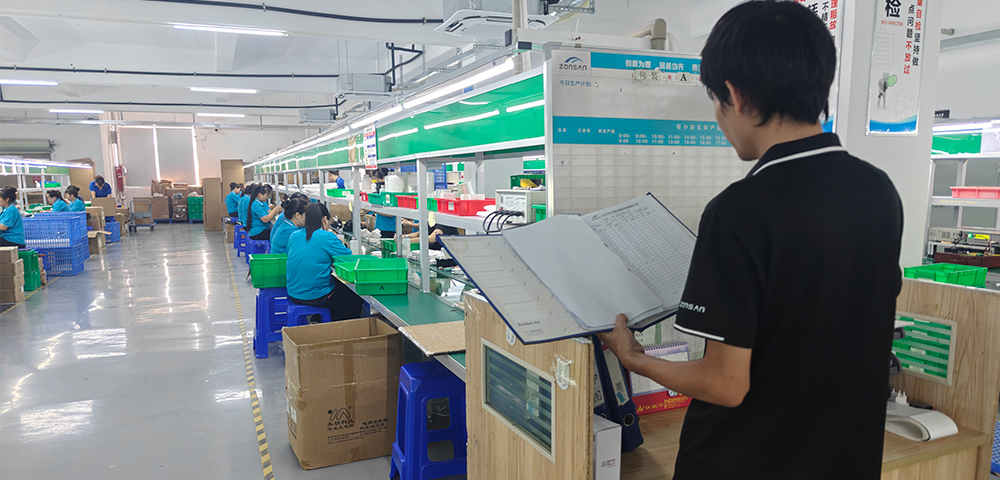
A Control Plan is a manufacturing quality document that describes how critical production processes are monitored and controlled throughout manufacturing.
Instead of focusing on product design, it focuses on process execution.
A typical Control Plan answers practical questions such as:
1. Which process needs to be monitored?
2. What characteristic is considered critical?
3. How should it be measured?
4. How frequently should it be checked?
5. What equipment should be used?
6. Who is responsible for the inspection?
7. What action should be taken if results fall outside acceptable limits?
These instructions create consistency across different operators, production shifts and manufacturing batches.
Without standardized process control, production quality can gradually become inconsistent even when the product design itself remains unchanged.
Why Control Plans Matter in USB-C Charger Manufacturing
Modern USB-C chargers combine compact mechanical structures with complex electronic circuits.
Even minor process variation can affect:
1. Charging performance
2. Thermal behavior
3. Safety protection
4. Product durability
5. Customer experience
For example, consider a multi-port 100W GaN charger.
If solder paste thickness varies during SMT production, one PCB may have excellent electrical reliability while another develops weak solder joints after long-term use.
Similarly, inconsistent application of thermal interface materials may cause some chargers to operate at higher temperatures than others.
These differences are often too small to notice visually, but they can significantly influence long-term reliability.
A Control Plan helps manufacturers monitor these critical variables before they affect finished products.
Where Does the Control Plan Fit in the Manufacturing System?
Many people think a Control Plan is simply another inspection checklist.
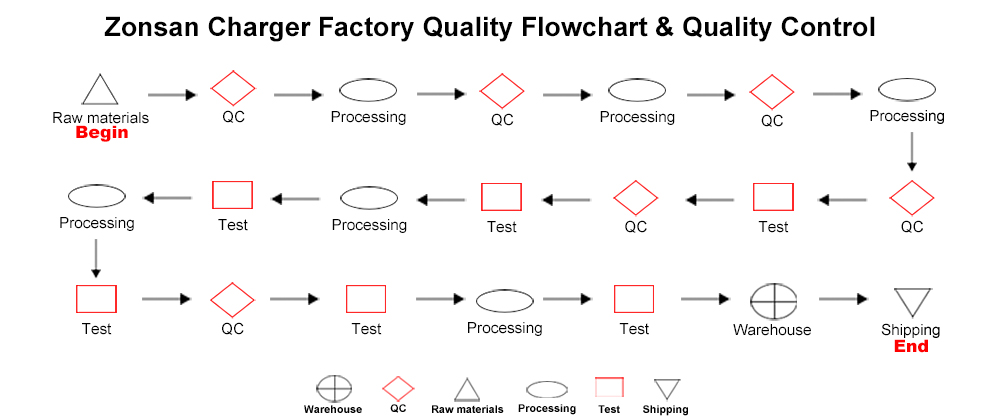
In reality, it connects several engineering activities into one continuous quality management process.
The relationship can be summarized as:
Product Design
↓
PFMEA (Identify potential process risks.)
↓
Control Plan (Define how each risk will be controlled.)
↓
SPC (Monitor production data continuously.)
↓
Inspection & Testing (AOI, ICT, FCT, Aging Test.)
↓
Corrective Action & Continuous Improvement
This workflow ensures that quality is built into the manufacturing process rather than inspected into the finished product.
What Information Is Included in a Control Plan?
Although the exact format varies between manufacturers, a professional Control Plan generally contains several key elements.
Process Step
Each manufacturing stage is listed individually.
Examples include:
• Incoming material inspection
• SMT assembly
• Reflow soldering
• PCB inspection
• Mechanical assembly
• Functional testing
• Aging test
• Final inspection
• Packaging
Breaking production into individual steps allows engineers to identify where process control is required.
Product or Process Characteristic
Each process contains one or more characteristics that directly influence quality.
For example:
SMT Process
Critical characteristic: Component placement accuracy.
Assembly Process
Critical characteristic: Correct installation of thermal pads.
Functional Test
Critical characteristic: Output voltage and charging protocol performance.
The Control Plan specifies exactly which characteristics must remain within acceptable limits.
Inspection Method
The document also defines how each characteristic should be verified.
Common inspection methods include:
• Visual inspection
• AOI
• ICT
• Functional Testing
• Thermal measurement
• Dimension inspection
• Torque verification
• Sampling inspection
Different manufacturing steps require different verification methods.
Inspection Frequency
Not every process requires the same inspection frequency.
Examples may include:
• First article inspection at the beginning of each shift.
• Hourly sampling inspection.
• 100% automated inspection.
• Random batch verification.
• Final inspection before packaging.
Inspection frequency is determined by process risk and production capability.
Reaction Plan
Perhaps the most important section of the Control Plan is the reaction plan.
It answers one simple question:
What should happen if a process goes out of control?
Typical actions may include:
• Stop the production line.
• Notify the quality engineer.
• Isolate affected products.
• Re-inspect previous production.
• Adjust machine parameters.
• Verify corrective actions before restarting production.
Without a clearly defined reaction plan, process deviations can continue unnoticed, increasing the risk of defective products reaching customers.
How Control Plans Are Created
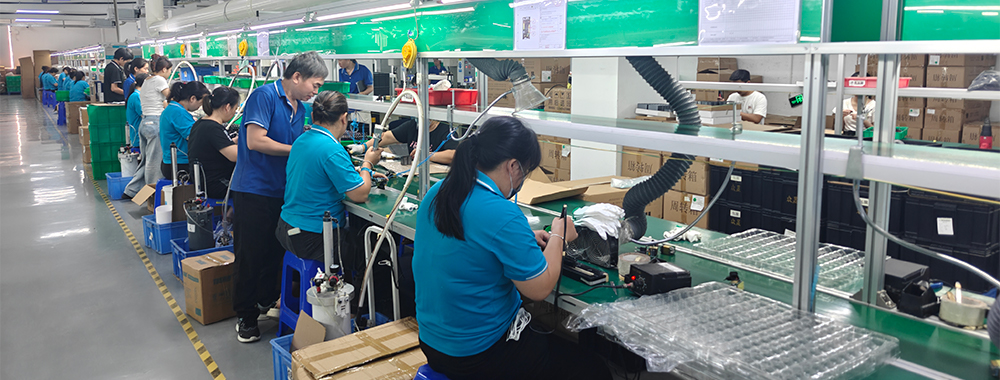
A professional Control Plan is rarely written by one individual.
Instead, it is developed through collaboration between multiple departments, including:
• Product design engineers
• Manufacturing engineers
• Process engineers
• Quality engineers
• Production supervisors
Each team contributes different expertise.
Design engineers understand product requirements.
Process engineers understand manufacturing capabilities.
Quality engineers identify critical inspection points.
Production personnel provide practical feedback from daily manufacturing operations.
This collaborative approach ensures that the Control Plan reflects both engineering requirements and real production conditions.
Control Plan Example: USB-C Connector Assembly
To better understand how a Control Plan works, consider one common manufacturing process.
Process Step
USB-C connector soldering.
Critical Characteristic
Solder joint quality and connector positioning.
Inspection Method
AOI inspection plus periodic microscope verification.
Inspection Frequency
100% AOI inspection with hourly sampling confirmation.
Reaction Plan
If abnormal soldering is detected:
• Stop production.
• Inspect previous boards.
• Verify stencil condition.
• Check reflow profile.
• Resume production only after engineering approval.
Rather than relying on experience alone, the Control Plan provides clear instructions that everyone follows consistently.
Why OEM Customers Value Strong Control Plans
For many OEM buyers, a factory's quality management system is just as important as the product itself.
A well-implemented Control Plan demonstrates that the manufacturer has:
• Standardized production procedures.
• Clearly defined quality checkpoints.
• Documented response methods.
• Consistent manufacturing practices.
These elements help reduce production variation and improve long-term product reliability.
From a customer's perspective, this translates into greater confidence when placing repeat orders or expanding production volumes.
How Control Plans Work Together With PFMEA and SPC
A Control Plan does not work independently.
In a mature charger manufacturing system, it is connected with other quality engineering tools to create a complete prevention and control cycle.
The relationship can be understood as:
PFMEA → Control Plan → SPC → Corrective Action
PFMEA Identifies Risks
PFMEA asks: "What problems could happen during manufacturing?"
Example: During PCB assembly, engineers identify that incorrect soldering temperature may create weak solder joints.
PFMEA records:
• Potential failure mode.
• Possible cause.
• Impact on product reliability.
• Risk level.
However, PFMEA alone does not explain exactly how production teams should control this risk.
Control Plan Defines Actions
The Control Plan converts PFMEA findings into practical manufacturing instructions.
For example:
PFMEA identifies:
Risk: Insufficient solder connection.
Control Plan defines:
Control Method:
• Monitor reflow temperature profile.
• Perform AOI inspection.
• Conduct sampling verification.
• Record inspection results.
The Control Plan turns engineering analysis into daily production behavior.
SPC Monitors Process Stability
After controls are established, SPC continuously monitors whether the process remains stable.
For example:
A Control Plan may require monitoring:
• Solder temperature.
• Output voltage.
• Thermal performance.
SPC then analyzes whether these values remain consistent over time.
If data begins moving toward abnormal conditions, engineers can take action before defects occur.
This combination creates a preventive quality system:
PFMEA finds the risks.
Control Plan controls the risks.
SPC watches the process.
Corrective Action improves the system.
Control Plans in High-Power GaN Charger Manufacturing
As charger technology develops, power density continues increasing.
Modern products include:
• 65W GaN chargers.
• 100W USB-C PD chargers.
• 140W PD 3.1 chargers.
• Multi-port desktop charging solutions.
Higher power creates additional manufacturing challenges.
A Control Plan becomes especially important in areas such as:
1. Component Verification
High-power chargers often use specialized components.
Examples:
• GaN power transistors.
• High-frequency transformers.
• Power management ICs.
• Protection components.
A Control Plan may define:
• Incoming inspection requirements.
• Supplier batch verification.
• Material traceability.
This prevents incorrect or inconsistent components from entering production.
2. Thermal Material Application
Thermal management is critical for compact high-power chargers.
Small differences in:
• Thermal pad thickness.
• Material position.
• Assembly pressure.
may influence heat dissipation performance.
A Control Plan may specify:
• Correct thermal material type.
• Application position.
• Inspection method.
• Verification frequency.
3. Electrical Performance Testing
For USB-C PD chargers, electrical parameters must remain consistent.
Control points may include:
• Output voltage.
• Output current.
• PD protocol communication.
• PPS performance.
• Power efficiency.
Testing methods may include:
• Automated testing equipment.
• Sampling verification.
• Data recording.
4. Safety Control
Safety-related processes require strict control.
Examples:
• Insulation distance.
• High-voltage testing.
• Grounding verification.
• Protection circuit validation.
These controls are especially important for products entering regulated markets such as Europe, North America and Korea.

Common Mistakes When Implementing Control Plans
Although Control Plans are widely used in professional manufacturing, their effectiveness depends on how they are created and maintained.
Mistake 1: Creating Documents Only for Customer Audits
One common mistake is treating the Control Plan as paperwork.
A document created only for compliance purposes may look complete but provide little practical value.
A useful Control Plan should reflect:
1. Actual production processes.
2. Real manufacturing risks.
3. Current equipment conditions.
The best Control Plans are living documents that support daily production decisions.
Mistake 2: Making the Control Plan Too General
A weak Control Plan may simply state:
"Check product quality."
However, this does not provide useful guidance.
A professional Control Plan should define:
• What to check.
• How to check.
• When to check.
• What standard applies.
• What action follows an abnormal result.
Specific information creates consistent execution.
Mistake 3: Not Updating After Process Changes
Manufacturing environments continuously change.
Examples:
• New PCB design.
• New supplier.
• New production equipment.
• Updated testing method.
• Improved assembly process.
Whenever important changes occur, the Control Plan should be reviewed.
Otherwise, the document may no longer represent the actual manufacturing process.
Mistake 4: Ignoring Production Feedback
Production operators and quality engineers often discover valuable improvement opportunities.
For example:
An operator may notice:
1. A difficult assembly step.
2. A recurring adjustment issue.
3. A testing inconvenience.
This information should be reviewed and used to improve the Control Plan.
Continuous improvement depends on communication between engineering and production teams.
Control Plans and Continuous Improvement
A professional manufacturing system does not remain unchanged.
Even a stable process can be improved.
Production data, customer feedback and engineering experience continuously provide opportunities for optimization.
A Control Plan supports this improvement cycle by creating visibility.
Engineers can analyze:
• Which processes create the most variation?
• Which inspection points detect the most issues?
• Which steps require improvement?
Over time, this leads to:
• Lower defect rates.
• Higher production efficiency.
• More predictable quality.
Why Control Plans Are Important for OEM and ODM Projects
For OEM and ODM customers, mass production reliability is often the biggest concern.
A product sample represents only a small quantity.
The real challenge is maintaining the same quality level during large-scale production.
A strong Control Plan provides confidence that:
• Production processes are standardized.
• Critical parameters are controlled.
• Quality problems can be detected early.
• Corrective actions are clearly defined.
For international brands, retailers and distributors, this reduces supply chain risk.
How Professional Charger Factories Use Control Plans During Mass Production
During actual production, a Control Plan becomes part of daily manufacturing operations.
Typical workflow:
Before Production
Engineering teams review:
• Product requirements.
• PFMEA results.
• Process capability.
• Inspection methods.
During Production
Teams monitor:
• Production parameters.
• Inspection results.
• Testing data.
• Process variation.
After Production
Teams analyze:
• Quality reports.
• Customer feedback.
• Failure data.
Then improvements are added back into the system.
This creates a closed-loop quality management process.
Building a Complete Quality Engineering System
A professional charger factory does not rely on a single quality tool.
Instead, different systems support each other.
The complete structure includes:
Preventive Engineering
Tools:
• PFMEA
• Design Review
• Process Review
Purpose: Identify risks before production.
Process Control
Tools:
• Control Plan
• SPC
• Work Instructions
Purpose: Maintain stable manufacturing.
Detection and Verification
Tools:
• AOI
• ICT
• FCT
• Aging Testing
Purpose: Confirm product performance.
Improvement
Tools:
• Failure Analysis
• CAPA
• Continuous Improvement
Purpose: Prevent repeated problems.
Together, these systems create a reliable manufacturing foundation.
Final Thoughts
In charger manufacturing, quality cannot depend only on final inspection.
By the time a defect reaches the inspection stage, resources have already been invested and production costs have increased.
Professional manufacturers focus on controlling quality throughout the entire process.
A Control Plan provides the structure needed to maintain consistency during mass production.
For USB-C chargers, especially advanced GaN and USB PD products, Control Plans help ensure that:
• Manufacturing processes remain stable.
• Critical parameters are monitored.
• Risks are controlled.
• Product quality remains consistent.
Combined with:
• PFMEA.
• SPC.
• AOI.
• ICT.
• FCT.
• Reliability Testing.
A Control Plan becomes an essential part of modern charger manufacturing quality engineering.
For OEM and ODM customers, choosing a manufacturer with a mature Control Plan system means partnering with a supplier that understands not only how to develop products, but also how to manufacture them reliably at scale.
Control Plan in Phone charger manufacturer —— Frequently Asked Questions
Q1: What is a Control Plan in charger manufacturing?
A Control Plan is a document that defines how manufacturing processes are monitored and controlled to maintain consistent product quality.
Q2: What is the difference between PFMEA and Control Plan?
PFMEA identifies potential manufacturing risks, while the Control Plan defines how those risks will be controlled during production.
Q3: Why are Control Plans important for OEM charger projects?
They help ensure that production quality remains consistent when moving from samples to mass production.
Q4: What information is included in a Control Plan?
A Control Plan usually includes process steps, critical characteristics, inspection methods, frequency and reaction plans.
Q5: How does SPC work with a Control Plan?
The Control Plan defines what should be monitored, while SPC analyzes production data to confirm process stability.
Q6: Are Control Plans required for GaN charger production?
For professional manufacturing environments, Control Plans are highly valuable because GaN chargers require tighter process control.
Q7: How often should a Control Plan be updated?
It should be reviewed whenever there are product changes, supplier changes, equipment changes or process improvements.
Q8: Do all charger factories use Control Plans?
Not all factories have mature quality systems. Professional OEM/ODM manufacturers typically use structured process control methods to maintain production consistency.
Recommended
• PFMEA in Charger Manufacturing: How Professional Factories Identify and Prevent Production Risks Before Mass Production.↗
• Statistical Process Control (SPC) in Charger Manufacturing: How Data Helps Prevent Quality Problems Before They Happen.↗
• How Functional Testing (FCT) Verifies USB-C Charger Performance Before Shipment.↗
• ISO 9001 Quality Management Systems.↗