Environmental Testing for USB-C Power Adapters: How Professional Manufacturers Verify Reliability in Real-World Conditions
Quick Answer
Environmental testing evaluates how USB-C and GaN chargers perform under different temperature, humidity and climate conditions before shipment. Professional manufacturers use controlled environmental chambers to verify electrical performance, mechanical stability and long-term reliability, ensuring chargers remain safe and functional in diverse real-world environments.
Key Takeaways
• Environmental testing verifies charger performance under different climate conditions.
• Temperature, humidity and thermal cycling tests simulate real-world operating environments.
• Environmental testing supports product reliability, not just certification.
• Professional manufacturers use climate chambers to identify weaknesses before mass production.
• Global OEM customers benefit from products validated for different regional conditions.
Introduction
A USB-C charger that performs perfectly in a laboratory does not automatically perform the same way everywhere in the world.
Imagine the following situations.
A customer in Dubai uses the charger in a room where the ambient temperature regularly exceeds 40°C.
Another customer in northern Europe leaves the charger in a cold delivery vehicle overnight before plugging it into the wall.
Meanwhile, someone in Southeast Asia uses the same charger every day in an environment with consistently high humidity.
Although the charger is the same product, the operating conditions are very different.
Professional charger manufacturers understand that electronic products are influenced not only by electrical design, but also by the environments in which they are used.
This is why environmental testing has become an essential part of modern reliability engineering.
Rather than assuming a charger will perform well under every condition, engineers recreate demanding environmental scenarios inside controlled laboratories before products enter mass production.
These evaluations provide valuable information about thermal behavior, material stability, electrical performance and long-term durability.
For OEM and ODM customers selling products worldwide, environmental validation helps build confidence that chargers can maintain consistent performance across different climates and regions.
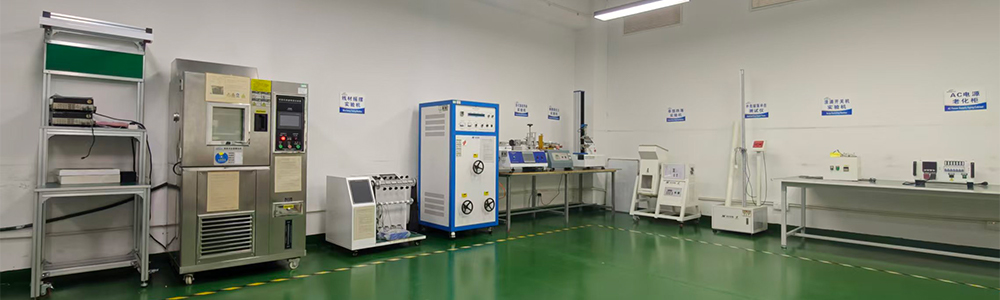
What Is Environmental Testing?
Environmental testing refers to a group of controlled evaluations that examine how a product responds to external environmental conditions.
Instead of measuring only electrical performance, these tests focus on how surrounding conditions influence the charger over time.
Depending on the product and customer requirements, environmental testing may include:
• High-temperature testing
• Low-temperature testing
• Humidity testing
• Thermal cycling
• Temperature shock testing
• Long-term environmental exposure
Each test examines different aspects of product performance.
Together, they provide a broader understanding of how a charger behaves throughout its expected service life.
Why Environmental Conditions Affect Charger Performance
Modern USB-C chargers contain dozens of electronic components working together.
Each component responds differently to environmental changes.
For example:
Semiconductors may exhibit different electrical characteristics as temperature changes.
Magnetic components can experience variations in efficiency.
Plastic housings expand and contract with temperature fluctuations.
Adhesives, insulation materials and thermal interface compounds also change over time under different environmental conditions.
Even PCB materials expand slightly during heating and contract during cooling.
These microscopic changes are usually harmless when properly considered during engineering design.
However, repeated environmental stress can expose weaknesses in products with insufficient design margins or inconsistent manufacturing quality.
Environmental testing allows engineers to identify these issues before customers experience them.
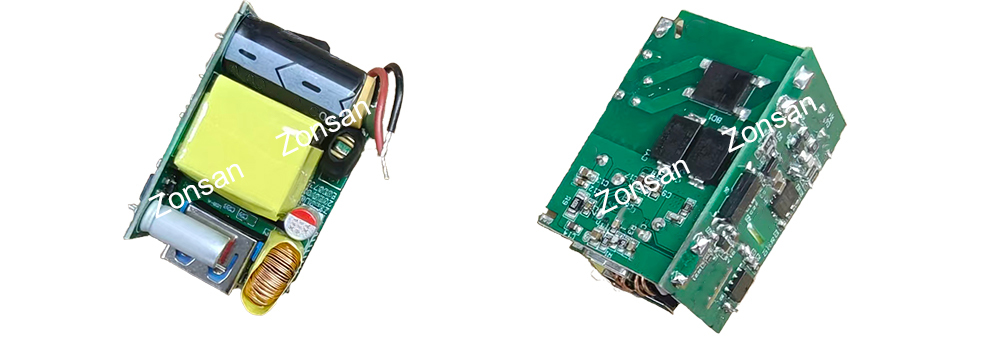
One of the most common environmental evaluations is high-temperature testing.
Chargers are operated inside climate chambers maintained at elevated ambient temperatures for specified periods.
Unlike normal room-temperature testing, high-temperature evaluation increases thermal stress throughout the entire product.
Engineers monitor:
• Output voltage stability
• Charging performance
• Surface temperature
• Internal thermal balance
• Protection circuit behavior
This testing helps verify that thermal design remains effective even when surrounding temperatures are significantly higher than normal indoor conditions.
Low-Temperature Testing
Cold environments introduce a different set of engineering challenges.
Some electronic materials become less flexible at lower temperatures.
Mechanical tolerances may also change slightly as materials contract.
Although most chargers generate heat during operation, they must first start safely after exposure to cold environments.
Engineers therefore evaluate:
• Startup performance
• Output stability
• USB PD negotiation
• Mechanical integrity
• Protection circuit operation
These tests help ensure that chargers continue functioning normally after transportation or storage in colder climates.
Humidity Testing
Humidity is another important consideration, particularly for products sold in tropical and coastal regions.
High humidity can influence:
• PCB insulation
• Surface contamination
• Connector corrosion
• Long-term material stability
• Electrical leakage characteristics
During humidity testing, chargers are exposed to controlled temperature and moisture conditions inside environmental chambers.
After testing, engineers repeat electrical evaluations to verify that performance remains within design specifications.
Environmental Testing Is More Than Certification
Some people assume environmental testing exists only because certification requires it.
In reality, professional engineering teams use these evaluations for a much broader purpose.
Environmental testing helps engineers:
• Validate new product designs
• Compare alternative materials
• Improve thermal management
• Verify supplier consistency
• Reduce long-term warranty risk
• Support continuous engineering improvement
For experienced manufacturers, environmental testing is not simply a checklist item before shipment.
It is an important source of engineering data that influences future product development.
Thermal Cycling vs Temperature Shock: Why They Are Different Tests
Although these two tests both involve changing temperatures, they evaluate different aspects of product reliability.
Many people—even those familiar with electronics manufacturing—mistakenly use the terms interchangeably.
In reality, they serve different engineering purposes.
Thermal Cycling
Thermal cycling gradually moves a product between high and low temperatures over repeated cycles.
This process simulates years of normal environmental changes.
As temperatures rise and fall, every material inside the charger expands and contracts at a slightly different rate.
Over hundreds or even thousands of cycles, engineers can evaluate whether repeated thermal stress affects:
• Solder joint integrity
• PCB stability
• Adhesive performance
• Transformer structure
• Plastic housing durability
Rather than looking for immediate failures, thermal cycling helps predict long-term reliability.
Temperature Shock Testing
Temperature shock is much more aggressive.
Instead of changing temperatures gradually, products are rapidly transferred between extreme hot and cold environments.
This sudden expansion and contraction creates significant mechanical stress.
Engineers use temperature shock testing to identify weaknesses that may not appear during slower environmental changes.
For example, sudden temperature differences can expose:
• Cracked solder joints
• Material delamination
• Housing deformation
• Mechanical assembly weaknesses
Although everyday users rarely experience such extreme transitions, transportation, logistics and industrial applications may expose products to similar conditions.
Environmental Test Equipment Used in Professional Charger Factories
Modern environmental testing depends on highly controlled laboratory equipment capable of maintaining stable test conditions.
Among the most commonly used systems are:
Programmable Climate Chambers
Climate chambers precisely regulate temperature and humidity.
Engineers can program complete environmental profiles lasting from several hours to multiple days.
These chambers allow repeated testing under identical conditions, improving data consistency.
Temperature Cycling Chambers
These systems automatically alternate between predetermined high and low temperatures.
The transition rate, dwell time and number of cycles are all programmable.
This makes long-term reliability evaluation far more consistent than manual testing.
Humidity Chambers
Humidity chambers combine temperature control with precise moisture regulation.
These systems are especially useful when evaluating insulation performance, connector durability and long-term material stability.
Data Acquisition Systems
Environmental testing generates large amounts of information.
Modern laboratories therefore use automated data acquisition systems to continuously record:
• Temperature
• Humidity
• Voltage
• Current
• Power
• Protection status
These records help engineers compare different product revisions and identify long-term trends during development.
Common Environmental Test Standards
Professional charger manufacturers generally perform environmental testing according to internationally recognized engineering practices and customer requirements.
Depending on the project, validation may reference standards covering environmental durability, transportation simulation and product safety.
Commonly referenced standards include:
• IEC environmental testing methods
• JEDEC reliability procedures for electronic components
• IPC recommendations for electronic assemblies
• Customer-specific OEM qualification requirements
Rather than treating standards as a checklist, experienced engineering teams use them as a framework for developing product-specific validation programs.
This approach provides greater flexibility while maintaining consistent engineering quality.
Why Environmental Testing Matters for OEM Buyers
For OEM brands, environmental testing offers benefits that extend well beyond laboratory verification.
It helps answer practical business questions such as:
• Will the product perform consistently in different countries?
• Can the charger tolerate transportation and warehouse storage?
• Will seasonal temperature changes affect customer experience?
• Is the product suitable for global distribution?
These considerations become increasingly important as brands expand into multiple international markets.
Products shipped to Europe, the Middle East, Southeast Asia and North America may experience dramatically different environmental conditions before they ever reach the end user.
By validating products under representative climate conditions, manufacturers reduce uncertainty and improve confidence throughout the supply chain.
Common Misconceptions About Environmental Testing
Several misunderstandings frequently appear during discussions about environmental validation.
Misconception 1: Room Temperature Testing Is Enough
Laboratory testing performed only under normal indoor conditions cannot fully represent global operating environments.
Professional manufacturers evaluate products across a much wider environmental range.
Misconception 2: Environmental Testing Is Only for Outdoor Products
Although chargers are usually used indoors, they are transported, stored and operated under many different environmental conditions throughout their lifecycle.
Environmental testing therefore remains highly relevant.
Misconception 3: High Temperature Is the Only Concern
Temperature is only one factor.
Humidity, rapid temperature changes and repeated thermal cycling can all influence long-term product reliability.
Professional validation considers multiple environmental variables together.
Misconception 4: Passing Environmental Tests Guarantees Unlimited Durability
No engineering test can eliminate every possible future failure.
Environmental validation significantly improves confidence in product reliability, but long-term performance still depends on sound engineering design, manufacturing quality and appropriate product usage.
Environmental Testing Supports Continuous Engineering Improvement
One of the greatest values of environmental testing is the engineering feedback it provides.
When abnormalities appear during climate evaluation, engineers investigate not only the immediate failure but also the underlying cause.
For example:
• Does the PCB require improved thermal spacing?
• Should a different adhesive be selected?
• Is another capacitor series better suited to elevated temperatures?
• Can enclosure ventilation be optimized?
Each round of environmental testing contributes to future product improvements.
This continuous refinement process allows manufacturers to gradually enhance reliability across multiple generations of products.
In this way, environmental testing is not simply about passing today's validation.
It also supports tomorrow's engineering innovation.
Final Thoughts
A charger may look identical on the outside regardless of where it is sold.
Inside, however, its ability to perform consistently under different environmental conditions depends on countless engineering decisions made during product development.
Environmental testing helps manufacturers verify those decisions before products reach customers.
By evaluating chargers under controlled temperature, humidity and climate conditions, engineering teams gain valuable insight into product robustness, manufacturing consistency and long-term reliability.
For OEM and ODM customers serving global markets, this testing provides additional confidence that products will continue operating safely and consistently across a wide range of real-world environments.
Ultimately, environmental testing demonstrates that product quality is not judged only by how a charger performs today—but by how well it continues performing wherever customers use it tomorrow.
Frequently Asked Questions (FAQ)
Q1: What is environmental testing for USB-C chargers?
Environmental testing evaluates how chargers perform under different temperature, humidity and climate conditions before mass production or shipment.
Q2: Why is environmental testing important?
It helps verify long-term reliability and confirms that products can operate consistently in different regions and environmental conditions.
Q3: What is the difference between thermal cycling and temperature shock?
Thermal cycling changes temperature gradually over repeated cycles, while temperature shock rapidly transfers products between extreme temperatures to create greater mechanical stress.
Q4: Does every charger require environmental testing?
Testing requirements depend on product design, customer specifications and target markets, although environmental validation is widely used for professional OEM projects.
Q5: Can environmental testing improve product reliability?
Yes. It helps engineers identify design weaknesses, optimize materials and improve manufacturing processes before mass production.
Q6: What equipment is used during environmental testing?
Typical equipment includes climate chambers, humidity chambers, thermal cycling systems, temperature shock chambers and automated data acquisition systems.
Q7: Does passing environmental testing guarantee zero failures?
No. Environmental testing reduces risk and improves confidence, but long-term reliability also depends on engineering design, production quality and proper product use.
Q8. Why do OEM customers value environmental validation?
Because it demonstrates that products have been evaluated under conditions similar to those encountered during transportation, storage and daily use across different global markets.
Recommended
• Understanding Hi-Pot Testing for USB-C Chargers: How Professional Manufacturers Verify Electrical Safety Before Shipment.↗
• How Chargers Go Through Aging Tests Before Shipping: Why Burn-In Testing Is Essential for Long-Term Reliability.↗
• Why Charger Reliability Matters More Than Fast Charging Speed: How Professional Manufacturers Engineer Long-Term Performance.↗