Understanding Hi-Pot Testing for USB-C Chargers: How Professional Manufacturers Verify Electrical Safety Before Shipment
Quick Answer
A Hi-Pot (High Potential) test is an electrical safety test that verifies the insulation between a charger's primary high-voltage circuit and its secondary low-voltage output. By applying a controlled high voltage for a specified period, manufacturers can confirm that no dangerous current leaks across the isolation barrier. Hi-Pot testing is an essential part of electrical safety verification before USB-C and GaN chargers are shipped.
Key Takeaways
• Hi-Pot testing verifies insulation safety, not charging performance.
• Every isolated USB-C charger should pass electrical insulation verification before shipment.
• Passing a functional test does not guarantee that a charger will pass a Hi-Pot test.
• Professional manufacturers integrate Hi-Pot testing into their production quality control process.
• Hi-Pot testing supports compliance with international safety standards such as IEC 62368-1.
Introduction
Imagine plugging a charger into a wall outlet.
On one side of the charger is mains electricity—typically 100V to 240V AC.
On the other side is a USB-C connector delivering only 5V, 9V, 15V or 20V DC to your phone or laptop.
Between these two worlds lies one of the most important safety systems inside the entire charger:
Electrical isolation.
Most users never think about it because, under normal conditions, it works silently in the background.
But from an engineering perspective, this isolation barrier is critical.
If it fails, dangerous voltage could potentially reach the USB output, creating a serious electrical hazard.
This is why professional charger manufacturers perform Hi-Pot testing before products leave the factory.
Unlike functional tests that verify whether a charger can deliver power, Hi-Pot testing answers a different question:
Can the insulation safely withstand high voltage without electrical breakdown?
For engineers, this distinction is fundamental.
A charger that charges perfectly but fails insulation testing cannot be considered a safe product.
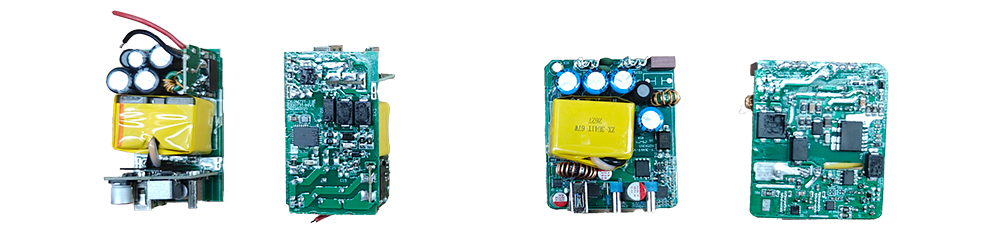
What Does "Hi-Pot" Mean?
Hi-Pot is short for High Potential.
The name refers to applying a voltage significantly higher than the charger's normal operating voltage to verify the integrity of its insulation system.
During the test, specialized equipment applies a controlled high voltage between isolated parts of the circuit.
If the insulation is properly designed and manufactured, only an extremely small leakage current should flow.
If insulation is damaged, contaminated or insufficient, the tester detects excessive leakage or electrical breakdown, causing the product to fail.
Importantly, the objective is not to stress the product until it fails.
Instead, the test confirms that the insulation provides an adequate safety margin under controlled conditions.
Why Functional Testing Is Not Enough
A charger may successfully complete every functional inspection during production.
It may negotiate USB Power Delivery correctly.
It may supply stable voltage.
It may even operate for hours during aging tests.
Yet none of these evaluations directly measures electrical insulation.
This is why functional testing and Hi-Pot testing serve different purposes.
| Functional Testing | Hi-Pot Testing |
| Verifies charging performance | Verifies electrical insulation |
| Confirms voltage and current output | Confirms isolation safety |
| Checks communication protocols | Checks leakage current |
| Evaluates operational behavior | Evaluates insulation integrity |
Both are essential.
One confirms that the charger works.
The other confirms that it remains electrically safe.
The Isolation Barrier Inside a Charger
One of the most important design features of an isolated USB-C charger is the separation between the primary circuit and the secondary circuit.
The primary side connects directly to AC mains power.
The secondary side supplies safe low-voltage DC power to connected devices.
The transformer serves as the central component providing galvanic isolation.
However, the transformer alone is not sufficient.
Engineers must also carefully control:
• Creepage distance
• Clearance distance
• PCB slot design
• Insulation materials
• Transformer insulation tape
• Safety capacitors
• PCB layout around the isolation barrier
Together, these elements create a complete insulation system capable of meeting international safety requirements.
How Does a Hi-Pot Tester Work?
Although the underlying electrical principles are sophisticated, the testing process itself is relatively straightforward.
The Hi-Pot tester connects to designated points on the charger.
It then applies a specified test voltage for a controlled period while continuously monitoring leakage current.
The equipment automatically evaluates whether the measured leakage remains within acceptable limits.
If excessive current flows, the system immediately records a failure.
Modern production equipment also stores test data electronically, allowing manufacturers to maintain traceable quality records for production batches.
Automation helps improve consistency while reducing the possibility of operator error.
Common Reasons a Charger May Fail a Hi-Pot Test
A failed Hi-Pot test does not necessarily indicate poor product design.
Sometimes the issue results from manufacturing variation or contamination during assembly.
Common causes include:
Insufficient Creepage or Clearance
If conductive parts are positioned too closely together, insulation strength may not satisfy safety requirements.
Transformer Insulation Problems
Improper insulation between transformer windings may reduce dielectric strength.
PCB Contamination
Flux residue, moisture or conductive particles remaining after production can increase leakage current.
Assembly Errors
Incorrect component installation or damaged insulation materials may compromise electrical isolation.
Damaged Components
Mechanical damage occurring during manufacturing or transportation can occasionally affect insulation performance.
Hi-Pot Testing Supports Global Product Compliance
Professional charger manufacturers typically perform Hi-Pot testing as part of broader electrical safety verification.
Although testing procedures vary depending on product type and target market, insulation verification supports compliance with internationally recognized safety standards.
For OEM customers selling products globally, demonstrating consistent insulation quality helps simplify certification processes while improving confidence among distributors and end users alike.
Hi-Pot testing therefore contributes not only to factory quality control but also to long-term market acceptance.
AC Hi-Pot vs DC Hi-Pot: What's the Difference?
When discussing Hi-Pot testing, many OEM buyers are surprised to learn that there is more than one testing method.
The two most common approaches are AC Hi-Pot testing and DC Hi-Pot testing.
Although both are designed to verify insulation integrity, they work differently and are selected based on product characteristics, production requirements and applicable safety standards.
AC Hi-Pot Testing
AC Hi-Pot applies alternating current at a specified high voltage.
Because mains electricity itself is AC, this method more closely simulates real operating conditions.
Advantages include:
• Better representation of real-world electrical stress
• Effective detection of insulation weaknesses
• Widely accepted in many safety verification procedures
However, AC testing requires more powerful equipment and generally places greater electrical stress on the product during the test.
DC Hi-Pot Testing
DC Hi-Pot applies direct current instead of alternating current.
After the insulation capacitance becomes charged, leakage current stabilizes, allowing accurate measurement with relatively lower test power.
Advantages include:
• Lower power consumption
• Reduced stress on sensitive components
• Suitable for automated production environments
Because each method has different characteristics, manufacturers select the appropriate procedure according to product design, customer specifications and certification requirements.
Neither method is universally "better"—the choice depends on engineering objectives.
What Is Leakage Current?
One of the most important values measured during a Hi-Pot test is leakage current.
This term sometimes causes confusion because it sounds like a fault.
In reality, a very small amount of leakage current is completely normal.
Every insulation system allows an extremely small current to flow when subjected to high voltage.
The purpose of the Hi-Pot tester is to determine whether that leakage remains below the allowable limit.
If leakage exceeds the specified threshold, the equipment records a failure.
Professional engineers do not simply look at "Pass" or "Fail."
They also monitor leakage trends over time.
Gradual changes in average leakage values across production batches may provide early warning of manufacturing issues long before products begin failing.
This data-driven approach supports continuous process improvement and strengthens production consistency.
Hi-Pot Testing vs Insulation Resistance Testing
Although both evaluate electrical insulation, Hi-Pot testing and insulation resistance (IR) testing are not identical.
They answer different engineering questions.
One confirms that the charger works.
The other confirms that it remains electrically safe.
The Isolation Barrier Inside a Charger
One of the most important design features of an isolated USB-C charger is the separation between the primary circuit and the secondary circuit.
The primary side connects directly to AC mains power.
The secondary side supplies safe low-voltage DC power to connected devices.
The transformer serves as the central component providing galvanic isolation.
However, the transformer alone is not sufficient.
Engineers must also carefully control:
• Creepage distance
• Clearance distance
• PCB slot design
• Insulation materials
• Transformer insulation tape
• Safety capacitors
• PCB layout around the isolation barrier
Together, these elements create a complete insulation system capable of meeting international safety requirements.
How Does a Hi-Pot Tester Work?
Although the underlying electrical principles are sophisticated, the testing process itself is relatively straightforward.
The Hi-Pot tester connects to designated points on the charger.
It then applies a specified test voltage for a controlled period while continuously monitoring leakage current.
The equipment automatically evaluates whether the measured leakage remains within acceptable limits.
If excessive current flows, the system immediately records a failure.
Modern production equipment also stores test data electronically, allowing manufacturers to maintain traceable quality records for production batches.
Automation helps improve consistency while reducing the possibility of operator error.
Common Reasons a Charger May Fail a Hi-Pot Test
A failed Hi-Pot test does not necessarily indicate poor product design.
Sometimes the issue results from manufacturing variation or contamination during assembly.
Common causes include:
Insufficient Creepage or Clearance
If conductive parts are positioned too closely together, insulation strength may not satisfy safety requirements.
Transformer Insulation Problems
Improper insulation between transformer windings may reduce dielectric strength.
PCB Contamination
Flux residue, moisture or conductive particles remaining after production can increase leakage current.
Assembly Errors
Incorrect component installation or damaged insulation materials may compromise electrical isolation.
Damaged Components
Mechanical damage occurring during manufacturing or transportation can occasionally affect insulation performance.
Hi-Pot Testing Supports Global Product Compliance
Professional charger manufacturers typically perform Hi-Pot testing as part of broader electrical safety verification.
Although testing procedures vary depending on product type and target market, insulation verification supports compliance with internationally recognized safety standards.
For OEM customers selling products globally, demonstrating consistent insulation quality helps simplify certification processes while improving confidence among distributors and end users alike.
Hi-Pot testing therefore contributes not only to factory quality control but also to long-term market acceptance.
AC Hi-Pot vs DC Hi-Pot: What's the Difference?
When discussing Hi-Pot testing, many OEM buyers are surprised to learn that there is more than one testing method.
The two most common approaches are AC Hi-Pot testing and DC Hi-Pot testing.
Although both are designed to verify insulation integrity, they work differently and are selected based on product characteristics, production requirements and applicable safety standards.
AC Hi-Pot Testing
AC Hi-Pot applies alternating current at a specified high voltage.
Because mains electricity itself is AC, this method more closely simulates real operating conditions.
Advantages include:
• Better representation of real-world electrical stress
• Effective detection of insulation weaknesses
• Widely accepted in many safety verification procedures
However, AC testing requires more powerful equipment and generally places greater electrical stress on the product during the test.
DC Hi-Pot Testing
DC Hi-Pot applies direct current instead of alternating current.
After the insulation capacitance becomes charged, leakage current stabilizes, allowing accurate measurement with relatively lower test power.
Advantages include:
• Lower power consumption
• Reduced stress on sensitive components
• Suitable for automated production environments
Because each method has different characteristics, manufacturers select the appropriate procedure according to product design, customer specifications and certification requirements.
Neither method is universally "better"—the choice depends on engineering objectives.
What Is Leakage Current?
One of the most important values measured during a Hi-Pot test is leakage current.
This term sometimes causes confusion because it sounds like a fault.
In reality, a very small amount of leakage current is completely normal.
Every insulation system allows an extremely small current to flow when subjected to high voltage.
The purpose of the Hi-Pot tester is to determine whether that leakage remains below the allowable limit.
If leakage exceeds the specified threshold, the equipment records a failure.
Professional engineers do not simply look at "Pass" or "Fail."
They also monitor leakage trends over time.
Gradual changes in average leakage values across production batches may provide early warning of manufacturing issues long before products begin failing.
This data-driven approach supports continuous process improvement and strengthens production consistency.
Hi-Pot Testing vs Insulation Resistance Testing
Although both evaluate electrical insulation, Hi-Pot testing and insulation resistance (IR) testing are not identical.
They answer different engineering questions.
| Hi-Pot Testing | Insulation Resistance Testing |
| Applies relatively high test voltage | Applies lower DC test voltage |
| Verifies dielectric strength | Measures insulation resistance |
| Detects insulation breakdown | Evaluates insulation quality |
| Common in production safety verification | Common in maintenance and engineering analysis |
For USB-C charger manufacturing, these tests are often complementary rather than interchangeable.
Using both provides a more complete understanding of insulation performance.
How Professional Charger Factories Integrate Hi-Pot Testing into Production
In modern manufacturing, Hi-Pot testing is rarely performed as an isolated activity.
Instead, it forms part of a structured production quality control system.
A typical production workflow may include:
1. SMT assembly
2. PCB functional inspection
3. Product assembly
4. Initial functional test
5. Hi-Pot electrical safety verification
6. Aging (Burn-In) test
7. Final functional inspection
8. Visual inspection
9. Packaging
This sequence helps ensure that every finished charger has passed both performance verification and electrical safety verification before shipment.
Many production lines integrate automated Hi-Pot equipment directly into conveyor systems.
Test results are automatically stored, allowing full production traceability.
If a failure occurs, the affected unit can be isolated immediately for engineering analysis without interrupting the rest of the production process.
Common Misconceptions About Hi-Pot Testing
Even experienced buyers sometimes misunderstand the role of Hi-Pot testing.
Several misconceptions appear frequently.
Misconception 1: Passing Hi-Pot Means the Charger Is High Quality
Not necessarily.
Hi-Pot verifies electrical insulation safety.
It does not evaluate charging efficiency, thermal performance, USB PD communication or long-term reliability.
A charger still requires comprehensive engineering validation across many other areas.
Misconception 2: Hi-Pot Testing Can Replace Functional Testing
No.
A charger may pass insulation verification while failing to negotiate USB Power Delivery correctly.
Electrical safety and functional performance are two separate aspects of product quality.
Professional manufacturers always perform both.
Misconception 3: Only High-Power Chargers Need Hi-Pot Testing
Incorrect.
Whether a charger is rated at 20W or 140W, if it connects directly to AC mains and includes an isolation barrier, electrical safety verification remains essential.
Misconception 4: Hi-Pot Testing Damages the Charger
When performed using appropriate equipment and controlled test parameters, Hi-Pot testing is a standard verification procedure designed to confirm insulation integrity—not to damage the product.
Manufacturers follow established engineering procedures to ensure testing is both safe and repeatable.
Why Hi-Pot Testing Reflects a Manufacturer's Engineering Capability
From a customer's perspective, Hi-Pot testing may appear to be just another quality checkpoint.
From an engineering perspective, it reveals much more.
Consistently passing Hi-Pot testing depends on numerous earlier decisions, including:
• Transformer insulation design
• PCB creepage and clearance layout
• Material selection
• Assembly quality
• Process cleanliness
• Manufacturing consistency
In other words, successful Hi-Pot performance is often the visible result of disciplined engineering and process control rather than the test itself.
Manufacturers with mature quality systems treat Hi-Pot testing not simply as a pass/fail inspection, but as a source of production data that helps improve future product reliability and safety.
Final Thoughts
Electrical safety is one of the most fundamental requirements for any AC-powered USB-C charger.
While charging speed, compact size and GaN technology often receive the most attention, none of these features matter if the insulation system cannot reliably separate high-voltage input from low-voltage output.
Hi-Pot testing provides manufacturers with an effective method for verifying that this isolation remains intact before products leave the factory.
More importantly, it reflects the quality of the engineering decisions made throughout product development—from transformer design and PCB layout to manufacturing process control.
For OEM and ODM customers, understanding how a supplier approaches Hi-Pot testing offers valuable insight into its commitment to product safety, manufacturing discipline and long-term quality.
Frequently Asked Questions (FAQ)
Q1: What is a Hi-Pot test?
A Hi-Pot test is an electrical safety test that verifies the insulation between a charger's primary and secondary circuits by applying a controlled high voltage.
Q2: Why is Hi-Pot testing important for USB-C chargers?
It helps ensure that dangerous mains voltage cannot leak to the low-voltage USB output, protecting users and connected devices.
Q3: Is Hi-Pot testing the same as a functional test?
No. Functional testing verifies charging performance, while Hi-Pot testing verifies electrical insulation safety.
Q4: What causes a charger to fail a Hi-Pot test?
Possible causes include insufficient insulation distance, transformer insulation defects, PCB contamination, assembly errors or damaged insulating materials.
Q5: What is leakage current?
Leakage current is the small amount of current that flows through insulation under high voltage. Hi-Pot testing confirms that this current remains within safe limits.
Q6: What is the difference between AC and DC Hi-Pot testing?
AC Hi-Pot better simulates real operating conditions, while DC Hi-Pot generally requires less test power and is widely used in automated production.
Q7: Does every charger need Hi-Pot testing?
Most isolated AC-powered USB-C chargers require insulation verification as part of electrical safety testing and quality control.
Q8: Why do OEM buyers care about Hi-Pot testing?
Consistent Hi-Pot testing demonstrates a manufacturer's attention to electrical safety, production quality and compliance with international standards.
Article Recommendetions
• How Chargers Go Through Aging Tests Before Shipping: Why Burn-In Testing Is Essential for Long-Term Reliability.↗
• Why Charger Reliability Matters More Than Fast Charging Speed: How Professional Manufacturers Engineer Long-Term Performance.↗
• How Transformer Design Determines Charger Efficiency: The Engineering Behind Every Fast Charger.↗
• How PCB Layout Determines Charger Performance: Inside the Engineering Behind Fast Chargers.↗
Using both provides a more complete understanding of insulation performance.
How Professional Charger Factories Integrate Hi-Pot Testing into Production
In modern manufacturing, Hi-Pot testing is rarely performed as an isolated activity.
Instead, it forms part of a structured production quality control system.
A typical production workflow may include:
1. SMT assembly
2. PCB functional inspection
3. Product assembly
4. Initial functional test
5. Hi-Pot electrical safety verification
6. Aging (Burn-In) test
7. Final functional inspection
8. Visual inspection
9. Packaging
This sequence helps ensure that every finished charger has passed both performance verification and electrical safety verification before shipment.
Many production lines integrate automated Hi-Pot equipment directly into conveyor systems.
Test results are automatically stored, allowing full production traceability.
If a failure occurs, the affected unit can be isolated immediately for engineering analysis without interrupting the rest of the production process.
Common Misconceptions About Hi-Pot Testing
Even experienced buyers sometimes misunderstand the role of Hi-Pot testing.
Several misconceptions appear frequently.
Misconception 1: Passing Hi-Pot Means the Charger Is High Quality
Not necessarily.
Hi-Pot verifies electrical insulation safety.
It does not evaluate charging efficiency, thermal performance, USB PD communication or long-term reliability.
A charger still requires comprehensive engineering validation across many other areas.
Misconception 2: Hi-Pot Testing Can Replace Functional Testing
No.
A charger may pass insulation verification while failing to negotiate USB Power Delivery correctly.
Electrical safety and functional performance are two separate aspects of product quality.
Professional manufacturers always perform both.
Misconception 3: Only High-Power Chargers Need Hi-Pot Testing
Incorrect.
Whether a charger is rated at 20W or 140W, if it connects directly to AC mains and includes an isolation barrier, electrical safety verification remains essential.
Misconception 4: Hi-Pot Testing Damages the Charger
When performed using appropriate equipment and controlled test parameters, Hi-Pot testing is a standard verification procedure designed to confirm insulation integrity—not to damage the product.
Manufacturers follow established engineering procedures to ensure testing is both safe and repeatable.
Why Hi-Pot Testing Reflects a Manufacturer's Engineering Capability
From a customer's perspective, Hi-Pot testing may appear to be just another quality checkpoint.
From an engineering perspective, it reveals much more.
Consistently passing Hi-Pot testing depends on numerous earlier decisions, including:
• Transformer insulation design
• PCB creepage and clearance layout
• Material selection
• Assembly quality
• Process cleanliness
• Manufacturing consistency
In other words, successful Hi-Pot performance is often the visible result of disciplined engineering and process control rather than the test itself.
Manufacturers with mature quality systems treat Hi-Pot testing not simply as a pass/fail inspection, but as a source of production data that helps improve future product reliability and safety.
Final Thoughts
Electrical safety is one of the most fundamental requirements for any AC-powered USB-C charger.
While charging speed, compact size and GaN technology often receive the most attention, none of these features matter if the insulation system cannot reliably separate high-voltage input from low-voltage output.
Hi-Pot testing provides manufacturers with an effective method for verifying that this isolation remains intact before products leave the factory.
More importantly, it reflects the quality of the engineering decisions made throughout product development—from transformer design and PCB layout to manufacturing process control.
For OEM and ODM customers, understanding how a supplier approaches Hi-Pot testing offers valuable insight into its commitment to product safety, manufacturing discipline and long-term quality.
Frequently Asked Questions (FAQ)
Q1: What is a Hi-Pot test?
A Hi-Pot test is an electrical safety test that verifies the insulation between a charger's primary and secondary circuits by applying a controlled high voltage.
Q2: Why is Hi-Pot testing important for USB-C chargers?
It helps ensure that dangerous mains voltage cannot leak to the low-voltage USB output, protecting users and connected devices.
Q3: Is Hi-Pot testing the same as a functional test?
No. Functional testing verifies charging performance, while Hi-Pot testing verifies electrical insulation safety.
Q4: What causes a charger to fail a Hi-Pot test?
Possible causes include insufficient insulation distance, transformer insulation defects, PCB contamination, assembly errors or damaged insulating materials.
Q5: What is leakage current?
Leakage current is the small amount of current that flows through insulation under high voltage. Hi-Pot testing confirms that this current remains within safe limits.
Q6: What is the difference between AC and DC Hi-Pot testing?
AC Hi-Pot better simulates real operating conditions, while DC Hi-Pot generally requires less test power and is widely used in automated production.
Q7: Does every charger need Hi-Pot testing?
Most isolated AC-powered USB-C chargers require insulation verification as part of electrical safety testing and quality control.
Q8: Why do OEM buyers care about Hi-Pot testing?
Consistent Hi-Pot testing demonstrates a manufacturer's attention to electrical safety, production quality and compliance with international standards.
Article Recommendetions
• How Chargers Go Through Aging Tests Before Shipping: Why Burn-In Testing Is Essential for Long-Term Reliability.↗
• Why Charger Reliability Matters More Than Fast Charging Speed: How Professional Manufacturers Engineer Long-Term Performance.↗
• How Transformer Design Determines Charger Efficiency: The Engineering Behind Every Fast Charger.↗
• How PCB Layout Determines Charger Performance: Inside the Engineering Behind Fast Chargers.↗