Why Charger Reliability Matters More Than Fast Charging Speed: How Professional Manufacturers Engineer Long-Term Performance
Quick Answer(Featured Snippet)
Charger reliability refers to a charger's ability to maintain safe, stable and consistent performance throughout its expected service life. Professional charger manufacturers improve reliability through engineering design, component selection, PCB optimization, thermal management, production quality control and extensive validation testing before mass production.
Key Takeaways
• Fast charging performance means little if long-term reliability is poor.
• Reliability begins during product design—not after manufacturing.
• Heat, electrical stress and component quality are the biggest factors affecting charger lifespan.
• Reliability testing includes aging tests, thermal cycling, Hi-Pot testing, humidity testing and long-term load evaluation.
• Professional charger factories treat reliability engineering as part of product development rather than final quality inspection.
Introduction
When consumers compare chargers, they usually focus on specifications.
Is it 65W?
Does it support USB PD?
How many USB-C ports does it have?
Can it charge a laptop?
These are all reasonable questions.
However, engineers often ask a different one:
"Will this charger still perform the same after thousands of hours of operation?"
That question lies at the heart of reliability engineering.
A charger that performs well on its first day isn't necessarily a well-engineered charger.
The real measure of quality is whether it continues to operate safely and consistently after months—or even years—of daily use.
Reliability is therefore about far more than avoiding product failure.
It reflects the combined quality of the entire engineering process, from circuit design and thermal management to manufacturing control and validation testing.
For OEM customers, reliability is especially important because it directly influences warranty costs, customer satisfaction and long-term brand reputation.
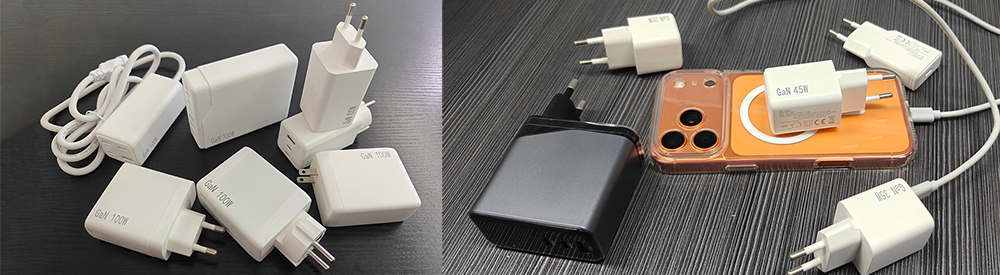
Reliability Is Designed, Not Added Later
One of the biggest misconceptions in electronics manufacturing is that reliability can be "tested into" a product.
In reality, testing can only reveal weaknesses.
It cannot compensate for poor engineering.
Professional development teams begin considering reliability before the first prototype is built.
During circuit design, engineers evaluate:
• Electrical stress on components
• Thermal distribution
• Expected operating lifetime
• Safety margins
• Material compatibility
• Environmental conditions
Every design decision influences long-term product stability.
For example, selecting a capacitor with insufficient voltage margin may reduce manufacturing cost, but it can also shorten product lifespan under demanding operating conditions.
Similarly, a PCB layout that creates unnecessary thermal hotspots may accelerate component aging even though the charger initially passes functional testing.
Reliability therefore begins on the engineer's workstation—not on the factory floor.
What Determines the Lifespan of a Charger?
A charger rarely fails because of a single cause.
Instead, long-term performance depends on how multiple engineering factors interact over time.
Among the most influential are:
Thermal Stress
Heat remains one of the primary contributors to electronic aging.
Repeated exposure to elevated temperatures gradually affects capacitors, magnetic materials, solder joints and semiconductor devices.
This is why thermal engineering plays such an important role in reliability.
Electrical Stress
Components continuously experience voltage spikes, switching currents and transient events.
If these stresses exceed design expectations, degradation accelerates.
Professional engineers therefore include adequate design margins rather than operating components near their absolute maximum ratings.
Mechanical Stress
Chargers are frequently transported, plugged in and unplugged.
Repeated mechanical forces can influence solder joints, connectors and enclosure integrity.
Mechanical reliability is particularly important for compact foldable chargers and travel adapters.
Environmental Conditions
Humidity, dust and ambient temperature all affect long-term performance.
Although users rarely notice these factors, engineers consider them throughout product development and reliability validation.
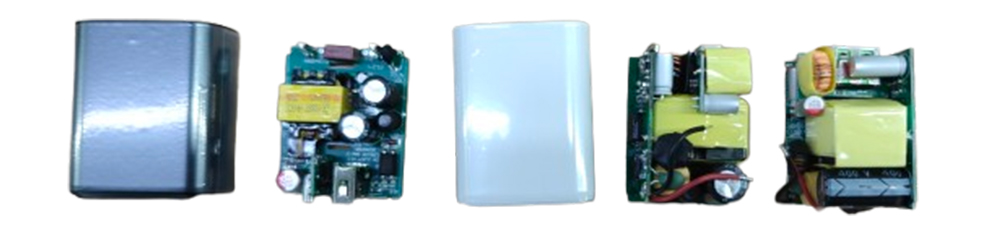
Why Component Selection Has a Long-Term Impact
Two chargers with similar specifications may use completely different component grades.
On the outside, they appear nearly identical.
Inside, however, their long-term reliability may differ significantly.
Professional charger manufacturers evaluate components based on more than electrical specifications.
They also consider:
• Lifetime ratings
• Temperature tolerance
• Manufacturer consistency
• Supply chain stability
• Qualification history
Choosing higher-quality components often increases manufacturing cost slightly but reduces field failures over the product's service life.
For OEM brands, this trade-off is frequently worthwhile because improved reliability lowers warranty claims and strengthens customer confidence.
Reliability Depends on the Entire System
A common mistake is assuming that one "premium" component guarantees a reliable charger.
In practice, reliability emerges from the interaction of the complete system.
Consider a high-quality capacitor installed beside an excessively hot transformer.
Even though the capacitor itself meets excellent specifications, prolonged exposure to elevated temperatures may still shorten its useful life.
Likewise, an advanced GaN transistor cannot compensate for poor PCB layout or inadequate thermal management.
Professional engineers therefore optimize the charger as a whole.
They evaluate how electrical, thermal and mechanical factors influence one another throughout the product's expected lifetime.
This systems approach distinguishes mature engineering organizations from manufacturers that focus only on individual components.
Reliability Engineering Continues Throughout Product Development
Reliability is not verified during a single test.
Instead, engineers collect evidence throughout every stage of development.
Early prototype evaluation focuses on identifying potential weaknesses before hardware becomes finalized.
As the design matures, testing becomes increasingly comprehensive.
Electrical performance, thermal behavior, EMC compliance and mechanical robustness are all reviewed together because weaknesses in one area often affect another.
Only after repeated validation under realistic operating conditions does the project move toward production readiness.
This structured process greatly improves confidence that laboratory performance can be consistently reproduced during mass manufacturing.
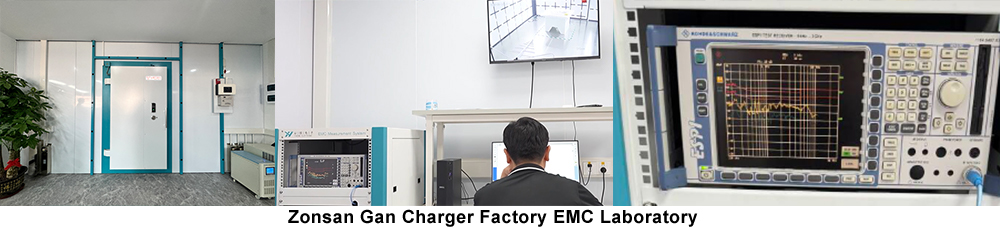
Reliability Is More Than Passing Certification
Safety certification is an important milestone.
However, certification alone does not guarantee long-term reliability.
A charger may satisfy regulatory requirements while still experiencing premature failures if engineering margins are insufficient.
Professional manufacturers therefore view certification as one part of a broader reliability strategy.
Their objective is not merely passing laboratory tests but delivering stable performance throughout the product's intended service life.
For OEM customers, this distinction is significant.
Products that consistently perform well in real-world environments help reduce warranty costs, improve customer satisfaction and strengthen brand reputation over time.
Why Professional Engineers Never Design a Charger to Its Absolute Limits
One of the defining characteristics of reliable electronic products is that they are not designed to operate at the maximum capability of every component.
Instead, experienced engineers build in what is commonly referred to as design margin.
Design margin is the difference between what a component is capable of and what it is expected to handle during normal operation.
For example, if a capacitor is continuously exposed to voltage close to its maximum rating, its aging process may accelerate over time.
Likewise, operating a power device near its thermal limit may not cause an immediate failure, but repeated long-term stress can gradually reduce reliability.
By providing reasonable operating margins for voltage, current and temperature, engineers create a charger that performs more consistently under different real-world conditions.
This philosophy also helps account for manufacturing tolerances, environmental differences and component variation across production batches.
Reliable products are rarely the result of "stronger" components alone.
More often, they are the result of conservative engineering decisions made early in product development.
Read More
Reliability Validation Before Mass Production
Design calculations provide confidence, but engineering assumptions must always be verified.
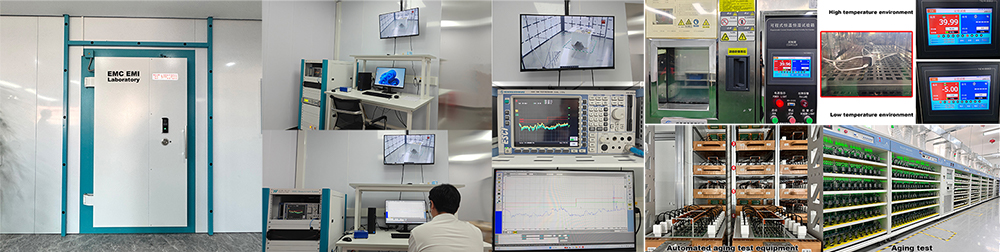
Before a charger enters mass production, professional manufacturers carry out multiple reliability evaluations to confirm that the product performs consistently under realistic operating conditions.
Typical validation activities include:
Continuous Full-Load Testing
Chargers operate continuously at rated output power for extended periods while engineers monitor electrical performance and internal temperature.
This helps identify unexpected thermal behavior or performance drift.
High-Temperature Operation
Products are tested under elevated ambient temperatures to verify stable operation in demanding environments.
This is particularly important for chargers sold in regions where indoor temperatures can remain high for long periods.
Thermal Cycling
Repeated heating and cooling cycles simulate years of normal expansion and contraction.
Engineers observe whether solder joints, magnetic components or enclosure structures show signs of fatigue after repeated temperature changes.
Humidity Evaluation
High humidity can influence insulation materials, PCB reliability and long-term electrical stability.
Environmental testing helps confirm that chargers remain safe and functional under different climate conditions.
Long-Term Aging
Aging tests allow engineers to evaluate whether electrical characteristics remain stable after prolonged operation.
These tests also help identify early-life failures before products reach customers.
How Reliability Engineering Reduces Warranty Costs
From a manufacturer's perspective, reliability is not only an engineering objective—it is also a business strategy.
Every field failure creates costs that extend far beyond replacing a charger.
Potential consequences include:
• Warranty claims
• Product returns
• Customer support expenses
• Logistics costs
• Reduced customer confidence
• Damage to brand reputation
By investing more effort during engineering validation, manufacturers can often prevent these costs from appearing later in the product lifecycle.
For OEM customers, this creates an important competitive advantage.
A product with fewer failures not only reduces after-sales costs but also strengthens relationships with distributors and end users.
In many cases, the value of reliability becomes most visible long after the product has been shipped.
Common Reliability Mistakes in Charger Development
Even experienced engineering teams occasionally encounter reliability challenges.
Understanding common mistakes helps illustrate why systematic engineering is so important.
Prioritizing Cost Over Engineering Margin
Reducing component cost without considering long-term operating conditions may improve short-term pricing but increase failure risk over time.
Professional manufacturers evaluate total lifecycle value rather than focusing only on initial material cost.
Treating Reliability as Final Quality Inspection
Reliability cannot be added after production.
If weaknesses exist in the original circuit design, quality inspection alone cannot eliminate them.
The foundation of reliability is always engineering.
Ignoring Long-Term Thermal Interaction
Components rarely fail because of one isolated hotspot.
More often, gradual heat transfer between neighboring components accelerates aging over thousands of operating hours.
System-level thermal design is therefore essential.
Relying Only on Certification Results
Passing safety certification demonstrates regulatory compliance, but it does not automatically guarantee ex
cellent long-term reliability.
Professional manufacturers continue validation beyond certification by performing extended reliability testing and production verification.
How Professional Charger Manufacturers Build Reliability into Every Product
Reliable chargers are not created by chance.
They are the result of a structured engineering process that integrates reliability into every stage of development.
Professional manufacturers typically improve long-term performance through:
• Conservative electrical design margins
• High-quality component selection
• Optimized PCB layout
• Efficient thermal management
• Stable power conversion architecture
• Comprehensive validation testing
• Strict production quality control
• Continuous supplier qualification
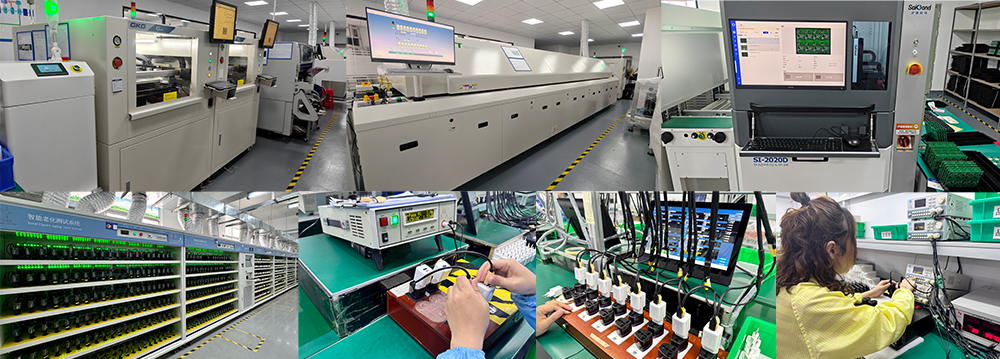
Importantly, reliability is monitored not only during product development but also throughout mass production.
Regular process audits, incoming material inspections and production verification help ensure that every manufacturing batch maintains the same quality standards established during engineering validation.
This consistency is particularly important for OEM and ODM customers who require dependable products across multiple production runs.
Final Thoughts
Fast charging has become an essential feature of modern electronics, but charging speed alone does not define product quality.
A charger that performs reliably year after year reflects careful engineering long before it reaches the customer.
Reliability is built through thoughtful circuit design, appropriate safety margins, effective thermal management, stable manufacturing processes and rigorous validation testing.
For professional charger manufacturers, every successful product represents thousands of engineering decisions working together toward a single objective:
Delivering safe, stable and consistent performance throughout the product's intended lifetime.
For OEM buyers, understanding how a supplier approaches reliability engineering provides valuable insight into its technical capability—and often explains why products with similar specifications can perform very differently in real-world use.

Read More
Frequently Asked Questions (FAQ)
Q1: What does charger reliability mean?
Charger reliability refers to the ability of a charger to maintain safe and stable performance throughout its expected service life under normal operating conditions.
Q2: What factors most affect charger reliability?
The most important factors include thermal management, component quality, electrical design margins, PCB layout, manufacturing consistency and validation testing.
Q3: Does higher charging power reduce reliability?
Not necessarily. High-power chargers can achieve excellent reliability when supported by proper engineering, thermal management and quality control.
Q4: Why are design margins important?
Design margins help components operate below their maximum limits, improving long-term stability and reducing the impact of manufacturing variation and environmental conditions.
Q5: How do manufacturers verify charger reliability?
Professional manufacturers perform aging tests, thermal cycling, humidity testing, continuous load testing and other validation procedures before production.
Q6: Is passing certification enough to prove reliability?
No. Certification confirms compliance with safety and EMC standards, but long-term reliability also depends on engineering quality and extensive validation.
Q7: Why is thermal management closely related to reliability?
Higher operating temperatures accelerate component aging. Effective thermal design helps extend product lifespan and maintain stable performance.
Q8: Why should OEM buyers evaluate reliability engineering?
Strong reliability engineering reduces warranty claims, improves customer satisfaction and supports consistent product quality across production batches.
Recommended reading
• Thermal Design in USB-C Chargers: How Professional Engineers Control Heat for Better Performance and Reliability.↗
• How Flyback Converters Work in USB-C Chargers: The Power Conversion Technology Behind Fast Charging.↗
• How EMI Affects Charger Performance: Engineering Stable, Safe and Compliant USB-C Chargers.↗