How OEM Charger Factories Test USB-C Compatibility (Inside Real Charging Labs)
Modern USB-C charging looks simple on the surface.
You plug in a cable.
The device charges.
But behind that seemingly simple process is an extremely complex compatibility ecosystem involving:
• charging protocols
• voltage negotiation
• thermal management
• cable communication
• device-specific charging behavior
• dynamic power allocation
And as USB-C charging evolves toward:
• PD3.1
• AVS
• AI laptops
• multi-device ecosystems
compatibility testing has become one of the most important parts of charger manufacturing.
In fact, many charging problems users experience today are not caused by insufficient wattage.
They are caused by: compatibility failures.
This is why professional OEM charger factories invest heavily in: USB-C compatibility labs.
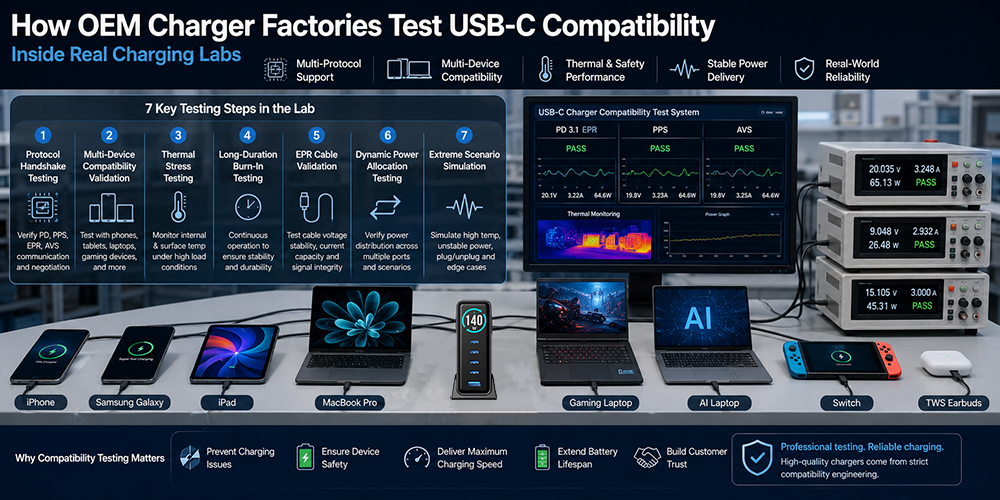
Why USB-C Compatibility Is More Complex Than Before
Years ago, chargers were relatively simple.
Most adapters delivered:
• fixed voltage
• fixed current
with limited communication.
Today, modern USB-C chargers must intelligently negotiate with devices in real time.
Different brands often prefer different charging behaviors.
For example:
| Device | Preferred Charging System |
| iPhone | PD |
| Samsung Galaxy | PPS |
| MacBook Pro | PD3.1 EPR |
| Gaming Laptop | High-power PD3.1 |
| AI Laptop | AVS-ready architecture |
This means one charger may behave differently across multiple devices.
Why Wattage Alone Is No Longer Enough
A charger labeled:
“100W”
does not automatically guarantee:
• full compatibility
• stable charging
• proper thermal behavior
Real compatibility depends on whether the charger correctly supports:
• protocol negotiation
• voltage transitions
• current regulation
• cable communication
• thermal response behavior
This is why professional testing is critical.
What Happens Inside a USB-C Compatibility Lab?
Professional OEM charger factories usually build dedicated testing environments for:
• PD protocol validation
• PPS testing
• AVS simulation
• EPR cable testing
• thermal stress analysis
• long-duration charging tests
These labs simulate: real-world charging behavior.
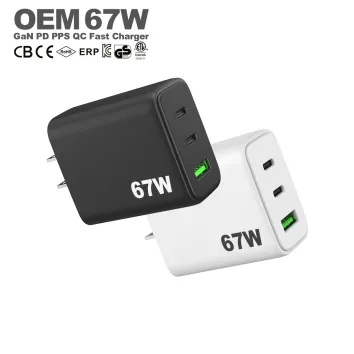
With 3 charging ports, advanced PPS technology, and global safety certifications, it is ideal for home, office, and travel use.
Read More
Step 1 — Protocol Handshake Testing
When a device connects to a USB-C charger, communication begins immediately.
The charger and device negotiate:
• voltage
• current
• power limits
• protocol compatibility
Factories test whether the charger correctly responds to:
• PD requests
• PPS adjustments
• EPR commands
• AVS dynamic voltage behavior
Any instability here may cause:
• slow charging
• disconnect loops
• overheating
• unstable power delivery
Step 2 — Multi-Device Compatibility Validation
Professional charger factories test chargers across many devices simultaneously.
This often includes:
• iPhones
• Samsung Galaxy devices
• iPads
• MacBooks
• gaming handhelds
• Windows laptops
• laptops
• earbuds
• tablets
Because every ecosystem behaves differently.
For example:
Why Wattage Alone Is No Longer Enough
A charger labeled:
“100W”
does not automatically guarantee:
• full compatibility
• stable charging
• proper thermal behavior
Real compatibility depends on whether the charger correctly supports:
• protocol negotiation
• voltage transitions
• current regulation
• cable communication
• thermal response behavior
This is why professional testing is critical.
What Happens Inside a USB-C Compatibility Lab?
Professional OEM charger factories usually build dedicated testing environments for:
• PD protocol validation
• PPS testing
• AVS simulation
• EPR cable testing
• thermal stress analysis
• long-duration charging tests
These labs simulate: real-world charging behavior.
With 3 charging ports, advanced PPS technology, and global safety certifications, it is ideal for home, office, and travel use.
Read More
Step 1 — Protocol Handshake Testing
When a device connects to a USB-C charger, communication begins immediately.
The charger and device negotiate:
• voltage
• current
• power limits
• protocol compatibility
Factories test whether the charger correctly responds to:
• PD requests
• PPS adjustments
• EPR commands
• AVS dynamic voltage behavior
Any instability here may cause:
• slow charging
• disconnect loops
• overheating
• unstable power delivery
Step 2 — Multi-Device Compatibility Validation
Professional charger factories test chargers across many devices simultaneously.
This often includes:
• iPhones
• Samsung Galaxy devices
• iPads
• MacBooks
• gaming handhelds
• Windows laptops
• laptops
• earbuds
• tablets
Because every ecosystem behaves differently.
For example:
Samsung devices may aggressively request PPS voltage changes.
Meanwhile: MacBooks focus heavily on PD3.1 EPR stability.
Step 3 — Thermal Stress Testing
Thermal performance is one of the biggest hidden factors affecting charging quality.
Professional labs evaluate:
• internal PCB temperature
• transformer temperature
• casing surface temperature
• sustained power stability
especially during:
• 65W+
• 100W+
• 140W PD3.1 charging
Poor thermal engineering often causes: charging throttling.
This reduces:
• charging speed
• efficiency
• long-term reliability
Step 4 — Long-Duration Burn-In Testing
Many cheap chargers appear stable during short tests.
But problems emerge after:
• hours of operation
• repeated charging cycles
• high ambient temperatures
Professional OEM factories conduct: burn-in testing
to verify:
• long-term power stability
• thermal consistency
• component durability
under continuous load conditions.
Step 5 — EPR Cable Validation
PD3.1 charging above:
100W
requires: EPR-certified USB-C cables.
Factories test:
• voltage stability
• cable resistance
• connector temperature
• signal integrity
because poor cable behavior can cause:
• unstable charging
• power loss
• excessive heat
• charging interruptions
Step 6 — Dynamic Power Allocation Testing
Modern desktop chargers often feature:
• 2 ports / 3 ports / 4 ports / 6 ports
with intelligent power sharing.
Factories must verify:
• how wattage redistributes
• whether voltage remains stable
• how protocols behave during switching
For example:
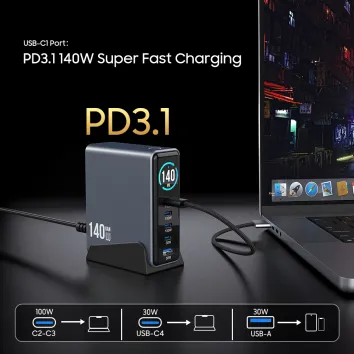
A 140W charger may dynamically shift:
• 140W → single device
• 100W + 30W → dual device mode
without interrupting charging stability.
Step 7 — Extreme Scenario Simulation
Professional charging labs also simulate difficult conditions such as:
• high ambient temperatures
• unstable AC input
• rapid plug/unplug cycles
• simultaneous device changes
• low-quality cable behavior
This helps engineers identify: edge-case compatibility failures.
Why Compatibility Testing Is Becoming More Important in 2026
The USB-C ecosystem is becoming increasingly complicated because devices now include:
• AI acceleration
• high-refresh displays
• GPU workloads
• dynamic battery systems
• advanced thermal controls
This creates rapidly changing power demands.
Modern chargers must respond intelligently in real time.
As a result: compatibility engineering is becoming as important as wattage itself.
Why GaN Chargers Require More Advanced Validation
GaN chargers operate at:
• higher switching frequencies
• higher power density
• lower thermal margins
Compared with traditional silicon chargers.
This improves:
• efficiency
• size reduction
• thermal behavior
But it also increases engineering complexity.
GaN chargers therefore require:
• stricter PCB optimization
• more advanced thermal analysis
• better protocol coordination
during compatibility testing.
Read More
Why AVS Will Increase Compatibility Complexity Further
PD3.2 AVS introduces: dynamic adjustable voltage systems.
This creates more intelligent charging behavior.
But it also means:
• more negotiation states
• more voltage transitions
• more real-time regulation
which significantly increases testing requirements.
Future compatibility labs will increasingly focus on:
• AVS response behavior
• AI laptop charging
• intelligent power optimization
ZONSAN's Perspective on USB-C Compatibility Testing
As a professional GaN charger manufacturer and OEM USB-C charger supplier, Zonsan Power considers compatibility testing one of the most critical stages of charger development.
Modern USB-C chargers must maintain stable operation across:
• smartphones / tablets / laptops
• gaming devices
• multi-port charging scenarios
while simultaneously supporting:
• PD / PPS / PD3.1 EPR
• next-generation AVS ecosystems
Especially for:
• 65W
• 100W
• 140W desktop GaN chargers
compatibility engineering now requires coordination between:
• protocol engineers
• PCB teams
• thermal engineers
• firmware testing teams
to ensure stable real-world charging performance.
Why Compatibility Engineering Will Define Future Chargers
The future of charging is no longer simply:
“more watts.”
The next generation of USB-C chargers will increasingly compete on:
• protocol intelligence
• thermal optimization
• dynamic voltage behavior
• ecosystem compatibility
• AI power management
This means: compatibility engineering
will become one of the biggest differentiators between:
• low-cost chargers
and:
• professional high-end charging systems.
Final Thoughts
USB-C charging has evolved into a highly intelligent ecosystem involving:
• PD / PPS / PD3.1 / AVS /
• dynamic voltage regulation
• real-time power negotiation
As charging systems become more advanced, professional compatibility testing becomes essential for:
• stability
• efficiency
• thermal safety
• long-term reliability
And in the coming years, the best chargers will not simply be those with: the highest wattage
but those with: the best compatibility engineering.
Recommended
• “PD3.0 vs PD3.1 vs PD3.2 (AVS): The Future of USB-C Charging”↗
• “Why Some USB-C Chargers Charge Faster Than Others”↗
• “USB-IF Official USB Power Delivery Specifications”↗
• “USB Type-C Certification Overview”↗
FAQ (People Also Ask)
Q1: Why do some chargers fail to charge certain devices properly?
Different devices use different charging protocols and voltage requirements. Poor compatibility engineering can cause charging issues.
Q2: What is USB-C compatibility testing?
It is a validation process that ensures chargers properly communicate and operate with different devices, cables, and charging protocols.
Q3: Why is PPS testing important?
PPS enables dynamic voltage adjustment, especially for Samsung fast charging systems.
Q4: What is EPR cable testing?
EPR testing validates whether USB-C cables can safely support high-power PD3.1 charging above 100W.
Q5: Why do OEM charger factories test multiple devices?
Because every device ecosystem behaves differently during charging negotiation and thermal management.
Q6: Are GaN chargers harder to engineer?
Yes. GaN chargers operate at higher switching frequencies and power density, requiring more advanced thermal and protocol engineering.
Q7: Why does thermal testing matter?
Overheating can reduce charging speed, damage components, and shorten charger lifespan.
Q8: Will AVS make USB-C charging more complicated?
Yes. AVS introduces dynamic intelligent voltage regulation, increasing compatibility engineering complexity.
Meanwhile: MacBooks focus heavily on PD3.1 EPR stability.
Step 3 — Thermal Stress Testing
Thermal performance is one of the biggest hidden factors affecting charging quality.
Professional labs evaluate:
• internal PCB temperature
• transformer temperature
• casing surface temperature
• sustained power stability
especially during:
• 65W+
• 100W+
• 140W PD3.1 charging
Poor thermal engineering often causes: charging throttling.
This reduces:
• charging speed
• efficiency
• long-term reliability
Step 4 — Long-Duration Burn-In Testing
Many cheap chargers appear stable during short tests.
But problems emerge after:
• hours of operation
• repeated charging cycles
• high ambient temperatures
Professional OEM factories conduct: burn-in testing
to verify:
• long-term power stability
• thermal consistency
• component durability
under continuous load conditions.
Step 5 — EPR Cable Validation
PD3.1 charging above:
100W
requires: EPR-certified USB-C cables.
Factories test:
• voltage stability
• cable resistance
• connector temperature
• signal integrity
because poor cable behavior can cause:
• unstable charging
• power loss
• excessive heat
• charging interruptions
Step 6 — Dynamic Power Allocation Testing
Modern desktop chargers often feature:
• 2 ports / 3 ports / 4 ports / 6 ports
with intelligent power sharing.
Factories must verify:
• how wattage redistributes
• whether voltage remains stable
• how protocols behave during switching
For example:
A 140W charger may dynamically shift:
• 140W → single device
• 100W + 30W → dual device mode
without interrupting charging stability.
Step 7 — Extreme Scenario Simulation
Professional charging labs also simulate difficult conditions such as:
• high ambient temperatures
• unstable AC input
• rapid plug/unplug cycles
• simultaneous device changes
• low-quality cable behavior
This helps engineers identify: edge-case compatibility failures.
Why Compatibility Testing Is Becoming More Important in 2026
The USB-C ecosystem is becoming increasingly complicated because devices now include:
• AI acceleration
• high-refresh displays
• GPU workloads
• dynamic battery systems
• advanced thermal controls
This creates rapidly changing power demands.
Modern chargers must respond intelligently in real time.
As a result: compatibility engineering is becoming as important as wattage itself.
Why GaN Chargers Require More Advanced Validation
GaN chargers operate at:
• higher switching frequencies
• higher power density
• lower thermal margins
Compared with traditional silicon chargers.
This improves:
• efficiency
• size reduction
• thermal behavior
But it also increases engineering complexity.
GaN chargers therefore require:
• stricter PCB optimization
• more advanced thermal analysis
• better protocol coordination
during compatibility testing.
Read More
Why AVS Will Increase Compatibility Complexity Further
PD3.2 AVS introduces: dynamic adjustable voltage systems.
This creates more intelligent charging behavior.
But it also means:
• more negotiation states
• more voltage transitions
• more real-time regulation
which significantly increases testing requirements.
Future compatibility labs will increasingly focus on:
• AVS response behavior
• AI laptop charging
• intelligent power optimization
ZONSAN's Perspective on USB-C Compatibility Testing
As a professional GaN charger manufacturer and OEM USB-C charger supplier, Zonsan Power considers compatibility testing one of the most critical stages of charger development.
Modern USB-C chargers must maintain stable operation across:
• smartphones / tablets / laptops
• gaming devices
• multi-port charging scenarios
while simultaneously supporting:
• PD / PPS / PD3.1 EPR
• next-generation AVS ecosystems
Especially for:
• 65W
• 100W
• 140W desktop GaN chargers
compatibility engineering now requires coordination between:
• protocol engineers
• PCB teams
• thermal engineers
• firmware testing teams
to ensure stable real-world charging performance.
Why Compatibility Engineering Will Define Future Chargers
The future of charging is no longer simply:
“more watts.”
The next generation of USB-C chargers will increasingly compete on:
• protocol intelligence
• thermal optimization
• dynamic voltage behavior
• ecosystem compatibility
• AI power management
This means: compatibility engineering
will become one of the biggest differentiators between:
• low-cost chargers
and:
• professional high-end charging systems.
Final Thoughts
USB-C charging has evolved into a highly intelligent ecosystem involving:
• PD / PPS / PD3.1 / AVS /
• dynamic voltage regulation
• real-time power negotiation
As charging systems become more advanced, professional compatibility testing becomes essential for:
• stability
• efficiency
• thermal safety
• long-term reliability
And in the coming years, the best chargers will not simply be those with: the highest wattage
but those with: the best compatibility engineering.
Recommended
• “PD3.0 vs PD3.1 vs PD3.2 (AVS): The Future of USB-C Charging”↗
• “Why Some USB-C Chargers Charge Faster Than Others”↗
• “USB-IF Official USB Power Delivery Specifications”↗
• “USB Type-C Certification Overview”↗
FAQ (People Also Ask)
Q1: Why do some chargers fail to charge certain devices properly?
Different devices use different charging protocols and voltage requirements. Poor compatibility engineering can cause charging issues.
Q2: What is USB-C compatibility testing?
It is a validation process that ensures chargers properly communicate and operate with different devices, cables, and charging protocols.
Q3: Why is PPS testing important?
PPS enables dynamic voltage adjustment, especially for Samsung fast charging systems.
Q4: What is EPR cable testing?
EPR testing validates whether USB-C cables can safely support high-power PD3.1 charging above 100W.
Q5: Why do OEM charger factories test multiple devices?
Because every device ecosystem behaves differently during charging negotiation and thermal management.
Q6: Are GaN chargers harder to engineer?
Yes. GaN chargers operate at higher switching frequencies and power density, requiring more advanced thermal and protocol engineering.
Q7: Why does thermal testing matter?
Overheating can reduce charging speed, damage components, and shorten charger lifespan.
Q8: Will AVS make USB-C charging more complicated?
Yes. AVS introduces dynamic intelligent voltage regulation, increasing compatibility engineering complexity.