NPI Process for Charger Manufacturing: How a New Charger Moves From Concept to Mass Production
NPI (New Product Introduction) is the complete process that transforms a charger idea into a mass-produced commercial product. For charger manufacturers, NPI connects product design, engineering validation, testing, production preparation and quality control to ensure a new USB-C, PD or GaN charger can be manufactured reliably at scale.
Key Takeaways
• NPI connects charger development with mass production.
• A good NPI process reduces production risks and quality problems.
• Engineering, testing, manufacturing and quality teams work together during NPI.
• DVT validates the design, while PVT validates production readiness.
• A mature NPI system helps OEM customers launch products faster and more reliably.
Introduction: A Charger Product Is Not Created Overnight
When customers see a new charger on the market, they usually see the final product:
A compact GaN charger.
A 100W USB-C PD charger.
A multi-port desktop charger.
A fast charger with a display.
But behind every commercial charger, there is a long development process.
From the first product idea to the first shipment, many steps must be completed:
→ Market research.
→ Product planning.
→ Circuit design.
→ Prototype development.
→ Engineering testing.
→ Safety validation.
→ Production preparation.
→ Quality control.
→ Mass production.
A charger that works in a laboratory is not automatically a successful commercial product. The real challenge is: Can the charger be produced consistently, safely and efficiently at production volume?
This is the purpose of NPI — New Product Introduction.
For charger manufacturers, NPI serves as a bridge between innovation and manufacturing, tightly integrating engineering concepts with factory execution capabilities.
What Is NPI in Charger Manufacturing?
NPI stands for New Product Introduction.
In simple words, NPI is the structured process used to introduce a new product from concept stage into mass production. For charger manufacturing, NPI manages the complete product journey:
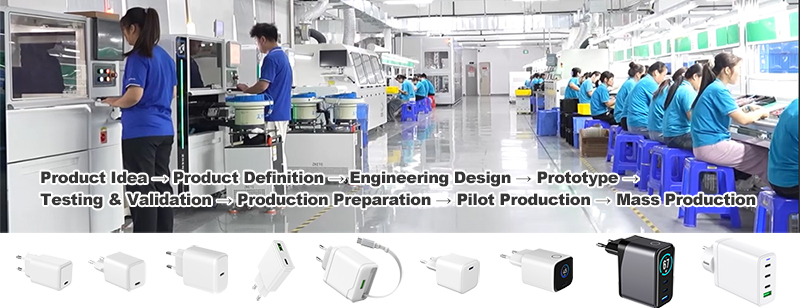
Product Idea → Product Definition → Engineering Design → Prototype → Testing & Validation → Production Preparation → Pilot Production → Mass Production
Each stage has a specific purpose. The goal is not merely to produce a functional charger, but to create one that achieves the following characteristics:
• Manufactured repeatedly.
• Tested efficiently.
• Certified properly.
• Delivered consistently.
• Supported after launch.
Why NPI Is Important for Charger Factories
Modern chargers are becoming more advanced. A traditional 5W or 10W charger is relatively simple compared with today's products.
Current market demand includes:
• 30W fast chargers.
• 65W GaN chargers.
• 100W USB-C PD chargers.
• 140W PD 3.1 chargers.
• Multi-port intelligent chargers.
• Desktop charging stations.
Higher power means more engineering challenges. For example:
A 140W charger requires careful management of:
• Power conversion efficiency.
• Thermal performance.
• Component selection.
• PCB layout.
• Safety distance.
• EMI performance.
• Power distribution.
Without a structured NPI process, problems may appear later during production. And late-stage problems are expensive.
Finding a design issue during early development may require changing a prototype. Finding the same problem after 50,000 units have been produced can create:
1. Production delays.
2. Additional costs.
3. Customer complaints.
4. Warranty risks.
This is why professional charger manufacturers invest heavily in NPI management.
Related Reading: Thermal Reliability Engineering for GaN Chargers: How Charger Manufacturers Control Heat in High-Power Charging Products
The Main Stages of Charger NPI Process
Although every company may organize NPI differently, a typical charger NPI process includes several key stages.
Stage 1: Product Concept and Requirement Definition
Every new charger starts with an idea. The idea may come from: Customer requirements. Market trends. Competitor analysis. Technology development. Internal product strategy.
At this stage, the team defines:
• Product category.
• Target market.
• Power output.
• Port configuration.
• Size requirements.
• Certification requirements.
• Cost target.
• Production quantity.
For example: A customer may request: "We need a compact 100W GaN charger with two USB-C ports and one USB-A port for the European market."
This simple request creates many technical questions:
→ Which GaN platform should be used?
→ What PD protocols are required?
→ What plug types are needed?
→ What certifications are required?
→ What is the target production cost?
→ How small can the housing be?
A clear product definition at the beginning helps avoid confusion later.
Requirement Analysis: Turning Ideas Into Specifications
A professional NPI process converts customer expectations into technical specifications. For a charger, these specifications may include:
Electrical Requirements
Examples: Input voltage. Output power. PD profiles. PPS support. QC compatibility. Port output distribution.
Mechanical Requirements
Examples: Product dimensions. Weight. Housing material. Plug design. Port layout.
Market Requirements
Examples: CE, CB, RoHS, KC, KCC, UKCA, FCC, ETL, EAC, ANATEL, and more.
Business Requirements
Examples: Target price. Production volume. Delivery schedule. Packaging requirements.
This stage is important because engineering teams need clear targets before starting development.
Stage 2: Product Design and Engineering Development
After requirements are confirmed, engineering teams begin product development. For chargers, this normally involves several areas.
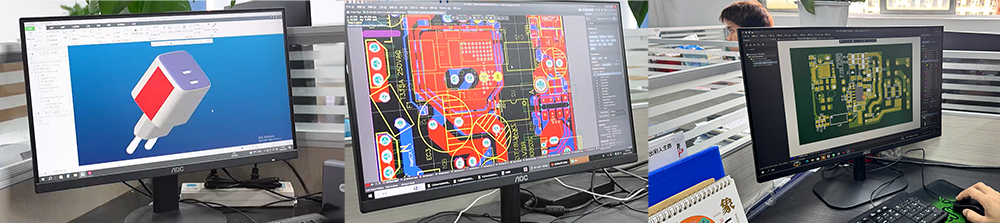
Circuit Design - Engineers develop the power architecture.
They need to consider: Power conversion, Efficiency, Stability, Protection circuits, and Component selection.
For GaN chargers, engineers also need to carefully evaluate high-frequency switching behavior.
PCB Design - PCB layout directly affects charger performance.
Key considerations include signal paths, power paths, thermal management, component placement, and EMI (electromagnetic interference) control.
A poor PCB layout can create problems even if the circuit design looks correct.
Mechanical Design - The enclosure design also plays an important role.
Engineers need to strike a balance among the following aspects: size, appearance, heat dissipation, structural strength, and manufacturing complexity.
This is especially challenging for compact high-power chargers. A smaller charger creates stronger demands on thermal management.
Prototype Development: Turning Design Into Reality
Once the engineering design is complete, the project enters the prototyping phase. The purpose of a prototype goes beyond merely showcasing the product's appearance; it enables engineers to evaluate the product's actual performance.
Prototype testing may include:
• Power output testing.
• Charging compatibility.
• Temperature testing.
• Safety checks.
• Mechanical evaluation.
At this stage, engineers often discover details that were difficult to predict during design. For example:
→ A charger may meet electrical requirements but generate more heat than expected.
→ A housing design may look good but affect thermal performance.
→ A PCB layout may work but require EMI improvements.
This is normal during product development. The prototype stage provides valuable feedback.
Engineering Validation Before Mass Production
A professional charger factory does not move directly from prototype to production. Before mass manufacturing, the product must go through structured validation.
Common validation stages include:
EVT (Engineering Validation Test)
Focus: Does the engineering design work?
Engineers verify basic functionality and identify early design problems.
DVT (Design Validation Test)
Focus: Does the final design meet all requirements?
Testing may include:
• Electrical performance.
• Thermal performance.
• Reliability.
• Safety.
• Compatibility.
PVT (Production Validation Test)
Focus: Can the factory produce this charger consistently?
Testing may include:
• Production line capability.
• Assembly process.
• Production testing.
• Yield performance.
These stages create confidence before large-scale manufacturing begins.
NPI and Charger Quality Management
Quality cannot be added only at the end of production. It must be considered throughout the NPI process. A mature charger manufacturer integrates quality into every stage.
During design:
• Select reliable components.
• Review thermal performance.
• Consider manufacturing requirements.
During testing:
• Identify potential failures.
• Improve product reliability.
During production preparation:
• Create inspection standards.
• Define testing procedures.
During mass production:
• Monitor process stability.
• Control product consistency.
This approach is much more effective than simply inspecting finished products.
Why NPI Capability Matters for OEM Charger Buyers
For OEM and ODM customers, choosing a charger supplier is not only about factory size or product price. A supplier's NPI capabilities directly impact the success or failure of a project. Manufacturers with extensive NPI experience can typically provide:
• Faster product development.
• Better engineering communication.
• Lower production risks.
• More predictable delivery.
• Better quality consistency.
For example: A customer wants to launch a private-label 65W GaN charger.
Factories lacking robust NPI experience may focus solely on sample production, whereas those with mature NPI processes take a comprehensive approach:
• Product requirements.
• Engineering feasibility.
• Testing plan.
• Certification path.
• Production preparation.
• Long-term manufacturing stability.
The difference often becomes visible after mass production begins.
NPI Team Structure Inside a Charger Factory
A successful NPI process is not driven by a single department; it requires close collaboration among multiple teams. For charger manufacturers, a typical NPI team usually includes:
1. Product Management Team
2. R&D Engineering Team
3. Hardware Engineers
4. Firmware Engineers (for intelligent chargers)
5. Mechanical Engineers
6. Quality Engineering Team
7. Certification Team
8. Procurement Team
9. Manufacturing Engineering Team
10. Production Team
Each department has a different responsibility.
Common mistake in product development is allowing engineering teams to design a product without considering manufacturing requirements.
Charger may look excellent on paper. But if it is difficult to assemble, difficult to test, or difficult to control during production, problems will appear later. This is why NPI requires communication between engineering and manufacturing from the beginning.
Engineering Team: Turning Requirements Into a Real Product
The engineering team is responsible for transforming product requirements into a working charger design.
Their work includes:
Electrical Engineering Responsible for:
• Power architecture.
• Circuit design.
• Component selection.
• PD protocol implementation.
• Power efficiency.
• Protection design.
For example, when developing a 100W GaN charger, engineers need to consider:
GaN power device selection.
Transformer design.
Switching frequency.
Thermal performance.
Output stability.
Mechanical Engineering Responsible for:
• Housing design.
• Product appearance.
• Internal structure.
• Heat dissipation design.
• Assembly feasibility.
Designing a compact charger requires meticulous structural planning. While a smaller housing is visually appealing, it also presents challenges:
• Less internal space.
• Higher thermal density.
• More difficult assembly.
Manufacturing Engineering
This team connects product design with factory production.
They evaluate:
1. Can this product be assembled efficiently?
2. Are production tools required?
3. Are testing fixtures available?
4. Can operators build it consistently?
This is a critical role in NPI. A product designed without manufacturing consideration often requires expensive changes later.
Quality Team: Building Quality Into the Process
Quality engineering is integrated throughout the entire NPI process. Their responsibilities extend beyond inspecting finished products; they also play a key role in preventing issues before production begins.
During NPI, the quality team may define:
• Quality standards.
• Inspection points.
• Test methods.
• Failure criteria.
• Reliability requirements.
For example: A charger factory may decide during NPI.
→ Where should electrical testing happen?
→ What defects require rejection?
→ How should failed units be handled?
→ What production data needs to be recorded?
These decisions create the foundation for stable mass production.
BOM Management During Charger NPI
BOM stands for Bill of Materials. It is one of the most important documents in product development.
A charger BOM contains all required materials and components, such as:
IC controllers.
GaN power components.
Transformers.
Capacitors.
Resistors.
USB-C connectors.
PCB.
Housing parts.
Packaging materials.
During the NPI (New Product Introduction) phase, BOM management requires strict control; even a minor component change can impact the entire product.
Why Component Availability Matters During NPI
Modern electronics manufacturing faces a practical challenge: If the supply is unstable, even technically perfect components may not be the best choice.
During NPI, engineers and procurement teams need to consider:
• Supplier reliability.
• Production capacity.
• Lead time.
• Alternative components.
• Long-term availability.
This is especially important for charger products because customers may expect continuous production for several years. A charger design that depends on an unstable component supply chain can create problems after launch.
Tooling and Production Preparation
Before mass production, the factory needs to prepare manufacturing resources. This may include:
Product Tooling
Examples: Injection molds. Assembly fixtures. Test fixtures. Packaging tools.
Production Equipment
Examples: Assembly equipment. Testing machines. Inspection equipment.
Work Instructions
Production teams need clear instructions for: Assembly sequence. Screw tightening. Component installation. Testing procedures. Quality checkpoints.
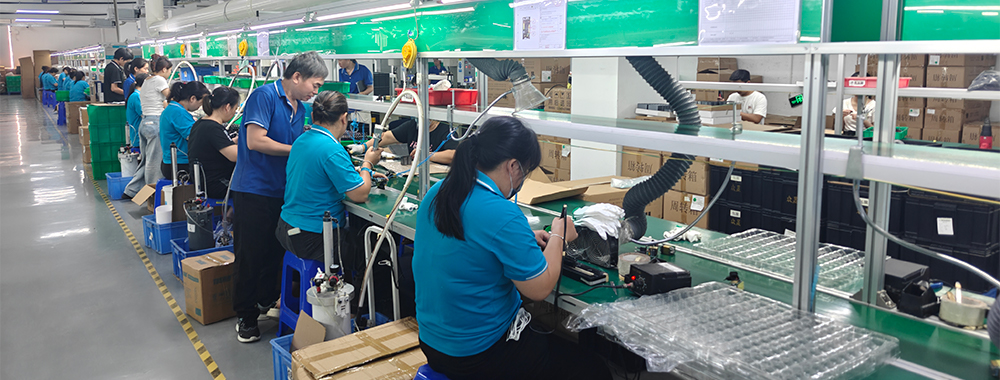
A good NPI process ensures that production preparation starts before mass production begins. The factory should not wait until the production date arrives to discover that equipment or processes are not ready.
Pilot Production: The Bridge Between Development and Mass Production
Before official mass production, many factories conduct pilot production. Pilot production is a smaller-scale production run used to verify the entire manufacturing process.
The purpose is to answer practical questions:
• Can the production line operate smoothly?
• Can workers follow the process?
• Are testing procedures effective?
• Is the production yield acceptable?
• Are there unexpected assembly problems?
Pilot production is an important learning stage. It allows the factory to improve the process before larger quantities are produced.
NPI and Production Yield Improvement
One important goal of NPI is improving production yield. A new product may have problems during early production trials.
Examples:
• Too many units fail testing.
• Assembly takes longer than expected.
• Certain components are difficult to install.
• Testing creates false failures.
The NPI team analyzes these issues and improves the process. Possible improvements include:
• Updating assembly instructions.
• Improving fixtures.
• Adjusting production parameters.
• Training operators.
• Changing component packaging methods.
The goal is a stable production process.
Common NPI Mistakes in Charger Manufacturing
Even experienced companies can make mistakes during new product introduction. Here are some common problems.
Mistake 1: Starting Design Without Clear Requirements
If product requirements are unclear, engineering changes may continue throughout development.
This increases:
• Development time.
• Cost.
• Production risk.
A clear product definition should come first.
Mistake 2: Ignoring Manufacturing During Design
A charger can be technically possible but difficult to manufacture.
Examples:
• Too many assembly steps.
• Difficult component placement.
• Poor testing accessibility.
Design for Manufacturing (DFM) should be considered early.
Mistake 3: Insufficient Testing Before Production
Skipping validation stages may save time initially. But problems discovered after launch are usually much more expensive.
Mistake 4: Poor Engineering Change Control
Uncontrolled changes during NPI can create confusion between:
• Engineering, Production, Quality, Customers.
Every important change should be reviewed and documented.
NPI and DVT/PVT: How They Work Together
NPI is the overall product introduction framework. DVT and PVT are important stages inside this framework.
A simple relationship:
NPI Process
↓
Engineering Development
↓
DVT (Validate Product Design)
↓
PVT (Validate Production Process)
↓
Mass Production
NPI provides the roadmap.
DVT confirms that the product is correct.
PVT confirms that the factory can produce it correctly.
Together, they reduce the risk of launching an immature product.
Related Reading: DVT and PVT Validation for Chargers: From Design to Mass Production
How OEM Buyers Can Evaluate a Charger Factory's NPI Capability
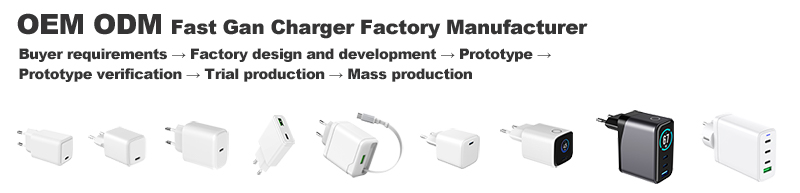
When choosing an OEM or ODM charger supplier, buyers often focus on: Product price. Factory size. Production capacity.
These factors are important, but NPI capability is also critical. Useful questions include:
Product Development
Does the factory have its own R&D team?
• Can they support custom charger development?
• How do they manage new product projects?
Validation
• Do they perform EVT/DVT/PVT stages?
• How are design problems handled?
Manufacturing
• Does the factory prepare production processes before launch?
• How do they control quality during ramp-up?
Engineering Support
• Can they support certifications?
• Can they optimize products for different markets?
A supplier with strong NPI capability can often become a long-term development partner rather than only a production vendor.
Related Reading: Charger Factory Audit Guide: How to Evaluate a Professional Charger Manufacturer
Why NPI Becomes More Important for Future Chargers
The charger market is moving toward:
• Higher power.
• Smaller size.
• More intelligent functions.
• More demanding safety requirements.
Future products may include:
• 240W USB-C PD chargers.
• Smart display chargers.
• Multi-device charging stations.
• Advanced GaN power systems.
These products require stronger engineering and manufacturing coordination. A mature NPI process helps factories handle increasing product complexity.
Final Thoughts
A charger is not created when the first prototype successfully charges a device.
That is only the beginning.
A professional NPI process transforms an idea into a reliable commercial product through:
• Clear requirements.
• Engineering development.
• Prototype testing.
• Design validation.
• Production preparation.
• Manufacturing improvement.
• Quality control.
For charger manufacturers, especially those producing USB-C PD and GaN fast chargers, NPI capability is one of the strongest indicators of long-term manufacturing experience.
A factory with a mature NPI system does not only know how to build chargers. It knows how to develop, validate and improve them.
That is the difference between a simple charger producer and a professional charger manufacturing partner.
Frequently Asked Questions (FAQ)
Q1: What is NPI in charger manufacturing?
NPI (New Product Introduction) is the process of moving a new charger from product concept through design, validation and production until mass manufacturing.
Q2: Why is NPI important for GaN charger development?
GaN chargers have higher power density and more complex engineering requirements, making structured product introduction essential.
Q3: How long does a charger NPI process take?
The timeline depends on product complexity, testing requirements, certifications and production preparation.
Q4: What is the difference between NPI and DVT/PVT?
NPI is the overall introduction process, while DVT and PVT are important validation stages within NPI.
Q5: Why should OEM buyers care about NPI capability?
Strong NPI capability helps reduce development risks, improve product consistency and support smoother mass production.
Q6: Does NPI only apply to new charger products?
NPI is mainly used for new products but similar processes are also valuable for major product updates and redesigns.
Reviewed by: Zonsan R&D team — Lucas Wang and Mila
Technical Review: Charging Producrs & New Poduct Development Process
Last reviewed: [August 24, 2026]