DVT and PVT Validation for Chargers: How New Products Move From Design to Mass Production
DVT (Design Validation Test) and PVT (Production Validation Test) are two critical stages between charger development and mass production. DVT verifies whether the charger design meets its technical, performance, safety and reliability requirements, while PVT verifies whether the same product can be produced consistently through the actual mass-production process.
Key Takeaways
• DVT validates the charger design.
• PVT validates the production process.
• DVT focuses on performance, safety and reliability.
• PVT focuses on manufacturing consistency.
• Both stages help reduce mass-production and field failures.
• A charger should not move to full production simply because the prototype works.
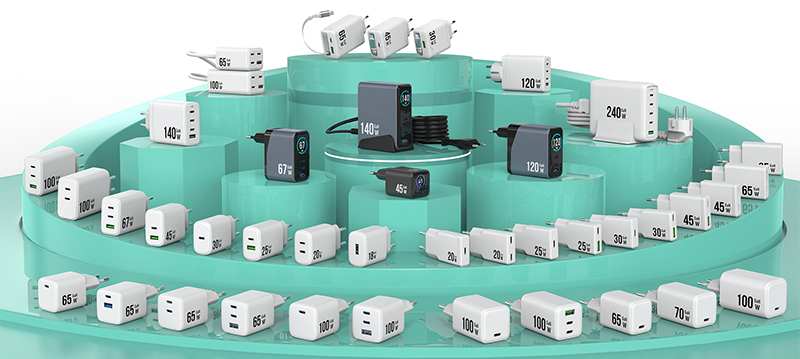
Introduction: A Working Prototype Is Not a Finished Product
Successfully operating a new charger for the first time is certainly exciting, but from a manufacturer's perspective, it is merely the beginning.
A prototype may successfully deliver 65W.
A 100W GaN charger may negotiate USB-C PD correctly.
A 140W charger may even pass the initial laboratory tests.
But none of these results automatically mean the product is ready for mass production. The real questions come later:
Can the design consistently meet its specifications?
Can the product survive the required reliability and safety testing?
Can the factory produce thousands of units with the same performance as the engineering sample?
And perhaps most importantly: Can the production line reproduce the product without introducing new problems?
This is where DVT and PVT validation become important.
For charger manufacturers, these stages provide a bridge between engineering development and commercial production.
DVT asks: Is the design ready?
PVT asks: Is the manufacturing process ready?
They are closely connected, but they are not interchangeable.
What Do DVT and PVT Mean?
DVT stands for Design Validation Test.
PVT stands for Production Validation Test.
They are normally performed at different stages of the new product introduction process. A simplified product-development path looks like this:
Product Concept → Engineering Design → Prototype → EVT → DVT → PVT → Mass Production
The exact terminology and number of stages can vary between companies and product categories.
However, when it comes to charger manufacturing, the core philosophy is highly pragmatic.
DVT — Does the charger design meet the intended requirements?
PVT — Can the factory manufacture that validated design consistently?
This difference is easy to remember.
DVT = Validate the Design
PVT = Validate the Production
Why DVT and PVT Matter for Charger Manufacturing
Chargers are relatively compact products, but internally they contain many components and engineering considerations.
A modern GaN charger may involve:
• Power semiconductors.
• Controllers.
• Transformers.
• Capacitors.
• MOSFETs or GaN power devices.
• USB-C connectors.
• Protection circuits.
• PCBs.
• Thermal materials.
• Plastic or other enclosure components.
• Firmware or control logic in some designs.
A change to one component can affect other parts of the product.
For example, changing a power component may influence:
• Efficiency, Temperature, Switching behavior, PCB layout, EMI performance, Reliability.
Similarly, altering the dimensions of the enclosure can also affect thermal performance. For this reason, a prototype that functions correctly only on an engineering test bench is far from sufficient; the entire product must be validated.
DVT: Validating the Fast Charger Design
DVT is primarily about proving that the product design works as intended.
At this stage, engineers are no longer asking only: "Can we make this charger work?"
They are asking: "Does this charger meet the complete set of requirements we designed it for?"
This can include electrical performance, thermal behavior, safety, compatibility, reliability and mechanical requirements.
The exact test list depends on the charger. A 20W USB-C charger will not necessarily require the same validation depth as a 140W PD 3.1 GaN charger.
Successfully operating a new charger for the first time is certainly exciting, but from a manufacturer's perspective, it is merely the beginning.
A prototype may successfully deliver 65W.
A 100W GaN charger may negotiate USB-C PD correctly.
A 140W charger may even pass the initial laboratory tests.
But none of these results automatically mean the product is ready for mass production. The real questions come later:
Can the design consistently meet its specifications?
Can the product survive the required reliability and safety testing?
Can the factory produce thousands of units with the same performance as the engineering sample?
And perhaps most importantly: Can the production line reproduce the product without introducing new problems?
This is where DVT and PVT validation become important.
For charger manufacturers, these stages provide a bridge between engineering development and commercial production.
DVT asks: Is the design ready?
PVT asks: Is the manufacturing process ready?
They are closely connected, but they are not interchangeable.
What Do DVT and PVT Mean?
DVT stands for Design Validation Test.
PVT stands for Production Validation Test.
They are normally performed at different stages of the new product introduction process. A simplified product-development path looks like this:
Product Concept → Engineering Design → Prototype → EVT → DVT → PVT → Mass Production
The exact terminology and number of stages can vary between companies and product categories.
However, when it comes to charger manufacturing, the core philosophy is highly pragmatic.
DVT — Does the charger design meet the intended requirements?
PVT — Can the factory manufacture that validated design consistently?
This difference is easy to remember.
DVT = Validate the Design
PVT = Validate the Production
Why DVT and PVT Matter for Charger Manufacturing
Chargers are relatively compact products, but internally they contain many components and engineering considerations.
A modern GaN charger may involve:
• Power semiconductors.
• Controllers.
• Transformers.
• Capacitors.
• MOSFETs or GaN power devices.
• USB-C connectors.
• Protection circuits.
• PCBs.
• Thermal materials.
• Plastic or other enclosure components.
• Firmware or control logic in some designs.
A change to one component can affect other parts of the product.
For example, changing a power component may influence:
• Efficiency, Temperature, Switching behavior, PCB layout, EMI performance, Reliability.
Similarly, altering the dimensions of the enclosure can also affect thermal performance. For this reason, a prototype that functions correctly only on an engineering test bench is far from sufficient; the entire product must be validated.
DVT: Validating the Fast Charger Design
DVT is primarily about proving that the product design works as intended.
At this stage, engineers are no longer asking only: "Can we make this charger work?"
They are asking: "Does this charger meet the complete set of requirements we designed it for?"
This can include electrical performance, thermal behavior, safety, compatibility, reliability and mechanical requirements.
The exact test list depends on the charger. A 20W USB-C charger will not necessarily require the same validation depth as a 140W PD 3.1 GaN charger.

What Is Usually Checked During DVT?
A DVT program for a charger can include several categories.
Electrical Performance
Engineers may verify:
• Input voltage range.
• Output voltage.
• Output current.
• Rated power.
• Efficiency.
• No-load power consumption.
• Regulation.
• Ripple and noise.
The goal is to confirm that the charger performs according to its design specifications. For a 100W USB-C PD charger, for example, the question is not simply whether it can reach 100W once. Engineers need to understand whether it can deliver the specified power consistently and within the required electrical limits.
USB-C PD Validation
USB-C PD products require additional attention because the charger does more than simply output a fixed voltage. The charger communicates with the connected device and negotiates an appropriate power profile.
Depending on the product, engineers may validate:
• Supported PD profiles.
• Voltage levels.
• Current limits.
• Power negotiation.
• PPS behavior.
• USB-C port performance.
• Response to different compatible devices.
For higher-power products, PD 3.1 and EPR requirements may also become relevant. This is one reason DVT can be much more extensive than a simple output-power check.
Thermal Validation During DVT
Heat is one of the most important areas of charger design validation.A charger may meet its electrical specifications but still have a thermal problem. This becomes particularly important when the product is:
• Compact.
• High-power.
• GaN-based.
• Multi-port.
• Designed for continuous operation.
Engineers may evaluate:
• Temperature rise.
• Internal component temperatures.
• PCB temperature.
• Transformer temperature.
• Housing temperature.
• Thermal behavior at different loads.
The objective is to understand whether the thermal design works under realistic and demanding conditions. A product that runs cool at 30% load may behave very differently at 90% or 100% load.
Related Reading: Thermal Reliability Engineering for GaN Chargers
DVT and Full-Load Testing
Full-load testing is one part of the broader validation process. As discussed in the previous ZEEAS article, full-load testing allows engineers to evaluate charger performance under demanding power conditions.
During DVT, this type of testing can help answer questions such as:
• Can the charger maintain its rated output?
• Does the output remain stable?
• Does temperature stabilize?
• Are there unexpected hot spots?
• Does protection behave correctly?
• Does performance change at different input voltages?
Test results may lead to design changes. This is perfectly normal; DVT is not merely a "final exam." It is also a stage for the engineering team to determine whether the design requires improvement.
Related Reading: Full-Load Testing for USB-C and GaN Chargers
DVT Is Where Design Problems Should Be Found
Imagine a new 140W GaN charger passes a basic functional test. During DVT, engineers discover that the internal temperature becomes higher than expected during sustained high-power operation.
That could lead to several possible design changes:
• Improve PCB layout.
• Adjust thermal materials.
• Change a component.
• Modify the power stage.
• Improve heat dissipation.
• Adjust the enclosure structure.
The specific solution depends on the root cause of the problem. The key point is that the issue was detected prior to mass production—which is precisely one of the main reasons why DVT is so critical. There is a world of difference between modifying 20 engineering samples and modifying 20,000 finished products.
DVT Also Looks Beyond Electrical Performance
A charger is a physical product. It has to survive normal handling, transportation and use.
Depending on the product and validation plan, DVT may therefore include mechanical and environmental evaluation. For example:
• Drop testing.
• Mechanical stress.
• Connector durability.
• Plug strength.
• Temperature cycling.
• Humidity exposure.
• Other environmental conditions.
The specific tests should be based on the product requirements and applicable standards. The purpose is to determine whether the physical product is ready for real-world use.
Safety Validation
Safety is another major part of charger validation. A charger connects directly to mains electricity.
That means insulation, electrical clearance, protection and other safety-related design considerations cannot be treated as optional details.
Depending on the target market and product, validation may consider applicable requirements and certifications such as: CE, ROHS, CB, UL / ETL, UKCA, FCC-related requirements, KC, and other regional requirements.
The exact certification path depends on the target market and product. DVT helps engineers identify potential problems before the product moves too far into production.
EMI and EMC Validation
Another area that often becomes important during charger development is electromagnetic compatibility. Switching power supplies generate high-frequency electrical activity.
If the design is not controlled properly, unwanted electromagnetic emissions can become a problem. Engineers may therefore evaluate:
• Conducted emissions.
• Radiated emissions.
• Noise behavior.
• Filter performance.
• PCB layout effects.
A charger may work perfectly from a power-output perspective and still require design changes because of EMC performance. This is another example of why "the charger works" is not enough to declare a design finished.
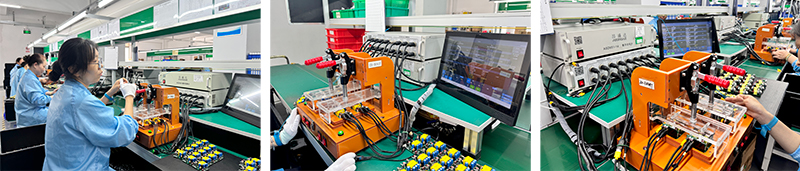
PVT: Validating the Production Process
Once the design has been sufficiently validated, attention shifts toward manufacturing. This is where PVT — Production Validation Test — becomes important. The central question changes.
DVT asks: Does the design work?
PVT asks: Can the factory produce this design consistently using the actual production process?
This is a very different challenge.
A factory may be able to build ten excellent engineering samples manually. That does not automatically mean it can manufacture 10,000 units with the same quality.
PVT is designed to test that transition.
Why Prototype Manufacturing and Mass Production Are Different
Engineering samples are often built under conditions that are more flexible than mass production. Engineers may:
• Adjust components manually.
• Rework PCBs.
• Fine-tune assembly.
• Inspect individual units closely.
• Spend more time on each sample.
Mass production cannot operate this way.
A production line needs:
• Standardized work instructions.
• Defined assembly processes.
• Controlled materials.
• Production equipment.
• Trained operators.
• Inspection points.
• Automated or semi-automated testing.
• Traceability.
PVT evaluates whether these systems can actually produce the validated charger.
What Happens During PVT?
PVT typically uses the actual or production-representative manufacturing process. This can include:
• Production tooling.
• Production materials.
• Production equipment.
• Production test fixtures.
• Standard operating procedures.
• Production-line operators.
The goal is to create a realistic production environment. Subsequently, the factory will evaluate whether the manufactured products consistently meet the design requirements.
PVT Is About Repeatability
This is perhaps the most important concept in PVT.
One excellent charger is not enough. The factory needs to demonstrate that the process can repeatedly produce acceptable units. Imagine testing 500 chargers.
If, 499 pass and 1 fails. the factory needs to understand why.
If, 450 pass and 50 fail. there is clearly a larger production problem.
PVT therefore gives manufacturers information about process capability and production consistency. The exact acceptance criteria depend on the product and quality plan.
Production Line Readiness
PVT also gives the factory an opportunity to verify the production line itself. For example:
Are the assembly stations working correctly?
Are test fixtures reliable?
Are operators following the work instructions?
Can the line maintain the required production takt?
Are inspection points positioned correctly?
Can defective units be identified and isolated?
Is production data being recorded?
These questions are easy to overlook when everyone is focused on the product design. But a good charger design can still suffer from poor production execution.
PVT and Production Testing
Production testing is another important part of PVT. The factory needs to make sure that the tests used during mass production can actually identify important defects.
For a charger, production testing may include:
• Input/output testing.
• Voltage testing.
• Current testing.
• Power testing.
• PD communication testing.
• Protection testing.
• Hi-pot or other applicable safety tests.
• Functional inspection.
The exact test configuration depends on the product.
The key point is that the production test process should be practical enough to operate consistently at production volume.
PVT Can Expose Problems DVT Did Not
This is one of the most important things to understand. A charger can pass DVT and still encounter problems during PVT.
Why?
Because the manufacturing environment has changed. For example, DVT may use carefully assembled engineering units.
PVT may reveal:
• Soldering variation.
• Assembly difficulty.
• Connector alignment problems.
• Thermal material placement variation.
• Production fixture issues.
• Component handling problems.
• Test-time inconsistencies.
These are not necessarily design flaws; they could be issues related to the manufacturing process.
That is precisely the reason for establishing the PVT stage.
DVT vs. PVT: The Simple Difference
The distinction can be summarized like this:
Once the design has been sufficiently validated, attention shifts toward manufacturing. This is where PVT — Production Validation Test — becomes important. The central question changes.
DVT asks: Does the design work?
PVT asks: Can the factory produce this design consistently using the actual production process?
This is a very different challenge.
A factory may be able to build ten excellent engineering samples manually. That does not automatically mean it can manufacture 10,000 units with the same quality.
PVT is designed to test that transition.
Why Prototype Manufacturing and Mass Production Are Different
Engineering samples are often built under conditions that are more flexible than mass production. Engineers may:
• Adjust components manually.
• Rework PCBs.
• Fine-tune assembly.
• Inspect individual units closely.
• Spend more time on each sample.
Mass production cannot operate this way.
A production line needs:
• Standardized work instructions.
• Defined assembly processes.
• Controlled materials.
• Production equipment.
• Trained operators.
• Inspection points.
• Automated or semi-automated testing.
• Traceability.
PVT evaluates whether these systems can actually produce the validated charger.
What Happens During PVT?
PVT typically uses the actual or production-representative manufacturing process. This can include:
• Production tooling.
• Production materials.
• Production equipment.
• Production test fixtures.
• Standard operating procedures.
• Production-line operators.
The goal is to create a realistic production environment. Subsequently, the factory will evaluate whether the manufactured products consistently meet the design requirements.
PVT Is About Repeatability
This is perhaps the most important concept in PVT.
One excellent charger is not enough. The factory needs to demonstrate that the process can repeatedly produce acceptable units. Imagine testing 500 chargers.
If, 499 pass and 1 fails. the factory needs to understand why.
If, 450 pass and 50 fail. there is clearly a larger production problem.
PVT therefore gives manufacturers information about process capability and production consistency. The exact acceptance criteria depend on the product and quality plan.
Production Line Readiness
PVT also gives the factory an opportunity to verify the production line itself. For example:
Are the assembly stations working correctly?
Are test fixtures reliable?
Are operators following the work instructions?
Can the line maintain the required production takt?
Are inspection points positioned correctly?
Can defective units be identified and isolated?
Is production data being recorded?
These questions are easy to overlook when everyone is focused on the product design. But a good charger design can still suffer from poor production execution.
PVT and Production Testing
Production testing is another important part of PVT. The factory needs to make sure that the tests used during mass production can actually identify important defects.
For a charger, production testing may include:
• Input/output testing.
• Voltage testing.
• Current testing.
• Power testing.
• PD communication testing.
• Protection testing.
• Hi-pot or other applicable safety tests.
• Functional inspection.
The exact test configuration depends on the product.
The key point is that the production test process should be practical enough to operate consistently at production volume.
PVT Can Expose Problems DVT Did Not
This is one of the most important things to understand. A charger can pass DVT and still encounter problems during PVT.
Why?
Because the manufacturing environment has changed. For example, DVT may use carefully assembled engineering units.
PVT may reveal:
• Soldering variation.
• Assembly difficulty.
• Connector alignment problems.
• Thermal material placement variation.
• Production fixture issues.
• Component handling problems.
• Test-time inconsistencies.
These are not necessarily design flaws; they could be issues related to the manufacturing process.
That is precisely the reason for establishing the PVT stage.
DVT vs. PVT: The Simple Difference
The distinction can be summarized like this:
| Stage | Main Question | Main Focus |
| DVT | Does the design meet requirements? | Product design |
| PVT | Can production consistently build it? | Manufacturing process |
| Mass Production | Can we keep doing it at scale? | Production control |
This distinction is useful for both manufacturers and OEM buyers.
If a supplier tells you that a product has completed DVT, that primarily tells you something about the design validation. It does not necessarily mean the manufacturing process has already been fully validated.
If a supplier tells you that a product has completed DVT, that primarily tells you something about the design validation. It does not necessarily mean the manufacturing process has already been fully validated.

Why OEM Buyers Should Care About DVT and PVT
For a B2B buyer, DVT and PVT are not just engineering terms.
They can affect:
• Product launch timing.
• Product consistency.
• Warranty risk.
• Customer complaints.
• Production yield.
• Delivery stability.
Suppose you are preparing to launch a private-label 100W GaN charger. You need more than just a functional prototype; you also need the assurance that the supplier can consistently manufacture the same charger.
A well-managed DVT/PVT process provides evidence that the manufacturer has thought about both sides of the problem: Is the product right? and Can we manufacture it right?
What Happens After DVT and PVT?
When DVT is completed, the design should have a clearer validation status.
When PVT is completed, the production process should have a clearer readiness status.
If both stages are successful, the product can move toward mass production according to the company's release process, but this does not mean quality control stops. Mass production still requires:
• Incoming inspection.
• Process control.
• Production testing.
• Reliability monitoring.
• Final inspection.
• Traceability.
• Continuous improvement.
DVT and PVT are gates. They are not the end of quality management.
DVT/PVT and NPI
DVT and PVT are also closely connected with NPI — New Product Introduction. NPI is the broader process of moving a new charger from concept and engineering into controlled manufacturing.
Within that process, DVT and PVT provide important validation gates.
A simplified structure is:
Product Concept → Engineering Development → EVT → DVT → PVT → Mass Production
Each stage answers a different question. And when these stages are managed properly, the manufacturer can reduce the risk of moving an immature product into mass production.
What Happens When a Charger Fails DVT?
DVT is designed to discover problems before mass production. A failure during DVT is not necessarily a bad result.
In fact, discovering problems during DVT is often the purpose of the process. At this stage, engineers still have the flexibility to make improvements.
For example, a 65W GaN charger may pass basic power output testing but fail thermal validation because the internal temperature rises too quickly under continuous high load.
The engineering team may then investigate:
Is the power component operating outside its ideal range?
Is the PCB layout causing unnecessary heat concentration?
Is the thermal material sufficient?
Is the enclosure design affecting heat dissipation?
Is another component creating unexpected losses?
After identifying the root cause, engineers can make design adjustments and repeat the validation process. This is much easier than discovering the same issue after mass production begins.
Why DVT Failures Can Actually Improve Product Quality
Some companies view failed tests as problems. Experienced manufacturers often view them as valuable information. A failed DVT result provides engineers with evidence about the product's limitations.
For example: A charger fails an EMI test.
The team investigates and finds that the switching circuit layout needs improvement. After redesigning the PCB, the charger passes.
The final product is stronger because the issue was discovered early.
A mature development process does not try to avoid all failures. It creates a controlled environment where failures can be found, analyzed and corrected before customers are affected.
What Happens When PVT Fails?
PVT failures are different from DVT failures. At this stage, the design should already be validated. The problem is usually related to manufacturing.
A few examples:
Assembly Variation — The design works correctly, but production workers install a component incorrectly.
Process Control Issue — A soldering parameter is not properly controlled.
Testing Problem — The production test fixture does not correctly identify a defect.
Material Variation — A component batch behaves differently from the approved specification.
The investigation process therefore focuses more on the factory system rather than the product design itself.
DVT Failure vs. PVT Failure
The difference can be summarized simply: DVT Failure
The question is: "Is there something wrong with the product design?"
Possible solutions:
1. Modify the circuit design.
2. Improve thermal performance.
3. Change components.
4. Adjust mechanical structure.
5. Update firmware or control parameters.
PVT Failure
The question is: "Can the factory consistently build this product correctly?"
Possible solutions:
1. Improve assembly instructions.
2. Adjust production equipment.
3. Train operators.
4. Update inspection methods.
5. Improve process controls.
Understanding this difference helps manufacturers solve the correct problem.
DVT/PVT and Production Yield
Production yield is another important concept connected with PVT. Yield refers to the percentage of products that successfully pass production testing without requiring rework or repair.
For example:
A production batch contains: 10,000 chargers → 9,800 units pass immediately(200 units require additional attention)
The first-pass yield is 98%.
A high and stable yield usually indicates:
• A mature design.
• A controlled production process.
• Good component consistency.
• Effective testing methods.
A low yield may indicate:
• Design difficulty.
• Manufacturing variation.
• Supplier problems.
• Poor process control.
This is why PVT is important. It helps the factory understand whether the product can move from engineering success to manufacturing success.
Why Yield Matters for OEM Customers
For OEM buyers, production yield directly affects several areas. A low-yield product may create:
1. Production delays.
2. Higher manufacturing costs.
3. Shipment risks.
4. Unstable quality.
5. Increased warranty concerns.
A supplier with a mature DVT/PVT process is usually better prepared to identify these issues before large orders begin.
The goal is not simply to produce one good sample. The goal is to produce thousands or millions of consistent units.
Golden Samples and Engineering Samples
During the transition from development to production, manufacturers usually define reference samples. These are often called: Engineering samples, Golden samples, and Master samples.
A golden sample represents the approved product standard. It can include:
• Appearance.
• Electrical performance.
• Mechanical structure.
• Label information.
• Packaging details.
• Test results.
During production, new units can be compared against the approved standard. This helps maintain consistency.
Why Golden Samples Matter in Charger Production
Chargers often contain many small details. For example:
1. Plastic housing texture.
2. Logo position.
3. Port alignment.
4. Cable appearance.
5. LED brightness.
6. Display behavior.
Without an approved reference, different departments may interpret requirements differently.
A golden sample creates a common standard between: Engineering team, Production team, Quality team, Customer.
This reduces communication problems during mass production.
BOM Control During DVT and PVT
The Bill of Materials (BOM) is another critical area during product validation. A charger BOM may include dozens or hundreds of components.
During DVT, engineers may still optimize the design. For example:
• Replace a component.
• Improve efficiency.
• Reduce cost.
• Improve availability.
However, once the product enters PVT, uncontrolled changes can create risks.
A component change may affect:
• Electrical performance.
• Thermal behavior.
• Safety certification.
• Reliability.
• Production testing.
Therefore, professional manufacturers use controlled engineering change processes.
Engineering Change Control Before Mass Production
A common mistake in manufacturing is assuming: "This component is similar, so we can replace it."
In reality, even a small component change can influence the final charger. For example:
Changing a capacitor may affect: Stability, Ripple performance, Lifetime.
Changing a power device may affect: Efficiency, Heat generation, Switching characteristics.
This is why component substitutions should be evaluated carefully. A mature NPI process requires:
• Engineering review.
• Testing confirmation.
• Quality approval.
• Documentation updates.
How Zonsan Factories Control Design Changes During NPI
A typical engineering change process may include:
1. Identify the reason for change.
2. Evaluate potential impact.
3. Verify technical compatibility.
4. Perform required testing.
5. Update documents.
6. Approve the change.
7. Release the updated version.
This prevents uncontrolled changes from entering production. For OEM projects, this process is especially important because customers need confidence that the approved product will remain consistent.
DVT/PVT Documentation OEM Buyers Should Request
For B2B charger projects, buyers do not always need every internal document. However, understanding the supplier's validation capability is valuable.
Useful information may include:
DVT Information
• Validation test plan.
• Electrical test results.
• Thermal validation results.
• Reliability test records.
• Safety test status.
PVT Information
• Production trial results.
• Yield information.
• Production test procedures.
• Quality inspection methods.
• Process control information.
The purpose is not to audit every engineering detail. The purpose is to understand whether the supplier has a structured development and manufacturing system.
Read More
How to Evaluate a Mobile Charger Supplier's DVT/PVT Capability
When selecting a smartphones charger manufacturer, buyers can ask practical questions.
About DVT - Ask:
How do you validate new charger designs?
Are high-load tests included?
Are thermal tests performed?
How are design failures handled?
About PVT - Ask:
Do you conduct pilot production before mass production?
How do you verify production consistency?
How do you control engineering changes?
How do you track production problems?
The answers often reveal the maturity of the supplier. Factory that only focuses on price and production quantity may not have the same development capability as a factory with a complete NPI system.
Related Reading: Charger Factory Audit Guide: What OEM Buyers Should Check
Common Mistakes During DVT and PVT
Mistake 1: Moving to Production Too Early
Some companies rush from prototype directly into mass production. This can create expensive problems later.
Mistake 2: Testing Only the Prototype
A prototype is not always representative of production reality. The manufacturing process also needs validation.
Mistake 3: Ignoring Thermal Performance
Especially for compact high-power chargers, thermal issues should be addressed early.
Mistake 4: Allowing Uncontrolled Component Changes
Small changes can create unexpected quality risks.
Mistake 5: Treating PVT as a Simple Trial Run
PVT is not only about producing samples. It is about proving that the production system is ready.
DVT/PVT in Modern GaN Charger Development
As charger technology becomes more advanced, validation becomes increasingly important. Modern products such as:
• 65W GaN chargers.
• 100W USB-C PD chargers.
• 140W PD 3.1 chargers.
• Multi-port desktop chargers.
all require careful engineering validation.
Higher power density means:
• Less design margin.
• More thermal challenges.
• Greater component stress.
• More complicated power management.
DVT and PVT provide structured checkpoints to reduce these risks.
Related Reading: NPI Process for Charger Manufacturing: From Product Concept to Mass Production
Final Thoughts
A successful charger product is not created when the first prototype works. It is created when the design has been validated and the factory has proven that it can manufacture that design consistently.
DVT answers: "Is this charger designed correctly?"
PVT answers: "Can we produce this charger correctly at scale?"
Both are essential parts of professional charger development.
For OEM and ODM buyers, understanding DVT and PVT provides a clearer way to evaluate supplier capability. A reliable charger factory is not only a company that owns production equipment.
It is a company that understands:
• Product engineering.
• Validation.
• Manufacturing control.
• Quality improvement.
• Mass-production consistency.
That difference becomes especially important as the market moves toward smaller, faster and more powerful charging products.
Frequently Asked Questions
Q1: What is DVT in charger manufacturing?
DVT (Design Validation Test) verifies whether a charger design meets its electrical, thermal, safety and reliability requirements.
Q2: What is PVT in charger manufacturing?
PVT (Production Validation Test) verifies whether a factory can consistently manufacture the validated charger design.
Q3: What is the difference between DVT and PVT?
DVT validates the product design, while PVT validates the manufacturing process.
Q4: Why is DVT important for GaN chargers?
GaN chargers have higher power density, making thermal, electrical and reliability validation especially important.
Q5: Why can a charger pass DVT but fail PVT?
Because the design may work correctly while the production process has issues such as assembly variation or process control problems.
Q6: What is a golden sample?
A golden sample is an approved reference unit used as the standard for production consistency.
Q7: Why should OEM buyers care about DVT and PVT?
They help reduce production risks, improve consistency and increase confidence before large-scale manufacturing.
Q8: Does DVT and PVT guarantee zero failures?
No. They reduce risks by identifying and solving potential problems before mass production.
Reviewed by: Zonsan R&D team — Lucas Wang and Linda
Technical Review: Charging Producrs & Power Solutions
Last reviewed: [August 25, 2026]