When Should a Brand Upgrade or Replace Its Charger Models A Product Lifecycle Strategy for OEM Buyers
Quick Answer: When Should a Brand Upgrade Its Charger Products?
A brand should upgrade or replace an existing charger when changes in device compatibility, charging protocols, market requirements, manufacturing economics, or customer expectations make the current model less commercially or technically suitable. The decision should consider remaining inventory, engineering feasibility, certification costs, and product positioning rather than technological novelty alone.
A Successful Charger Does Not Necessarily Need a Replacement Every Year
The charging industry moves quickly. New smartphones enter the market, laptop power requirements evolve, USB-C charging protocols are updated, and semiconductor manufacturers introduce more efficient power conversion solutions.
For brands selling charging accessories, these developments create constant pressure to introduce new products. However, replacing an existing charger too frequently can be just as problematic as keeping an outdated model in the catalogue for too long.
From our perspective as a charger manufacturer, the decision to upgrade a product should begin with a fairly simple question: what has changed since the existing model was developed?
If a 65W GaN charger continues to satisfy its intended customers, remains commercially competitive, and can still be manufactured reliably, there may be little reason to replace it immediately. On the other hand, a charger that still sells reasonably well may already have limitations that affect its next two years of commercial viability.
The issue could be its charging protocol configuration, port arrangement, physical dimensions, manufacturing cost, or suitability for newer devices.
These are different problems, and they do not necessarily require the same solution. Effective charger product lifecycle management involves deciding which models should remain unchanged, which deserve an engineering upgrade, and which should eventually be discontinued.
For OEM and ODM customers, making these decisions together with a charger manufacturer can prevent unnecessary development expenditure while keeping the product range technically relevant.
1. Understand the Difference Between a Product Upgrade and a Product Replacement
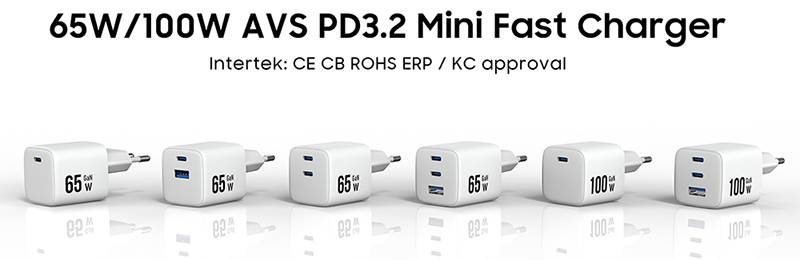
In charger manufacturing, an upgrade does not always mean developing a completely new product. Some changes can be introduced within the boundaries of an existing design. Others require a new electrical or mechanical configuration that should be treated as a separate product generation. The distinction matters because it influences engineering workload, manufacturing preparation, certification requirements, inventory management, and the way the product is presented to customers.
A practical classification is shown below.
| Type of Change | Typical Scope | Commercial Implication |
| Cosmetic refresh | Color, logo, packaging or surface finish | Retains the established product concept |
| Functional upgrade | Charging profiles, power allocation or supported features | Improves specific functions of the existing product |
| Mechanical redesign | Housing, dimensions, plug structure or port arrangement | May require new tooling and mechanical validation |
| Electrical redesign | Power architecture, PCB, major components or output capability | May represent a new technical product generation |
| Model replacement | A substantially different product intended to succeed an existing | SKU Requires a coordinated commercial transition |
These categories are not rigid. A housing change, for instance, may initially appear cosmetic but affect thermal performance or compliance requirements. The manufacturer needs to evaluate the actual consequences of the change.
For the brand, the more important question is whether customers should regard the revised charger as the same product or a different one.
When a change affects advertised specifications, device compatibility, power allocation, or other purchasing decisions, continuing to use the same commercial model number can create confusion. A new version may deserve a separate SKU even when much of the engineering platform remains unchanged.
2. Do Not Confuse a New Charging Protocol with an Immediate Need for Replacement
Charging protocol development is one of the most visible reasons brands consider updating their products. USB Power Delivery has expanded the applications that can be powered through USB-C, while programmable and adjustable voltage capabilities provide additional charging options for compatible devices.
The introduction of Extended Power Range, or EPR, with USB PD 3.1 increased the maximum standardized USB-C power capability to 240W. USB Power Delivery previously supported up to 100W using a 20V, 5A configuration. Further details are available in the official USB Power Delivery overview published by the USB Implementers Forum.
However, the existence of a newer protocol or higher power capability does not automatically make every existing charger obsolete. A charger developed for everyday smartphone charging does not need to support 140W simply because higher-power USB-C charging is available.
Likewise, introducing AVS support into a product range does not necessarily require immediately discontinuing every established PD and PPS charger. The decision depends on the devices the brand intends to serve and the commercial value of the additional charging capability.
Determine whether the new feature solves a relevant problem
Before requesting a protocol upgrade, buyers should establish:
• Whether their target devices actually support the new charging capability.
• Whether the existing charger creates a measurable compatibility or performance limitation.
• Whether the proposed feature materially improves the intended charging experience.
• Whether the current hardware architecture can support the change.
• Whether the resulting product can be positioned at a commercially sustainable price.
A protocol-related request may involve more than a firmware adjustment. Voltage capability, current sensing, power conversion behavior, component ratings, protection functions, and thermal conditions may all need to be evaluated.
For this reason, an experienced OEM charger manufacturer should assess the proposed upgrade against the existing electrical architecture before making commitments.
The objective is not to accumulate as many protocol names as possible on a product specification. It is to provide charging capabilities that make sense for the product's intended customers.
3. Identify the Signals That an Existing Charger Is Approaching Commercial Obsolescence
A charger does not need to fail technically to become commercially outdated. Sometimes the underlying electrical design remains sound, but the market has moved away from the original product concept.
This can happen gradually, making it difficult to identify a clear replacement date.
There are several signals that deserve attention.
Device compatibility is becoming less competitive. The charger still operates correctly, but newer devices cannot obtain the charging performance that customers increasingly expect.
The product's physical design no longer fits its market position. A charger that was considered compact several years ago may become difficult to differentiate from newer GaN products at the same power level.
Customer purchasing behavior has changed. Buyers may increasingly prefer dual USB-C ports rather than a combination of USB-C and USB-A, or require different multi-port charging combinations.
Manufacturing economics have deteriorated. An older design may depend on relatively expensive components, inefficient assembly methods, or materials that are becoming difficult to source.
The product's commercial role has become unclear. Newer models within the same brand may provide better functionality at a similar retail price, leaving the existing product without a distinct reason to remain in the range.
None of these signals alone establishes that a charger must be discontinued.
The decision should consider their combined effect. A slow decline in sales caused by seasonal demand is not the same as a sustained decline caused by a product's technical limitations.
Brands should combine sales data, customer feedback, return information, competitor specifications, and manufacturing feedback before deciding whether the current model needs an upgrade.
The manufacturer can contribute engineering and supply-chain information, but the brand is usually better placed to determine how the product is performing commercially.
Read More
4. Separate Component Obsolescence from Product Obsolescence
One of the more important distinctions in long-term charger manufacturing is the difference between a discontinued component and a discontinued product.
A semiconductor manufacturer may stop producing a power controller, GaN device, rectifier, or other component used in an established charger. That does not necessarily mean the finished charger needs to be removed from the market.
Depending on the design, an alternative component may be available. The charger manufacturer can evaluate its suitability and determine whether the existing product can continue to be manufactured. The commercial product may remain unchanged even though an internal engineering revision has been introduced.
However, not every component replacement is straightforward. An alternative switching device may introduce different electrical losses. A new controller may behave differently during startup, standby operation, protection events, or changes in load.
These differences can affect the complete charger. This is why component substitutions need to be evaluated at the system level rather than accepted solely because the replacement part has similar nominal specifications. Our article on component lifecycle management in charger manufacturing explains the engineering and supply-chain considerations involved in maintaining a charger design when components become unavailable.
For OEM buyers, the practical question is whether the existing model remains commercially and technically viable after the necessary engineering changes.
If a controlled component substitution can maintain the agreed specification and applicable compliance requirements, the brand may have no reason to introduce a new commercial SKU.
If the required changes become extensive, a successor model may be the more sensible investment.
The objective should be to preserve the product when preservation makes sense, not to maintain an aging design at any cost.
5. Evaluate Whether the Existing Charger Platform Still Has Upgrade Potential
Before commissioning a replacement charger, it is worth examining what remains possible within the existing platform. A fast charger architecture has certain limits. These may be associated with its power stage, thermal capacity, component ratings, mechanical dimensions, or protocol implementation.
Within those limits, meaningful improvements may still be possible. Beyond them, the cost and complexity of modification can increase rapidly.
Consider a brand that wants to replace an established 65W dual-port charger with a more compact version while retaining the same power capability.
If the existing electrical design has suitable thermal and mechanical margins, a revised housing and layout may be feasible.
If the design is already operating near its practical thermal limits, reducing enclosure volume could require a significant electrical redesign.
In that situation, describing the project as a simple housing upgrade would underestimate the engineering work involved.
When does platform reuse stop making economic sense?
A manufacturer should evaluate more than the immediate development cost. If an existing platform requires extensive PCB changes, a new transformer, different power semiconductors, revised thermal management, and new tooling, the remaining benefit of reuse may become limited.
The project could be carrying the constraints of an older architecture without retaining its original development advantages.
A new platform may offer a better foundation for the next several product generations. Our explanation of how charger manufacturers develop new product platforms provides further background on the engineering foundations behind related charger models.
For a product lifecycle decision, however, the emphasis should be on remaining commercial value. The cheapest way to update a charger today is not necessarily the most economical way to maintain that product for the next few years.
6. Calculate the Cost of Keeping an Old Model Against the Cost of Replacing It
When discussing a charger upgrade, buyers often compare the unit price of the existing model with the quotation for its replacement.
That comparison is useful, but incomplete. The existing product may already have approved tooling, packaging, established production processes, certification documentation, and an operating distribution network.
A replacement product introduces costs that do not appear directly in its unit price. These can include engineering expenditure, tooling, certification, packaging changes, sample validation, inventory transition, product photography, revised listings, and marketing preparation.
A simple manufacturing-side calculation can help establish whether a proposed replacement deserves further consideration.
Calculate the recurring unit-cost advantage
Assume a brand is considering replacing an existing USB-C GaN charger with a revised design.
The following numbers are illustrative and do not represent ZONSAN quotations.
For the brand, the more important question is whether customers should regard the revised charger as the same product or a different one.
When a change affects advertised specifications, device compatibility, power allocation, or other purchasing decisions, continuing to use the same commercial model number can create confusion. A new version may deserve a separate SKU even when much of the engineering platform remains unchanged.
2. Do Not Confuse a New Charging Protocol with an Immediate Need for Replacement
Charging protocol development is one of the most visible reasons brands consider updating their products. USB Power Delivery has expanded the applications that can be powered through USB-C, while programmable and adjustable voltage capabilities provide additional charging options for compatible devices.
The introduction of Extended Power Range, or EPR, with USB PD 3.1 increased the maximum standardized USB-C power capability to 240W. USB Power Delivery previously supported up to 100W using a 20V, 5A configuration. Further details are available in the official USB Power Delivery overview published by the USB Implementers Forum.
However, the existence of a newer protocol or higher power capability does not automatically make every existing charger obsolete. A charger developed for everyday smartphone charging does not need to support 140W simply because higher-power USB-C charging is available.
Likewise, introducing AVS support into a product range does not necessarily require immediately discontinuing every established PD and PPS charger. The decision depends on the devices the brand intends to serve and the commercial value of the additional charging capability.
Determine whether the new feature solves a relevant problem
Before requesting a protocol upgrade, buyers should establish:
• Whether their target devices actually support the new charging capability.
• Whether the existing charger creates a measurable compatibility or performance limitation.
• Whether the proposed feature materially improves the intended charging experience.
• Whether the current hardware architecture can support the change.
• Whether the resulting product can be positioned at a commercially sustainable price.
A protocol-related request may involve more than a firmware adjustment. Voltage capability, current sensing, power conversion behavior, component ratings, protection functions, and thermal conditions may all need to be evaluated.
For this reason, an experienced OEM charger manufacturer should assess the proposed upgrade against the existing electrical architecture before making commitments.
The objective is not to accumulate as many protocol names as possible on a product specification. It is to provide charging capabilities that make sense for the product's intended customers.
3. Identify the Signals That an Existing Charger Is Approaching Commercial Obsolescence
A charger does not need to fail technically to become commercially outdated. Sometimes the underlying electrical design remains sound, but the market has moved away from the original product concept.
This can happen gradually, making it difficult to identify a clear replacement date.
There are several signals that deserve attention.
Device compatibility is becoming less competitive. The charger still operates correctly, but newer devices cannot obtain the charging performance that customers increasingly expect.
The product's physical design no longer fits its market position. A charger that was considered compact several years ago may become difficult to differentiate from newer GaN products at the same power level.
Customer purchasing behavior has changed. Buyers may increasingly prefer dual USB-C ports rather than a combination of USB-C and USB-A, or require different multi-port charging combinations.
Manufacturing economics have deteriorated. An older design may depend on relatively expensive components, inefficient assembly methods, or materials that are becoming difficult to source.
The product's commercial role has become unclear. Newer models within the same brand may provide better functionality at a similar retail price, leaving the existing product without a distinct reason to remain in the range.
None of these signals alone establishes that a charger must be discontinued.
The decision should consider their combined effect. A slow decline in sales caused by seasonal demand is not the same as a sustained decline caused by a product's technical limitations.
Brands should combine sales data, customer feedback, return information, competitor specifications, and manufacturing feedback before deciding whether the current model needs an upgrade.
The manufacturer can contribute engineering and supply-chain information, but the brand is usually better placed to determine how the product is performing commercially.
Read More
4. Separate Component Obsolescence from Product Obsolescence
One of the more important distinctions in long-term charger manufacturing is the difference between a discontinued component and a discontinued product.
A semiconductor manufacturer may stop producing a power controller, GaN device, rectifier, or other component used in an established charger. That does not necessarily mean the finished charger needs to be removed from the market.
Depending on the design, an alternative component may be available. The charger manufacturer can evaluate its suitability and determine whether the existing product can continue to be manufactured. The commercial product may remain unchanged even though an internal engineering revision has been introduced.
However, not every component replacement is straightforward. An alternative switching device may introduce different electrical losses. A new controller may behave differently during startup, standby operation, protection events, or changes in load.
These differences can affect the complete charger. This is why component substitutions need to be evaluated at the system level rather than accepted solely because the replacement part has similar nominal specifications. Our article on component lifecycle management in charger manufacturing explains the engineering and supply-chain considerations involved in maintaining a charger design when components become unavailable.
For OEM buyers, the practical question is whether the existing model remains commercially and technically viable after the necessary engineering changes.
If a controlled component substitution can maintain the agreed specification and applicable compliance requirements, the brand may have no reason to introduce a new commercial SKU.
If the required changes become extensive, a successor model may be the more sensible investment.
The objective should be to preserve the product when preservation makes sense, not to maintain an aging design at any cost.
5. Evaluate Whether the Existing Charger Platform Still Has Upgrade Potential
Before commissioning a replacement charger, it is worth examining what remains possible within the existing platform. A fast charger architecture has certain limits. These may be associated with its power stage, thermal capacity, component ratings, mechanical dimensions, or protocol implementation.
Within those limits, meaningful improvements may still be possible. Beyond them, the cost and complexity of modification can increase rapidly.
Consider a brand that wants to replace an established 65W dual-port charger with a more compact version while retaining the same power capability.
If the existing electrical design has suitable thermal and mechanical margins, a revised housing and layout may be feasible.
If the design is already operating near its practical thermal limits, reducing enclosure volume could require a significant electrical redesign.
In that situation, describing the project as a simple housing upgrade would underestimate the engineering work involved.
When does platform reuse stop making economic sense?
A manufacturer should evaluate more than the immediate development cost. If an existing platform requires extensive PCB changes, a new transformer, different power semiconductors, revised thermal management, and new tooling, the remaining benefit of reuse may become limited.
The project could be carrying the constraints of an older architecture without retaining its original development advantages.
A new platform may offer a better foundation for the next several product generations. Our explanation of how charger manufacturers develop new product platforms provides further background on the engineering foundations behind related charger models.
For a product lifecycle decision, however, the emphasis should be on remaining commercial value. The cheapest way to update a charger today is not necessarily the most economical way to maintain that product for the next few years.
6. Calculate the Cost of Keeping an Old Model Against the Cost of Replacing It
When discussing a charger upgrade, buyers often compare the unit price of the existing model with the quotation for its replacement.
That comparison is useful, but incomplete. The existing product may already have approved tooling, packaging, established production processes, certification documentation, and an operating distribution network.
A replacement product introduces costs that do not appear directly in its unit price. These can include engineering expenditure, tooling, certification, packaging changes, sample validation, inventory transition, product photography, revised listings, and marketing preparation.
A simple manufacturing-side calculation can help establish whether a proposed replacement deserves further consideration.
Calculate the recurring unit-cost advantage
Assume a brand is considering replacing an existing USB-C GaN charger with a revised design.
The following numbers are illustrative and do not represent ZONSAN quotations.
| Cost Item | Existing Model | Replacement Model |
| Factory unit cost | $8.20 | $7.70 |
| Expected annual volume | 30,000 units | 30,000 units |
| Additional engineering, tooling and compliance expenditure | — | $12,000 |
The recurring factory unit-cost difference is: Unit saving = $8.20 − $7.70 = $0.50
The theoretical break-even quantity is:
Break-even quantity = Additional upfront cost / Unit saving
Break-even quantity = $12,000 / $0.50 = 24,000 units
Under these assumptions, the replacement would recover its additional upfront engineering, tooling, and compliance costs after approximately 24,000 units. At an annual volume of 30,000 units: Annual gross unit-cost saving = 30,000 × $0.50 = $15,000
After deducting the initial expenditure, the first-year net saving within this simplified calculation would be $3,000.
That is before considering inventory write-offs, marketing expenditure, freight differences, financing costs, warranty performance, or changes in demand.
This distinction is important. A lower factory price can make a replacement look attractive, but the actual benefit may take considerable time to materialize.
Not every replacement should be justified by cost savings
Some upgrades are valuable because they improve product positioning, support important devices, address compliance requirements, or reduce technical risk. In such cases, the replacement model may actually cost more to manufacture.
The commercial justification should then come from the expected value of the improvement rather than a lower unit price.
For OEM buyers, the decision should reflect the economics of the complete product transition, not simply the difference between two factory quotations.
7. Manage Inventory Before Introducing the Next Product Generation
A technically successful charger upgrade can still become a commercial problem if the brand introduces the replacement at the wrong time.
Existing inventory is one of the main reasons.
A brand may have finished products in its own warehouses, distributors' warehouses, retail stores, and overseas fulfilment centres. There may also be outstanding purchase orders, unused branded packaging, dedicated components, or unfinished production associated with the outgoing model.
Introducing its successor without considering these commitments can create unnecessary discounting and inventory write-offs. From the manufacturer's perspective, a product transition should therefore begin before the final replacement sample is approved.
The buyer and factory need a shared understanding of the expected remaining production quantity, current material commitments, forecast demand, and intended launch date.
Estimate the remaining inventory coverage
A basic inventory calculation is: Inventory coverage (months) = Sellable inventory / Average monthly sales
Suppose the outgoing charger has 9,000 sellable units remaining and average monthly sales of 3,000 units.
The nominal inventory coverage is three months. However, this assumes sales remain stable.
Once a replacement is announced, demand for the outgoing model may decrease. The actual sell-through period could become longer. For that reason, brands should avoid treating historical monthly sales as a guaranteed prediction during a product transition.
The forecast needs to account for the new model's effect on existing demand.
Agree on the final production order
If an outgoing charger still has significant demand, the brand may need one final production order before discontinuation. The required quantity should consider existing inventory, expected sales during the transition, safety stock, warranty obligations, and the arrival date of the successor.
The manufacturer should also confirm whether the materials needed for that final order remain available. An unplanned gap between the final shipment of an existing model and the first shipment of its successor can disrupt distribution even when both products are technically acceptable.
This is one of the reasons lifecycle discussions are more effective when manufacturers receive rolling demand forecasts rather than isolated purchase orders.
Read More
8. Decide Whether the Old and New Models Should Coexist
A replacement does not always need to eliminate the previous product immediately. In some cases, the two generations can serve different customers.
An established PD/PPS charger may continue to serve the mainstream market while a newer model with additional charging capabilities targets a higher price segment. This can be commercially useful if the products have clearly different functions, price points, or intended applications.
However, keeping both generations indefinitely also creates additional complexity.
The manufacturer may need to maintain separate component requirements, production instructions, packaging, quality records, and product configurations. The brand needs to manage additional listings, inventory, customer support information, and demand forecasts.
The additional complexity is justified only if both models contribute distinct commercial value.
A useful decision framework is shown below.
The theoretical break-even quantity is:
Break-even quantity = Additional upfront cost / Unit saving
Break-even quantity = $12,000 / $0.50 = 24,000 units
Under these assumptions, the replacement would recover its additional upfront engineering, tooling, and compliance costs after approximately 24,000 units. At an annual volume of 30,000 units: Annual gross unit-cost saving = 30,000 × $0.50 = $15,000
After deducting the initial expenditure, the first-year net saving within this simplified calculation would be $3,000.
That is before considering inventory write-offs, marketing expenditure, freight differences, financing costs, warranty performance, or changes in demand.
This distinction is important. A lower factory price can make a replacement look attractive, but the actual benefit may take considerable time to materialize.
Not every replacement should be justified by cost savings
Some upgrades are valuable because they improve product positioning, support important devices, address compliance requirements, or reduce technical risk. In such cases, the replacement model may actually cost more to manufacture.
The commercial justification should then come from the expected value of the improvement rather than a lower unit price.
For OEM buyers, the decision should reflect the economics of the complete product transition, not simply the difference between two factory quotations.
7. Manage Inventory Before Introducing the Next Product Generation
A technically successful charger upgrade can still become a commercial problem if the brand introduces the replacement at the wrong time.
Existing inventory is one of the main reasons.
A brand may have finished products in its own warehouses, distributors' warehouses, retail stores, and overseas fulfilment centres. There may also be outstanding purchase orders, unused branded packaging, dedicated components, or unfinished production associated with the outgoing model.
Introducing its successor without considering these commitments can create unnecessary discounting and inventory write-offs. From the manufacturer's perspective, a product transition should therefore begin before the final replacement sample is approved.
The buyer and factory need a shared understanding of the expected remaining production quantity, current material commitments, forecast demand, and intended launch date.
Estimate the remaining inventory coverage
A basic inventory calculation is: Inventory coverage (months) = Sellable inventory / Average monthly sales
Suppose the outgoing charger has 9,000 sellable units remaining and average monthly sales of 3,000 units.
The nominal inventory coverage is three months. However, this assumes sales remain stable.
Once a replacement is announced, demand for the outgoing model may decrease. The actual sell-through period could become longer. For that reason, brands should avoid treating historical monthly sales as a guaranteed prediction during a product transition.
The forecast needs to account for the new model's effect on existing demand.
Agree on the final production order
If an outgoing charger still has significant demand, the brand may need one final production order before discontinuation. The required quantity should consider existing inventory, expected sales during the transition, safety stock, warranty obligations, and the arrival date of the successor.
The manufacturer should also confirm whether the materials needed for that final order remain available. An unplanned gap between the final shipment of an existing model and the first shipment of its successor can disrupt distribution even when both products are technically acceptable.
This is one of the reasons lifecycle discussions are more effective when manufacturers receive rolling demand forecasts rather than isolated purchase orders.
Read More
8. Decide Whether the Old and New Models Should Coexist
A replacement does not always need to eliminate the previous product immediately. In some cases, the two generations can serve different customers.
An established PD/PPS charger may continue to serve the mainstream market while a newer model with additional charging capabilities targets a higher price segment. This can be commercially useful if the products have clearly different functions, price points, or intended applications.
However, keeping both generations indefinitely also creates additional complexity.
The manufacturer may need to maintain separate component requirements, production instructions, packaging, quality records, and product configurations. The brand needs to manage additional listings, inventory, customer support information, and demand forecasts.
The additional complexity is justified only if both models contribute distinct commercial value.
A useful decision framework is shown below.
| Decision | When It Makes Sense |
| Retain the existing model | It remains competitive and serves a clearly defined market |
| Refresh the existing model | Limited changes can improve its appeal without requiring a new product generation |
| Introduce a parallel model | The new product serves a different customer group or price segment |
| Gradually replace the existing model | The successor serves essentially the same application more effectively |
| Discontinue the existing model | Demand, technical suitability, compliance or supply conditions no longer justify continued production |
The key question is whether customers can understand the reason both products exist. If a new charger and its predecessor provide almost identical charging performance at similar prices, maintaining both may increase sourcing and inventory complexity without adding meaningful value.
Product differentiation should come from an actual difference in customer benefit.
Read More
9. Preserve Product Identity and Compatibility During the Transition
Changing a charger model creates responsibilities beyond the factory. Product listings, packaging, manuals, distributor databases, warranty systems, and customer support materials all need to reflect the correct version.
A brand should not assume that a revised charger is interchangeable with its predecessor simply because both have the same maximum wattage.
The new model may support different PD voltage profiles, PPS ranges, multi-port output combinations, or power redistribution behavior. Its physical dimensions and plug structure may also differ.
For a device manufacturer bundling a charger with its own electronic product, these differences can be particularly important. The replacement charger must meet the requirements of the bundled device, not merely provide an equivalent maximum power rating.
Even between two nominally identical 65W chargers, the available output configurations can differ enough to affect certain applications. The manufacturer and buyer should therefore agree on which characteristics must remain unchanged and which can be revised.
When a new model changes characteristics relevant to customer purchasing decisions, the product identification and commercial information should distinguish it appropriately. Internal engineering revision numbers and commercial SKU identifiers serve different purposes, but they need to remain connected.
Without that connection, customer support teams may struggle to determine which product version a customer actually owns.
10. Reassess Product Compliance When Introducing a Successor Model
Certification and regulatory requirements need to be included in lifecycle decisions, especially when a product is sold across multiple countries. An existing approval or conformity document cannot automatically be transferred to a replacement charger merely because it has the same rated power or brand name.
Changes to the circuit architecture, safety-critical components, insulation arrangement, enclosure, plug configuration, or other relevant characteristics may influence the applicable assessment.
A fast charger manufacturer should review the actual modification and determine what additional testing, documentation, or certification work is necessary.
Sometimes the existing product configuration can be maintained with limited changes. In other cases, a new compliance assessment may be required.
The associated cost and time need to be included when evaluating the commercial replacement strategy. Brands should also distinguish between a common electrical product and its regional versions.
The same product generation may be ready for one market while another regional configuration still requires additional engineering or compliance work.
This can make a staggered regional launch more practical than replacing every market version simultaneously. The important point is that the outgoing model should not be discontinued in a particular market solely because its successor is ready for sale somewhere else.
Any decision to continue selling the outgoing product remains subject to the applicable legal and compliance requirements.
11. Build a Rolling Product Lifecycle Review with Your Charger Manufacturer
Long-term OEM cooperation becomes more valuable when product discussions take place before an urgent replacement is necessary. Instead of reviewing the charger range only when sales decline or a component becomes unavailable, brands can establish a regular lifecycle review with their manufacturing partner.
For many product programmes, a quarterly commercial review combined with a more detailed engineering review when required provides a useful starting point. The review can cover the status of current models, customer feedback, emerging device requirements, component availability, expected product upgrades, and upcoming development decisions.
A simple lifecycle planning record may look like this.
Product differentiation should come from an actual difference in customer benefit.
Read More
9. Preserve Product Identity and Compatibility During the Transition
Changing a charger model creates responsibilities beyond the factory. Product listings, packaging, manuals, distributor databases, warranty systems, and customer support materials all need to reflect the correct version.
A brand should not assume that a revised charger is interchangeable with its predecessor simply because both have the same maximum wattage.
The new model may support different PD voltage profiles, PPS ranges, multi-port output combinations, or power redistribution behavior. Its physical dimensions and plug structure may also differ.
For a device manufacturer bundling a charger with its own electronic product, these differences can be particularly important. The replacement charger must meet the requirements of the bundled device, not merely provide an equivalent maximum power rating.
Even between two nominally identical 65W chargers, the available output configurations can differ enough to affect certain applications. The manufacturer and buyer should therefore agree on which characteristics must remain unchanged and which can be revised.
When a new model changes characteristics relevant to customer purchasing decisions, the product identification and commercial information should distinguish it appropriately. Internal engineering revision numbers and commercial SKU identifiers serve different purposes, but they need to remain connected.
Without that connection, customer support teams may struggle to determine which product version a customer actually owns.
10. Reassess Product Compliance When Introducing a Successor Model
Certification and regulatory requirements need to be included in lifecycle decisions, especially when a product is sold across multiple countries. An existing approval or conformity document cannot automatically be transferred to a replacement charger merely because it has the same rated power or brand name.
Changes to the circuit architecture, safety-critical components, insulation arrangement, enclosure, plug configuration, or other relevant characteristics may influence the applicable assessment.
A fast charger manufacturer should review the actual modification and determine what additional testing, documentation, or certification work is necessary.
Sometimes the existing product configuration can be maintained with limited changes. In other cases, a new compliance assessment may be required.
The associated cost and time need to be included when evaluating the commercial replacement strategy. Brands should also distinguish between a common electrical product and its regional versions.
The same product generation may be ready for one market while another regional configuration still requires additional engineering or compliance work.
This can make a staggered regional launch more practical than replacing every market version simultaneously. The important point is that the outgoing model should not be discontinued in a particular market solely because its successor is ready for sale somewhere else.
Any decision to continue selling the outgoing product remains subject to the applicable legal and compliance requirements.
11. Build a Rolling Product Lifecycle Review with Your Charger Manufacturer
Long-term OEM cooperation becomes more valuable when product discussions take place before an urgent replacement is necessary. Instead of reviewing the charger range only when sales decline or a component becomes unavailable, brands can establish a regular lifecycle review with their manufacturing partner.
For many product programmes, a quarterly commercial review combined with a more detailed engineering review when required provides a useful starting point. The review can cover the status of current models, customer feedback, emerging device requirements, component availability, expected product upgrades, and upcoming development decisions.
A simple lifecycle planning record may look like this.
| Review Area | Information to Consider |
| Commercial performance | Sales, inventory coverage, margins and customer demand |
| Technical relevance | Supported devices, power profiles and charging compatibility |
| Manufacturing status | Component availability, production feasibility and recurring costs |
| Market compliance | Current requirements and anticipated changes |
| Upgrade feasibility | Remaining platform capability and required engineering work |
| Transition readiness | Successor validation, inventory planning and launch preparation |
| After-sales responsibility | Warranty support and identification of affected product versions |
The review should result in a decision for each model: continue production, investigate an upgrade, prepare a successor, or plan discontinuation. The development schedule should then be calculated from the required engineering workload rather than an arbitrary launch date.
Our guide on custom charger development timelines explains why an established charger modification and a completely new design can require substantially different development schedules.
A lifecycle review is not intended to create additional administrative work for every purchase order. Its purpose is to provide enough visibility for both companies to make better decisions before substantial engineering or inventory commitments are made.
12. How ZONSAN Supports Long-Term OEM Charger Product Development
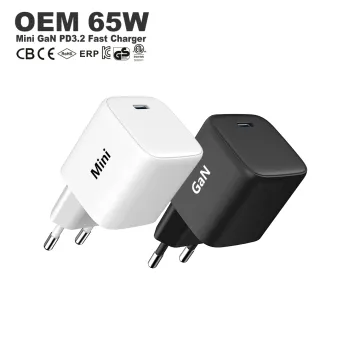
ZONSAN has specialized in charger development and manufacturing since 2009. Our product portfolio covers power levels from 5W to 240W, including USB-C PD chargers, PPS chargers, compact GaN wall chargers, multi-port products, and desktop charging solutions.
For OEM and ODM customers, working across different power levels and product configurations creates opportunities to develop related products over time.
However, not every project needs a new design. An established charger may remain suitable for its intended market for several years. Another product may benefit from changes to its housing, charging capabilities, port configuration, or other technical characteristics.
As a usb gan charger manufacturer, our role is to evaluate these requirements in relation to the available product platforms and the engineering work involved. Depending on the project, customers can discuss branding, packaging, industrial design, electrical specifications, structural changes, and other development requirements through our OEM and ODM charger customization services.
For brands planning a product upgrade, it is useful to provide more than a target wattage or a reference image. Information about the existing product, its intended replacement, target devices, market requirements, expected volumes, and launch objectives allows the engineering discussion to focus on the relevant commercial and technical differences.
The feasibility, costs, validation scope, and scheduling arrangements can then be established for the specific project.
From a manufacturing perspective, a successful product upgrade should improve an identified aspect of the existing business. That improvement may be better charging compatibility, a more suitable mechanical design, improved manufacturing economics, or a stronger product position.
The goal is not to replace products simply because newer technologies exist. It is to develop a charger portfolio that remains relevant, manufacturable, and commercially sustainable.
Read More
Final Thoughts: Manage Product Generations, Not Just New Product Launches
A charger brand cannot build a sustainable business by concentrating only on its next product launch. Every established model represents earlier investments in development, manufacturing, compliance, distribution, and customer recognition.
Some of those investments remain valuable long after a newer charging technology becomes available. Others gradually lose their value as technical limitations, component availability, or changing customer expectations make a replacement more appropriate.
Effective charger product lifecycle management requires understanding the difference. A capable OEM charger manufacturer should help buyers evaluate whether the existing design can be maintained, whether an upgrade is technically feasible, and whether a new architecture offers better long-term value.
The brand must then combine that engineering information with its own commercial priorities.
The strongest product roadmap is not necessarily the one with the most frequent launches. It is the one that introduces meaningful improvements at the right time without unnecessarily disrupting the products that already work.
Frequently Asked Questions
Q1: What is charger product lifecycle management?
Charger product lifecycle management is the process of managing a charging product from development and commercial introduction through ongoing production, engineering revisions, upgrades, replacement, and eventual discontinuation. It connects technical decisions with manufacturing and commercial requirements.
Q2: How often should a brand upgrade its charger models?
There is no universal replacement interval. Brands should review their chargers regularly and introduce upgrades when supported by changes in customer demand, device compatibility, manufacturing economics, compliance requirements, or product competitiveness.
Q3: Does a new USB-C PD protocol make older chargers obsolete?
Not automatically. An existing charger may remain suitable for its intended devices and applications. A protocol upgrade should be evaluated according to the additional charging capabilities it provides and their relevance to the target market.
Q4: Can an OEM charger manufacturer upgrade an existing charger without developing a new PCB?
Sometimes. Certain changes may be possible within the existing hardware architecture. However, modifications affecting power conversion, voltage capability, thermal performance, or protection functions may require PCB changes and additional validation.
Q5: When should a brand replace an existing GaN charger?
Replacement becomes worth considering when the existing model can no longer meet important commercial or technical requirements, or when maintaining and upgrading the old architecture becomes less practical than developing a successor.
Q6: Does component discontinuation mean the charger must also be discontinued?
No. A technically suitable alternative component may allow manufacturing to continue. The phone charger manufacturer should evaluate the replacement's effect on performance, reliability, safety, and applicable compliance requirements.
Q7: Should a new charger generation use a different model number?
A separate model number or SKU is advisable when changes affect advertised specifications, device compatibility, charging performance, or other characteristics relevant to customers. Internal design revisions should remain identifiable even when the commercial model number is retained.
Q8: Do upgraded chargers require new certification?
It depends on the modifications, target markets, and applicable conformity assessment requirements. Existing compliance evidence should be reviewed against the actual revised product configuration before determining whether additional testing or certification is necessary.
Q9: How can OEM buyers reduce inventory risk when replacing charger models?
Buyers should review remaining sellable inventory, outstanding purchase orders, material commitments, expected sales, and the successor's production readiness. A coordinated final-order and launch strategy can help reduce excess inventory and supply interruption.
Q10: Is it better to upgrade an existing charger platform or develop a new one?
The decision depends on the remaining capability of the existing platform, required changes, development costs, and future product objectives. Platform reuse can be economical, but extensive modifications may make a new architecture more suitable.
Q11: Should older and newer charger generations be sold simultaneously?
They can coexist when they serve distinct customer groups, applications, or price segments. If both products compete for essentially the same demand, a managed transition may be more economical than maintaining two overlapping SKUs.
Q12: How can brands build a long-term relationship with an OEM charger manufacturer?
Brands should share product forecasts, target market requirements, planned upgrades, and expected lifecycle decisions with their manufacturing partner. Regular commercial and technical reviews can help coordinate product development, manufacturing continuity, and future model transitions.
Reviewer: Sam and Jack Second Reviewers: Jeroen Groen and Lucas
Final Review Date: [November 25, 2026]
Our guide on custom charger development timelines explains why an established charger modification and a completely new design can require substantially different development schedules.
A lifecycle review is not intended to create additional administrative work for every purchase order. Its purpose is to provide enough visibility for both companies to make better decisions before substantial engineering or inventory commitments are made.
12. How ZONSAN Supports Long-Term OEM Charger Product Development
ZONSAN has specialized in charger development and manufacturing since 2009. Our product portfolio covers power levels from 5W to 240W, including USB-C PD chargers, PPS chargers, compact GaN wall chargers, multi-port products, and desktop charging solutions.
For OEM and ODM customers, working across different power levels and product configurations creates opportunities to develop related products over time.
However, not every project needs a new design. An established charger may remain suitable for its intended market for several years. Another product may benefit from changes to its housing, charging capabilities, port configuration, or other technical characteristics.
As a usb gan charger manufacturer, our role is to evaluate these requirements in relation to the available product platforms and the engineering work involved. Depending on the project, customers can discuss branding, packaging, industrial design, electrical specifications, structural changes, and other development requirements through our OEM and ODM charger customization services.
For brands planning a product upgrade, it is useful to provide more than a target wattage or a reference image. Information about the existing product, its intended replacement, target devices, market requirements, expected volumes, and launch objectives allows the engineering discussion to focus on the relevant commercial and technical differences.
The feasibility, costs, validation scope, and scheduling arrangements can then be established for the specific project.
From a manufacturing perspective, a successful product upgrade should improve an identified aspect of the existing business. That improvement may be better charging compatibility, a more suitable mechanical design, improved manufacturing economics, or a stronger product position.
The goal is not to replace products simply because newer technologies exist. It is to develop a charger portfolio that remains relevant, manufacturable, and commercially sustainable.
Read More
Final Thoughts: Manage Product Generations, Not Just New Product Launches
A charger brand cannot build a sustainable business by concentrating only on its next product launch. Every established model represents earlier investments in development, manufacturing, compliance, distribution, and customer recognition.
Some of those investments remain valuable long after a newer charging technology becomes available. Others gradually lose their value as technical limitations, component availability, or changing customer expectations make a replacement more appropriate.
Effective charger product lifecycle management requires understanding the difference. A capable OEM charger manufacturer should help buyers evaluate whether the existing design can be maintained, whether an upgrade is technically feasible, and whether a new architecture offers better long-term value.
The brand must then combine that engineering information with its own commercial priorities.
The strongest product roadmap is not necessarily the one with the most frequent launches. It is the one that introduces meaningful improvements at the right time without unnecessarily disrupting the products that already work.
Frequently Asked Questions
Q1: What is charger product lifecycle management?
Charger product lifecycle management is the process of managing a charging product from development and commercial introduction through ongoing production, engineering revisions, upgrades, replacement, and eventual discontinuation. It connects technical decisions with manufacturing and commercial requirements.
Q2: How often should a brand upgrade its charger models?
There is no universal replacement interval. Brands should review their chargers regularly and introduce upgrades when supported by changes in customer demand, device compatibility, manufacturing economics, compliance requirements, or product competitiveness.
Q3: Does a new USB-C PD protocol make older chargers obsolete?
Not automatically. An existing charger may remain suitable for its intended devices and applications. A protocol upgrade should be evaluated according to the additional charging capabilities it provides and their relevance to the target market.
Q4: Can an OEM charger manufacturer upgrade an existing charger without developing a new PCB?
Sometimes. Certain changes may be possible within the existing hardware architecture. However, modifications affecting power conversion, voltage capability, thermal performance, or protection functions may require PCB changes and additional validation.
Q5: When should a brand replace an existing GaN charger?
Replacement becomes worth considering when the existing model can no longer meet important commercial or technical requirements, or when maintaining and upgrading the old architecture becomes less practical than developing a successor.
Q6: Does component discontinuation mean the charger must also be discontinued?
No. A technically suitable alternative component may allow manufacturing to continue. The phone charger manufacturer should evaluate the replacement's effect on performance, reliability, safety, and applicable compliance requirements.
Q7: Should a new charger generation use a different model number?
A separate model number or SKU is advisable when changes affect advertised specifications, device compatibility, charging performance, or other characteristics relevant to customers. Internal design revisions should remain identifiable even when the commercial model number is retained.
Q8: Do upgraded chargers require new certification?
It depends on the modifications, target markets, and applicable conformity assessment requirements. Existing compliance evidence should be reviewed against the actual revised product configuration before determining whether additional testing or certification is necessary.
Q9: How can OEM buyers reduce inventory risk when replacing charger models?
Buyers should review remaining sellable inventory, outstanding purchase orders, material commitments, expected sales, and the successor's production readiness. A coordinated final-order and launch strategy can help reduce excess inventory and supply interruption.
Q10: Is it better to upgrade an existing charger platform or develop a new one?
The decision depends on the remaining capability of the existing platform, required changes, development costs, and future product objectives. Platform reuse can be economical, but extensive modifications may make a new architecture more suitable.
Q11: Should older and newer charger generations be sold simultaneously?
They can coexist when they serve distinct customer groups, applications, or price segments. If both products compete for essentially the same demand, a managed transition may be more economical than maintaining two overlapping SKUs.
Q12: How can brands build a long-term relationship with an OEM charger manufacturer?
Brands should share product forecasts, target market requirements, planned upgrades, and expected lifecycle decisions with their manufacturing partner. Regular commercial and technical reviews can help coordinate product development, manufacturing continuity, and future model transitions.
Reviewer: Sam and Jack Second Reviewers: Jeroen Groen and Lucas
Final Review Date: [November 25, 2026]