Reliability Testing for USB-C Chargers: How Manufacturers Verify Long-Term Performance
A charger can pass a basic functional test and still have problems later. It may work normally when it leaves the production line, but after weeks or months of repeated use, weaknesses can begin to appear.
The charger may become too hot.
The output may become unstable.
A USB-C port may stop working properly.
The housing may become loose or damaged.
For consumers, this can be frustrating!
For an OEM customer, it can become a much bigger problem.
A returned product means additional logistics, customer service costs, replacement costs and, more importantly, damage to the customer's confidence in the supplier.
This is why professional charger manufacturers do more than test whether a charger works.
They also need to understand how the product behaves under stress, repeated use and abnormal conditions.
This is where reliability testing becomes important.
For USB-C chargers, especially compact GaN chargers and high-power PD chargers, reliability testing is an important part of the manufacturing quality system.

What Is Reliability Testing in Phone Charger Manufacturing?
Reliability testing is the process of evaluating how consistently a charger performs under defined operating conditions over time. The objective is not simply to answer: "Does the charger work?"
Instead, engineers want to understand:
• How does it perform under continuous load?
• How does it behave at high temperature?
• Can it withstand repeated electrical stress?
• Does the product remain stable after long operating periods?
• Are there mechanical weaknesses?
• Do safety protections continue working correctly?
Reliability testing therefore looks at the product from a longer-term perspective.
A normal functional test checks whether the charger meets its requirements at a particular point in time.
Reliability testing asks a different question: Can the charger continue to perform as expected after repeated or stressful operating conditions?
Why Reliability Testing Matters for USB-C Chargers
Modern USB-C chargers are becoming smaller while delivering more power.
A compact charger may provide:
• 30W / 45W / 65W / 100W / 140W or more.
This creates engineering challenges.
Higher power density means that components may operate under greater thermal and electrical stress.
At the same time, consumers expect chargers to be:
• Small. Fast. Quiet. Safe. Reliable.
These requirements make reliability testing particularly important.
A 100W GaN charger, for example, cannot be evaluated only by checking whether it can output 100W for a few seconds.
Engineers need to understand how the charger behaves during sustained operation and under different environmental conditions.
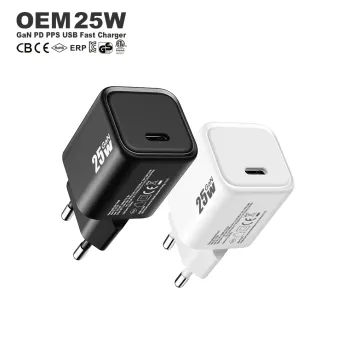
Read More
Reliability Testing vs. Functional Testing
These two terms are sometimes confused.
They are related, but they serve different purposes.
Functional Testing
Functional testing asks: "Does the product perform its required functions?"
For a USB-C charger, this may include:
• Output voltage.
• Output current.
• USB-C PD communication.
• PPS operation.
• Port functionality.
• Protection functions.
The test is generally focused on whether the product works according to its specifications.
Reliability Testing
Reliability testing asks: "Will the product continue to perform reliably under defined conditions?"
This can involve:
• Long-duration operation.
• Temperature stress.
• Repeated electrical loading.
• Aging.
• Mechanical stress.
• Abnormal operating conditions.
Both types of testing are important.
A charger may pass functional testing but still reveal a reliability issue during extended operation.
How Functional Testing (FCT) Verifies USB-C Charger Performance Before Shipment.↗
When Does Reliability Testing Take Place?
Reliability testing can be performed at different stages of product development and manufacturing.
For an OEM or ODM charger project, testing may occur during:
Product Development
Engineers validate the design before mass production.
Engineering Verification
The factory evaluates whether the product can meet required performance and reliability targets.
Pilot Production
The production process is checked using actual manufacturing conditions.
Mass Production
Routine testing and sampling help confirm that production remains stable.
Quality Investigation
Additional reliability testing may be performed when a customer complaint or production abnormality appears.
This means reliability testing is not necessarily a single test performed once.
It can be part of the product's entire lifecycle.
Common Reliability Tests for USB-C Chargers
Different charger products require different testing programs.
A 20W single-port charger does not necessarily need exactly the same testing strategy as a 140W multi-port GaN charger.
However, professional charger manufacturers commonly consider several important areas.
1. Aging Test
Aging testing is one of the most practical reliability tests for chargers.
The charger operates under defined electrical conditions for an extended period.
Engineers monitor whether:
• Output remains stable.
• Temperature remains within limits.
• Protection functions behave correctly.
• Components show abnormal behavior.
The purpose is to identify potential early-life problems before products reach customers.
Why Aging Testing Matters
Some defects do not appear immediately. A component may work normally during a short functional test but become unstable after extended operation.
Aging testing creates additional operating time under controlled conditions.
This gives engineers a better opportunity to detect such problems before shipment.
2. High-Temperature Testing
Temperature is one of the major factors affecting electronic product reliability. For a charger, heat can come from:
• Power semiconductors.
• Transformers.
• Rectifiers.
• Capacitors.
• Controller circuits.
• Internal power losses.
Compact GaN chargers can have particularly demanding thermal requirements because high power is packed into a relatively small enclosure.
High-temperature testing helps engineers understand how the product performs when environmental or internal temperatures increase.

A charger may be tested under different output loads.
For example:
• Low load.
• Medium load.
• High load.
• Maximum rated load.
Engineers can compare:
• Output stability.
• Temperature.
• Efficiency.
• Protection behavior.
High-load testing is particularly relevant to:
• 65W PD chargers.
• 100W USB-C chargers.
• 140W PD 3.1 chargers.
• Multi-port desktop chargers.
4. Temperature Cycling
A charger may experience different temperatures during its lifetime.
For example:
A product may be stored in a cold environment, transported through a hot region and then operated indoors.
Temperature cycling exposes the product to controlled changes between different temperature conditions.
This can help identify potential weaknesses related to:
• Materials.
• Solder joints.
• Mechanical structures.
• Component interfaces.
5. Humidity Testing
Humidity can affect electronic products over time.
High humidity may contribute to:
• Corrosion.
• Material degradation.
• Electrical leakage.
• Insulation problems.
Humidity testing helps manufacturers understand how products behave in controlled high-humidity environments.
The exact conditions depend on the product and target market.
6. Insulation and Dielectric Strength Testing
Electrical safety is another important part of charger reliability.
Professional manufacturers may perform tests related to:
• Insulation.
• Dielectric strength.
• Leakage current.
• Grounding.
These tests help verify that the product maintains appropriate electrical safety under defined conditions.
For chargers connected directly to mains electricity, this area requires particular attention.
7. Short-Circuit and Protection Testing
A charger should not only work under normal conditions. It also needs to respond correctly when abnormal situations occur. Protection testing may evaluate behavior under conditions such as:
• Output short circuit.
• Over-current.
• Over-voltage.
• Over-temperature.
The objective is to confirm that protection mechanisms respond appropriately and that the product can recover or shut down according to its design.
8. Plug and Port Mechanical Testing
Reliability is not limited to electronics. USB-C ports and AC plugs are mechanical components that consumers interact with repeatedly.
Testing may evaluate:
• Plug insertion and removal.
• Connector durability.
• Port mechanical strength.
• Housing strength.
For chargers used frequently every day, mechanical reliability can be just as important as electrical reliability.
9. Drop and Mechanical Impact Testing
Portable chargers can be dropped during everyday use. Mechanical testing helps evaluate whether the product can withstand defined impact conditions.
Engineers may inspect:
• Housing damage.
• PCB movement.
• Connector damage.
• Internal component displacement.
The exact test conditions depend on the product design and customer requirements.
Reliability Testing for GaN Chargers
GaN technology has changed charger design significantly. Gallium nitride allows power electronics to operate at high switching frequencies and can contribute to smaller, more efficient charger designs.
But smaller size and higher power density also create additional thermal and electrical engineering challenges.
For GaN chargers, engineers may pay particular attention to:
• Thermal performance.
• High-load stability.
• Switching behavior.
• Component temperature.
• Long-duration operation.
This is one reason reliability validation is important when developing compact high-power GaN chargers.
Reliability Testing for USB-C PD Chargers
USB-C PD chargers have another layer of complexity. The charger needs to communicate correctly with compatible devices and provide the appropriate power profile.
Depending on the product, engineers may evaluate:
• PD negotiation.
• Different output voltage levels.
• PPS operation.
• Multi-port power distribution.
• Load changes.
• Protection response.
For a multi-port charger, testing becomes even more important because several ports may operate simultaneously.
Multi-Port Charger Reliability Testing
A single-port charger has a relatively straightforward power path. A multi-port charger has more variables.
For example:
A 2C1A charger may be tested under:
• USB-C1 only.
• USB-C2 only.
• USB-A only.
• USB-C1 + USB-C2.
• USB-C1 + USB-A.
• USB-C2 + USB-A.
• All ports simultaneously.
The goal is to confirm that the charger behaves correctly under different combinations.
This is particularly important for products designed for laptops, tablets, smartphones and other devices at the same time.
How Reliability Testing Data Is Used
Testing only has value when the results are properly analyzed.
A professional quality team may record:
• Test conditions.
• Product model.
• Production batch.
• Test duration.
• Test results.
• Failure information.
This information can then be connected with the factory's traceability system.
If a reliability problem appears, engineers can investigate:
• Which production batch was involved.
• Which components were used.
• Whether similar products show the same behavior.
This creates a connection between:
Reliability Testing → Traceability → Failure Analysis → CAPA
The result is a much stronger quality improvement cycle.
Traceability System in Electronics Manufacturing: How Charger Factories Track Every Production Step.↗
Reliability Testing and the ZEEAS Quality System
Reliability testing is not an isolated quality activity.
It fits into the broader manufacturing system developed throughout this ZEEAS content series.
The relationship can be understood as:
PFMEA — Identify potential risks.
↓
Control Plan — Define how critical processes are controlled.
↓
SPC — Monitor process stability.
↓
Traceability — Record manufacturing history.
↓
Reliability Testing — Verify long-term product performance.
↓
Failure Analysis — Understand why problems occur.
↓
CAPA — Prevent repeated problems.
This is a complete quality engineering loop.
Control Plan in Charger Manufacturing: How Professional Factories Maintain Stable Quality During Mass Production.↗

A failed test does not automatically mean that the entire product design is unusable.
The first step is to understand the failure.
Engineers may ask:
→ Is the failure repeatable?
→ Is it related to the product design?
→ Is it related to a component?
→ Is it related to manufacturing?
→ Is the test setup correct?
The failed sample is then analyzed.
Possible actions include:
• Design modification.
• Component replacement.
• Process adjustment.
• Additional testing.
• Supplier investigation.
If the failure is related to an existing manufacturing process, the issue may trigger a CAPA process.
CAPA Process in Charger Manufacturing: How Factories Prevent Repeated Quality Problems.↗
Reliability Testing During New Charger Development
Reliability testing is especially important before launching a new charger.
A typical development process may look like:
Concept → Engineering Prototype → Electrical Testing → Thermal Testing → Reliability Testing → Design Improvement → Pilot Production → Production Validation → Mass Production
This approach reduces the risk of discovering major problems only after large-scale production begins.

Why OEM Buyers Should Ask About Reliability Testing
When evaluating a charger manufacturer, buyers often focus on:
1. Price.
2. MOQ.
3. Lead time.
4. Certifications.
5. Product appearance.
These are important.
But reliability capability deserves attention too.
A buyer can ask:
1. What reliability tests are performed?
2. Which tests are conducted during development?
3. Which tests are used for mass production?
4. How are failed samples investigated?
5. How are reliability results recorded?
6. How are repeated problems handled?
The answers can reveal a lot about a factory's engineering maturity.
Reliability Testing Is More Than a Final Inspection
A common misunderstanding is that reliability testing is simply another inspection before shipment. It is much more than that.
Reliability testing can provide information for:
• Product development.
• Component selection.
• Thermal design.
• Manufacturing improvement.
• Supplier evaluation.
Testing results can therefore influence the product long before the final shipment.
Common Mistakes in Charger Reliability Testing
Mistake 1: Testing Only Samples Without Understanding Production Variation
A good prototype does not automatically guarantee stable mass production.
Production validation is important because manufacturing variation can affect reliability.
Mistake 2: Testing Only Normal Conditions
A charger may perform perfectly under normal load.
That does not tell engineers how it behaves under:
• High load.
• High temperature.
• Long operating periods.
• Abnormal conditions.
A balanced reliability program should consider realistic stress conditions.
Mistake 3: Ignoring Test Data
Test results should be recorded and analyzed. Otherwise, valuable information is lost.
Historical data can help engineers identify trends and improve future designs.
Mistake 4: Treating Every Failure as a Product Defect
Sometimes a failed test may be caused by:
• Incorrect test setup.
• Equipment calibration.
• Sample preparation.
• Unexpected environmental conditions.
Engineers should verify the failure before deciding on corrective action.
Building a Reliable Charger Manufacturing System
A reliable charger does not come from one test. It comes from many systems working together.
The product design needs to be sound.
Components need to be controlled.
Manufacturing processes need to be stable.
Testing needs to be appropriate.
Production data needs to be traceable.
And when problems occur, the factory needs to learn from them. This is why professional manufacturing quality should be viewed as a system rather than a single inspection step.
Final Thoughts
A charger that works today is not necessarily a charger that will remain reliable after months of everyday use. For manufacturers, long-term reliability needs to be considered during product development, process validation and mass production. Reliability testing helps engineers understand how a charger behaves under realistic and controlled stress conditions.
For USB-C and GaN chargers, this becomes increasingly important as products become:
• Smaller. Faster. More powerful. More complex.
The strongest manufacturing systems do not depend on final inspection alone.
They combine:
• PFMEA.
• Control Plans.
• SPC.
• Traceability.
• Functional Testing.
• Reliability Testing.
• Failure Analysis.
• CAPA.
Together, these systems help transform quality from a final checkpoint into an ongoing manufacturing process. For OEM and ODM customers, that difference matters.
A capable charger factory should not only be able to produce a working sample. It should have the engineering and manufacturing systems needed to reproduce that quality consistently across thousands or even hundreds of thousands of units.
That is the real purpose of reliability testing.
Frequently Asked Questions
Q1: What is reliability testing for USB-C chargers?
Reliability testing evaluates how a USB-C charger performs over time and under defined electrical, thermal, mechanical and environmental conditions.
Q2: Is reliability testing the same as functional testing?
No. Functional testing confirms that a charger performs its required functions, while reliability testing evaluates longer-term performance and resistance to defined stresses.
Q3: Why is reliability testing important for GaN chargers?
GaN chargers can deliver high power in compact enclosures, making thermal management and long-term operating stability particularly important.
Q4: What tests are commonly performed on chargers?
Depending on the product, testing may include aging, high-load, temperature, humidity, insulation, protection, mechanical and port durability testing.
Q5: Do all chargers need the same reliability tests?
No. Testing requirements depend on the charger design, power level, intended market, customer requirements and applicable standards.
Q6: How does reliability testing help OEM customers?
It provides evidence that the manufacturer evaluates long-term product performance rather than relying only on short functional tests.
Q7: What happens if a charger fails a reliability test?
Engineers investigate the failure, determine the cause and may modify the design, components or manufacturing process before repeating validation.
Q8: How does reliability testing connect with CAPA?
When a reliability failure reveals a systemic problem, the investigation can lead to corrective and preventive actions that reduce the chance of recurrence.
Q9: Is reliability testing performed before mass production?
Yes. Reliability validation is commonly performed during product development and pilot production, while selected reliability checks may also continue during mass production.
When evaluating a charger manufacturer, buyers often focus on:
1. Price.
2. MOQ.
3. Lead time.
4. Certifications.
5. Product appearance.
These are important.
But reliability capability deserves attention too.
A buyer can ask:
1. What reliability tests are performed?
2. Which tests are conducted during development?
3. Which tests are used for mass production?
4. How are failed samples investigated?
5. How are reliability results recorded?
6. How are repeated problems handled?
The answers can reveal a lot about a factory's engineering maturity.
Reliability Testing Is More Than a Final Inspection
A common misunderstanding is that reliability testing is simply another inspection before shipment. It is much more than that.
Reliability testing can provide information for:
• Product development.
• Component selection.
• Thermal design.
• Manufacturing improvement.
• Supplier evaluation.
Testing results can therefore influence the product long before the final shipment.
Common Mistakes in Charger Reliability Testing
Mistake 1: Testing Only Samples Without Understanding Production Variation
A good prototype does not automatically guarantee stable mass production.
Production validation is important because manufacturing variation can affect reliability.
Mistake 2: Testing Only Normal Conditions
A charger may perform perfectly under normal load.
That does not tell engineers how it behaves under:
• High load.
• High temperature.
• Long operating periods.
• Abnormal conditions.
A balanced reliability program should consider realistic stress conditions.
Mistake 3: Ignoring Test Data
Test results should be recorded and analyzed. Otherwise, valuable information is lost.
Historical data can help engineers identify trends and improve future designs.
Mistake 4: Treating Every Failure as a Product Defect
Sometimes a failed test may be caused by:
• Incorrect test setup.
• Equipment calibration.
• Sample preparation.
• Unexpected environmental conditions.
Engineers should verify the failure before deciding on corrective action.
Building a Reliable Charger Manufacturing System
A reliable charger does not come from one test. It comes from many systems working together.
The product design needs to be sound.
Components need to be controlled.
Manufacturing processes need to be stable.
Testing needs to be appropriate.
Production data needs to be traceable.
And when problems occur, the factory needs to learn from them. This is why professional manufacturing quality should be viewed as a system rather than a single inspection step.
Final Thoughts
A charger that works today is not necessarily a charger that will remain reliable after months of everyday use. For manufacturers, long-term reliability needs to be considered during product development, process validation and mass production. Reliability testing helps engineers understand how a charger behaves under realistic and controlled stress conditions.
For USB-C and GaN chargers, this becomes increasingly important as products become:
• Smaller. Faster. More powerful. More complex.
The strongest manufacturing systems do not depend on final inspection alone.
They combine:
• PFMEA.
• Control Plans.
• SPC.
• Traceability.
• Functional Testing.
• Reliability Testing.
• Failure Analysis.
• CAPA.
Together, these systems help transform quality from a final checkpoint into an ongoing manufacturing process. For OEM and ODM customers, that difference matters.
A capable charger factory should not only be able to produce a working sample. It should have the engineering and manufacturing systems needed to reproduce that quality consistently across thousands or even hundreds of thousands of units.
That is the real purpose of reliability testing.
Frequently Asked Questions
Q1: What is reliability testing for USB-C chargers?
Reliability testing evaluates how a USB-C charger performs over time and under defined electrical, thermal, mechanical and environmental conditions.
Q2: Is reliability testing the same as functional testing?
No. Functional testing confirms that a charger performs its required functions, while reliability testing evaluates longer-term performance and resistance to defined stresses.
Q3: Why is reliability testing important for GaN chargers?
GaN chargers can deliver high power in compact enclosures, making thermal management and long-term operating stability particularly important.
Q4: What tests are commonly performed on chargers?
Depending on the product, testing may include aging, high-load, temperature, humidity, insulation, protection, mechanical and port durability testing.
Q5: Do all chargers need the same reliability tests?
No. Testing requirements depend on the charger design, power level, intended market, customer requirements and applicable standards.
Q6: How does reliability testing help OEM customers?
It provides evidence that the manufacturer evaluates long-term product performance rather than relying only on short functional tests.
Q7: What happens if a charger fails a reliability test?
Engineers investigate the failure, determine the cause and may modify the design, components or manufacturing process before repeating validation.
Q8: How does reliability testing connect with CAPA?
When a reliability failure reveals a systemic problem, the investigation can lead to corrective and preventive actions that reduce the chance of recurrence.
Q9: Is reliability testing performed before mass production?
Yes. Reliability validation is commonly performed during product development and pilot production, while selected reliability checks may also continue during mass production.