Charger Quality Engineering: How Professional Factories Build Reliable Production Systems
Provider of Information: Luo Zhang(Production Supervisor) & David Li(Quality Oversight)
From Risk Prevention to Process Control and Continuous Improvement
A charger can pass its electrical tests and still have a quality problem. It may work correctly when it leaves the factory, yet show inconsistent performance across a large production batch. A component supplier may change a material. A manufacturing process may gradually drift. Or a defect that was corrected once may appear again several months later.
These problems are difficult to solve with final inspection alone.
For a USB-C charger manufacturer, quality depends on how well engineering decisions, supplier controls, manufacturing processes, testing results, and corrective actions work together. A reliable product is not created by adding more inspections at the end of the line. It comes from controlling the factors that determine quality throughout the product lifecycle.
This is the purpose of charger quality engineering.
Quality engineering connects preventive planning, production monitoring, product verification, traceability, failure investigation, and continuous improvement. For manufacturers producing USB-C PD chargers, GaN chargers, PPS chargers, and higher-power charging solutions, this connection becomes especially important as designs become more compact and production requirements more demanding.
In this article, we explain how a charger factory can build a connected quality engineering system, what each part contributes, and what OEM and ODM buyers should look for when evaluating a manufacturing partner.
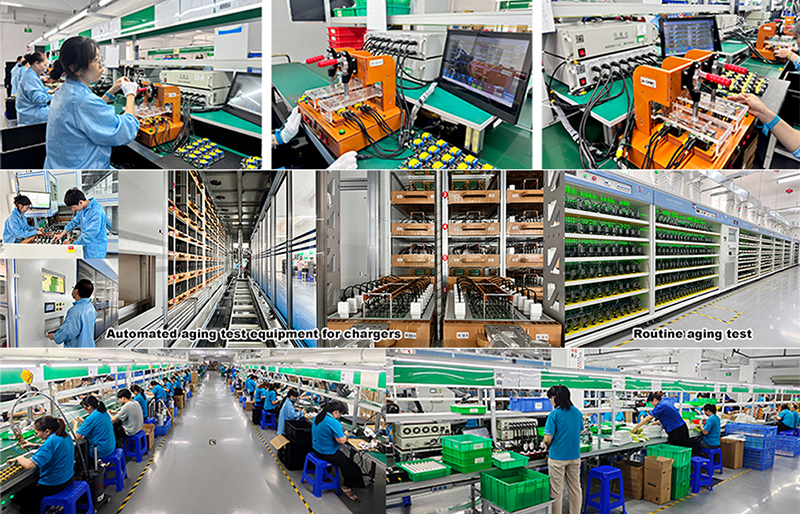
What Is Charger Quality Engineering?
Charger quality engineering is the systematic process of preventing defects, controlling manufacturing variation, verifying product performance, and improving production based on evidence. It applies engineering methods throughout product development and mass production rather than relying exclusively on finished-product inspection.
For a charger manufacturer, quality engineering typically covers:
• Product and process risk assessment before production.
• Supplier qualification and incoming material verification.
• Standardized manufacturing controls.
• Process monitoring and electrical testing.
• Production and material traceability.
• Root-cause analysis and corrective action.
• Continuous review of quality performance.
The exact tools used depend on the product, production process, customer requirements, and applicable regulations. The objective, however, remains consistent: make products that meet defined requirements repeatedly, not just during prototype approval or a single successful production run.
Why Quality Engineering Matters in Charger Manufacturing
A modern charger combines electrical, thermal, mechanical, and manufacturing requirements in a compact enclosure. Its final performance depends on more than whether the circuit design is correct.
Consider a 100W USB-C GaN charger.(Zonsan Model ZX-1U96T) Its design may have passed engineering validation, but mass production introduces additional variables. Component batches can differ within their approved specifications. Soldering conditions require control. Thermal materials must be installed correctly. USB-C power negotiation and output performance must be verified under defined test conditions.
Even if all other stages meet the required standards, a problem at any single stage can still affect the final product. Quality engineering can help manufacturers address these three interconnected challenges.
1. Preventing problems before production
The earlier a manufacturing risk is identified, the more options engineers typically have to address it. If process risks are spotted during the planning phase, they can be mitigated by adjusting designs, adding fixtures, refining work instructions, or implementing appropriate inspection methods.
Conversely, if the same issue is not discovered until thousands of units have already been assembled, the resolution may require rework, sorting, production delays, or even a complete halt in shipments. Therefore, proactive quality planning should be integrated into the product introduction and process development stages, rather than being confined solely to final quality control.
2. Maintaining consistency during mass production
Passing prototype testing does not guarantee that a factory can consistently replicate the same results across different shifts, varying batches of components, or different production scales. A robust quality engineering system identifies critical characteristics, standardizes how they are measured, and defines the specific actions to be taken when inspection results fall outside of acceptable limits.
3. Learning from real production results
No manufacturing process can be considered "perfect and immutable." Internal inspection results, test failures, supplier issues, product returns, and customer feedback all provide opportunities for continuous improvement. The crucial question is whether these findings actually lead to effective process enhancements—or if the same problems continue to recur.
The Main Elements of a Charger Quality Engineering System
A mature quality system does not depend on one document, one machine, or one department. Different methods address different parts of the problem.
1. Risk prevention: PFMEA
Process Failure Mode and Effects Analysis (PFMEA) helps engineers identify how a manufacturing process could fail, what the consequences might be, and which risks deserve attention.
For example, engineers may assess the risk of incorrect component placement, poor solder joints, misplaced thermal interface materials, or an assembly error that affects electrical safety or product performance.
PFMEA is most useful when its findings influence actual process decisions. Identified risks should lead to suitable prevention measures, inspection methods, or other controls—not simply remain in a report.
For a closer look, see PFMEA in Charger Manufacturing: How Factories Identify Risks Before Mass Production.
2. Production control: Control Plans and work instructions
A Control Plan translates important product and process risks into practical manufacturing controls. It defines what needs to be checked, the applicable criteria, the inspection or measurement method, the frequency where appropriate, and the response to abnormal results.
Work instructions then help production personnel perform the relevant operations consistently.
For a charger assembly line, these controls might cover critical assembly steps, selected process parameters, electrical verification, and product identification. The specific controls should reflect the actual product and process rather than follow a generic checklist.
The distinction is straightforward: PFMEA helps identify what could go wrong; the Control Plan defines how important risks will be controlled during production.
Read more in Control Plan in Charger Manufacturing: How Factories Keep Mass Production Stable.
3. Process monitoring: SPC and production data
Statistical Process Control (SPC) uses data over time to help determine whether a process is behaving consistently or showing signs of unusual variation.
This is different from checking whether a single unit passes a specification. A process may continue producing acceptable units while its results begin to drift toward a limit. Appropriate monitoring can help engineers investigate that movement before it becomes a larger problem.
SPC is not suitable for every measurement or process in the same way. The data must be meaningful, collected consistently, and analyzed using an appropriate method. A chart by itself does not improve quality; the value comes from interpreting the results and responding correctly.
For more detail, see Statistical Process Control (SPC) in GaN Charger Manufacturing.
4. Verification: Inspection and electrical testing
Inspection and testing provide evidence that materials, assemblies, and finished chargers meet defined requirements.
Depending on the product and process, a charger factory may use incoming inspection, automated optical inspection (AOI), electrical functional testing, USB-C PD protocol verification, protection-function testing, thermal evaluation, aging tests, and other appropriate checks.
These methods are not interchangeable. AOI can identify certain visible assembly defects, while electrical testing verifies specified electrical behavior. Thermal and reliability evaluations address different questions again.
A comprehensive test plan should clearly define the objectives and acceptance criteria for each test. Furthermore, it must account for the suitability of test equipment, requirements for calibration or verification, test repeatability, and the procedures for recording and investigating failures.
See How We Test USB-C Chargers Before Shipment for a closer look at charger testing.
5. Traceability: Connecting products with production history
Traceability links a finished product or production batch to relevant manufacturing information. Depending on the system, this may include material lots, production dates, process records, inspection results, test data, rework history, and shipment information.
Its value becomes clear when a problem occurs.
Without useful records, engineers may know that a charger failed but struggle to determine which production lots, materials, or process conditions were involved. With appropriate traceability, they can narrow the investigation and make a more informed decision about the affected scope.
While traceability cannot prevent all defects, it makes quality investigations and containment decisions more effective.
Read Phone Charger Manufacturing Traceability: How Factories Track Production Quality.
6. Problem solving: Failure analysis and CAPA
When a defect occurs, the first priority is to contain the issue and protect potentially affected products. The next step is to establish why it happened. Failure analysis examines evidence to distinguish the actual root cause from a symptom or assumption. Corrective and Preventive Action (CAPA) then provides a structured way to address the identified cause, implement changes, and verify whether those changes are effective.
For example, replacing a failed component may restore a unit to working condition, but it does not necessarily explain why the component failed or whether other units share the same risk.
An effective corrective action may require changes to a process setting, supplier control, inspection method, work instruction, or risk assessment. The appropriate response depends on the verified cause.
Related reading: Failure Analysis in Charger Manufacturing: How Factories Find the Root Cause.
CAPA Process in Phone Fast Charger Manufacturing: How Factories Prevent Repeated Quality Problems

Read More
How These Quality Methods Work Together
The individual methods become more useful when their outputs feed into the next stage. A factory may have separate PFMEA files, Control Plans, test records, and CAPA reports, but simply having those documents does not guarantee an effective system.
The key lies in the interconnections between them. A simplified quality engineering cycle looks roughly like this: Identify risks → Define controls → Monitor production → Verify products → Investigate abnormalities → Implement corrective action → Review and update controls.
Here is how that cycle works in practice.
Step 1 — Identify important risks
During product introduction or process review, engineering and quality teams identify possible failure modes and determine which risks require additional control.
Step 2 — Put controls into the production process
The team translates relevant risks into process controls, inspection requirements, work instructions, and test criteria.
Step 3 — Collect meaningful production evidence
Inspection results, electrical test records, process measurements, supplier information, and traceability records provide evidence of how the process is performing.
Step 4 — Investigate abnormal results
When a result falls outside its acceptance criteria or a trend indicates a possible issue, the factory follows the appropriate containment and investigation procedure. The response should reflect the severity and nature of the problem.
Step 5 — Verify the improvement
After a corrective action is implemented, the factory needs evidence that the change works. Depending on the issue, this may involve repeat testing, process checks, a defined monitoring period, or review of subsequent production results.
Step 6 — Update the relevant controls
If the investigation reveals a weakness in the existing system, the factory may need to revise its PFMEA, Control Plan, work instructions, supplier requirements, inspection methods, or training.
This final step is easy to overlook. If a root cause is identified but the production controls remain unchanged, the organization may have solved one incident without reducing the likelihood of recurrence.
A Practical Example: Managing a Charger Assembly Defect
Imagine that a factory identifies inconsistent assembly results during production of a USB-C fast charger. The example below illustrates how quality engineering methods can work together; it is not a claim about a specific production incident.
Traceability links a finished product or production batch to relevant manufacturing information. Depending on the system, this may include material lots, production dates, process records, inspection results, test data, rework history, and shipment information.
Its value becomes clear when a problem occurs.
Without useful records, engineers may know that a charger failed but struggle to determine which production lots, materials, or process conditions were involved. With appropriate traceability, they can narrow the investigation and make a more informed decision about the affected scope.
While traceability cannot prevent all defects, it makes quality investigations and containment decisions more effective.
Read Phone Charger Manufacturing Traceability: How Factories Track Production Quality.
6. Problem solving: Failure analysis and CAPA
When a defect occurs, the first priority is to contain the issue and protect potentially affected products. The next step is to establish why it happened. Failure analysis examines evidence to distinguish the actual root cause from a symptom or assumption. Corrective and Preventive Action (CAPA) then provides a structured way to address the identified cause, implement changes, and verify whether those changes are effective.
For example, replacing a failed component may restore a unit to working condition, but it does not necessarily explain why the component failed or whether other units share the same risk.
An effective corrective action may require changes to a process setting, supplier control, inspection method, work instruction, or risk assessment. The appropriate response depends on the verified cause.
Related reading: Failure Analysis in Charger Manufacturing: How Factories Find the Root Cause.
CAPA Process in Phone Fast Charger Manufacturing: How Factories Prevent Repeated Quality Problems
Read More
How These Quality Methods Work Together
The individual methods become more useful when their outputs feed into the next stage. A factory may have separate PFMEA files, Control Plans, test records, and CAPA reports, but simply having those documents does not guarantee an effective system.
The key lies in the interconnections between them. A simplified quality engineering cycle looks roughly like this: Identify risks → Define controls → Monitor production → Verify products → Investigate abnormalities → Implement corrective action → Review and update controls.
Here is how that cycle works in practice.
Step 1 — Identify important risks
During product introduction or process review, engineering and quality teams identify possible failure modes and determine which risks require additional control.
Step 2 — Put controls into the production process
The team translates relevant risks into process controls, inspection requirements, work instructions, and test criteria.
Step 3 — Collect meaningful production evidence
Inspection results, electrical test records, process measurements, supplier information, and traceability records provide evidence of how the process is performing.
Step 4 — Investigate abnormal results
When a result falls outside its acceptance criteria or a trend indicates a possible issue, the factory follows the appropriate containment and investigation procedure. The response should reflect the severity and nature of the problem.
Step 5 — Verify the improvement
After a corrective action is implemented, the factory needs evidence that the change works. Depending on the issue, this may involve repeat testing, process checks, a defined monitoring period, or review of subsequent production results.
Step 6 — Update the relevant controls
If the investigation reveals a weakness in the existing system, the factory may need to revise its PFMEA, Control Plan, work instructions, supplier requirements, inspection methods, or training.
This final step is easy to overlook. If a root cause is identified but the production controls remain unchanged, the organization may have solved one incident without reducing the likelihood of recurrence.
A Practical Example: Managing a Charger Assembly Defect
Imagine that a factory identifies inconsistent assembly results during production of a USB-C fast charger. The example below illustrates how quality engineering methods can work together; it is not a claim about a specific production incident.
| Quality stage | Purpose | Possible action |
| PFMEA | Identify potential risks | Assess how assembly variation could affect product quality |
| Control Plan | Define production controls | Specify the relevant assembly check and response to abnormal results |
| Process monitoring | Detect variation | Review inspection findings and applicable process data |
| Traceability | Identify affected scope | Link suspect units to relevant production and material records |
| Failure analysis | Establish the cause | Examine failed units, process history, and supporting evidence |
| CAPA | Prevent recurrence | Implement a cause-based change and verify its effectiveness |
| System review | Retain the improvement | Update risk assessments and production controls where necessary |
Notice that no single step solves the whole problem. Testing may detect a defective unit, but traceability helps establish the scope. Failure analysis investigates the cause, while CAPA turns the findings into a lasting process improvement.
That is the difference between reacting to defects and managing quality through engineering.
Read More
Quality Engineering for GaN and High-Power USB-C Chargers
Higher power does not automatically mean lower reliability. However, compact, high-power charger designs can place tighter demands on component selection, thermal design, electrical performance, and manufacturing consistency.
For GaN chargers and high-power USB-C PD products, quality engineering should reflect the characteristics of the actual design.
Component control: Confirm that critical components meet the approved specifications and that substitutions are properly reviewed.
PCB assembly: Establish suitable controls for soldering, component placement, and relevant inspection points.
Thermal performance: Verify the design and manufacturing conditions that influence heat generation and heat transfer.
Electrical performance: Test the required output behavior, charging protocols, and protection functions under defined conditions.
Mechanical assembly: Check relevant housing, connector, insulation, and assembly requirements.
Change management: Reassess risks and verification requirements when a design, component, material, or process changes.
The control measures required for a 20W wall-plug charger may differ from those for a 140W multi-port charger. Quality plans should fully account for variations in circuit architecture, power density, thermal characteristics, interface configurations, and intended use. The goal of quality engineering is not to maximize the number of test items, but rather to implement appropriate control measures tailored to the specific risks and requirements of the product.
What OEM and ODM Buyers Should Ask a Charger Manufacturer
For buyers sourcing USB-C chargers, a supplier's quality capability is worth evaluating before a large production order is placed. A polished sample and a list of testing equipment provide only part of the picture.
Useful questions include:
1. How are manufacturing risks identified before mass production?
Ask whether the supplier reviews process risks during product introduction and how those findings influence production controls.
2. How does the factory maintain consistency between batches?
Look for clearly defined inspection criteria, suitable process monitoring, documented reaction procedures, and a way to review recurring quality issues.
3. What happens when a charger fails a test?
A useful answer should cover containment, investigation, disposition of affected products, and how the cause is addressed—not merely that the failed unit is replaced.
4. Can production records support an investigation?
Ask what traceability information is maintained and how quickly the supplier can identify the potentially affected batch or production scope.
5. How are corrective actions verified?
The factory should be able to explain how it checks whether a change has resolved the identified problem and whether relevant production controls need updating.
6. How are engineering or component changes handled?
For OEM and ODM projects, changes to components, PCB layouts, housings, plugs, or charging protocols may affect product performance or compliance. Buyers should understand how proposed changes are reviewed, verified, approved, and documented.
These questions help distinguish a factory that performs inspections from one that uses quality information to manage its manufacturing process.
How ZONSAN Approaches Charger Manufacturing Quality
ZONSAN develops and manufactures USB-C charging products for OEM and ODM customers, including GaN chargers, USB-C PD chargers, PPS fast chargers, and multi-port charging solutions.
For this type of manufacturing, quality depends on the relationship between engineering, production, and testing. PCB development, SMT production, inspection, electrical verification, thermal evaluation, aging tests, and final quality checks each address different aspects of product conformity and manufacturing consistency.
The appropriate controls also depend on the charger being produced. A customized OEM project may involve different power ratings, components, housing designs, plug configurations, port layouts, or charging protocols. Those requirements need to be reflected in the applicable engineering and production processes.
For buyers evaluating a charger manufacturing partner, the important question is not simply whether a factory has inspection equipment. It is how the factory defines requirements, controls relevant processes, responds to abnormal results, and uses evidence to improve production.
If you are sourcing a customized USB-C charger, GaN charger, or multi-port charging product, discuss the required specifications, target markets, verification needs, and expected production volume with the manufacturer before mass production begins. These details help establish an appropriate quality plan for the project.
Final Thoughts
Quality engineering for chargers serves as a vital link connecting several key stages, encompassing risk prevention, production control, performance verification, and the integration of lessons learned from failures.
PFMEA (Process Failure Mode and Effects Analysis) helps identify potential manufacturing issues; Control Plans translate significant risks into specific production controls; SPC (Statistical Process Control) and other process data facilitate the monitoring of production variability; and inspection and testing are used to verify that products meet established requirements. Traceability supports root-cause investigations, while failure analysis and CAPA (Corrective and Preventive Actions) transform various issues into opportunities for continuous improvement.
No single method is sufficient on its own. Their true value lies in how they work in synergy, ensuring that the established control measures remain consistently aligned with the actual product and its manufacturing process.
For OEM and ODM buyers, it is crucial to make a key distinction when evaluating charger suppliers: the ability to produce a compliant sample does not equate to the capability to consistently meet established quality standards throughout large-scale production.
A professional charger manufacturer relies on far more than just production equipment and final product inspection. It requires a robust quality engineering system—one that proactively prevents issues, promptly detects anomalies when they arise, and enables evidence-based, in-depth investigations to continuously optimize the production process.
FAQ: Charger Quality Engineering
Q1. What is quality engineering in charger manufacturing?
Quality engineering is the systematic use of engineering methods to prevent defects, control manufacturing variation, verify product requirements, and improve production. It covers the product and process lifecycle rather than relying only on final inspection.
Q2. What is the difference between quality engineering and quality control?
Quality control focuses on checking whether materials, processes, and products meet defined requirements. Quality engineering also works upstream to prevent problems, design suitable controls, analyze process performance, and improve the system that produces the product.
Q3. Which quality tools are commonly used in charger manufacturing?
Depending on the product and process, manufacturers may use PFMEA, Control Plans, SPC, incoming inspection, AOI, electrical functional testing, traceability, failure analysis, and CAPA. The appropriate combination depends on product risks, customer requirements, and applicable standards.
Q4. Why is PFMEA important for charger manufacturers?
PFMEA helps identify potential manufacturing failures and their causes before they lead to defects. Its findings can guide preventive measures, inspection requirements, process controls, and production planning.
Q5. Does final testing guarantee charger quality?
No. Final testing can verify specified characteristics under defined test conditions, but it cannot detect every possible defect or guarantee long-term field performance. Process control, appropriate reliability evaluation, supplier management, and corrective action remain important.
Q6. How does SPC improve charger manufacturing quality?
SPC helps engineers analyze process data over time and identify unusual variation or potential process drift. It is most effective when measurements are suitable, data is collected consistently, and defined responses are triggered when results indicate a problem.
Q7. Why is traceability important for USB-C chargers?
Traceability links products or production batches with relevant material, process, inspection, and test records. It helps manufacturers investigate failures, determine potentially affected products, and support more targeted containment and corrective action.
Q8. How do manufacturers prevent the same charger defect from happening again?
They need to establish the root cause, implement an appropriate corrective action, verify its effectiveness, and update relevant process controls or documentation. Replacing a failed unit alone does not necessarily prevent recurrence.
Q9. What should OEM buyers check when evaluating a charger factory's quality system?
Buyers should ask how the factory identifies risks, controls mass production, verifies electrical and safety requirements, maintains traceability, handles nonconforming products, manages engineering changes, and verifies corrective actions. Specific evidence is more useful than a general claim of strict quality control.
Q10. Do high-power GaN chargers need different quality controls from low-power chargers?
They may. High-power and compact designs can introduce different electrical, thermal, component, and assembly requirements. The quality plan should reflect the actual product design, manufacturing risks, intended use, and applicable verification requirements rather than applying the same checklist to every charger.
Reviewer: Luo Zhang and David Li
Second Reviewers: Lucas and Selike
Final Review Date: [October 16, 2026]
That is the difference between reacting to defects and managing quality through engineering.
Read More
Quality Engineering for GaN and High-Power USB-C Chargers
Higher power does not automatically mean lower reliability. However, compact, high-power charger designs can place tighter demands on component selection, thermal design, electrical performance, and manufacturing consistency.
For GaN chargers and high-power USB-C PD products, quality engineering should reflect the characteristics of the actual design.
Component control: Confirm that critical components meet the approved specifications and that substitutions are properly reviewed.
PCB assembly: Establish suitable controls for soldering, component placement, and relevant inspection points.
Thermal performance: Verify the design and manufacturing conditions that influence heat generation and heat transfer.
Electrical performance: Test the required output behavior, charging protocols, and protection functions under defined conditions.
Mechanical assembly: Check relevant housing, connector, insulation, and assembly requirements.
Change management: Reassess risks and verification requirements when a design, component, material, or process changes.
The control measures required for a 20W wall-plug charger may differ from those for a 140W multi-port charger. Quality plans should fully account for variations in circuit architecture, power density, thermal characteristics, interface configurations, and intended use. The goal of quality engineering is not to maximize the number of test items, but rather to implement appropriate control measures tailored to the specific risks and requirements of the product.
What OEM and ODM Buyers Should Ask a Charger Manufacturer
For buyers sourcing USB-C chargers, a supplier's quality capability is worth evaluating before a large production order is placed. A polished sample and a list of testing equipment provide only part of the picture.
Useful questions include:
1. How are manufacturing risks identified before mass production?
Ask whether the supplier reviews process risks during product introduction and how those findings influence production controls.
2. How does the factory maintain consistency between batches?
Look for clearly defined inspection criteria, suitable process monitoring, documented reaction procedures, and a way to review recurring quality issues.
3. What happens when a charger fails a test?
A useful answer should cover containment, investigation, disposition of affected products, and how the cause is addressed—not merely that the failed unit is replaced.
4. Can production records support an investigation?
Ask what traceability information is maintained and how quickly the supplier can identify the potentially affected batch or production scope.
5. How are corrective actions verified?
The factory should be able to explain how it checks whether a change has resolved the identified problem and whether relevant production controls need updating.
6. How are engineering or component changes handled?
For OEM and ODM projects, changes to components, PCB layouts, housings, plugs, or charging protocols may affect product performance or compliance. Buyers should understand how proposed changes are reviewed, verified, approved, and documented.
These questions help distinguish a factory that performs inspections from one that uses quality information to manage its manufacturing process.
How ZONSAN Approaches Charger Manufacturing Quality
ZONSAN develops and manufactures USB-C charging products for OEM and ODM customers, including GaN chargers, USB-C PD chargers, PPS fast chargers, and multi-port charging solutions.
For this type of manufacturing, quality depends on the relationship between engineering, production, and testing. PCB development, SMT production, inspection, electrical verification, thermal evaluation, aging tests, and final quality checks each address different aspects of product conformity and manufacturing consistency.
The appropriate controls also depend on the charger being produced. A customized OEM project may involve different power ratings, components, housing designs, plug configurations, port layouts, or charging protocols. Those requirements need to be reflected in the applicable engineering and production processes.
For buyers evaluating a charger manufacturing partner, the important question is not simply whether a factory has inspection equipment. It is how the factory defines requirements, controls relevant processes, responds to abnormal results, and uses evidence to improve production.
If you are sourcing a customized USB-C charger, GaN charger, or multi-port charging product, discuss the required specifications, target markets, verification needs, and expected production volume with the manufacturer before mass production begins. These details help establish an appropriate quality plan for the project.
Final Thoughts
Quality engineering for chargers serves as a vital link connecting several key stages, encompassing risk prevention, production control, performance verification, and the integration of lessons learned from failures.
PFMEA (Process Failure Mode and Effects Analysis) helps identify potential manufacturing issues; Control Plans translate significant risks into specific production controls; SPC (Statistical Process Control) and other process data facilitate the monitoring of production variability; and inspection and testing are used to verify that products meet established requirements. Traceability supports root-cause investigations, while failure analysis and CAPA (Corrective and Preventive Actions) transform various issues into opportunities for continuous improvement.
No single method is sufficient on its own. Their true value lies in how they work in synergy, ensuring that the established control measures remain consistently aligned with the actual product and its manufacturing process.
For OEM and ODM buyers, it is crucial to make a key distinction when evaluating charger suppliers: the ability to produce a compliant sample does not equate to the capability to consistently meet established quality standards throughout large-scale production.
A professional charger manufacturer relies on far more than just production equipment and final product inspection. It requires a robust quality engineering system—one that proactively prevents issues, promptly detects anomalies when they arise, and enables evidence-based, in-depth investigations to continuously optimize the production process.
FAQ: Charger Quality Engineering
Q1. What is quality engineering in charger manufacturing?
Quality engineering is the systematic use of engineering methods to prevent defects, control manufacturing variation, verify product requirements, and improve production. It covers the product and process lifecycle rather than relying only on final inspection.
Q2. What is the difference between quality engineering and quality control?
Quality control focuses on checking whether materials, processes, and products meet defined requirements. Quality engineering also works upstream to prevent problems, design suitable controls, analyze process performance, and improve the system that produces the product.
Q3. Which quality tools are commonly used in charger manufacturing?
Depending on the product and process, manufacturers may use PFMEA, Control Plans, SPC, incoming inspection, AOI, electrical functional testing, traceability, failure analysis, and CAPA. The appropriate combination depends on product risks, customer requirements, and applicable standards.
Q4. Why is PFMEA important for charger manufacturers?
PFMEA helps identify potential manufacturing failures and their causes before they lead to defects. Its findings can guide preventive measures, inspection requirements, process controls, and production planning.
Q5. Does final testing guarantee charger quality?
No. Final testing can verify specified characteristics under defined test conditions, but it cannot detect every possible defect or guarantee long-term field performance. Process control, appropriate reliability evaluation, supplier management, and corrective action remain important.
Q6. How does SPC improve charger manufacturing quality?
SPC helps engineers analyze process data over time and identify unusual variation or potential process drift. It is most effective when measurements are suitable, data is collected consistently, and defined responses are triggered when results indicate a problem.
Q7. Why is traceability important for USB-C chargers?
Traceability links products or production batches with relevant material, process, inspection, and test records. It helps manufacturers investigate failures, determine potentially affected products, and support more targeted containment and corrective action.
Q8. How do manufacturers prevent the same charger defect from happening again?
They need to establish the root cause, implement an appropriate corrective action, verify its effectiveness, and update relevant process controls or documentation. Replacing a failed unit alone does not necessarily prevent recurrence.
Q9. What should OEM buyers check when evaluating a charger factory's quality system?
Buyers should ask how the factory identifies risks, controls mass production, verifies electrical and safety requirements, maintains traceability, handles nonconforming products, manages engineering changes, and verifies corrective actions. Specific evidence is more useful than a general claim of strict quality control.
Q10. Do high-power GaN chargers need different quality controls from low-power chargers?
They may. High-power and compact designs can introduce different electrical, thermal, component, and assembly requirements. The quality plan should reflect the actual product design, manufacturing risks, intended use, and applicable verification requirements rather than applying the same checklist to every charger.
Reviewer: Luo Zhang and David Li
Second Reviewers: Lucas and Selike
Final Review Date: [October 16, 2026]