How Chargers Pass ETL Certification: A Step-by-Step Guide for Charger Manufacturers
For Chinese charger manufacturers, obtaining the ETL certification mark involves far more than simply sending a finished product to a laboratory and waiting for the certificate.
The real preparation begins long before that stage.
Charger designs must comply with relevant safety requirements. Components, insulation systems, PCB layouts, transformer construction, enclosures, protection circuitry, and manufacturing processes must all meet the standards required for final compliance assessment.
This is followed by product testing, documentation preparation, factory evaluations, and ongoing follow-up inspections after approval.
This is particularly critical for modern USB-C chargers.
While both 20W PD wall chargers and 140W PD3.1 GaN chargers are marketed as USB-C chargers, their electrical architectures, thermal characteristics, and safety considerations differ vastly.
There is another key reason for OEM and ODM clients to understand the ETL certification process: certification activities can impact product development timelines long before mass production begins.
This article outlines how professional charger manufacturers prepare for ETL certification, the testing process, the requirements for factory demonstrations, and the key factors buyers should consider when sourcing ETL-certified chargers.
Quick Answer: How Does a Charger Pass ETL Certification?
A charger normally passes ETL certification through several stages:
1. Product and technical information review
2. Applicable safety standard and certification requirements determination
3. Engineering sample preparation
4. Product safety testing
5. Test report and listing review
6. Certification agreement and documentation
7. Initial Factory Assessment (IFA)
8. Production-line and quality-control verification where required
9. Authorization to Mark
10. Ongoing follow-up services and factory inspections
Intertek describes its ETL certification path for non-building products around four main certification stages: information, agreement, inspection and authorization. Product testing and technical evaluation take place as part of the overall assessment before the final authorization.
The important point is that ETL certification evaluates both the product and the manufacturing process behind the certified product.
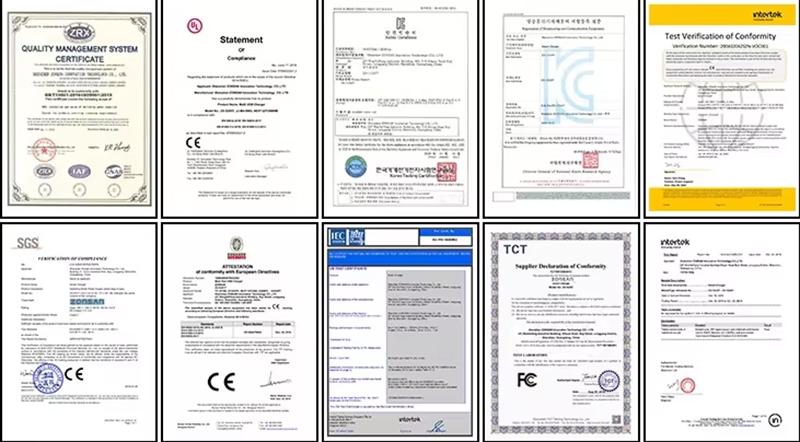
What Is ETL Certification?
ETL is a product certification mark operated by Intertek, which is recognized by OSHA as a Nationally Recognized Testing Laboratory (NRTL).
ETL Listed Mark indicates that a product has been independently evaluated against applicable safety requirements. Intertek states that ETL Listed products are accepted by authorities, inspectors, retailers and other stakeholders across the United States and Canada.
One common misunderstanding is that ETL is itself a technical standard.
It isn't !
The ETL mark represents certification by Intertek. The actual technical requirements depend on the product and applicable standards.
For charger manufacturers, this distinction is crucial. Factories should not simply make a blanket statement like, "We need ETL certification."
ETL Certification Starts During Charger Engineering
One of the biggest mistakes a charger manufacturer can make is treating certification as the final step of product development.
By that point, changing the design can become expensive.
Consider a 65W GaN charger for which mold production has already been completed; during certification testing, engineers discover that the temperature at a specific internal location or the insulation structure fails to meet the requirements of relevant standards.
At this stage, factory engineers need to modify and adjust elements such as the PCB layout, transformer structure, insulation materials, safety clearances, thermal interface materials, enclosure design, and component specifications. This may trigger a new round of engineering verification.
In serious charger development, safety requirements therefore need to be considered during the schematic, PCB and mechanical design stages.
Most factories conduct in-house laboratory testing during the final prototype stage of the charger to ensure all functional tests/inspections meet certification requirements. The product is then submitted to Intertek's laboratory for further testing and certification.
Experienced charger manufacturers typically involve certification engineers early in the project to ensure the product meets certification standards from the development stage, rather than waiting until the product design is finalized to address compliance issues.
Step 1 — Define the Charger Configuration
Before testing begins, the manufacturer needs to establish exactly what product is being evaluated.
This sounds simple, but it becomes important for multi-port and multi-model charger platforms.
Engineering and technical documentation must clearly specify product information, such as: product model, rated input and output parameters, number of ports, USB-C and USB-A interface configuration, PD (Power Delivery) capabilities, PPS (Programmable Power Supply) capabilities, rated power, plug configuration, housing structure, component configuration, and manufacturing location/company.
For instance, a 100W 2C1A charger and a 100W 3C1A charger should not be considered the same product or model simply because they share the same 100W rated power.
They differ in their internal power architectures, port configurations, and protection mechanism performance.
For an OEM charger manufacturer, controlling the model definition at this stage helps prevent problems later in the certification process.
Step 2 — Review the Charger Construction
Before laboratory testing, engineers need to understand what is physically inside the charger.
For a standard AC-DC USB-C charger, internal components typically include: an AC input section, fuses and protection components, a rectification stage, power switching components, a transformer, secondary-side rectification, output filtering, a USB-C PD controller, protection circuitry, capacitors, a PCB (printed circuit board), an insulation system, and so on.
In a GaN charger, the high-frequency power stage and compact PCB architecture make the design particularly sensitive to thermal and layout decisions.
Therefore, the certification review goes beyond merely testing whether the USB-C port can output the rated voltage.
The charger's overall construction, component selection, insulation design, clearances and creepage distances, and mechanical structural design are all critically important.
Step 3 — Prepare Engineering Samples
The samples submitted for testing should represent the actual production design as closely as possible. This is an important point for OEM projects.
A factory should not build a special “laboratory version” of a charger using different components or a different transformer construction simply to pass testing. The certified product needs to correspond to the product that will actually be manufactured.
Before sending samples to the laboratory, a professional charger manufacturer will normally perform internal verification.
Common inspection items include input voltage testing, output power testing, protection function testing, temperature measurement, insulation checks, dielectric withstand voltage testing, USB-C PD verification, PPS verification (if applicable), structural inspections, and more.
The purpose of this internal testing is straightforward: Find problems before the certification laboratory does.
That can save both time and engineering cost.
Read More
Step 4 — Product Safety Testing
This is the stage most people envision when they think of "certification." The charger will be evaluated against the applicable requirements established for the product.
Testing covers electrical, mechanical, thermal, and other safety-related characteristics.
For a charger, engineers need to evaluate areas such as:
Electrical safety
The laboratory examines the product's electrical construction and safety behavior.
This can involve: Input conditions, Output conditions, Abnormal operating conditions, Dielectric withstand, Insulation, Leakage-related safety considerations, and Protection functions.
Temperature
Heat is one of the major engineering concerns in compact fast chargers.
A 65W or 100W GaN charger may operate at high power while occupying very little physical space.
Engineers therefore need to understand temperature behavior across:
• Power components, Transformer, PCB, Enclosure ,Insulation materials, Other safety-critical areas.
Thermal design cannot be separated from electrical design.
A PCB that works electrically but produces excessive localized heating is not a finished charger design.
Mechanical construction
The physical enclosure also matters.
Engineers evaluate areas such as Enclosure construction, Component positioning, Plug structure, Mechanical stability, Protection against access to hazardous parts.
This is why charger certification is closely connected to both electrical engineering and mechanical engineering.
Step 5 — Verify Protection Functions
Modern chargers incorporate various protection mechanisms. Depending on the specific design, these include over-voltage protection (OVP), over-current protection (OCP), short-circuit protection (SCP), over-temperature protection (OTP), as well as input and output protections.
Crucially, protection features should not merely be items listed on a specification sheet.
The protection system needs to behave correctly under the required test conditions.
For example, if a charger supports multiple USB-C outputs, the engineering team needs to understand what happens when:
• One port reaches its maximum load
• Multiple ports are loaded simultaneously
• A connected device is disconnected
• An abnormal output condition occurs
• The charger reaches a thermal limit
This becomes increasingly important as charger power increases.
The power distribution architecture of a 20W single-port charger is relatively simple, whereas that of a 140W multi-port charger is far more complex.
Step 6 — Check the Transformer and Insulation System
For AC-powered chargers, the transformer and insulation structure deserve particular attention.
The transformer provides electrical isolation between primary and secondary circuits while transferring energy through the power conversion stage.
Its construction involves considerations such as winding design, insulation materials, tape, bobbins, magnetic cores, wire specifications, and creepage and clearance distances.
A small change in transformer construction can affect the safety evaluation.
This is one reason why certification documentation should be closely connected to the approved Bill of Materials and engineering drawings.
If a manufacturer changes a safety-critical component after certification, the change may require engineering review rather than simply being treated as a normal purchasing substitution.
Step 7 — Review Production-Line Testing
ETL certification is not only about laboratory samples, and production consistency matters as well.
Intertek's ETL documentation explains that production-line testing may be required depending on the listing report. Examples of commonly required tests include dielectric withstand, grounding continuity and other production-line checks.
This creates an important connection between certification engineering and factory manufacturing.
A fast charger factory needs to be able to demonstrate that the same safety characteristics verified during certification are maintained during mass production.
This means that production operators must follow controlled procedures when performing tasks, such as:
• High-potential (Hi-pot) testing
• Grounding checks (where applicable)
• Functional testing
• Output verification
• Visual inspection
• Label verification
• Test record management
The exact requirements depend on the certified product and its listing documentation.
Step 8 — Initial Factory Assessment
Once the product evaluation has progressed, Intertek conducts an Initial Factory Assessment at the manufacturing location.
The purpose is not simply to look around the factory.
Intertek explains that the Initial Factory Assessment checks whether the manufacturing site's internal processes are sufficiently defined to continue producing compliant products consistent with the tested product.
This is where the difference between a trading company and a real charger manufacturer becomes very clear.
A professional charger factory needs to demonstrate control over the production process.
The assessment may involve areas such as:
• Manufacturing process control
• Quality-control procedures
• Production testing
• Component control
• Assembly processes
• Records
• Product identification
• Labeling
• Traceability
The factory must be able to show that the product being manufactured is controlled rather than simply assembled according to an informal process.

What Does an ETL Factory Audit Look At?
From a manufacturer's perspective, preparation should begin well before the inspector arrives.
The factory should have a clear process covering: Incoming materials. Components need to be identified and controlled.
Taking a charger as an example, this includes all charger components such as power ICs, Gallium Nitride (GaN) devices, MOSFETs, transformers, capacitors, connectors, heat sinks, plastic housings, and insulating materials.
Production process
The factory should have documented production procedures.
This is particularly important for safety-critical assembly steps.
Testing equipment
Required production tests should be performed using suitable equipment with controlled procedures.
Test records
A factory should be able to show evidence that required production tests are actually being performed.
Non-conforming products
There should be a process for identifying, isolating and handling defective products.
Label and marking control
The ETL mark cannot simply be added to packaging because a product has “passed testing.”
Intertek requires authorization before the ETL mark can legally be applied.
Step 9 — Certification Agreement and Documentation
After the technical evaluation, the certification process moves into formal documentation.
Intertek describes the certification process as including information review, agreement, inspection and authorization.
The manufacturer needs to provide the required information and complete the certification agreement.
At this stage, consistency becomes important.
The following should not contradict each other:
• Product model
• Product label
• Technical specification
• Manufacturing location
• Certified construction
• Test sample
• Listing documentation
This is crucial for OEM projects, as the same factory may manufacture products for multiple client brands.
The manufacturer needs to keep the certification scope and product identification under control.
Step 10 — Authorization to Mark
Passing product testing does not mean a manufacturer can immediately print the ETL logo on the charger.
The final authorization matters.
Intertek states that the Authorization to Mark gives the manufacturer permission to legally use the ETL Mark on the certified product. Once authorization is completed, the listing is also published in Intertek's directory.
This is an important distinction for buyers.
A supplier saying: “This charger passed ETL testing.” is not necessarily the same as showing that the final product is authorized to carry the ETL Listed Mark.
For procurement teams, the certification status should be verified against the relevant listing information.
Intertek also provides an online directory where products can be searched by manufacturer, model or standard.
ETL Certification Does Not End After Approval
This is one of the most important parts of the process.
ETL certification is not simply: Test → Pass → Certificate → Finished. Ongoing factory surveillance is part of maintaining the certification program.
Intertek describes follow-up services and factory inspections as part of continued ETL compliance. In practical terms, the manufacturer needs to keep producing the charger in accordance with the certified construction and production requirements.
This means that the factory must not unilaterally alter the charger's specifications—including internal component materials and appearance—without first assessing the impact of such changes on the certification.
without considering whether the change affects the certification.
This is where good engineering change control becomes extremely valuable.
Why Engineering Change Control Matters After ETL Certification
Imagine a charger manufacturer has an approved 100W GaN charger.
Six months later, a capacitor supplier increases pricing.
The purchasing department finds a cheaper alternative with similar electrical specifications.
From a normal procurement perspective, the substitution may look reasonable. From a certification perspective, however, the question is different: Is this component part of the certified construction?
If it is safety-critical, the replacement require engineering and certification review.(Re-certification)
Certification compliance is not only an R&D responsibility.
It becomes a manufacturing responsibility.
ETL vs UL: A Common Question From Charger Buyers
Many buyers ask whether ETL is “better” or “worse” than UL.
That is not the most useful way to compare them.
ETL is operated by Intertek, while UL certification is associated with UL Solutions.
Both are recognized NRTL pathways, and Intertek states that ETL-certified products are evaluated to applicable safety standards and have the same type of regulatory acceptance as other recognized NRTL marks.
For a charger buyer, the better questions are:
• What product is actually certified?
• Which model number is listed?
• Which manufacturing location is covered?
• What standard was used?
• Is the product currently listed?
• Is the production factory covered by the certification?
• Does the shipped product match the certified construction?
Those questions provide much more useful information than simply comparing two logos.
Why ETL Certification Is Important for OEM Charger Projects
For a brand developing a USB-C charger for the North American market, certification should be considered during product planning.
Certification requirements impact the following areas:
• Product architecture, component selection, PCB design, transformer design, enclosure materials, and production testing.
• Packaging, label design, and project schedules.
These factors are critical for customized products.
The brand owner may specify requirements regarding housing dimensions, foldable prongs, the logo, port layout, or power configuration. However, any modifications to the mechanical structure or electrical performance must be evaluated in the context of the charger's overall design.
A compact 65W GaN charger is not simply a smaller version of a 100W charger. Its thermal structure, power components, PCB layout and safety margins can all be different.
Good OEM engineering therefore balances three things at the same time: Performance + manufacturability + certification
Ignoring one of them usually creates problems later.
How a Professional Charger Factory Prepares for ETL
A capable charger manufacturer should not wait until the laboratory testing stage to discover certification problems.
A better workflow is:
Product requirement → Electrical architecture → PCB and transformer design → Component selection → Mechanical and thermal design → Engineering prototype → Internal safety testing → Certification sample → ETL laboratory evaluation → Factory assessment → Production-line control → Authorization to Mark → Mass production and follow-up compliance.
This approach makes certification part of product development rather than a separate administrative task.
How ZONSAN Supports Certified Charger Manufacturing
ZONSAN is a charger manufacturer focused on USB-C, PD, GaN and other fast-charging solutions, with products covering approximately 5W to 240W and OEM/ODM development capabilities.
Its published product and company information lists ETL among its certifications alongside CE, CB, FCC, KC and other market certifications.
For a charger manufacturer, certification capability is closely connected with engineering and production capability.
The important part is not simply having certification logos on a website.
The factory needs to maintain:
• Controlled component sourcing
• PCB engineering
• SMT production
• Assembly processes
• Electrical testing
• Aging testing
• Thermal verification
• Quality inspection
• Production documentation
ZONSAN's existing manufacturing content also describes testing and quality-control procedures covering USB-C PD chargers, GaN chargers and high-power charging products.
For OEM customers, this integrated approach is more useful than treating certification as an isolated laboratory exercise.
What Buyers Should Ask an ETL Charger Manufacturer
If you are sourcing an ETL-certified charger, do not stop at: “Do you have ETL?”
Ask more specific questions.
1. Which exact model is ETL listed?
Ask for the model number rather than accepting a general company certificate.
2. Which factory manufactures the certified product?
The manufacturing location matters because factory assessment and follow-up services are tied to manufacturing arrangements.
3. Is the factory covered by active follow-up service?
This helps establish whether the production site is operating within the certification framework.
4. Does the mass-production version match the tested sample?
This is particularly important for OEM products.
5. How are engineering changes controlled?
Ask how the manufacturer handles component substitutions and PCB revisions after certification.
6. What production-line tests are performed?
A professional factory should be able to explain its safety and functional testing process.
7. Can the listing be verified?
Buyers can use Intertek's ETL Listed Product Directory to verify certification information.
These questions can reveal much more about a supplier than a certification logo on a quotation sheet.
Final Thoughts
Passing ETL certification is not simply about making a charger that works.
It is about demonstrating that the charger has been properly engineered, tested, documented and manufactured under controlled conditions.
For modern USB-C and GaN chargers, this becomes even more important as power density increases and product designs become more compact.
The strongest charger manufacturers understand this early.
They do not design first and “deal with ETL later.”
They consider safety requirements during PCB development, transformer design, component selection, thermal engineering and production planning.
For OEM and ODM buyers, that distinction matters.
A supplier that understands ETL as part of the complete engineering and manufacturing process is generally much better positioned to support a stable product from prototype through mass production.
In the end, an ETL mark is not just a logo on a charger.
It is the visible result of engineering work, independent testing, factory control and continued compliance behind the product.
Reviewer: Zonsan Team and Factory Supervisors — Emma and Luo Zhang
Second Reviewer: Lucas
Final Review Date: [September 7, 2026]
FAQ
Q1: What is ETL certification for chargers?
ETL certification is an independent product safety certification program operated by Intertek. The ETL Listed Mark indicates that a product has been evaluated against applicable safety requirements by an OSHA-recognized NRTL.
Q2: Is ETL the same as UL?
ETL and UL are different certification marks operated by different organizations. Both can be used through recognized NRTL certification pathways, and ETL products are accepted by authorities and inspectors in the United States and Canada.
Q3: How long does ETL certification take for a charger?
There is no single timeline for every charger. Project duration depends on product complexity, testing requirements, sample readiness, documentation, factory location and whether design modifications are required. Intertek publishes individual timelines for stages such as information review and factory inspection, but the complete project varies by product.
Q4: Does ETL certification test the charger itself?
Yes. Product samples are evaluated against the applicable requirements before the listing report and authorization process.
Q5: Does an ETL-certified charger factory need a factory inspection?
Yes. Intertek conducts an Initial Factory Assessment at proposed manufacturing locations as part of the certification process.
Q6: Can a manufacturer change components after ETL certification?
Changes to certified construction should be controlled and reviewed because they may affect compliance with the listing requirements. Manufacturers should not assume that every component substitution is automatically acceptable.
Q7: Can an OEM charger use the customer's brand with ETL?
Potentially, but the brand, model and manufacturing arrangement need to be handled within the certification documentation and authorization requirements. The exact scope depends on the certification project.
Q8: Does ETL certification guarantee that a charger will never fail?
No. Certification verifies compliance with applicable safety requirements. It does not guarantee that a charger will never experience a manufacturing defect or fail during its entire service life.
Q9: How can I verify an ETL charger?
Use Intertek's ETL Listed Product Directory and search using the manufacturer, model number or other available certification information.
Q10: Why is factory quality control important after ETL approval?
Because certified products must continue to be manufactured in accordance with the applicable certification requirements. Intertek uses follow-up services and factory inspections to monitor continued compliance.